
- Services
- Commercial Roofing
Commercial Roofing in Leesburg & Loudoun County, VA



Commercial Roofing Services

Commercial roofing in Loudoun County runs $7 to $15 per square foot for a single-ply replacement, and most projects are scheduled around your operating hours so the building keeps working.
Loudoun Roofing has been working on commercial buildings across Leesburg and Loudoun County since 2001 — office and flex space, retail, warehouse and light industrial, churches, and schools. We install and repair the systems these buildings actually use: TPO, EPDM, modified bitumen and standing seam metal.
If you’re gathering bids, we’ll give you a scope you can compare against other proposals rather than a single number — square footage, system spec, tear-off or recover, warranty terms and a realistic schedule. For a full commercial roof replacement, that comparison is worth getting right.
Commercial Properties We Work On
Different building types bring different roofing problems. What they have in common is that the building has to keep operating while the work happens.
- Office and flex space — usually low-slope membrane with significant rooftop mechanical equipment. Most of the difficulty is working around HVAC units, and most leaks start at the penetrations around them rather than in the field of the roof.
- Retail and shopping centres — trading hours constrain everything. We schedule around opening times and stage materials so customer access and parking aren’t affected.
- Warehouse and light industrial — large uninterrupted spans where the economics favour a durable single-ply system, and where a leak over stored inventory costs far more than the repair.
- Churches — often a mix of steep-slope over the sanctuary and low-slope over later additions, sometimes with slate or standing seam on the original structure. Two different roofing jobs on one building.
- Schools — work almost always happens in the summer window or over breaks, which means the schedule is fixed and the planning matters more than the installation.
Why Commercial Roofing Is a Different Job
Beyond scale, three things separate commercial work from residential:
The building stays open. Nobody moves out for a week. Staging, access, noise and safety all have to work around people using the building.
The systems are different. Low-slope membrane roofing — TPO, EPDM, modified bitumen — is a separate discipline from shingle work, with different failure modes and different repair techniques. Seams, terminations and flashing details are where commercial roofs fail.
The decision is financial. A commercial roof is a capital asset with a service life, a warranty and a depreciation schedule. The right proposal shows cost per square foot, expected life and what maintenance is needed to hold the warranty — not just a price.
We work to National Roofing Contractors Association guidelines and the Virginia Uniform Statewide Building Code on every commercial project.
roofing
Our Services
Roofing Services
Our crews are trained in the latest safety protocols, material handling, and installation techniques. Each member is vetted, insured, and committed to getting the job done right the first time. We frequently complete OSHA-certified safety training and maintain up-to-date licenses.

Commercial Roof Systems We Install
- TPO — the most common choice on new commercial work. White reflective membrane, heat-welded seams, good energy performance in Virginia summers.
- EPDM — rubber membrane, long track record, handles freeze-thaw well. Often the sensible choice on re-roofs where the existing system is EPDM.
- Modified bitumen — multi-ply, tough underfoot, suited to roofs with heavy foot traffic for equipment servicing.
- Standing seam metal — for steep-slope commercial and architectural applications. Longest service life of anything we install. See metal roofing.
Our Commercial Process
- Inspection and assessment. Free, and it covers the whole system — membrane condition, seams, terminations, flashing, drainage and ponding, and the state of penetrations around rooftop equipment.
- Scope and proposal. Square footage, system specification, tear-off versus recover, warranty terms, timeline and cost. Written so it can be compared against other bids line for line.
- Permits and scheduling. We pull the permits and build the inspection windows into the programme, then schedule around your operating hours.
- Installation. Staged so the building keeps working. Daily site cleanup, contained debris, and access maintained.
- Close-out. Final walkthrough, warranty documentation, and photographic records for your files.
Preventative Maintenance
Most commercial roof failures are avoidable. Seams open, flashing lifts, drains clog and ponding water sits — all of which are cheap to address early and expensive once water is in the building.
We recommend twice-yearly inspections, spring and autumn, plus clearing drains and scuppers. Most manufacturer warranties on commercial systems require documented maintenance to stay valid — worth checking yours, because a lapsed maintenance record is a common reason a warranty claim gets refused.
Emergency and Storm Response
We answer emergency calls 24/7 and respond within 60 minutes. On commercial buildings the priority is stopping water reaching inventory, equipment or tenants — tarping and temporary membrane repair first, permanent work once conditions allow. See storm and hail damage and emergency roof repair.
Commercial Roof Systems for Virginia’s Climate
Virginia’s weather ranges from hot, humid summers to cold, icy winters, and commercial roofs take that cycling harder than residential ones because low-slope assemblies hold water rather than shedding it. These are the systems we specify for commercial buildings here:
- TPO: the default for low-slope commercial. The white reflective membrane cuts cooling load through a Virginia summer, and heat-welded seams end up stronger than the membrane itself. Most of our commercial installations are 60-mil TPO.
- EPDM: rubber membrane with the longest proven track record of any single-ply system. Handles freeze-thaw well and stays flexible in cold weather, which makes it a sensible choice on re-roofs where the existing system is already EPDM.
- Modified bitumen: multi-ply and tough underfoot. Worth the premium on roofs that get walked regularly for equipment servicing.
- Standing seam metal: for steep-slope and architectural commercial work. Forty to seventy years of service life, and the lowest cost per year of anything we install. See metal roofing.
- Roof coatings: elastomeric coatings can buy several more years from an existing membrane that is worn but not failed. A genuine option for a building not ready for a full commercial roof replacement — though only where the insulation underneath is dry.
Which one suits your building depends on the roof slope, how much rooftop equipment sits on it, how often it gets walked, and how long you intend to hold the property. We’ll tell you which we’d specify and why rather than defaulting to whatever we buy most of.
What Does a Commercial Roof Cost?
A single-ply commercial roof replacement in Loudoun County runs $7 to $15 per square foot installed. Standing seam metal sits above that range.
- TPO and EPDM — the mainstream choice for low-slope commercial, at the lower end of the range. 20 to 30 year service life depending on membrane thickness.
- Modified bitumen — mid-range, and more robust under the foot traffic that comes with servicing rooftop equipment.
- Standing seam metal — highest upfront, 40 to 70 years, lowest cost per year of service.
What moves your number within that range:
- Tear-off adds roughly $1 to $3 per square foot, and each additional layer beyond the first adds around $0.50 to $1.50 more. Wet insulation that needs replacing adds cost again.
- Roof complexity carries a premium of about 15 to 30%. Every HVAC unit, vent and skylight is a penetration to flash, and penetrations are where commercial roofs leak.
- Square footage works in your favour. Larger roofs cost less per foot — the difference is significant above about 50,000 square feet.
- Insulation is not optional here. Loudoun County sits in climate zone 4, and the Virginia Uniform Statewide Building Code requires a minimum of R-30 continuous insulation on low-slope commercial roofs with insulation entirely above the deck. Any quote that comes in far below the range is worth checking against that requirement.
Why Commercial Bids Vary So Much
If you have three quotes with a wide spread between them, the usual explanation isn’t that one contractor is cheaper. It’s that they’re pricing different scopes of work.
The common differences: membrane thickness (a 60-mil and an 80-mil TPO are not the same roof), insulation R-value, whether tear-off is included or assumed away, how flashing and accessories are counted, and what warranty tier is being quoted. A bid that buries the accessory and flashing count in a thin allowance will look cheaper on paper and cost more by the end.
When you’re comparing, ask each contractor for membrane type and thickness, insulation R-value, tear-off or recover, the flashing and penetration count, and the warranty term. If the bids still differ after that, you’re comparing like for like and the difference is real.
Our proposals are itemized on exactly those lines, so they can be set against anyone else’s.
Commercial Roofing Across Loudoun County
Loudoun County holds one of the largest concentrations of commercial building stock in Virginia, and what sits on those roofs varies considerably by where you are.
Leesburg — the county seat, with office and flex space along the Route 7 and Route 15 corridors alongside older commercial buildings downtown, some of which carry original low-slope assemblies that have been recovered more than once. Work inside town limits needs a Town of Leesburg zoning permit as well as the county building permit, and the county won’t issue until the town’s is approved.
Ashburn, Sterling and Dulles — the county’s data centre and light industrial corridor, anchored by Dulles International Airport. Large low-slope roofs carrying heavy rooftop mechanical loads, where the penetrations around cooling equipment are both the most common leak source and the hardest detail to get right. Loudoun County Economic Development tracks the commercial development here if you’re assessing the market.
Aldie and the Route 50 corridor — mixed commercial and light industrial, and an area we already do a good deal of commercial work in.
Purcellville, Round Hill and western Loudoun — smaller commercial buildings, churches, schools and agricultural structures. Wind exposure off the Blue Ridge is materially higher out here, which affects membrane attachment method and edge detailing on low-slope roofs — a fully adhered system often makes sense where a mechanically fastened one would be fine further east. The National Weather Service office in Sterling, inside the county, issues the high wind warnings for this area.
Commercial roofing work requires permits and staged inspections from Loudoun County Building and Development. We handle the applications and schedule around the inspection windows.
Bid Checker
Compare Your Commercial Roofing Bids
Got quotes with a wide spread between them? Answer six questions about the cheapest one. Most of the time the gap isn’t a cheaper contractor — it’s a smaller scope of work.
Please answer all six questions.
This checks whether a bid is fully specified, not whether the contractor is good. A complete bid from a poor contractor is still a poor job — but an incomplete bid can’t be compared to anything at all.
Get A Fully Itemized QuoteWhy Choose Loudoun Roofing
- Commercial and residential under one roof — we’ve been doing both since 2001, which means a property manager with a mixed portfolio isn’t juggling two contractors.
- Licensed and verifiable — check any Virginia contractor licence free through the Department of Professional and Occupational Regulation, including ours.
- Insurance documentation — certificates of insurance, W-9 and licence details provided as standard. If your management company needs to be named as additional insured, tell us and we’ll arrange it.
- Local, and staying — a warranty is only worth the company standing behind it. We’re in Leesburg and we’ll be here when the roof needs attention in year twelve.
- 24/7 emergency response within 60 minutes — because a commercial leak over stock or equipment gets expensive by the hour.
Testimonials
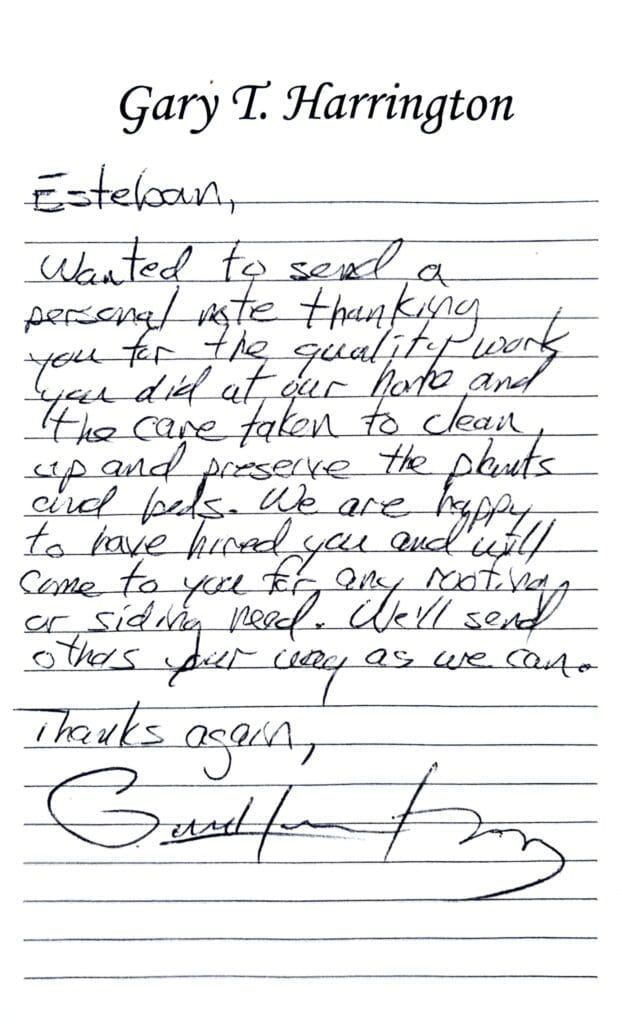
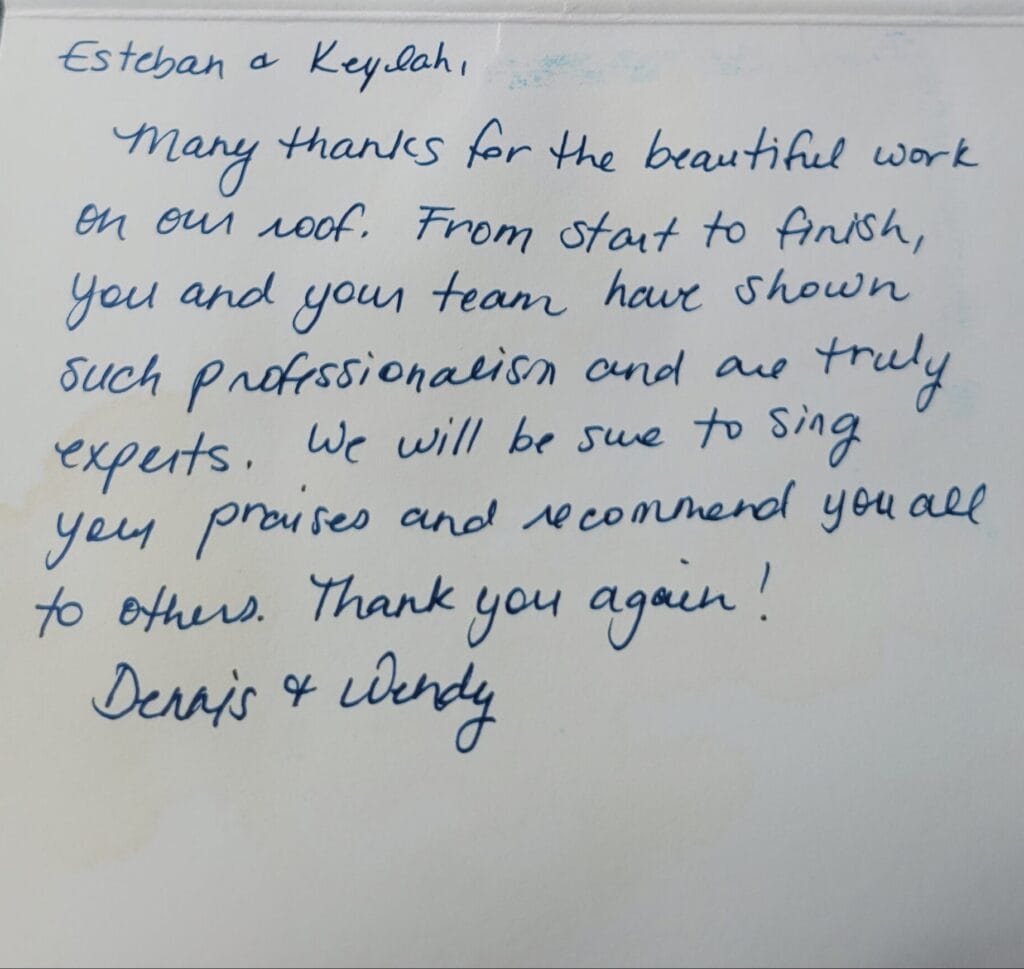
What they’re saying about us
Frequently Asked Questions
What roofing system is best for a commercial building in Virginia?
For low-slope commercial roofs, TPO is the most common choice — the white reflective membrane handles Virginia summers well and the heat-welded seams hold up. EPDM is a strong alternative, particularly on re-roofs where the existing system is already EPDM. Modified bitumen suits roofs with heavy foot traffic. For steep-slope commercial, standing seam metal lasts longest.
How long does a commercial roof replacement take?
It depends on square footage and how much the building constrains the schedule. A straightforward single-ply replacement on a mid-sized building runs one to three weeks. Retail and schools take longer because we work around trading hours or term dates rather than working continuously.
Can you work around our business hours?
Yes, and on most commercial jobs we have to. We stage work so entrances, loading areas and parking stay usable, and schedule the disruptive phases outside your busiest times. Tell us the constraints at the proposal stage and we’ll build the programme around them.
How often should a commercial roof be inspected?
Twice a year — spring and autumn — plus after any significant storm. Most manufacturer warranties on commercial systems require documented maintenance to remain valid, so regular inspections protect the warranty as well as the roof.
Can you recover over our existing roof instead of tearing off?
Sometimes. A recover saves the disposal cost and the disruption of a tear-off, but only where the existing system is sound, the deck is dry, and code allows another layer. If there’s trapped moisture in the insulation, a recover seals it in and the new roof fails early. We’ll tell you which applies after the inspection.
Do you need a permit for commercial roofing work in Loudoun County?
Yes, in most cases, and commercial work has staged inspections rather than a single sign-off. Properties inside Leesburg town limits need a Town of Leesburg zoning permit as well as the county building permit, and the county won’t issue until the town’s is approved. We handle both.
What warranty comes with a commercial roof?
Two: the manufacturer’s warranty on the membrane or panels, and our workmanship warranty on the installation. Manufacturer warranties on commercial systems typically run 15 to 30 years depending on the system and thickness specified — and most require documented maintenance to stay valid. We provide both in writing at close-out.
Do you handle insurance claims on commercial buildings?
Yes. We document damage in the format adjusters work from, meet the adjuster on site, and submit supplements where the initial estimate misses work that’s genuinely needed. Commercial claims involve larger sums and more scrutiny, so documentation quality matters more than on a residential claim.
What causes most commercial roof leaks?
Details, not the field of the roof. Seams, terminations, and flashing around rooftop equipment account for the large majority of leaks we’re called to. That’s why an inspection focuses on penetrations and edges rather than walking the middle of the membrane.
Do you work on churches and schools?
Yes. Churches often combine steep-slope over the original sanctuary with low-slope over later additions — effectively two roofing jobs on one building. Schools are almost always summer or break-period work, which means a fixed window and planning that has to be right first time.
Get in Touch with Loudoun Roofing
Loudoun Roofing & Home Improvement
Leesburg, Virginia 20175
Monday: 6AM – 10PM
Tuesday: 6AM – 10PM
Wednesday: 6AM – 10PM
Thursday: 6AM – 10PM
Friday: 6AM – 10PM
Saturday: 8AM – 6PM
Sunday: 8AM – 4PM
Read Our Reviews on Google