
- Services
- Commercial Roofing
TPO Roofing Contractors in Leesburg & Loudoun County, VA



TPO Roofing Services

TPO roof installation in Loudoun County runs $7 to $12 per square foot installed, and a properly specified system lasts 20 to 30 years depending on membrane thickness.
TPO — thermoplastic polyolefin — is the most widely installed commercial low-slope membrane in the country, and for good reason in this climate. The white reflective surface cuts cooling load through a Virginia summer, and the seams are heat-welded rather than glued, which produces a bond stronger than the membrane itself.
Loudoun Roofing installs and replaces TPO on commercial buildings across Leesburg and Loudoun County — office and flex space, retail, warehouse and light industrial. See commercial roofing for everything else we do, or commercial roof replacement if you’re weighing repair against replacement.
TPO vs EPDM: Which Should You Specify?
These are the two systems most commercial buildings in Loudoun County end up choosing between. Both work. They fail differently and suit different buildings.
TPO
- White and reflective, so it reduces cooling load through the summer. On a building with significant air conditioning demand this is a real operating saving, not a marketing point.
- Heat-welded seams. The sheets are fused, not adhered — the seam ends up stronger than the surrounding membrane.
- Good puncture resistance, which matters on roofs with regular foot traffic for equipment servicing.
- The formulation has changed over the years. Early TPO had a poor reputation and some of it is still repeated; current membranes from established manufacturers are a different product.
EPDM
- Black, so it absorbs heat. A disadvantage in July, arguably an advantage in February — it sheds snow faster.
- Decades of proven performance. The longest real-world track record of any single-ply system.
- Handles freeze-thaw well, and stays flexible at low temperatures.
- Seams are adhered rather than welded, which historically made them the weak point — though seam tape technology has improved considerably.
Which One for Your Building?
TPO usually wins where cooling costs matter — retail, office, anything with heavy rooftop air conditioning — and where the roof gets walked on regularly.
EPDM often makes more sense on a re-roof where the existing system is already EPDM, on buildings where summer cooling load is not a significant cost, and where the simplest possible detailing is preferred.
If you’re replacing an existing roof, what’s already up there carries real weight in the decision. We’ll tell you which we’d specify and why, rather than defaulting to whichever we happen to buy more of.
roofing
Our Services
Roofing Services
Our crews are experienced in material handling and installation techniques. Each member is vetted, insured, and committed to getting the job done right the first time.

Membrane Thickness: The Spec That Decides Everything
TPO is sold in different thicknesses measured in mils, and this single choice drives lifespan, warranty tier and price more than anything else in the quote.
- 45-mil — the thinnest commonly specified. Lowest cost, shortest warranty, and rarely worth it on a building you intend to keep.
- 60-mil — the standard specification for commercial work, and what we recommend for most buildings. Good balance of cost and service life.
- 80-mil — for roofs with heavy foot traffic, significant rooftop equipment, or where the longest possible warranty matters.
This is the number to check on every bid you receive. A quote using 45-mil will look cheaper than one using 60-mil and is not the same roof. If a proposal doesn’t state the thickness, ask before comparing it to anything.
Attachment Method
How the membrane is fixed to the roof matters as much as the membrane itself, and it depends on where the building is.
- Mechanically fastened — screwed through to the deck at the seams. Faster and less expensive, and fine on most sheltered sites.
- Fully adhered — bonded across the whole surface. More expensive, better wind uplift performance, and quieter in high wind.
In western Loudoun — Purcellville, Round Hill and out toward the Blue Ridge — wind exposure is materially higher, and a fully adhered system is often worth the premium where a mechanically fastened one would be adequate further east. The National Weather Service office in Sterling issues the high wind warnings for this area.
Insulation
Loudoun County sits in climate zone 4, and the Virginia Uniform Statewide Building Code requires a minimum of R-30 continuous insulation on low-slope commercial roofs with insulation entirely above the deck. That’s a fixed cost in any compliant TPO installation here, and a quote priced well below the going rate is worth checking against it.
Our Installation Process
- Assessment. Free inspection including core samples on a replacement, to establish whether the existing insulation is dry and whether a recover is possible.
- Specification and proposal. Membrane thickness, attachment method, insulation R-value, flashing and penetration count, warranty tier, timeline and cost — itemized so it compares against any other bid.
- Permits. Pulled by us, with staged inspections built into the schedule. Loudoun County Building and Development handles these, and inside Leesburg town limits a Town of Leesburg zoning permit is needed first.
- Installation. Phased so the building keeps operating, with no more deck opened than can be closed the same day.
- Close-out. Manufacturer and workmanship warranties in writing, plus photographic documentation.
We work to National Roofing Contractors Association guidelines on every commercial installation.
Looking After It Afterwards
TPO is low-maintenance rather than no-maintenance, and most manufacturer warranties require documented upkeep to stay valid. We’ve written a detailed guide covering cleaning, inspection intervals and what to watch for — see TPO roof care.
Roofing Materials Tailored for Virginia’s Climate
Virginia’s weather ranges from hot, humid summers to cold, icy winters, placing significant stress on roofing systems. That’s why we recommend proven, high-performance materials for local multi-family properties:
- Architectural Asphalt Shingles: More durable and visually appealing than 3-tab asphalt shingles, these provide superior wind resistance and can last up to 30 years.
- TPO Roofing: Ideal for low-slope or flat roofs, TPO membranes are highly reflective, reducing cooling costs and resisting algae buildup.
- Standing Seam Metal Roofing: Increasingly popular in Northern Virginia, this option offers extreme durability and longevity, lasting up to 50 years with minimal maintenance.
- Roof Coatings: Elastomeric coatings help extend the lifespan of existing roofs by up to 10 years, making them a cost-effective solution for properties not ready for full roof replacement.
What Does a TPO Roof Cost?
$7 to $12 per square foot installed in Loudoun County for a 60-mil system with code-compliant insulation. On a 10,000 square foot building that’s roughly $70,000 to $120,000.
What moves it:
- Membrane thickness — the largest single variable. 45-mil to 80-mil is a meaningful price difference and a meaningful warranty difference.
- Attachment method — fully adhered costs more than mechanically fastened, and is worth it in exposed locations.
- Tear-off or recover — tear-off adds roughly $1 to $3 per square foot. See commercial roof replacement for how that decision gets made.
- Penetrations — every HVAC curb, vent and drain is a detail to flash. A roof crowded with equipment can run 15 to 30% above a clear one of the same size.
- Square footage — larger roofs cost less per foot, noticeably above 50,000 square feet.
Across a 25-year service life, the difference between a 45-mil and a 60-mil system is usually recovered several times over. The cheaper roof on installation day is rarely the cheaper roof.
TPO Roofing Across Loudoun County
Ashburn, Sterling and Dulles — the county’s data centre and light industrial corridor, and where most of our TPO work happens. These buildings carry heavy rooftop cooling equipment, which is exactly where a reflective membrane earns its cost and where the penetration detailing has to be right. Much of this stock went up from the late 1990s, so a good deal of it is now at replacement age.
Leesburg — office and flex space along the Route 7 and Route 15 corridors, plus retail. Older downtown commercial buildings sometimes carry two existing layers already, which forces a tear-off rather than a recover.
Aldie and the Route 50 corridor — mixed commercial and light industrial, and an area we already work in regularly.
Purcellville, Round Hill and western Loudoun — higher wind exposure, which changes the attachment specification as above.
Why Choose Loudoun Roofing
- We state the membrane thickness on every proposal. If a competing bid doesn’t, that’s the first thing to ask them.
- We specify the attachment method for the site, not the one that’s quickest to install. Wind exposure in western Loudoun is genuinely different from Ashburn.
- Licensed and verifiable — check any Virginia contractor licence free through the Department of Professional and Occupational Regulation, ours included.
- Commercial and residential since 2001 — a 20-year membrane warranty is only worth the company standing behind it.
- Itemized proposals that can be compared line for line against any other bid.
Testimonials
What they’re saying about us
| 4.9 | ★★★★★ Excellent Based on 105 reviews |
✦ What customers say
Customers most often say Loudoun Roofing responds quickly to leaks and storm damage, often the next day, and that owner Esteban inspects both the roof and the attic and sends before-and-after photos of every repair. Many reviewers describe honest advice that fixes the actual problem instead of pushing a full replacement, with fair, detailed estimates. Homeowners across Loudoun County and Northern Virginia also mention on-time crews, spotless cleanup down to the last nail, and Keylah in the office keeping them informed.
AI-generated summary of customer reviews, updated October 20, 2026.

Oct 2026 · Google
From start to finish Esteban and the Loudoun Roofing team were thorough and professional. He spent hours inspecting our roof and…
Read more
…provided a detailed report that we went over in person, where he explained every detail and answered every question we had about the severity, costs and timeline. Then during the work took the time to explain aspects of the roof, the work being done and how to prevent the same level of damage in the future.I've recommended his team to agents and friends and would recommend him to you reading this as well.

Oct 2026 · Google
Highly recommend Loudoun Roofing. Esteban was great to work with and helped us with our radon vent pipe. Will use them in the future when needed.

Sep 2026 · Google
Very professional from start to finish. Loudoun Roofing was courteous, responsive, and easy to work with. I really appreciated…
Read more
…the clear communication and quality service. They took their time and the results look great.

Sep 2026 · Google
Esteban provided us with a very thorough roof inspection prior to purchasing a home. The information helped us feel assured about…
Read more
…the condition of the roof and what improvements were necessary. His communication was very friendly, professional, and prompt as well.

Sep 2026 · Google
I recently used Loudoun Roofing for my roof project. I would have to say one of the best experiences with a contractor at my home…
Read more
…of more than 13 years. The whole experience was exceptional. From the moment I reached out to Esteban, the process was one of the best. They communicate effectively, pricing was phenomenal compared to other roofing companies, their workmanship was excellent from start to finish. The team was incredibly professional, punctual and hard working. I really appreciated their reliability and the high quality of their work. It is rare to find such a trustworthy group, and I definitely recommend using them for any residential roofing needs.

Aug 2026 · Google
Throughtout all the years in construction i have known many roofers and roofing company's, but these guys here are one of the…
Read more
…best i have seen perform work, good quality, professionalism, good prices, and show up on time, can say many more good things about them, but I'm pretty sure you get the picture.
Show more reviews

Aug 2026 · Google
Excellent communication, quality and workmanship. Would definitely recommend.

Aug 2026 · Google
Loudoun Roofing was fantastic. Esteban, Kayla, and and their team could not have been better. They certainly went above and…
Read more
…beyond what I expected and I would have no reservations in recommending them for any roof repair or replacement jobs. I also felt the price was more than fair. I now have a new roof with the peace of mind that comes with knowing it was done right.

Aug 2026 · Google
I used Loudoun Roofing to repair a leak in my roof that another company had supposedly “repaired “ previously but started leaking…
Read more
…again (after I had paid to get the drywall damaged by the previous leak to be repaired and repainted). Loudoun Roofing promptly responded to my inquiry and sent Esteban Marin out to assess the problem and provide an estimate. Esteban was prompt, courteous, and clearly knowledgeable, and explained the problem and showed me the pictures he had taken of the problem area (a roof valley). He thereafter sent me a detailed estimate that I thought was reasonable and we scheduled the time for the repair. Esteban and his assistant Wesley came at the appointed time and did great work in repairing the roof. They were very professional, courteous, efficient, and clearly knew what they were doing. Esteban also provided a host of photos of the problem areas and their repairs and explained what they did and why. Esteban also went over the entire roof locating additional issues and addressed them. They also quickly and very nicely fixed some roof trim on the front of my house at my request. It has been a couple of weeks since the repairs were done and we have had a number of very heavy rain storms; I am very pleased to report that the work Esteban and Wesley did on the roof did the trick—no more leaks!
I highly recommend Loudoun Roofing for any roof repair you need. They were fantastic in every regard. And, I can’t say enough about Esteban Marin: that man knows his stuff and is a true professional.

Jul 2026 · Google
This is my 3rd time using Loudoun Roofing. Esteban is the best, takes photos of what he found causing the leak then photos of…
Read more
…the finished job. While here he did an inspection of my entire roof and found a few other issues that needed addressing. He arrived at the time promised, communicated clearly about the work, and showed a high level of professionalism. The quality of the roof repair was excellent and he left the very clean site. I would definitely recommend Loudoun Roofing and Esteban to anyone looking for a trustworthy professional roofer. On a side note, Keylah who runs the office was fantastic, great communication and customer service. They are a great team! I

Jul 2026 · Google
I googled a couple of other services recommended by an inspector I found working on a neighbor's house. I had doubts about those…
Read more
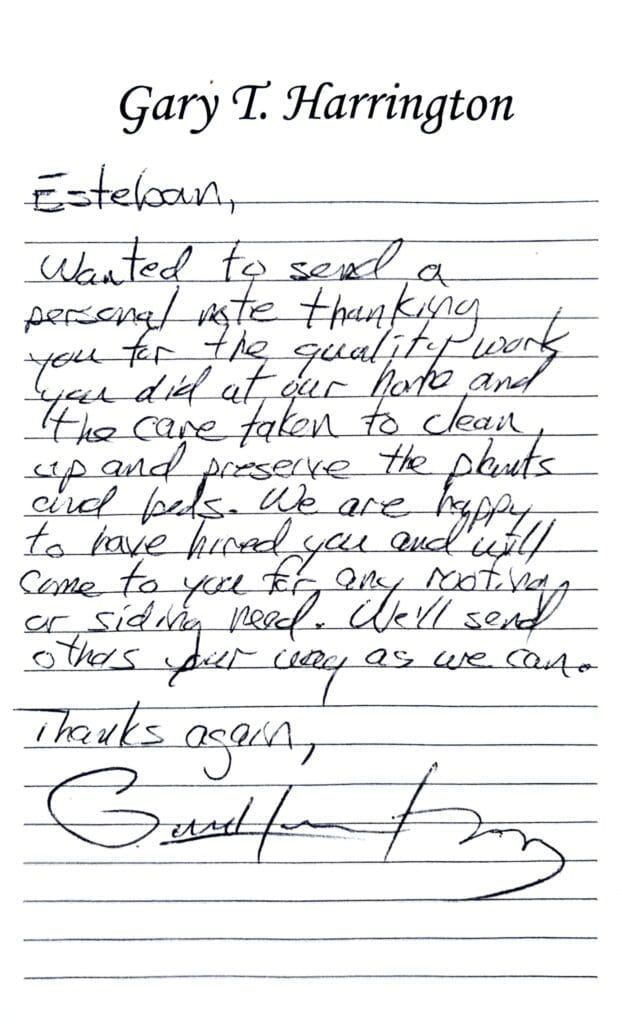
…companies because they were franchise businesses. I needed repairs to what I have, not a company that seeks every chance to do a total replacement. I then found Loudoun Roofing on the internet. Esteban recognized that I had 12-15 years left in the life of my existing roofing, but needed repairs for shoddy workmanship on the original installation. - We are the second owners. Esteban agreed to replace only what was necessary to get our roof ready for another fifteen years and to match the existing roofing. We also upgraded our gutter system. Due to a weather delay, the work was done while we were out of town. When we came back home, all the repairs were done, and our house looked great! They provided before-and-after photos for all repairs. Our yard and flower beds appeared undisturbed; the crew did an outstanding job of not disturbing our beds and in cleaning up after the work. The quality of their work was outstanding. I am confident knowing they were reliable and respectful of my home. I would highly recommend Loudoun Roofing to anyone looking for a trustworthy roofer.

Jul 2026 · Google
I worked with 7 roofing companies in order to resolve the leak in my roof. (And those are the ones that bothered to return my…
Read more
…phone calls.) All but 1 company took the time to properly assess the problem and provide a sensible solution. The other companies provided ridiculously high estimates that addressed almost everything except the actual problem. Keylah and Esteban are the finest professionals I have ever met in any trade business; it was such a relief working with them. I actually look forward to working with them again because I know that any problem I might have will be done right.
Accept no substitutes -- only go with Loudoun Roofing.

Jul 2026 · Google
Esteban and his team were professional and did great work. Definitely recommend them for roofing work.

Jul 2026 · Google
Excellent, professional metal roof service.


Jun 2026 · Google
I recently hired Loudoun Roofing for a roof replacement and was impressed with everything. The crew arrived exactly when they…
Read more
…said they would and kept me updated at each step, which made the whole process smooth. Their professionalism showed in the careful way they handled the asphalt shingles and the clean, precise finish of the new roof. The quality of the work is obvious – there are no leaks and the roof looks great. I felt I could rely on them completely and would recommend Loudoun Roofing to anyone looking for a reliable roofer near me.

Jun 2026 · Google
Esteban was extremely thorough during the inspection and estimate process, taking the time to explain everything clearly and…
Read more
…answer our questions. From start to finish, communication was easy and professional, and the entire project ran smoothly.
One thing we especially appreciated was how quickly they were able to get us on the schedule. Despite the heat and thunderstorms in the forecast, the crew worked efficiently and safely to complete our townhome roof replacement in just a day and a half. The workmanship and overall experience were very good, and we felt confident throughout the process. Thank you Loudoun Roofing team!

May 2026 · Google
5/5 stars – each star for professional service, efficiency, responsiveness, reliability and politeness. Loudoun Roofing was…
Read more
…outstanding from start to finish. The crew arrived on time, were very polite and answered all my questions. They fixed a roof leak quickly and explained the process for the new roof installation using asphalt shingles. I was impressed with how responsive they were to my calls and how reliable they proved to be throughout the project. I highly recommend them to anyone looking for a roofer near me. Great value and excellent workmanship.

May 2026 · Google
Highly impressed with Loudoun Roofing. I had several companies come look at my roof, Loudoun Roofing was the only one that showed…
Read more
…me pictures of the inside and outside, explained all the issues with the roof, underlayment, flashing. In fact, they’re the only ones to discover that the exhaust fans for the bathrooms weren’t even vented to the outside. They were great communicators, extremely professional and clean, and they take great care in their work.

May 2026 · Google
Loudoun Roofing did a great job on our gables, attic fan, and new roof. Esteban and his team were responsive, professional, and…
Read more
…thorough. The roof looks beautiful, and they left the property very clean at the end of the job.

May 2026 · Google
I was very impressed with the promptness and professionalism of Loudoun Roofing. The crew arrived on time, kept the work area…
Read more
…clean, and communicated every step of the roof repair. Their reliability gave me peace of mind and the final result looks great. I’m excited to call them again for my next roof replacement.

May 2026 · Google
Loudoun Roofing was fantastic from start to finish. They arrived right on time and kept the schedule, which made the whole…
Read more
…process stress‑free. The crew was courteous and clearly knew their stuff, handling our roof replacement with professionalism. I appreciated the communication and the reliable workmanship on our roof replacement. Highly recommended for anyone looking for a dependable roofer near me.

May 2026 · Google
I had a great experience with Loudoun Roofing. They showed up right on time, kept me in the loop with clear communication, and…
Read more
…were quick to answer any questions I had. The crew was professional from start to finish and the workmanship on my roof repair was top notch. I appreciated how responsive they were and how smooth the whole process felt. Highly recommend them for any residential roofing needs.

Apr 2026 · Google
We had a great experience with Loudoun Roofing. Excellent communication, great work, on time, and reasonable pricing. Would highly recommend.

Apr 2026 · Google
From the first call to the finished job, Loudoun Roofing was amazing. The team was professional, arrived on time, and explained…
Read more
…the process clearly. They performed a roof replacement with asphalt shingles and took care of a small roof leak. The workmanship was top notch and the crew was respectful and tidy. I would definitely recommend them to anyone looking for a roofer near me.

Mar 2026 · Google
5/5 stars – each star for customer care, product quality, atmosphere, speed, and value. I cannot recommend Loudoun Roofing highly…
Read more
…enough.
During the recent ice storm in Northern Virginia, when the situation was urgent and stressful, they were the only roofing company that actually took the time to speak with me. Every other company either didn’t answer, said they didn’t have staff, didn’t handle repairs, or simply hung up. That alone says a lot—but what truly set them apart was the level of care and professionalism that followed.
A huge shoutout to Keylah Marin — her empathy, patience, and genuine concern for my situation were exceptional. She didn’t rush the call, took the time to understand the issue, and made me feel like a priority when most companies wouldn’t even engage. That level of customer care is rare and truly differentiates this business.
When it came to the inspection, Esteban Marin was equally impressive. He was incredibly thorough—taking the time to check every nook and corner of the roof until he was completely satisfied with his assessment. What stood out most was his honest, straightforward, and completely non-pushy approach. He explained everything clearly, answered all questions, and never tried to upsell or pressure—just solid expertise and integrity.
From the initial call to scheduling, repair work, and final payment, the entire process was smooth, transparent, and stress-free.
If you’re looking for a roofing company that combines responsiveness, honesty, craftsmanship, and truly outstanding customer service, Loudoun Roofing is the one to call.

Mar 2026 · Google
From the first phone call to the final walkthrough, Loudoun Roofing was professional, responsive and right on time. The crew…
Read more
…arrived punctually, explained the roof repair options clearly and completed the work without any delays. I was impressed by how affordable the pricing was while still delivering high‑quality asphalt shingles. Their reliability gave me peace of mind knowing the roof replacement was done right. I would highly recommend them for any residential roofing needs.

Jan 2026 · Google
I was nervous about a roof leak following a brief snow and thaw, so I…
Read more
…called Loudoun Roofing, having worked with them on other exterior repair projects. Following the initial inspection and assessment of the roof and the likely source of the leaks, we received a very reasonable estimate. Once scheduled, the crew arrived on time and got to work right away. Their professionalism and efficiency were impressive – they completed the roof repairs, took completion photos, and confirmed that no other issues were uncovered during the work. I appreciated the speed in which they completed the work and left the property spotless. The new asphalt shingles and vent caps look great and I feel confident about the repairs and adjustments made to the transition between the asphalt shingles and the metal roofing at the rear of the house over the sunroom. Overall, the punctuality, cleanliness and high level of service made this the best roofing experience I’ve had over the homes we have owned.
Pics are pre-repairs and post repairs of affected areas.


Dec 2025 · Google
Loudoun Roofing and Esteban was recommended to me by a roofer in…
Read more
…Maryland. I needed someone licensed in Virginia. I was so happy with the recommendation. Esteban and his team did a great job on my roof. They cleaned up exceptionally well and answered questions throughout the process. I would definitely recommend to family and friends.


Frequently Asked Questions
What is TPO roofing?
Thermoplastic polyolefin — a single-ply membrane for flat and low-slope commercial roofs. It’s supplied in rolls and the seams are heat-welded rather than glued, which fuses the sheets into a single surface. The white finish reflects sunlight and reduces cooling load.
How much does TPO roof installation cost?
$7 to $12 per square foot installed in Loudoun County for a 60-mil system with code-compliant insulation — roughly $70,000 to $120,000 on a 10,000 square foot building. Membrane thickness, attachment method and the number of rooftop penetrations move it within that range.
What thickness of TPO should I specify?
60-mil for most commercial buildings. 80-mil where there’s heavy foot traffic or significant rooftop equipment, or where you want the longest available warranty. 45-mil is rarely worth it on a building you intend to keep. Always check which thickness a quote is based on, because it’s the largest single price variable.
TPO or EPDM — which is better?
Neither is universally better. TPO’s reflective surface reduces cooling costs and its heat-welded seams are very strong, which suits buildings with heavy air conditioning demand. EPDM has the longer proven track record and handles freeze-thaw well. On a re-roof, what’s already installed carries real weight in the decision.
Can TPO be installed over an existing roof?
Sometimes. A recover avoids the tear-off cost and disruption, but only where the deck and insulation are dry and the building doesn’t already carry two layers — Virginia’s code limits how many coverings can be stacked. We take core samples before recommending it, because recovering over wet insulation seals the water in and voids the warranty.
How long does a TPO roof installation take?
Most mid-sized commercial buildings take one to three weeks. Roofs crowded with rooftop equipment take longer than the square footage suggests, because the flashing details around each penetration are the slow part.
Will we have to close the building during installation?
No. We phase the work so sections are opened and closed the same day where possible, and stage materials so entrances, loading areas and parking stay usable. Retail and schools get scheduled around trading hours and term dates.
What warranty comes with a TPO roof?
The manufacturer’s warranty on the membrane, typically 15 to 30 years depending on thickness and system specification, plus our workmanship warranty on the installation. Most manufacturer warranties require documented maintenance to remain valid — worth reading the terms rather than filing them.
Is TPO a good choice for Virginia's climate?
Yes, particularly for buildings with significant cooling demand. The reflective surface works hardest in a Northern Virginia summer, and modern TPO formulations handle the freeze-thaw cycling well. In exposed western parts of the county the attachment method matters more than the membrane choice.
Do you repair TPO roofs as well as install them?
Yes. Most TPO repairs involve re-welding a failed seam or patching around a penetration, and both are straightforward when caught early. If the membrane has reached the end of its service life, we’ll tell you that instead of selling you a repair that won’t hold.