
Quick answer
Most winter roof leaks in Loudoun County come from five things: ice dams, cracked pipe boots, worn flashing at a wall or chimney, attic frost that melts, and shingles lifted by wind. Each one needs a different fix, so find the cause before you patch anything. A free roof inspection tells you which one you have.
Why roofs leak more in winter
In summer, rain hits the roof and runs off. In winter, water stays on the roof longer. Snow sits for days, melts in the afternoon sun and freezes again overnight. That slow, repeated melt keeps water pressed against the same small openings, and it finds weak spots a quick rainstorm never would.
The National Weather Service office for our area sits in Sterling, here in Loudoun County. Its winter weather page posts snowfall and ice forecasts for Northern Virginia, so it’s a good place to check before a storm. Loudoun County’s Office of Emergency Management keeps its own winter weather page for getting your home ready for cold-weather emergencies.
The 5 most common causes of winter roof leaks
1. Ice dams at the roof edge
Heat from the house melts snow higher up the roof. The water runs down and freezes again at the cold edge, building a ridge of ice. More meltwater pools behind that ridge and backs up under the shingles. These leaks usually show up during a thaw, as stains on ceilings or walls near an outside wall. Our guide to ice dams on Loudoun County roofs explains why they form and how to stop them for good.
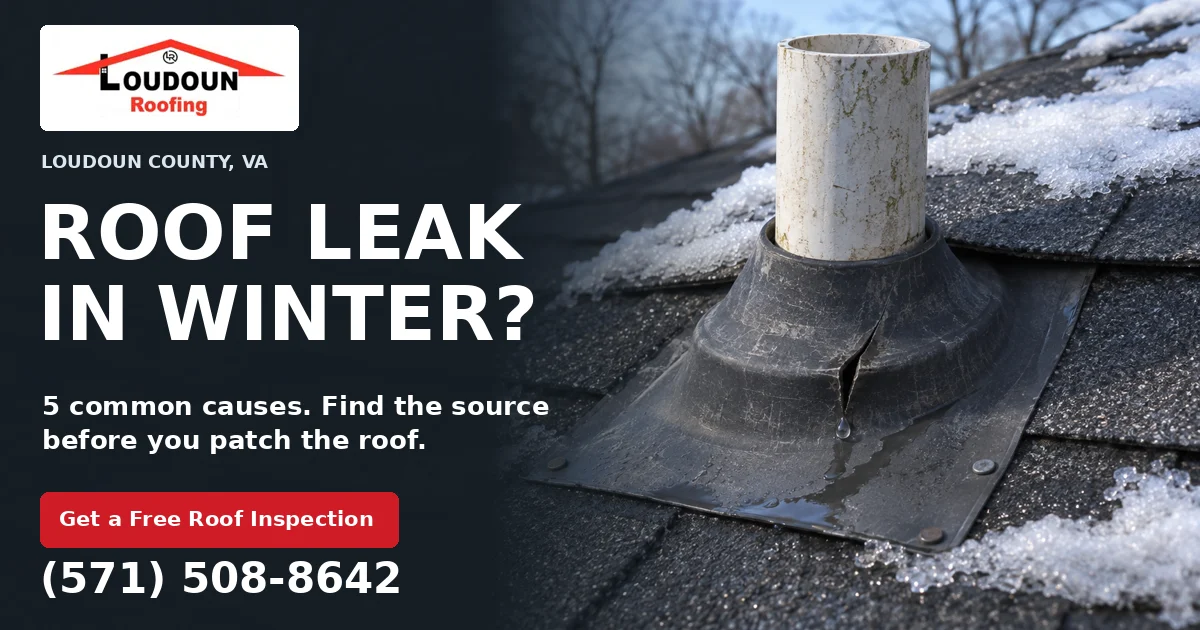
2. Cracked pipe boots
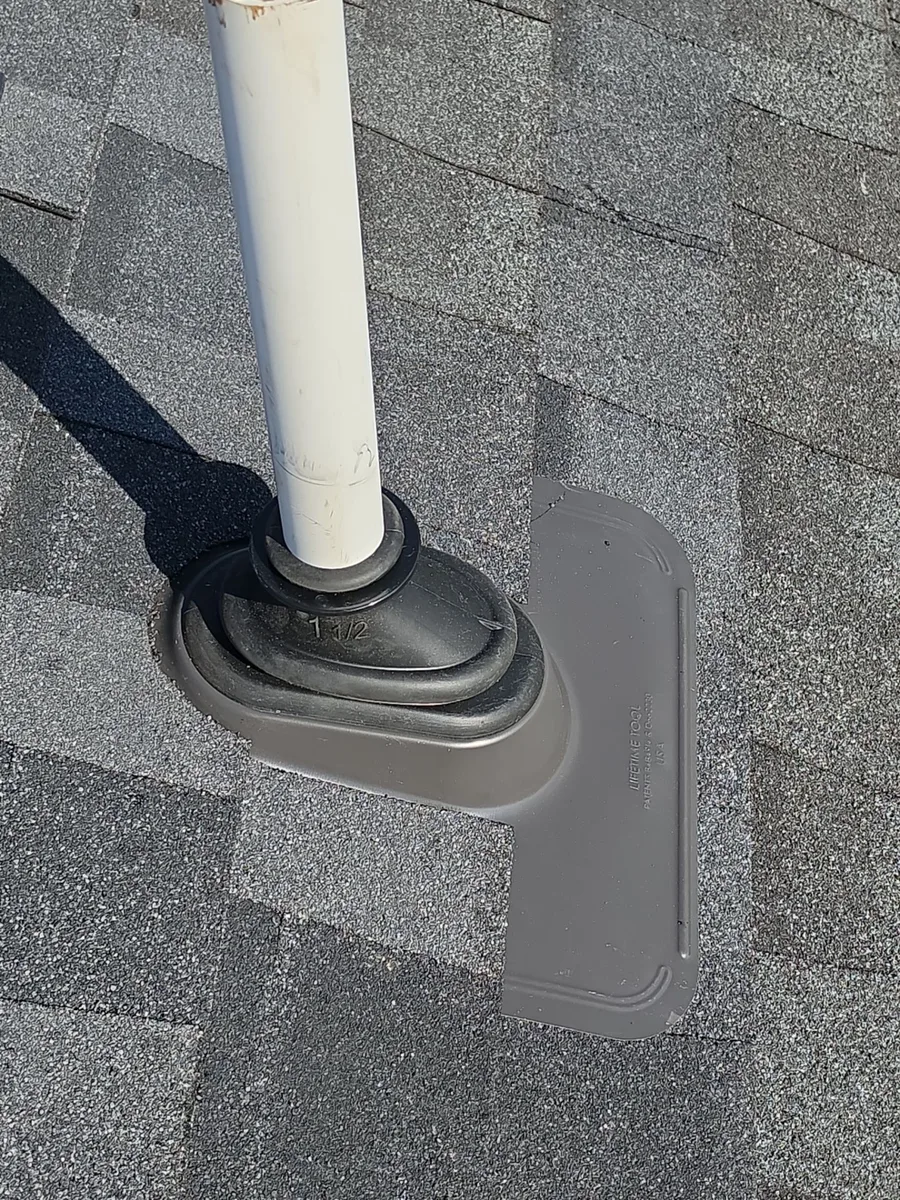
A pipe boot is the rubber collar that seals the roof around a plumbing vent pipe. The rubber dries out and cracks over time, and in many Ashburn, Sterling and South Riding homes built from the late 1990s on, the original boots are reaching the age when they start to fail. Melting snow runs straight into the crack. On a detached garage in the Old Waterford Knoll neighborhood of Leesburg, an old pipe flashing had let water soak the deck boards underneath. Our crew replaced the wet boards and put in a lifetime pipe boot.
3. Worn flashing at a wall, chimney or skylight
Flashing is the metal that steers water away wherever the roof meets something else: a wall, a chimney or a skylight. When it pulls loose or rusts, water gets behind it. In Greenway Farm, Leesburg, failed flashing where the roof meets the wall had already rotted the trim. In Lovettsville, a roof-to-wall leak had rotted a hole through the roof deck. Caulk would not have fixed either one. Both needed new flashing tucked in behind the siding. If the drip is around a skylight, our skylight team checks the flashing and the seals.
4. Attic frost that melts and drips
Sometimes the roof isn’t leaking at all. Warm, damp air from the house rises into a cold attic and freezes as frost on the nails and the underside of the roof. On the first warm day it melts and drips, and it looks just like a leak. During a January inspection in Main Street Village, Purcellville, our crew found frost and ice built up inside an old ridge vent and dark staining on the wood below it. In Goose Creek Village, Ashburn, we found water-stained, rotting decking around the roof vent where the dryer duct connects. ENERGY STAR explains that good attic ventilation, insulation and air sealing keep the attic cold in winter and block warm, moist air from below. Our guide to roof vent installation shows how the vents work together.
5. Shingles lifted by winter wind
Strong winter wind can lift the edge of a shingle or break the seal that holds it down. Once a shingle lifts, melting snow and rain run under it. Nails can also work loose and push up through the shingles over time. Wind-lifted shingles are one of the repairs we see most on the builder-grade roofs in Ashburn, Sterling and South Riding.
How to tell which one you have
- It only drips during a thaw after snow, near an outside wall: most likely an ice dam.
- The stain sits under a vent pipe in the bathroom or kitchen ceiling: check the pipe boot.
- The stain runs along a wall, a chimney or a skylight: most likely the flashing.
- It drips on a sunny morning after a cold night, and you see frost on the attic nails: most likely condensation.
- It started after a windy day, and you can see a lifted or missing shingle from the yard: wind damage.
These clues help, but they overlap. Water can travel along a rafter and show up feet away from where it got in, so the stain isn’t always under the problem.
What to do tonight if your roof is leaking
- Stay away from water near anything electrical. If water is near a light, ceiling fan or outlet, switch off the breaker to that room.
- Catch the water. Put a bucket under the drip and move furniture and electronics out of the way.
- Take photos of the stain, the drip and any damage before you clean up. Your insurance company will want them.
- Stay off the roof. A snowy or icy roof is dangerous, at night most of all.
- Call us at (571) 508-8642. We answer emergency roof repair calls 24/7 and respond within 60 minutes. We tarp the roof to stop the water, then schedule the permanent repair in daylight, when it can be done properly.
Fix the cause before spring
A winter leak that stops when the snow melts hasn’t gone away. It is waiting for the next storm, and the wet wood underneath keeps getting worse. Our free roof inspection takes about an hour. We check the shingles, flashing, valleys, gutters, roof penetrations like pipe boots and skylights, and the attic ventilation and insulation. You keep the written report and photos. Then you’ll know whether you need a roof repair, better attic airflow or nothing at all. For year-round care, see our roof maintenance service.
Frequently asked questions
Why does my roof leak sometimes and not others? +
Because many leaks only open up under certain conditions. An ice dam leak needs snow and a thaw. Attic condensation drips after a cold night. A worn flashing or a lifted shingle may only leak when wind drives rain or melting snow in at an angle. Note when the leak shows up, because that pattern helps us find the cause.
Does insurance cover roof leaks from snow? +
It depends on your policy, so check with your insurance company. The Virginia State Corporation Commission’s homeowners insurance guide lists “weight of ice, snow, or sleet” and “freezing of plumbing” among the perils that homeowners policies name. Photograph the damage before you clean up. We document roof damage in the format adjusters work from and can meet your adjuster on site.
Can a roof leak be fixed in winter? +
Yes. In an emergency, we tarp the roof to stop the water and then schedule the permanent repair in daylight, when it can be done properly. Larger repairs are scheduled around the weather.
What happens if you don’t fix a leak in your roof? +
The water keeps soaking the wood under the shingles. Over time that rots the roof deck, stains ceilings and walls, and can lead to mold. A small repair, like a new pipe boot or a short run of flashing, can turn into replacing rotted decking.
Is condensation in the attic the same as a roof leak? +
No. A leak is water coming in from outside. Condensation is moisture from inside the house that freezes in a cold attic and drips when it melts. The fix is different: better attic ventilation, insulation and air sealing instead of roof repairs. Frost on the attic nails on a cold morning is a sign of condensation.
Call (571) 508-8642 any time, day or night.
Loudoun Roofing is led by Esteban Marin, who has been roofing since 2001, and serves Leesburg and Loudoun County, Virginia. Loudoun Roofing, Leesburg, VA 20175. Call (571) 508-8642, open 24 hours, 7 days a week, or book your free roof inspection.