
Why Acting Fast Can Save Your Home and Your Wallet
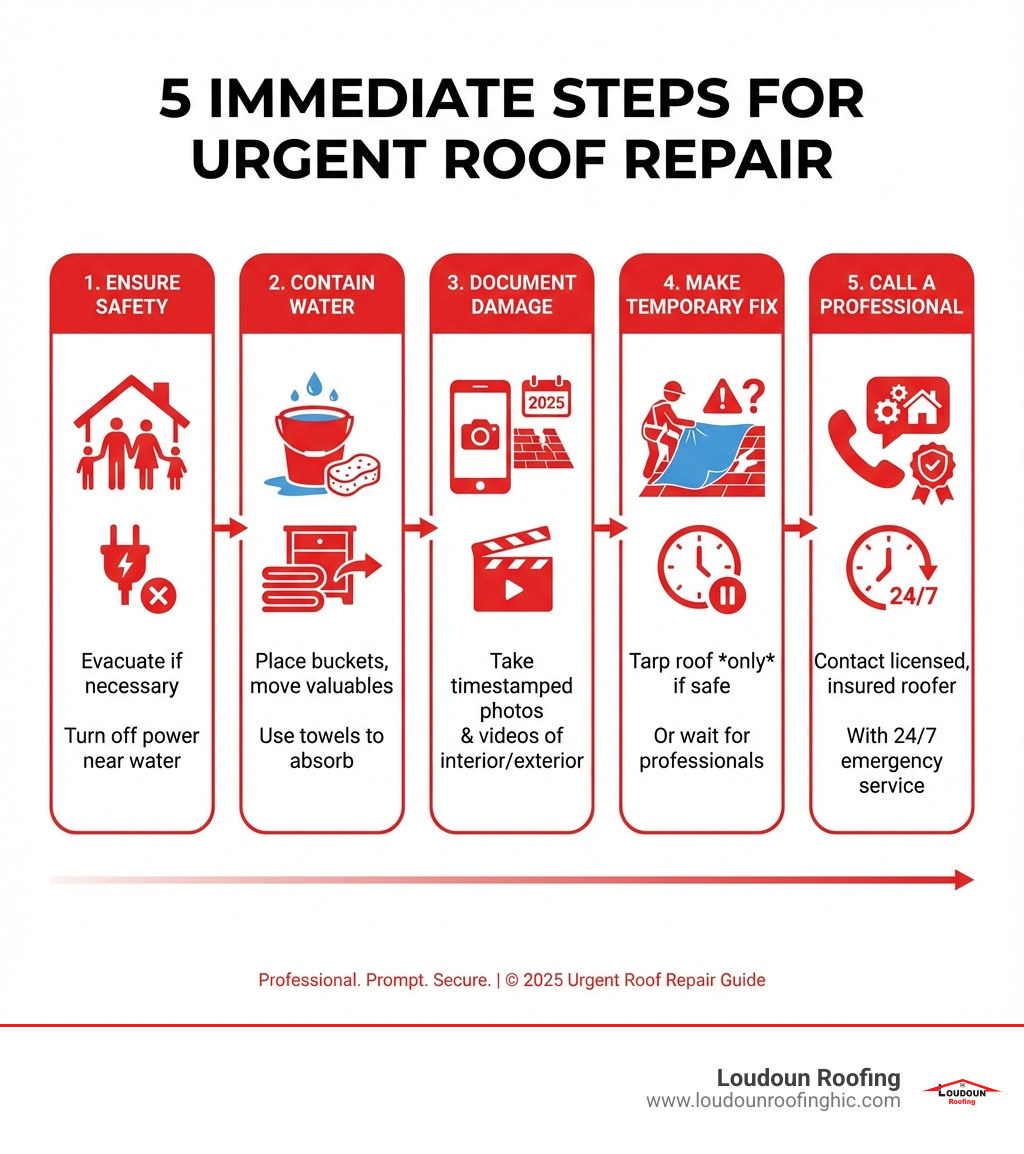
Urgent roof repair becomes necessary when sudden damage threatens your home with water intrusion, structural failure, or safety hazards. The most critical steps are:
- Ensure safety first – evacuate if structural damage is severe, turn off power near leaks
- Contain interior water – place buckets under drips, move valuables away from affected areas
- Document all damage – take photos and videos for insurance claims
- Call a professional immediately – contact a licensed roofing contractor offering 24/7 emergency services
- Avoid DIY repairs – climbing on damaged roofs is dangerous and may void warranties
Time matters. Water damage spreads rapidly, potentially causing mold growth within 24 to 48 hours, structural deterioration, and electrical hazards. The average emergency roof repair costs between $300 and $1,000, but delaying action can lead to expenses exceeding $5,000 as minor issues escalate into major problems.
When you’re facing a roofing crisis in Northern Virginia, having a clear action plan and access to reliable emergency roof repair services can mean the difference between a manageable repair and catastrophic damage. This guide walks you through every step—from recognizing true emergencies to securing lasting repairs—so you can protect your home and your investment.
I’m Esteban Marin, owner and president of Loudoun Roofing & Home Improvement, and since 2001 I’ve responded to countless urgent roof repair calls across Loudoun County, helping homeowners stabilize damage and restore their homes quickly and safely. Whether it’s a storm-damaged valley, a compromised skylight (for more on this, see our guide on skylight leak repair), or wind-torn shingles, I’ve seen how the right response in the first few hours can prevent thousands of dollars in additional damage.
As your trusted local partner for all roofing needs in Leesburg and across Loudoun County, we at Loudoun Roofing are committed to providing top-tier service. We understand that when it comes to your home, there’s no substitute for prompt, expert attention, especially in an emergency.
Recognizing a True Roofing Emergency
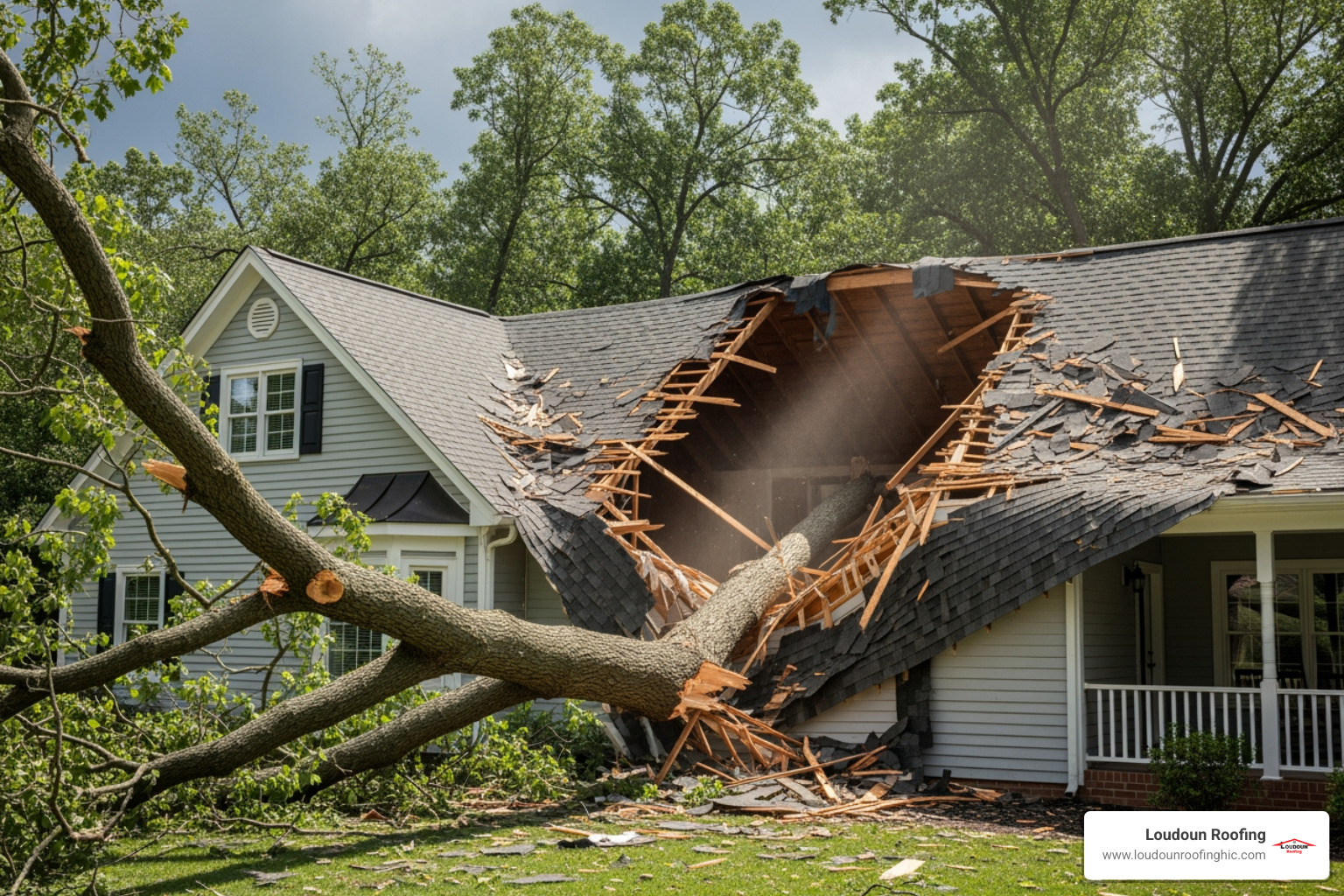
A roofing emergency is defined as any situation where there is active water intrusion, structural compromise, or immediate safety hazards. Delaying repairs in these cases can lead to severe property damage, electrical risks, and mold growth. Water damage from a leaky roof can spread rapidly, potentially causing structural damage, mold growth, and electrical hazards if not addressed promptly.
Common causes of urgent roof repair needs include:
- Severe storms: Heavy rains, strong winds, and hail can wreak havoc on even the most robust roofs.
- Fallen trees or large branches: These can cause punctures, structural damage, and expose your home to the elements.
- Hail or wind damage: High winds can rip shingles off, while hail can cause bruising, cracking, and granule loss that compromises your roof’s integrity. For more on storm-related issues, see our storm damage roof repair services.
- Fire damage: Even if not directly on the roof, nearby fires can cause heat damage or create vulnerabilities.
- Animal intrusion: Pests like raccoons or squirrels can chew through roofing materials, creating holes for water entry.
- Flashing failures: Damaged or improperly installed flashing around chimneys, vents, or skylights can lead to significant leaks.
- Ice dams: In colder climates, ice dams can cause water to back up under shingles and into your home.
What Constitutes an Emergency vs. a Non-Urgent Issue
It’s crucial to distinguish between a roof problem that needs immediate attention and one that can wait a few days. Knowing the difference can save you stress and money.
Emergency signs that require immediate professional intervention include:
- Water pouring in: Active, uncontrolled water entering your home, attic, or near electrical fixtures.
- Sagging ceiling or roof deck: Indicates significant water saturation or structural failure, which could lead to collapse.
- Exposed attic or interior: Large holes or missing sections of roofing that leave your home directly open to the elements.
- Major structural compromise: Visible damage to rafters, trusses, or the overall roof structure.
- Tree through the roof: Obvious and immediate damage from a fallen tree or large limb.
Non-emergency signs that still require professional attention, but can typically wait for business hours, include:
- A few missing shingles: While important to replace, one or two missing shingles usually don’t pose an immediate threat unless accompanied by active leaks.
- Minor granule loss: Granules in gutters are a sign of wear but don’t typically necessitate an emergency call.
- Small, slow leaks: If water is not actively pouring in and can be contained, it might not be an emergency, but still needs prompt repair.
- Moss or algae growth: These are signs of moisture and can degrade your roof over time, but are not an emergency.
| Emergency Signs | Non-Emergency Signs |
|---|---|
| Active water pouring into home/attic | Small, contained leak |
| Sagging ceiling or roof deck | Minor granule loss in gutters |
| Exposed interior/attic due to large holes | One or two missing shingles |
| Structural damage (e.g., broken rafters) | Moss or algae growth |
| Damage near electrical components | Discolored shingles (not actively leaking) |
| Tree fallen on roof | Cracked sealant around a vent (not actively leaking) |
Common Causes of Emergency Roof Damage
Understanding the typical culprits behind urgent roof repair needs can help homeowners in Leesburg, Loudoun County, and across Northern Virginia prepare and respond effectively.
- Hurricanes and tornadoes: While less common, these severe weather events can cause catastrophic damage, requiring immediate attention.
- High winds: Winds exceeding 40 mph can lift, tear, or completely remove shingles, leaving your roof vulnerable. This is particularly prevalent in our region. See our page on wind damage roof shingles for more information.
- Hail impact: Hailstones can bruise or crack shingles, dent vents, and compromise the protective layers of your roof, leading to leaks. For a detailed guide, see How to Spot Hail Damage on Your Roof: A Complete Guide for Homeowners in Loudoun County, VA.
- Debris or tree limbs: Falling branches, especially from tall oak or pine trees common in our area, can puncture roofs or dislodge components.
- Neglected maintenance: Over time, minor issues like clogged gutters or worn flashing can escalate into major emergencies.
- Improper installation: A poorly installed roof or flashing can fail prematurely under stress, leading to unexpected leaks.
- Flashing or sealant failures: These critical seals can crack, dry out, or detach, allowing water to penetrate vulnerable areas.
- Ice dams: As mentioned, these can force melting snow back under your shingles, causing significant water damage to the interior.
Your First 60 Minutes: Immediate Steps to Mitigate Damage

When a roofing emergency strikes, the clock is ticking. Your immediate actions can significantly reduce further damage and potential costs. We always advise prioritizing safety, then focusing on containing the water and documenting the damage.
- Protect yourself and family: Ensure everyone is safe. If there’s structural damage or a risk of collapse, evacuate the home. If fallen trees have brought down power lines, call 911 or your utility company immediately. Never go on the roof during active storms, high winds, or if it’s wet or structurally compromised.
- Move valuables and furniture: Quickly move electronics, furniture, and personal belongings away from the affected area to prevent them from getting wet.
- Contain water with buckets and towels: Place buckets, trash cans, or other containers under active leaks. Use towels or plastic sheeting to direct water flow and protect floors. If your ceiling is bulging with water, carefully puncture the lowest point with a small tool to release the water into a container, preventing a sudden, larger collapse.
- Document all damage with photos and videos: From a safe location, take clear, timestamped photos and videos of the damage both inside (leaks, water stains, damaged belongings) and outside (missing shingles, holes, debris). This documentation is crucial for your insurance claim.
- Attempt temporary fixes only if safe: If conditions allow and you can safely access the area without getting on the roof, you might attempt a temporary fix like placing a tarp over the damaged section. However, improper coverage can cause additional damage or safety risks. In most cases, it’s safer to wait for a professional emergency repair team.
- Contact a professional immediately: The moment you suspect a significant roof issue, call a licensed and insured roofing contractor that offers 24/7 emergency services. For urgent help in Northern Virginia, visit our emergency roof repair page.
Safely Assessing and Documenting the Damage
Assessing the extent of roof damage safely is a critical first step after an emergency. Our top priority is your safety, so we strongly advise against climbing onto a damaged roof yourself.
- Inspect from the ground using binoculars: Walk around your home and use binoculars to get a closer look at your roof. Look for missing or uplifted shingles, punctures, debris, or any visible signs of structural compromise.
- Take clear photos and videos: Document everything you see—both obvious damage and subtle signs like granule loss or lifted shingle edges. These visual records are invaluable for your insurance claim and for your chosen contractor.
- Note the time and date of damage: This information is important for your insurance claim, especially if the damage was caused by a specific weather event.
- Document both interior and exterior issues: Don’t forget to photograph any internal water stains, ceiling damage, or damaged belongings.
- Never climb on a damaged or wet roof: This is extremely dangerous. Roofs can be slippery, unstable, and present electrical hazards. Leave roof-level inspections to the professionals. For more on assessment, see our guide on storm damage assessment.
Temporary Measures for an Urgent Roof Repair
While waiting for professional help, there are several temporary measures you can take to mitigate damage inside your home:
- Use buckets and towels to catch leaks: This is the most immediate step to prevent water from spreading. Empty buckets regularly to avoid overflow.
- Move electronics and valuables: Water and electricity are a dangerous combination. Move any electrical devices away from leaks and consider turning off power to affected circuits if water is near electrical fixtures.
- Carefully release water from ceiling bulges: If you notice a bulge in your ceiling, it’s likely filled with water. Place a bucket underneath and carefully puncture the lowest point with a screwdriver or similar tool. This allows the water to drain in a controlled manner, preventing a sudden, larger collapse.
- Tarp the roof if safe, or wait for professionals: If you have a heavy-duty, waterproof tarp and can safely access the damaged area from a ladder (without getting on the roof), you might be able to secure a temporary tarp. However, this should only be attempted if conditions are calm and you have prior experience. Improper tarping can cause more damage or pose a safety risk. For detailed instructions on how to tarp a roof, you can refer to resources like this guide from Home Depot. For professional tarping, which we highly recommend, see our emergency roof repair services. A temporary fix like roof tarping can prevent catastrophic water damage while awaiting permanent repairs, but it is crucial to have it done by professionals to ensure proper installation and safety. The cost to tarp a roof in an emergency situation can average about $450.
Finding and Hiring a Professional for Urgent Roof Repair
When your home has suffered roof damage, choosing the right contractor is crucial for effective emergency repairs and lasting peace of mind. We pride ourselves on being a trusted local partner, known for our durable, expertly crafted roofing backed by industry-leading warranties and a strong commitment to customer satisfaction. For trusted local help, especially for urgent roof repair needs, see our roofing contractor services in Leesburg.
What to Look for in an Emergency Roofing Contractor
In a crisis, you need a contractor you can rely on. Here’s what we believe you should look for when selecting an emergency roofing professional in Northern Virginia:
- 24/7 availability: Roofing emergencies don’t stick to business hours. A reliable contractor will offer round-the-clock service to respond to your urgent needs.
- Local presence and experience: Choose a company with deep roots in Leesburg, Loudoun County, or Northern Virginia. Local companies often offer faster response times, possess knowledge of local climate conditions and building codes, and provide more personalized service. We’ve been serving this community since 2001, giving us invaluable local expertise.
- Proper licensing and insurance: This is non-negotiable. Verify that the contractor is fully licensed and insured. This protects you from liability in case of accidents and ensures they meet industry standards. For more, see our guide to finding licensed roofers.
- Positive reviews and testimonials: Check online reviews and ask for references. A strong reputation for reliability, responsiveness, and professionalism speaks volumes.
- Experience with your roof type: Whether you have asphalt shingles, metal roofing, or a flat roof, ensure the contractor has proven experience with your specific material.
- Transparent communication: In a stressful situation, clear and honest communication is vital. The contractor should explain the damage, the proposed repairs, and any potential costs clearly.
The Professional Process and Potential Costs
When you call us for an urgent roof repair, here’s what you can typically expect from our professional process:
- Emergency tarping and stabilization: Our first priority is to prevent further water intrusion. We’ll deploy temporary measures, such as professional tarping, to make your home watertight and stable. This is crucial for mitigating damage until permanent repairs can begin.
- Detailed inspection and damage assessment: Once the immediate threat is contained, our experienced team will conduct a thorough inspection of your entire roof system, including the decking, underlayment, and flashing, to accurately assess the full extent of the damage. We use HAAG certified inspectors who are trained to identify all types of residential and commercial roof issues, ensuring no problem is missed.
- Debris removal: We’ll safely remove any fallen trees, branches, or other debris from your roof and property.
- Cost of temporary and permanent repairs: The average cost of emergency roof repair can range from $300 to $1,000, with more complex issues (like extensive structural damage from a fallen tree) potentially costing upwards of $5,000. Temporary fixes like tarping can average about $450. We provide transparent, written estimates for both temporary and permanent solutions.
- Factors affecting cost: The final cost will depend on several factors:
- Extent of damage: Minor repairs are less expensive than significant reconstruction.
- Roofing material: Some materials, like tile or metal, may have higher repair costs than asphalt shingles.
- Accessibility: Steep roofs or those difficult to access may incur higher labor costs.
- Time of day/night: Emergency call-out fees might apply for after-hours service.
- Permit requirements: Larger repairs may require permits, impacting the timeline and cost.
Delaying roof repairs can lead to higher costs in the long run, as minor issues can escalate into major problems requiring more extensive and expensive solutions, including full roof replacement. For more on pricing, see our comprehensive guide on roof repair costs.
Navigating Insurance and Preventing Future Emergencies
Dealing with an urgent roof repair is stressful enough without the added headache of insurance claims. Understanding your policy and maintaining your roof are key to preventing future emergencies and ensuring your claims are covered. We’re here to help you steer this process.
- Review your policy for coverage details: Familiarize yourself with what your homeowner’s insurance policy covers regarding roof damage.
- Document all damage and repairs: Keep meticulous records, including photos, videos, our inspection reports, and all repair invoices. This is your evidence for the insurance company.
- Work with your contractor for claim support: We can assist you with accurate documentation and provide a detailed assessment that can help streamline your claim. Having us present when an insurance adjuster visits can facilitate agreement on repair needs.
- Schedule regular inspections and maintenance: Proactive care is your best defense against unexpected emergencies.
For a deeper dive into how insurance works for roofing issues, see our dedicated page on roof insurance claims explained.
The Role of Insurance in Covering Emergency Repairs
Many homeowners wonder if their insurance will cover an urgent roof repair. Here’s the general breakdown:
- Sudden, accidental damage is typically covered: Most insurance policies cover sudden and unforeseen damage caused by events like storms, hail, fallen trees, or fire. If a severe storm rips off your shingles, for example, your policy will likely cover the repair or replacement.
- Gradual wear, neglect, or lack of maintenance is not: Insurance policies generally do not cover damage that results from a lack of maintenance or general wear and tear over time. This is why regular inspections and timely repairs are so important. If a leak is determined to be from a long-standing, unaddressed issue, your claim could be denied due to neglect.
- Proper documentation is essential for claims: As mentioned, thorough documentation (photos, videos, contractor reports, receipts) proves the extent and cause of the damage, significantly strengthening your claim.
- Contractors can assist with the claims process: We have extensive experience working with insurance companies. Our team can help you understand the process, provide the necessary documentation, and ensure that your claim accurately reflects the damage and required repairs.
Timely reporting of damage to your insurance agent is also crucial. Many policies have deadlines for filing claims after an incident. For more detailed information on navigating this process, see our guide on roof insurance claims.
Best Practices for Preventing an Urgent Roof Repair
An ounce of prevention is worth a pound of cure, especially when it comes to your roof. Regular maintenance can significantly reduce the likelihood of needing an urgent roof repair.
- Schedule regular roof inspections: We recommend scheduling professional roof inspections at least once a year, and ideally twice (spring and fall), to catch minor issues before they escalate. Roofs that are more than 15-20 years old require more critical regular inspections.
- Clean gutters and downspouts: Clogged gutters can cause water to back up, leading to ice dams in winter and water infiltration under your shingles during heavy rains. Keep them clear of leaves and debris. For tips, see our roof and gutter cleaning guide.
- Trim overhanging branches: Trees close to your home can drop leaves, debris, and, most critically, branches during storms. Trim branches back from your roof by at least 6 to 10 feet to prevent punctures and granule loss.
- Replace worn or damaged components: Don’t let a few missing or cracked shingles turn into a major leak. Address these small repairs promptly.
- Address minor leaks promptly: Even a small, slow drip can lead to significant structural damage, mold, and rot over time. If you notice any signs of a leak, get it inspected and repaired quickly.
By following these best practices, you can extend your roof’s lifespan, maintain its warranty, and avoid the stress and expense of unexpected emergencies. For a comprehensive approach, explore our preventative roof maintenance services.
Frequently Asked Questions about Urgent Roof Repair
We understand you likely have many questions when facing a roofing emergency. Here are some of the most common ones we hear from homeowners in Leesburg, Loudoun County, and Northern Virginia.
How much does emergency roof repair cost?
Emergency roof repair typically costs between $300 and $1,000, with severe cases (such as extensive structural damage from a fallen tree or widespread hail damage) potentially reaching $5,000 or more. Emergency tarping, a critical temporary fix, averages around $450. The exact costs depend on the extent of the damage, the type of roofing material, the accessibility of the damaged area, and whether it’s an after-hours call. Delaying repairs can lead to higher costs in the long run, as minor issues can escalate rapidly.
Should I attempt to fix my roof myself in an emergency?
We strongly advise against attempting major DIY repairs, especially during or immediately after a storm. Climbing a damaged or wet roof is extremely dangerous due to the risk of falls, unstable surfaces, and potential electrical hazards. Furthermore, improper DIY repairs can void existing warranties on your roofing materials and may even lead to insurance claim denials. Your safety is paramount. Always call a licensed and insured professional for urgent roof repair.
Does homeowners insurance cover all emergency roof repairs?
Many insurance policies cover sudden and accidental damage caused by unforeseen events like storms, hail, or fallen trees. However, they generally do not cover damage resulting from gradual wear and tear, neglect, or a lack of maintenance. It’s crucial to review your specific policy to understand your coverage and contact your insurance agent promptly after finding damage. Our team can help you document the damage accurately to support your claim. For more detailed information, see our page on roof insurance claims explained.
Your Local Partner in a Roofing Crisis
When a roofing emergency strikes in Northern Virginia, immediate action is essential to protect your home. By identifying emergencies, taking prompt steps to mitigate damage, and contacting a trusted professional like us, you can minimize loss and restore your peace of mind. Regular maintenance is your best defense, but when the unexpected happens, Loudoun Roofing is here to help.
We are a local family business, deeply committed to our community in Leesburg, Loudoun County, and throughout Northern Virginia. Unlike “fly-by-night” companies that chase storms and disappear, we’re here for the long haul, offering reliability, professionalism, and guaranteed repairs. We treat our customers like family, easing your anxiety with prompt, expert service.
For 24/7 emergency roof repair in Leesburg, VA, or anywhere in our service areas of Loudoun County and Northern Virginia, call us today at (571) 364-8285. We’ll respond quickly, inspect thoroughly, and provide lasting repairs to keep your roof and your home safe.