

Why Your TPO Roof Deserves Regular Attention
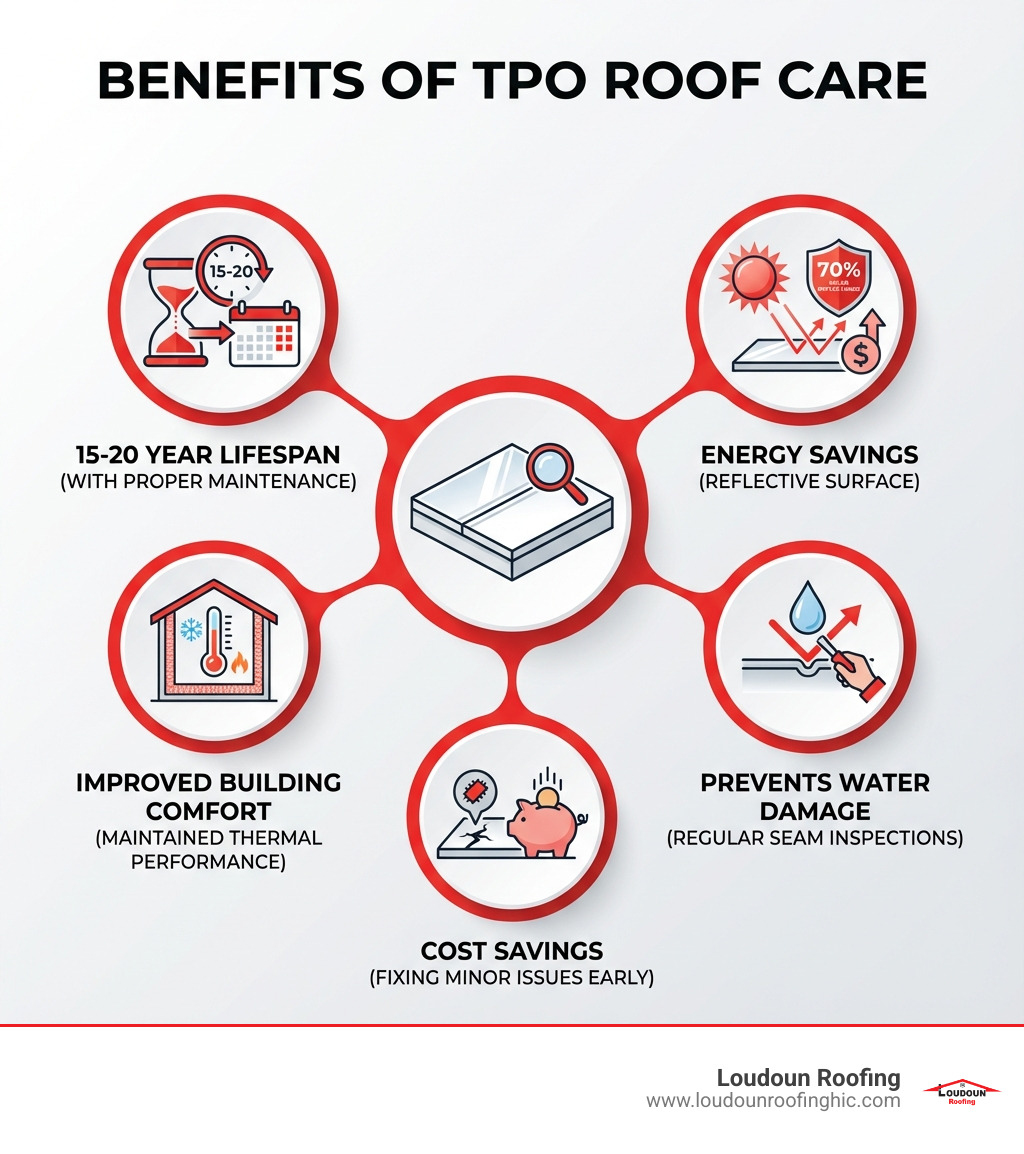
TPO roof care is the key to maximizing your roofing investment’s performance and lifespan. A well-maintained TPO system reliably delivers 15–20 years of watertight protection, energy savings, and stable operating costs for commercial buildings. Property owners who follow a structured maintenance plan—like the programs we offer through our commercial roofing services in Northern Virginia—see fewer leaks, lower lifecycle costs, and better long-term performance.
Here’s what proper TPO maintenance includes:
Essential TPO Roof Care Steps:
- Inspect twice yearly (spring and fall) for damage, debris, and drainage issues
- Clean annually using low-pressure washing (under 2,000 PSI) and mild, TPO-safe detergents
- Check seams and flashing for gaps, separation, or deterioration
- Remove debris promptly to prevent mold, algae, and membrane damage
- Address repairs immediately using compatible materials or professional services
- Maintain proper drainage to prevent water pooling and membrane breakdown
Thermoplastic Polyolefin (TPO) has become one of the most popular single-ply roofing membranes for commercial and flat roofing across Northern Virginia. As a trusted local roofing company, we know property owners choose TPO for its exceptional durability, energy-efficient reflective surface, and cost-effectiveness. But like any roofing system, TPO requires consistent maintenance to deliver its promised 15 to 20-year lifespan.
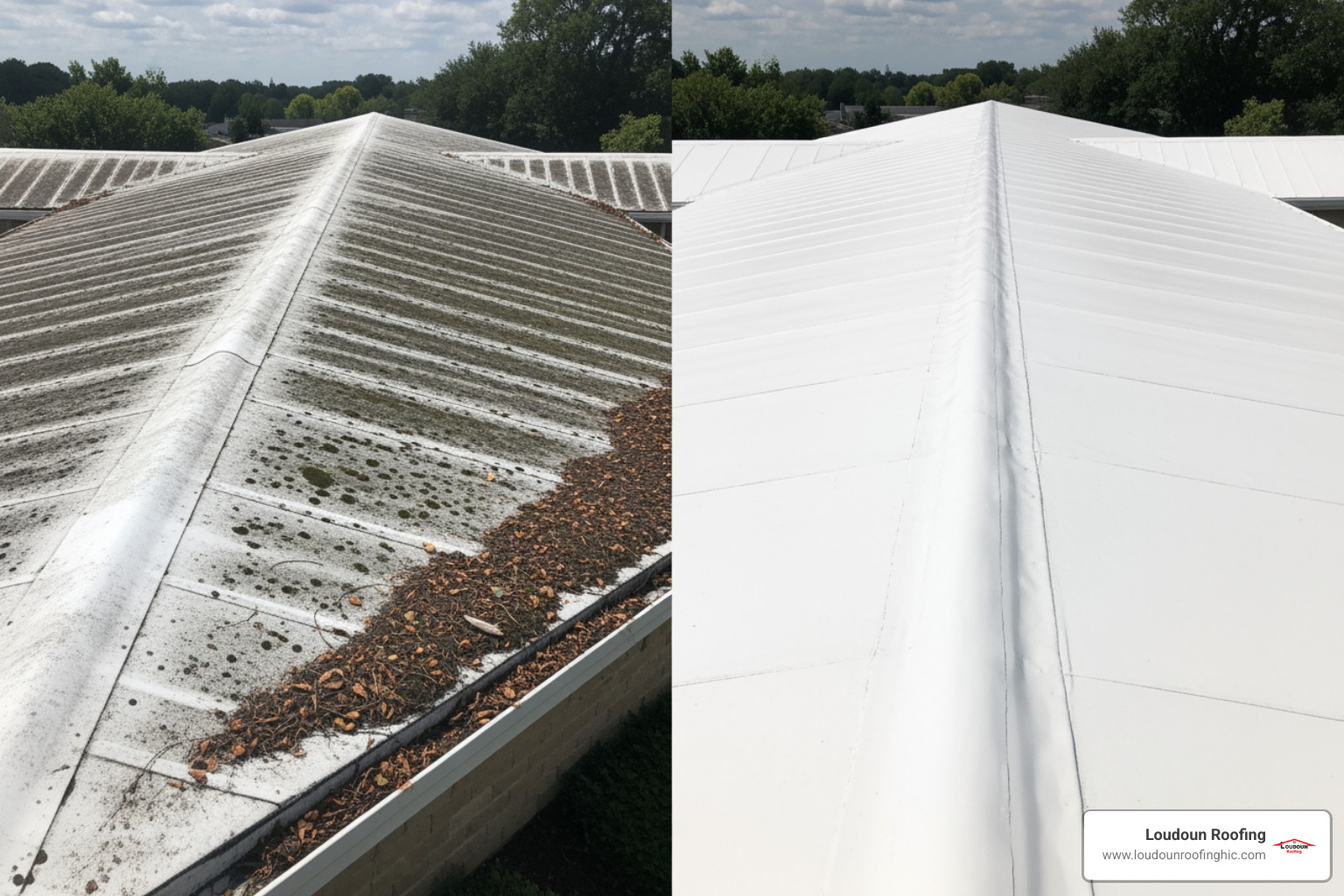
The reality is simple: regular cleaning and inspection can greatly extend the life of your TPO roof and reduce the need for repairs. A clean TPO roof maintains its white, reflective properties—keeping your building cooler and energy bills lower. Neglect, on the other hand, leads to debris accumulation, which becomes a breeding ground for mold, mildew, and algae. These contaminants compromise the membrane and can ultimately cause leaks and costly structural damage.
I’m Esteban Marin, owner and president of Loudoun Roofing & Home Improvement, and since 2001 I’ve specialized in commercial roofing systems including advanced TPO roof care and waterproofing techniques for properties throughout Loudoun County. My team and I have seen how a proactive maintenance plan protects buildings and saves property owners thousands in emergency repairs.
Why TPO Roof Maintenance is Non-Negotiable
When it comes to commercial roofing in Leesburg, Loudoun County, and Northern Virginia, TPO roofing systems are an excellent choice, known for their resilience and energy efficiency. However, even the most robust systems require diligent care to perform optimally. We’ve often heard the phrase, “if it ain’t broke – don’t fix it,” but this motto is a flawed approach to roof maintenance, especially for TPO. A proactive approach is not just a suggestion; it’s a necessity.
A properly installed and maintained TPO roof can last between 15 to 20 years, sometimes even longer, depending on environmental conditions unique to our region. This impressive lifespan is only achievable with consistent TPO roof care. Without it, we see roofs degrade prematurely, leading to costly repairs and even full replacements long before their time.
One of the most touted benefits of TPO roofing is its energy efficiency. The light-colored surface of a TPO roof is designed to reflect sunlight and UV rays, making the building more energy efficient during our warm Northern Virginia summers. However, if that pristine white surface becomes covered with dirt, dust, pollen, and other contaminants, its reflective properties diminish. This means your HVAC system has to work harder, leading to increased energy bills and negating one of the primary advantages of a TPO roof.
Neglecting your TPO roof also invites a host of other problems. Debris accumulation—leaves, twigs, dirt, and even standing water—creates a breeding ground for mold, mildew, algae, and other plant growth. These organic invaders can compromise the roofing membrane, leading to degradation and even leaks. Pests are also attracted to accumulated debris, potentially causing further damage. Water pooling, which can occur if drainage is blocked or the roof is sagging, further breaks down the roofing material, accelerating deterioration and increasing the risk of leaks. Over time, structural stress and environmental exposure can cause surface degradation, thinning, and shrinkage of the TPO membrane.
The consequences of neglecting TPO roof care extend beyond the roof itself. Leaks can lead to significant interior damage to insulation, the roof deck, and even your building’s contents or inventory. Operational downtime for your business can result in financial loss. In severe cases, unchecked moisture can lead to mold growth inside the building, posing health risks and requiring extensive remediation. Investing in regular maintenance is a small price to pay to avoid these potentially catastrophic and expensive issues.
The Ultimate Guide to TPO Roof Care: Cleaning & Inspection
To ensure your TPO roof lives up to its full potential, we recommend a consistent schedule of inspections and cleaning. Our expert experience shows that TPO roofing systems should be inspected at least twice a year for optimum performance—typically in the spring and fall. Annual cleaning is also essential to maintain its reflective properties and prevent mold and mildew growth. This section details the core practices for effective TPO roof care to maximize your roof’s performance and lifespan.
Essential Tools and Safe Cleaning Solutions
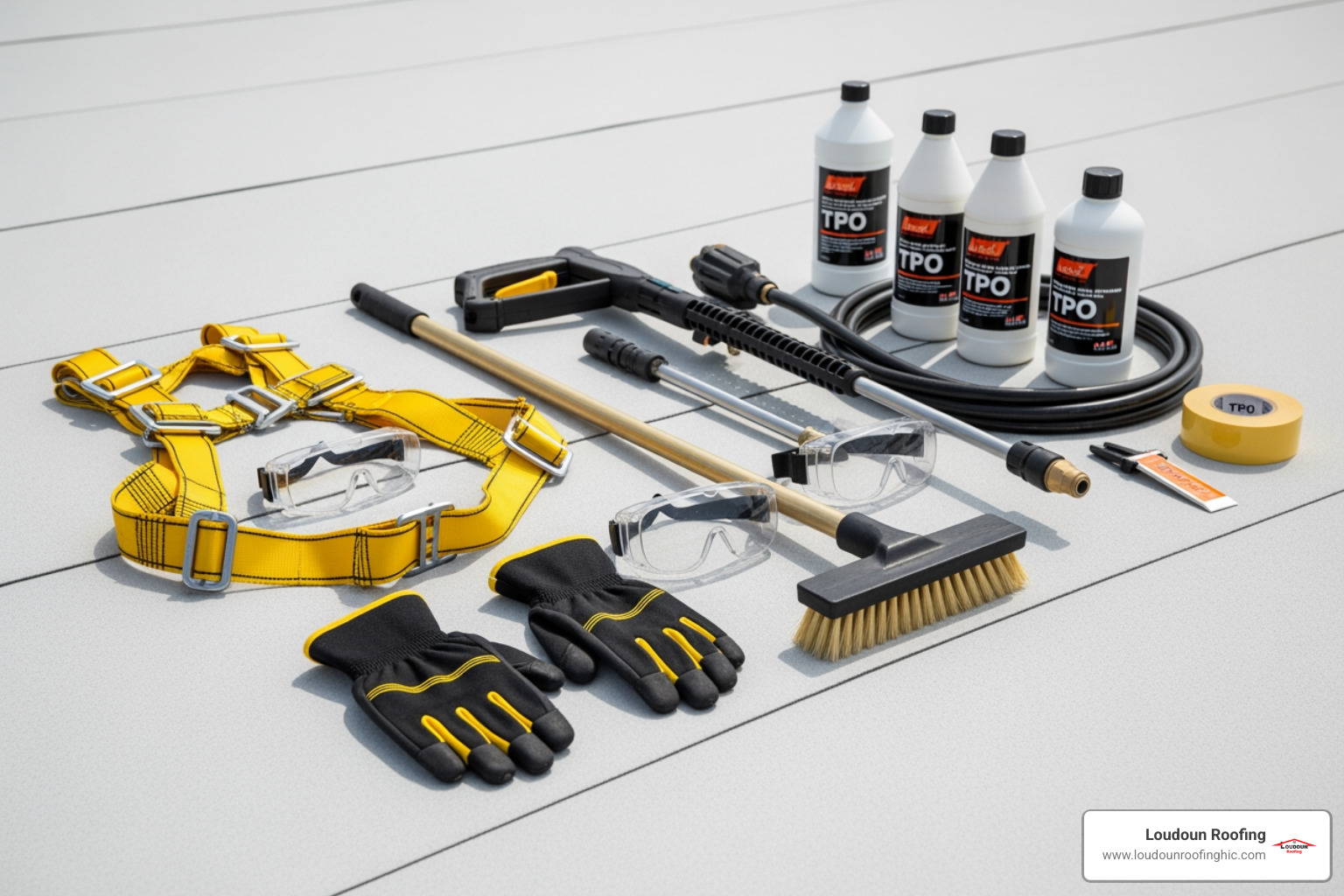
Before we even begin talking about cleaning, safety is paramount. Working on a roof, especially a commercial one, carries inherent risks. Always prioritize safety by wearing a safety harness when working at heights, checking weather conditions, ensuring your ladder is secure, wearing non-slip shoes with good gripping soles, and ideally, having a partner on site.
Here’s a list of the essential tools and supplies we recommend for proper TPO roof care and cleaning:
- Sturdy Ladder & Safety Harness: For safe access and fall prevention.
- Non-slip Shoes, Gloves, Goggles: Essential personal protective equipment.
- Soft-bristle Broom or Leaf Blower: For initial debris removal.
- Soft-bristle Brush or Microfiber Mop: For gentle scrubbing.
- Garden Hose with Spray Nozzle: For rinsing.
- Low-Pressure Washer (800-1,500 PSI): Optional, but helpful for larger roofs or tougher stains. Crucially, ensure it’s under 2,000 PSI.
- Bucket: For mixing cleaning solutions.
- TPO-Safe Cleaning Solution: Mild, non-abrasive detergents (like a mild household detergent mixed with water, or products like Murphy Oil Soap or Simple Green are often suitable, but always check with your TPO manufacturer first). For organic growth like algae or mildew, a diluted hydrogen peroxide solution can be effective.
- TPO Repair Tape, TPO Seam Adhesive, Roofing Caulk: For minor, immediate repairs identified during inspection.
- Utility Knife, Tape Measure, Caulk Gun: For repair tasks.
Cleaners to Avoid: Just as important as knowing what to use is knowing what not to use. Avoid petroleum-based products, chlorine bleach, acetone, and abrasive cleaners, as these can break down the TPO membrane’s chemical structure. Harsh chemicals and stiff-bristled brushes, metal tools, or high-pressure washing equipment can physically damage the membrane, potentially voiding your warranty and leading to leaks. Even roofing cement, commonly used on other roof types, is not compatible with TPO and should be avoided for repairs.
A Step-by-Step Guide to Cleaning Your TPO Roof
With your safety gear on and tools ready, let’s walk through the steps for effectively cleaning your TPO roof:
- Safety First, Always: Re-confirm your safety setup. Ensure your ladder is stable, your harness is secure, and you have a partner if possible. Never work on a wet or slippery roof.
- Protect Surrounding Areas: Before you start, protect low curbs, base flashing, and any surrounding vegetation from cleaning solutions and runoff. This prevents water from entering sensitive areas and chemicals from harming plants.
- Initial Debris Removal: Use a soft-bristle broom or a leaf blower to clear away loose leaves, twigs, dirt, and other debris from the entire roof surface. Pay special attention to drainage areas to ensure they are clear. Be careful not to use sharp objects that could puncture the membrane.
- Apply Cleaning Solution: Mix your chosen TPO-safe cleaning solution (e.g., mild detergent and water) in a bucket or low-pressure sprayer. Apply it evenly across a manageable section of the roof. If dealing with stubborn organic growth like algae, allow the solution (e.g., diluted hydrogen peroxide) to sit for 10-15 minutes, but don’t let it dry completely.
- Gentle Scrubbing: Using a soft-bristle brush or microfiber mop, gently scrub the treated section with overlapping circular motions. Avoid excessive force, as you don’t want to damage the membrane. For tough spots, you may need to apply a bit more solution and scrub again.
- Thorough Rinsing: This is crucial. Rinse the cleaned section thoroughly with clean water from a garden hose, working from the highest point of the roof downward. You want to ensure all cleaning solution and loosened dirt are completely washed away.
- Low-Pressure Washing (If Needed): For larger roofs or more stubborn dirt, a low-pressure washer can be used. Set your pressure washer between 800 and 1,500 PSI, and use a wide-angle nozzle (40 degrees or wider). Maintain a distance of at least 12 to 18 inches from the roof surface. Sweep in motions following the roof’s slope, working towards the drains. Never direct the spray directly at seams, flashing, or penetrations, and keep the wand moving constantly to avoid concentrating pressure in one spot. Make multiple gentle passes rather than increasing pressure.
- Repeat and Inspect: Work in sections across the roof, repeating steps 4-7. After the entire roof is cleaned and rinsed, visually inspect for any remaining dirt or missed spots. If necessary, repeat the cleaning steps for those areas.
- Clear Drains and Gutters: As part of your cleaning process, ensure all drains, scuppers, and gutters are free of debris. This is vital for proper water runoff and preventing future pooling. For more detailed guidance, explore our roof and gutter cleaning guide.
Post-Cleaning Inspection: What to Look For in TPO Roof Care
Once your TPO roof is sparkling clean, it’s the perfect time for a detailed inspection. The clean surface makes it much easier to spot potential issues that might have been hidden by dirt and debris. This is a critical part of TPO roof care that can prevent small problems from becoming major headaches.
Here’s what we carefully check for:
- Membrane Inspection:
- Punctures or Tears: Look for any holes or rips caused by foot traffic, fallen debris, or sharp objects. Even small ones can lead to leaks.
- Blisters or Bubbles: These are raised areas where the membrane has separated from the substrate, often indicating trapped moisture or adhesion issues.
- Cracks or Discoloration: While TPO is durable, prolonged UV exposure or chemical contact can cause surface degradation, thinning, or discoloration. Look for any signs of material breakdown.
- Poor Adhesion: Check if the membrane is lifting or detaching from the underlying layers.
- Seam Integrity:
- Gaps or Separation: The seams are where TPO sheets are welded together. Look closely for any signs of separation, lifting, or gaps, which are common entry points for water.
- Cracks in Welds: Even if the seam isn’t fully separated, fine cracks in the welded area can compromise its watertight seal.
- Bubbles or Blisters along Seams: Similar to membrane blisters, these indicate potential issues with the seam bond.
- Flashing Inspection:
- Around Vents, Pipes, and HVAC Units: These penetrations are critical areas. Check for cracks, gaps, rust, or deterioration in the flashing materials. Ensure all attachment points are secure and not lifting.
- Parapets and Wall Tie-ins: Inspect where the TPO membrane transitions to vertical surfaces. Any gaps or damage here can lead to leaks.
- Drainage Check:
- Ponding Water: After a rain, or if you’ve just cleaned the roof, look for any areas where water collects and doesn’t drain within 48 hours. Ponding water significantly reduces the lifespan of the membrane.
- Clogged Drains/Scuppers: Ensure all drainage points are clear and functioning correctly.
- Roof Slope: Verify that the roof’s slope effectively directs water towards the drainage system.
Documenting your findings, ideally with photos, is a best practice. This creates a historical record of your roof’s condition over time. If you find anything concerning or prefer a professional assessment, our team provides comprehensive roof inspection services throughout Leesburg, Loudoun County, and Northern Virginia.
Identifying and Addressing Common TPO Roof Problems
Even with diligent TPO roof care, issues can arise. The key is to identify them early and address them promptly. This section helps you spot trouble before it escalates into major damage and helps you decide on the best course of action, protecting your building from water damage and expensive emergency roof repairs.
Warning Signs Your TPO Roof Needs Repair
Being able to recognize the warning signs of a compromised TPO roof can save you significant time and money. Here are the common indicators we look for during our inspections:
- Visible Damage to the Membrane:
- Punctures and Tears: These are often caused by foot traffic, dropped tools, fallen tree branches (especially common after storms in Northern Virginia), or even sharp debris carried by wind. Any visible hole, no matter how small, is a potential leak point.
- Seam Failures: Over time, or due to improper installation, the heat-welded seams can weaken, lift, or separate. Look for gaps, lifting edges, or cracking along the seam lines. This is a very common issue and a primary source of leaks.
- Blisters and Bubbling: These raised areas indicate that the membrane has lost adhesion to the substrate beneath, often due to trapped moisture or installation errors.
- UV Degradation/Shrinkage: Prolonged exposure to the sun’s harsh UV rays can cause the TPO membrane to degrade, leading to thinning, cracking, or even shrinkage. This can put stress on seams and flashing.
- Interior Signs of Trouble:
- Water Stains on Ceilings or Walls: This is the most obvious sign of a leak. Don’t ignore even small discoloration; it indicates water is getting in.
- Increased Energy Bills: If your heating or cooling costs suddenly spike without a clear reason, it could mean your TPO roof’s reflective properties are compromised, or that moisture has entered the insulation, reducing its effectiveness.
- Dampness or Musty Odors: These can indicate hidden moisture intrusion and potential mold growth within the building structure.
- Pooling Water:
- Persistent Ponding: If water remains on your TPO roof for more than 48 hours after rainfall, it indicates a drainage problem or low spots in the roof structure. This standing water accelerates membrane degradation and can lead to leaks.
DIY vs. Professional TPO Roof Repair: A TPO Roof Care Dilemma
When you spot a problem, the first question is often: can I fix this myself, or do I need a professional? While some minor issues might seem manageable, we generally recommend caution when it comes to DIY TPO roof care and repairs.
When DIY Repairs Might Be Considered (with extreme caution):
- Minor Punctures: For very small, isolated punctures (e.g., from a dropped screw), you might be able to use an approved TPO repair tape or patch kit. These kits typically involve cleaning the area, applying an adhesive, and pressing down a pre-cut patch.
- Small Seam Sealing: If you notice a tiny section of a seam just beginning to lift, and you have access to manufacturer-approved TPO seam adhesive, you might attempt to re-adhere it.
Crucial Considerations for DIY:
- Warranty: Many TPO manufacturers have strict warranty clauses. Improper DIY repairs, or using non-approved materials, can void your entire roof warranty. Always review your warranty documentation first.
- Safety: Working on a roof is dangerous. Even minor repairs can lead to serious injury if proper safety protocols are not followed.
- Expertise: Understanding how TPO membranes behave, how adhesives cure, and how to properly heat-weld (if applicable) requires specialized knowledge and tools.
When to Call a Professional (Highly Recommended for Most Issues):
For most TPO roof care repairs, especially beyond superficial damage, professional intervention is essential. This includes:
- Widespread Damage or Large Tears: Anything more than a small puncture typically requires professional expertise.
- Significant Water Damage: If you suspect water has penetrated beyond the membrane into the insulation or roof deck, a professional assessment is crucial to prevent structural issues.
- Seam Failures Requiring Heat-Welding: TPO seams are typically heat-welded for a watertight seal. Re-welding or repairing these requires specialized heat-welding equipment and experienced technicians to ensure a proper, lasting bond. This is not a DIY task.
- Flashing Repairs: Repairs around complex penetrations like HVAC units, skylights, or parapet walls require precision and specialized techniques to ensure water tightness.
- Unidentified Leak Sources: If you’re experiencing leaks but can’t pinpoint the exact source, a professional can use advanced techniques like infrared inspections to detect hidden moisture.
- Biological Growth: For severe algae, mold, or lichen growth that is deeply embedded or widespread, professional treatment with TPO-specific biocides is often needed.
Risks of Improper DIY Repair:
Attempting complex repairs without the right knowledge or tools can lead to:
- Voiding your warranty.
- Causing further damage to the membrane or underlying structure.
- Using incompatible materials (like roofing cement) that can degrade the TPO membrane.
- Creating new leak points that are harder and more expensive to fix later.
Professional roofers, like our team at Loudoun Roofing, have the specialized tools, approved materials, and expertise in heat-welding and proper patching techniques to ensure repairs are done correctly and last. For more information on comprehensive solutions for commercial properties, please see our page on commercial flat roof repair.
Frequently Asked Questions about TPO Roofs
We often get questions from property owners in Leesburg and across Northern Virginia about TPO roof care and maintenance. Here are some of the most common ones we address:
How long does a TPO roof last with proper care?
A properly installed TPO roof that receives regular maintenance can last between 15 and 20 years, and in some cases, even longer depending on environmental factors and the quality of the maintenance program. We’ve seen roofs exceed this expectation when homeowners and commercial property managers commit to consistent TPO roof care. Factors like our local climate in Northern Virginia, which experiences a range of temperatures and precipitation, emphasize the need for vigilant maintenance to achieve maximum lifespan. Without proper care, this lifespan can be significantly shortened.
Can you pressure wash a TPO roof?
Yes, you can pressure wash a TPO roof, but it is critical to use a low-pressure washer, typically under 2,000 PSI. We recommend keeping the pressure between 800 and 1,500 PSI. Always use a wide-angle fan tip (40 degrees or wider) and maintain a distance of at least 12 to 18 inches from the roof surface. High pressure can easily damage the membrane, lift seams, and void your warranty. Always spray with the slope of the roof and away from seams, flashing, and penetrations. Keep the wand moving constantly to avoid concentrating pressure in one spot. For general cleaning, a garden hose with a spray nozzle and a soft brush is often sufficient and safer.
What is the most important aspect of TPO roof maintenance?
While all aspects of TPO roof care are important, regular, semi-annual inspections are arguably the most critical. By inspecting your roof at least twice a year (ideally in the spring and fall), you can identify and address minor issues like small punctures, debris buildup, or early signs of seam stress before they escalate into major leaks and costly structural damage. This proactive approach allows for timely intervention, protecting your investment and extending the overall lifespan of your TPO roof. It also helps ensure that the reflective properties for energy efficiency are maintained.
Protect Your Investment with a Proactive Maintenance Plan
As we’ve discussed, proactive TPO roof care is not just an option; it’s a strategic investment. Regular maintenance extends your roof’s lifespan, preserves its energy-efficient properties, and prevents unforeseen, costly repairs. By staying ahead of potential issues, you protect your building’s structural integrity, its contents, and your bottom line.
For property owners in Leesburg, Loudoun County, and throughout Northern Virginia, partnering with a certified local commercial roofer like Loudoun Roofing ensures your TPO roof receives expert care according to manufacturer specifications. Our team has the specialized knowledge, experience, and equipment to handle all aspects of TPO roof care, from routine inspections and cleaning to complex repairs and replacements. We understand the unique challenges our local climate presents and tailor our services to provide the most effective and durable solutions.
Don’t wait for a leak to become a crisis. To learn more or to schedule a professional evaluation and set up a comprehensive maintenance plan for your TPO roof, explore our roof maintenance services today. We’re here to help you keep your TPO roof “TPO-tally awesome” for years to come!