
Why Skylights Transform Your Home Into a Brighter, More Efficient Space
Skylights for roof installations are like nature’s spotlight, allowing you to invite the sun and stars into your home while dramatically reducing your electricity bills. To get started with a trusted Northern Virginia roofing contractor, explore options that fit your home and budget. When strategically placed, these architectural gems can work wonders for your home’s energy efficiency and create a happier, more welcoming atmosphere.
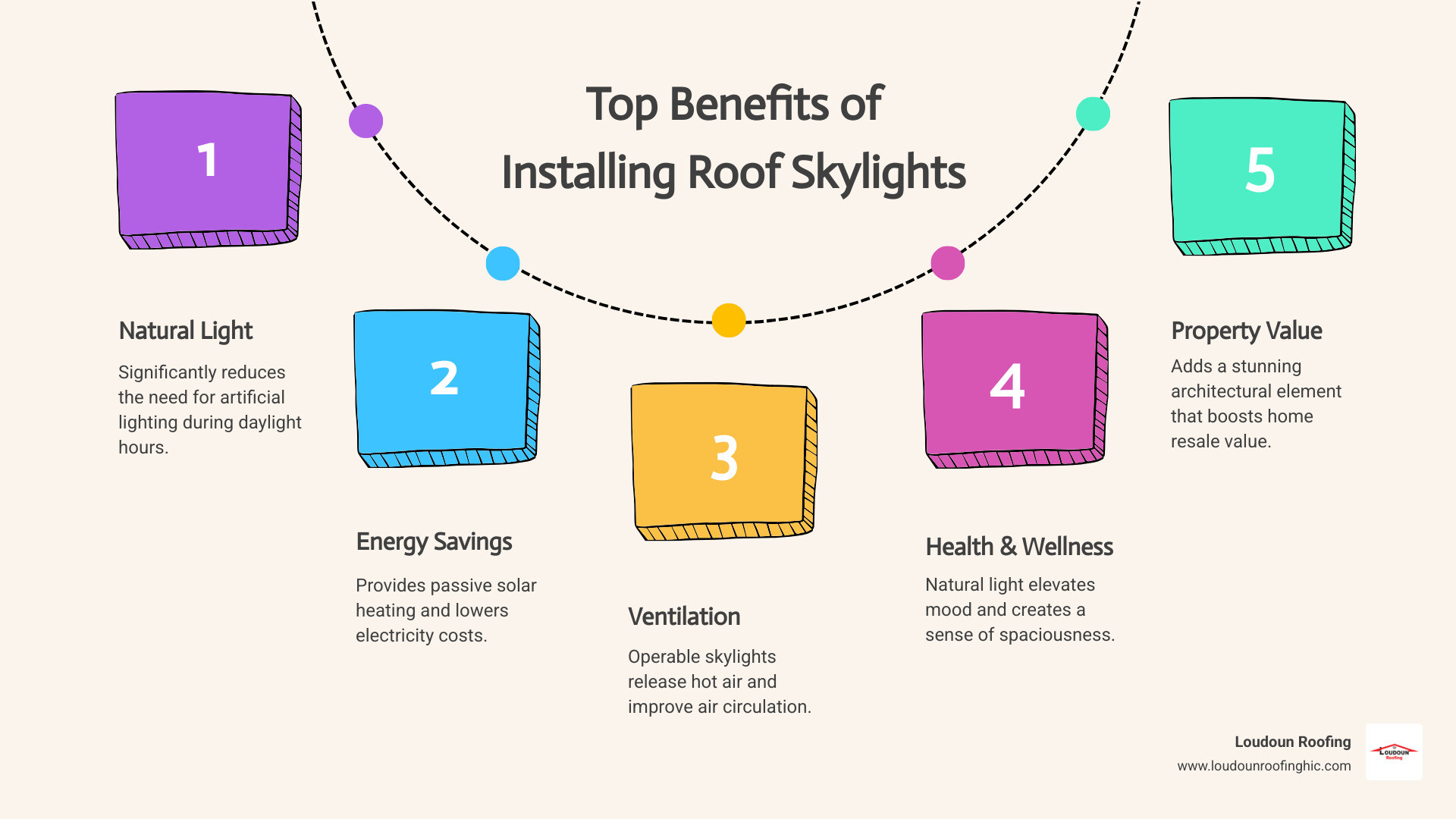
Top Benefits of Installing Roof Skylights:
- Natural Light: Significantly reduces need for artificial lighting during daylight hours
- Energy Savings: Provides passive solar heating and lowers electricity costs
- Ventilation: Operable skylights release hot air and improve air circulation
- Health & Wellness: Natural light lifts mood and creates sense of spaciousness
- Property Value: Adds stunning architectural element that boosts home resale value
According to the U.S. Department of Energy, skylight size should never exceed 5% of floor area in rooms with many windows, and no more than 15% for spaces with few windows. Whether you’re considering fixed skylights for consistent illumination, ventilating skylights for fresh air circulation, or tubular skylights for small spaces, choosing the right option depends on your specific needs and roof configuration.
For Northern Virginia homeowners, proper installation is critical to avoid water leaks – one of the most common problems with improperly installed skylights. Working with experienced roofing professionals ensures your skylight will provide years of leak-free performance.
As Esteban Marin, I’ve been installing skylights for roof applications since 2001, tackling everything from complex valley installations to challenging dormer configurations. My hands-on approach ensures every skylight project meets the highest standards for waterproofing and long-term performance.
Exploring the Main Types of Skylights
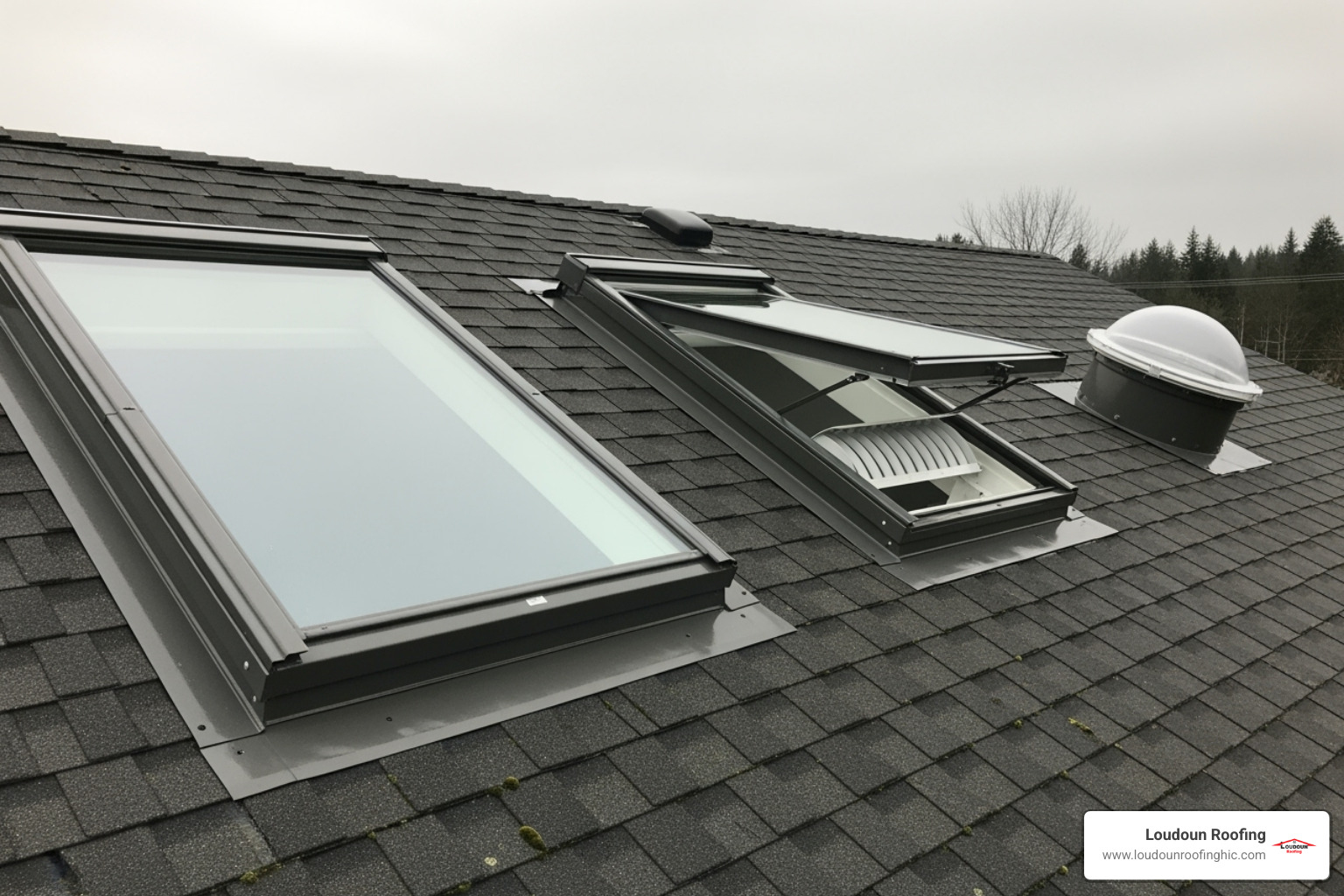
When you’re considering skylights for roof installations, you’ll quickly find there’s much more variety than you might expect. Each type serves different purposes and works better in certain situations. Let me walk you through the three main categories so you can find the perfect match for your home.
Fixed Skylights: For Uninterrupted Sunshine
Think of fixed skylights as your home’s sealed window to the sky. These beauties don’t open or close – they simply do one thing exceptionally well: flood your space with gorgeous natural light. Since they’re permanently sealed units with no moving parts, they offer maximum daylight while being incredibly energy-efficient and requiring minimal maintenance.
I love recommending fixed skylights for spaces where you want that wow factor of abundant sunshine but don’t necessarily need ventilation. They’re absolutely perfect for hallways, stairwells, and sunrooms where the goal is to eliminate dark corners and create an open, airy feeling.
The best part? They’re the most cost-effective lighting solution you’ll find. No complex mechanisms means fewer things that can go wrong, and you’ll enjoy years of beautiful natural light with virtually no upkeep.
Ventilating Skylights: For Light and Fresh Air
Now we’re talking about the multi-taskers of the skylight world! Ventilating skylights give you everything a fixed skylight offers, plus the amazing benefit of fresh air circulation. These operable units are game-changers for reducing humidity and improving indoor air quality.
You have some fantastic options when it comes to how they operate. Manual versions work with a simple crank or rod – perfect when the skylight is within easy reach. Electric models come with remote controls, which is a blessing when you’re dealing with high ceilings or hard-to-reach spots. My personal favorite? The solar-powered options that harness the sun’s energy to operate themselves.
Here’s something that’ll give you peace of mind: many of today’s ventilating skylights come with rain sensor technology. They’ll automatically close when moisture is detected, so you never have to worry about forgetting to shut them during a sudden downpour.
These are absolutely ideal for kitchens and bathrooms where you’re dealing with cooking steam, shower humidity, or lingering odors. They naturally pull hot air up and out, keeping your home more comfortable year-round. For more details about how we can help with your ventilation needs, check out more info about our roofing services.
Tubular Skylights (Sun Tunnels): For Small or Challenging Spaces
Sometimes called sun tunnels, these clever little devices are the problem-solvers of the skylight family. They don’t give you a view of the sky or provide ventilation, but they work magic in spaces where traditional skylights just won’t fit.
Here’s how they work: a reflective tube captures sunlight at roof level and channels it down through your ceiling, where a light diffuser spreads it evenly throughout the room. The result? Bright, natural illumination in spaces you never thought possible.
These are highly energy-efficient with minimal heat transfer, making them perfect for closets, hallways, and small bathrooms – especially interior spaces without direct roof access. I’ve installed these in walk-in closets where homeowners can finally see their clothes properly, and in windowless powder rooms that went from feeling like caves to bright, welcoming spaces.
The beauty of tubular skylights is their versatility. They can steer around obstacles in your attic and bring light to areas that seemed destined to rely on artificial lighting forever.
A Guide to Choosing the Best Skylights for Roof Performance
Selecting the right skylights for roof installation involves more than just picking a type. The materials, energy ratings, shapes, and sizing all work together to determine how well your skylight will perform over the years. Let’s explore what really matters when making this important decision for your home.
Glazing and Materials: Glass vs. Plastic
The heart of any skylight is its glazing material, and this choice will affect everything from durability to your energy bills. We typically work with two main categories, each with distinct advantages.
Plastic glazing offers some compelling benefits, especially for budget-conscious homeowners. Acrylic options are lighter and less expensive than glass, making installation easier. However, they can scratch easily and may become brittle or discolored over time. Without special coatings, most UV rays pass right through, which can fade your furniture and flooring.
Polycarbonate is the tougher cousin in the plastic family. It offers excellent impact resistance – perfect if you live in an area prone to hail storms. While it’s more durable than acrylic, it can still scratch and some types may yellow with age. The good news? It’s incredibly resilient when Mother Nature throws her worst at it.
Glass glazing costs more upfront, but it’s an investment that pays off in longevity and clarity. Glass doesn’t discolor or scratch as easily, maintaining its crystal-clear appearance for decades. For safety reasons, all skylight glass must be safety glazing – either tempered glass that shatters into small, safe pieces, or laminated glass that holds together even when broken thanks to a protective interlayer.
In our experience, most homeowners are happiest with glass skylights. They look better longer and provide that pristine view of the sky that makes the investment worthwhile.
Understanding Energy Efficiency Ratings
Here in Northern Virginia, where we experience everything from sweltering summers to chilly winters, energy efficiency isn’t just nice to have – it’s essential. Modern skylights for roof applications come packed with technologies designed to keep your home comfortable year-round.
Low-E glass coatings are like invisible shields for your skylight. These microscopic layers reflect heat, keeping summer sun from overheating your home while bouncing your indoor heat back inside during winter. Combined with argon gas filling between glass panes, these features dramatically improve insulation.
The numbers that matter most are the U-factor and Solar Heat Gain Coefficient (SHGC). Think of U-factor as your skylight’s report card for preventing heat loss – lower numbers mean better insulation. SHGC tells you how much solar heat gets through – crucial for managing cooling costs during our humid Virginia summers.
Look for the ENERGY STAR label as your guide. These skylights meet strict efficiency standards based on our regional climate. For detailed information about these ratings, check out the National Fenestration Rating Council (NFRC).
Don’t overlook integrated blinds or shades, especially exterior ones. They’re incredibly effective at blocking heat before it enters your home, giving you control over both light and temperature throughout the day.
How Shape and Size Impact Your Space
The shape of your skylight affects both its visual impact and how it distributes light throughout your room. Flat skylights follow your roof’s natural pitch and blend seamlessly with the roofline, while dome shapes shed water beautifully and capture light from wider angles throughout the day.
Pyramid skylights create dramatic lighting effects and are particularly stunning in larger spaces, while round skylights add a unique architectural element that can become a real conversation piece. Each shape influences how light spreads through your room and contributes to your home’s overall aesthetic.
Getting the size right is crucial for comfort and efficiency. We follow a proven sizing rule of thumb: skylight area should never exceed 5% of floor area in rooms with many windows, or 15% of floor area for spaces with few windows. This prevents your room from feeling like a greenhouse in summer or losing too much heat in winter.
These guidelines ensure you get plenty of natural light without the temperature extremes that can make spaces uncomfortable or drive up energy costs.
Professional Installation: The Key to a Leak-Free, Lasting Skylight
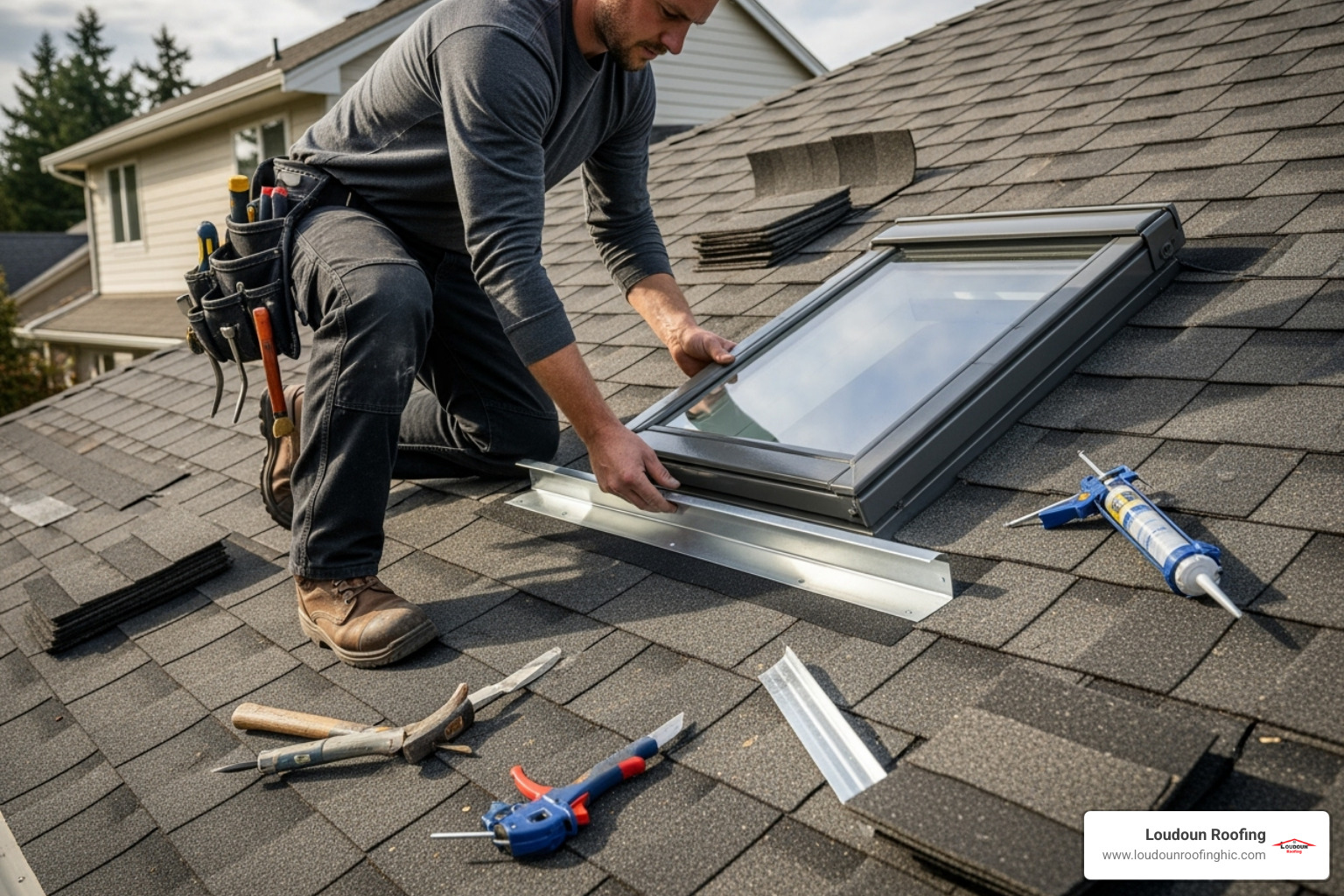
Even the highest quality skylights for roof applications can fail if not installed correctly. Think of it this way: you wouldn’t trust just anyone to perform surgery, so why trust just anyone to cut a hole in your roof? Proper installation is absolutely critical for a leak-free, long-lasting skylight that protects your home’s integrity and maximizes energy efficiency.
As experienced roofing professionals in Leesburg, VA, we’ve seen too many skylight disasters caused by poor installation. Water damage, air leaks, and structural problems can all be avoided when the job is done right the first time.
Optimal Placement and Roof Slope for Maximum Benefit
Where you place your skylight on the roof makes a huge difference in how it performs. It’s not just about finding a convenient spot – the orientation and angle directly impact how much light and heat your skylight will provide throughout the year.
Roof orientation is like choosing the best seat in a theater. North-facing skylights give you steady, cool light all day long – perfect for art studios or home offices where you want consistent illumination without glare. East-facing installations capture beautiful morning sunshine, making them ideal for kitchens where you want that cheerful wake-up light with your coffee.
South-facing skylights are the workhorses of passive solar heating. They’ll help warm your home naturally during winter months, but they can turn your space into an oven during summer without proper shading. West-facing skylights deliver intense afternoon light and heat – great if you love dramatic sunset views, but they require careful consideration for summer comfort.
Roof slope is equally important for skylights for roof performance. The optimal angle is typically your geographical latitude plus 5 to 15 degrees. Here in Northern Virginia, that means a slope between 44 and 54 degrees works best for maximizing winter solar gain while minimizing excessive summer heat.
This strategic planning is part of our comprehensive roof installation process, ensuring your skylight works with nature instead of against it.
Critical Moisture Control: Flashing and Sealing
Here’s where many skylight installations go wrong: moisture control. Water leaks are the number one complaint we hear about skylights, and almost every single case traces back to improper installation. The good news? These problems are completely preventable with the right expertise.
Proper mounting starts the process correctly. We typically use either curb-mounted systems, where the skylight sits on a raised wooden frame, or deck-mounted installations that sit directly on the roof deck. Each method has specific requirements for waterproofing, and choosing the wrong approach can spell disaster.
Flashing is absolutely critical – it’s the metal barrier system that directs water away from the skylight opening. Poor flashing work is like leaving your front door open during a rainstorm. Our expertise in roof and window flashing means we know exactly how to layer and seal these components with your existing roof system.
Waterproofing membranes provide that extra insurance policy. We apply sheet waterproofing materials over the skylight flanges and under your roofing material, creating multiple barriers against water penetration. This is especially important in areas prone to ice dams or heavy storms.
Air sealing prevents condensation problems that can damage your home’s structure and reduce energy efficiency. We carefully insulate and seal the skylight shaft in your attic, stopping unwanted air movement that can cause moisture issues.
The bottom line? Professional expertise makes all the difference. We’ve been installing skylights for roof applications since 2001, and we follow manufacturer guidelines religiously while applying real-world experience to every installation. Every detail matters, from the initial roof opening to the final weatherproof seal.
Frequently Asked Questions About Roof Skylights
How much does a skylight installation cost?
When homeowners ask about the cost of skylights for roof installations, I always tell them it’s like asking “How much does a car cost?” – there are so many variables that influence the final price. Let me break down what affects your investment.
The type of skylight you choose makes the biggest difference in cost. Fixed skylights are your most budget-friendly option since they’re essentially a sealed window in your roof. Ventilating skylights cost more because of their operating mechanisms, whether that’s a simple manual crank or a sophisticated solar-powered motor with rain sensors.
Size and glazing options also impact your budget significantly. A small tubular skylight will cost much less than a large pyramid-shaped unit with laminated Low-E glass and argon filling. Those energy-efficient features add to the upfront cost but pay dividends in reduced energy bills over time.
Your roof’s complexity plays a major role in labor costs too. Installing a skylight on a simple gabled roof with asphalt shingles is straightforward. But if you have a steeply pitched metal roof or complex framing, that requires more specialized work and time.
Here’s what I always emphasize: a skylight is an investment that can increase home value and reduce long-term energy bills. The natural daylighting alone can dramatically cut your electricity costs, and the boost to your home’s appeal is undeniable. We provide free estimates so you know exactly what to expect for your specific project.
Can a skylight be installed on any roof?
This is one of the most practical questions we get, and the honest answer is that most roofs can accommodate skylights, but not all situations are created equal.
Pitched roofs are ideal for skylight installations because they naturally shed water – exactly what we want. Whether you have asphalt shingles, metal panels, or clay tiles, we have proven flashing systems that work beautifully with each material.
Flat roofs present more challenges but are absolutely doable. We use specially designed skylights with curved or domed shapes that prevent water from pooling. The key is proper curb mounting and meticulous flashing work.
The real consideration is what’s happening inside your roof structure. Rafters and trusses might need modification, and we need to plan where the light shaft will run through your attic and ceiling. Sometimes what looks simple from the outside requires creative problem-solving on the inside.
Professional assessment is crucial to determine feasibility and the correct installation method for your specific roof structure. During our consultation, we’ll climb up there, take measurements, and give you honest feedback about what’s possible. We never recommend a skylight installation unless we’re confident it will perform flawlessly for decades.
How long do skylights last and what maintenance is needed?
Quality skylights for roof applications are built to last, and with proper installation and minimal maintenance, they’ll brighten your home for many years to come.
Most skylights last 20-30 years, often matching the lifespan of your roofing material. The key factors are material quality and installation expertise. Glass skylights consistently outlast plastic ones – they don’t scratch, discolor, or become brittle over time like some acrylics can.
Installation quality is absolutely critical here. A perfectly manufactured skylight can fail in just a few years if it’s installed poorly, while a properly installed unit will keep performing long after you’ve forgotten the installation cost.
The good news is that skylights need very little maintenance. Regular cleaning keeps them looking great and maximizes light transmission – just hose off debris and clean the glass like any other window. Inspection of seals and flashing should happen annually or after severe storms. Look for any cracks, wear, or lifting around the roof flashing.
If you have ventilating skylights, keep the operating mechanisms working smoothly with occasional cleaning and lubrication according to the manufacturer’s instructions.
When issues do arise, quick attention prevents small problems from becoming expensive headaches. If you notice any signs of wear or leaks, don’t wait – Read our roof skylight repair ultimate guide for detailed guidance on keeping your skylights in perfect condition.
Conclusion: Let the Light In with Confidence
Installing skylights for roof applications is one of those home improvements that delivers benefits you’ll appreciate every single day. Whether you’re sipping your morning coffee under the gentle glow of a north-facing fixed skylight or enjoying fresh air circulation from a solar-powered ventilating unit, these architectural gems truly transform how you experience your home.
Throughout this guide, we’ve covered everything you need to make an informed decision. The durability of safety glass glazing ensures your investment will last decades, while energy-efficient features like Low-E coatings and argon gas filling help keep your utility bills in check. The shape and size you choose will create the perfect balance of natural light without turning your room into a greenhouse.
But here’s the thing that really matters: professional installation is absolutely critical. We’ve seen too many beautiful skylights turn into expensive headaches because of poor installation. Water leaks, air gaps, and improper flashing can quickly transform your dream skylight into a nightmare. That’s why choosing experienced professionals who understand the intricacies of roofing systems makes all the difference.
For homeowners throughout Leesburg, VA, and the surrounding Northern Virginia communities, you deserve skylights that perform flawlessly for decades. At Loudoun Roofing, we’ve been perfecting our skylight installation process since 2001, and we understand exactly what it takes to create a leak-proof, energy-efficient installation that adds real value to your home.
Ready to brighten your home with confidence? Learn more about our professional Skylights services and request your free estimate today. Let’s bring some sunshine into your life – the right way.