

Why Skylight Leak Repair Demands Immediate Attention
Skylight leak repair becomes urgent when you see water stains on the ceiling, notice drips during rain, or find damaged flashing. Common fixes include resealing gaps, repairing flashing, clearing debris, and replacing weatherstripping. While minor leaks can be a DIY project, persistent issues, cracked glass, or old skylights often require professional help. For homeowners in Northern Virginia, understanding these issues is the first step toward protecting your home, and finding a trusted partner for comprehensive residential and commercial roofing services is key to a lasting solution.
Quick Skylight Leak Repair Checklist:
- Rule out condensation – Check if moisture is on the glass (condensation) or walls/ceiling (leak).
- Inspect the flashing – Look for gaps, cracks, or lifted metal around the skylight.
- Clean debris – Remove leaves and dirt from the frame and drainage channels.
- Check seals – Examine weatherstripping and caulk for deterioration.
- Apply sealant – Use roof cement for flashing or clear silicone for glass-to-frame joints.
- Replace if old – Consider replacement if the skylight is over 20 years old or has cracked glass.
What begins as a small stain can quickly escalate into rotted roof decking, damaged insulation, and mold growth. Repair costs for leaking skylights range from $50 to $1,500, but ignoring the problem leads to exponentially higher bills. Skylights are natural weak points on a roof, but most leaks stem from common, fixable causes like worn seals or damaged flashing. The key is to act quickly.
Find more about skylight leak repair:
Is It a Leak or Just Condensation? Diagnosing Your Skylight Issue
Before starting a repair, you must determine if you have a leak or just condensation. A leak means water from outside is getting in, while condensation is moisture from inside your home collecting on the cold skylight glass.
Water stains on your ceiling or walls are clear signs of a leak. You may also see drips during rain or notice a musty odor, which indicates mold growth. These signs mean water is traveling from the outside in.
Condensation appears as moisture forming directly on the glass surface, which can happen even on dry days. It is most common in rooms with high humidity, like bathrooms and kitchens, or in homes with poor ventilation. If you see water only on the glass, condensation is the likely culprit.
Understanding your skylight’s anatomy—the curb (support frame), lens (glass), and flashing (waterproof strips)—helps with diagnosis. For a deeper look at how these systems work, visit our page on skylights.
| Feature | True Leak | Condensation |
|---|---|---|
| Visible Water | Drips from frame, ceiling, or walls; water stains on drywall | Moisture on glass surface; collects at glass edges |
| Timing | During rain, snowmelt, or immediately after storms | Can occur on dry days, especially in humid conditions |
| Location | Frame, ceiling, walls, or surrounding drywall | Primarily on the glass pane itself |
| Associated Issues | Damaged flashing, deteriorated seals, musty odors, structural concerns | Foggy glass, high indoor humidity, poor air circulation |
| Solution | External repair of flashing, seals, or roof components | Improve ventilation, reduce humidity, use dehumidifiers |
Common Causes of Skylight Leaks
Most skylight leaks trace back to a few common problems:
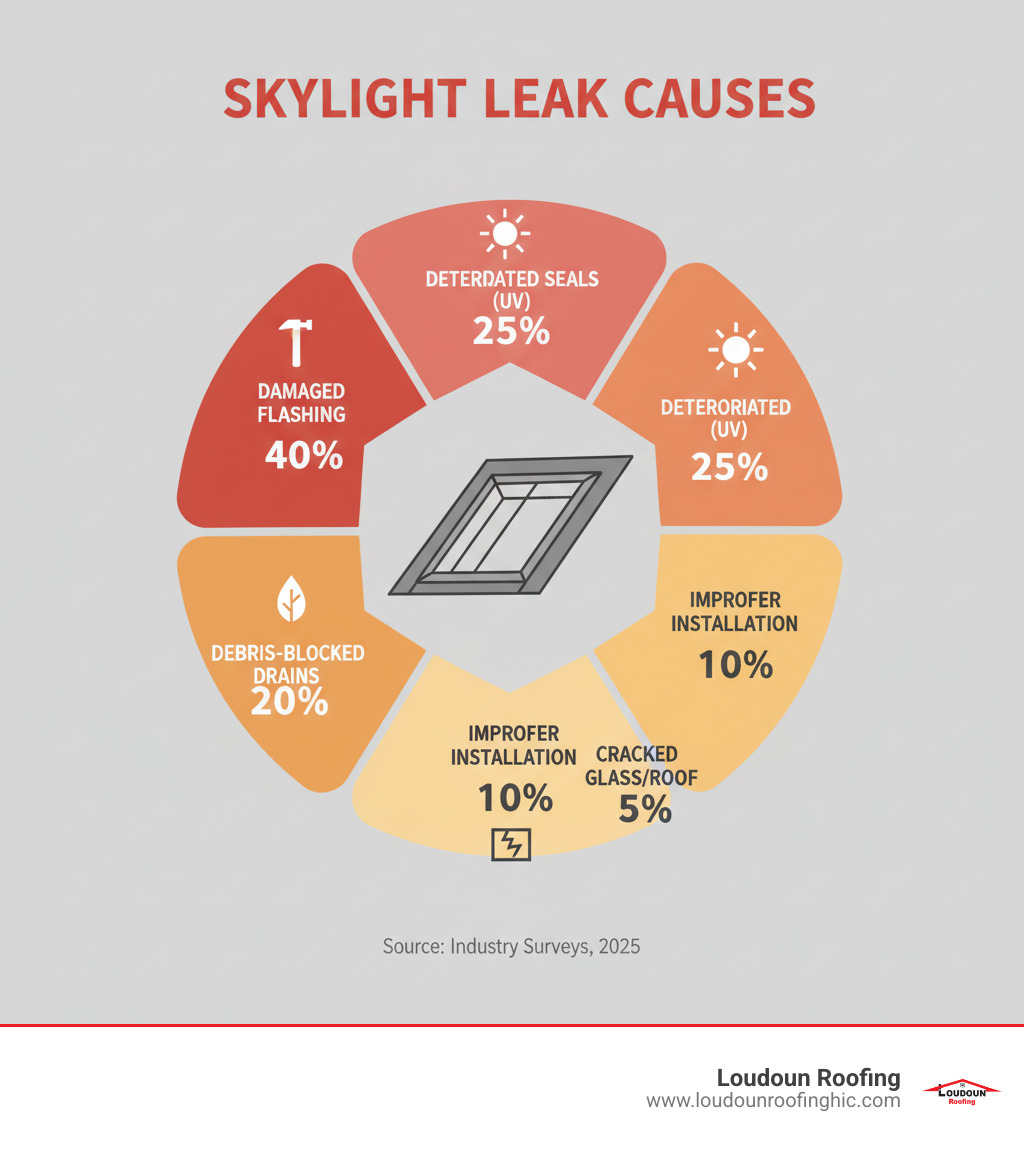
- Improper installation: Incorrect sealing or flashing techniques during installation almost guarantee future leaks.
- Damaged flashing: This is the most frequent cause. The metal strips that channel water away can get bent, cracked, or corroded, allowing water intrusion. Understanding proper roof and window flashing is key.
- Degraded seals: UV rays and weather cause the seals around the glass to dry out and crack over time, creating entry points for water.
- Cracked skylight glass: Hail, falling branches, or thermal stress can crack the glass or dome, compromising the waterproof barrier.
- Debris buildup: Leaves and twigs clog drainage channels (weep holes), causing water to pool and seep under the flashing.
- Damaged shingles: Damaged shingles around the skylight can let water in underneath, which then travels to the skylight opening.
- Age-related failure: Skylights last 15-30 years. As they age, materials become brittle and seals fail. If your skylight is over 20 years old, replacement is often a better long-term solution than repeated repairs.
The Dangers of Ignoring a Leak
Ignoring a small drip can lead to severe and costly consequences:
- Structural rot: Water seeping into roof decking and joists causes wood to decay, compromising your home’s structural integrity.
- Mold and mildew growth: Damp environments are breeding grounds for mold, which poses health risks and requires expensive remediation.
- Damaged insulation: Wet insulation loses its effectiveness, driving up your energy bills.
- Compromised drywall and interior finishes: Prolonged moisture will stain, soften, and eventually destroy drywall and paint.
- Electrical hazards: Water contacting ceiling wiring creates a serious risk of short circuits and electrical fires.
- Costly future repairs: A minor sealing job can escalate into a major project involving structural work and mold remediation. Prompt skylight leak repair is an investment that protects your home. If the leak is from a storm, our storm hail damage services can help.
Essential Safety and Preparation for Skylight Leak Repair
Working on a roof is inherently dangerous. A fall from even a low height can be serious, so safety must be your top priority. If your roof has a steep pitch (over 35 degrees) or you’re uncomfortable with heights, it is always best to schedule a professional roof inspection.
Safety First
Only work on a dry, clear day with minimal wind. When using an extension ladder, place the base one foot out for every four feet of height and ensure it extends three feet above the roofline. Always maintain three points of contact when climbing.
On the roof, wear non-slip, closed-toed shoes. A roof safety harness is essential for sloped roofs. Never work alone, and critically, never step, sit, or walk on a skylight—it is not designed to support weight. For official guidelines, please review OSHA fall prevention and roof safety procedures.

Gathering Your Tools and Materials
Having the right tools makes the job safer and more effective. Your essential toolkit should include:
- Safety Gear: Non-slip shoes, work gloves, safety glasses, and a roof safety harness.
- Cleaning Tools: A stiff brush, rags, and rubbing alcohol or acetone to prepare surfaces.
- Repair Tools: A caulk gun and a putty knife or scraper.
- Sealants: Use roofing cement caulk for flashing and clear 100% silicone caulk for glass-to-frame joints. Do not use acrylic or latex caulk.
- Other Supplies: Masking tape for clean lines and a plastic tarp for temporary emergency covers.
If at any point you feel uncertain, call a professional. Your safety is more important than any DIY repair.
A Step-by-Step Guide to DIY Skylight Leak Repair
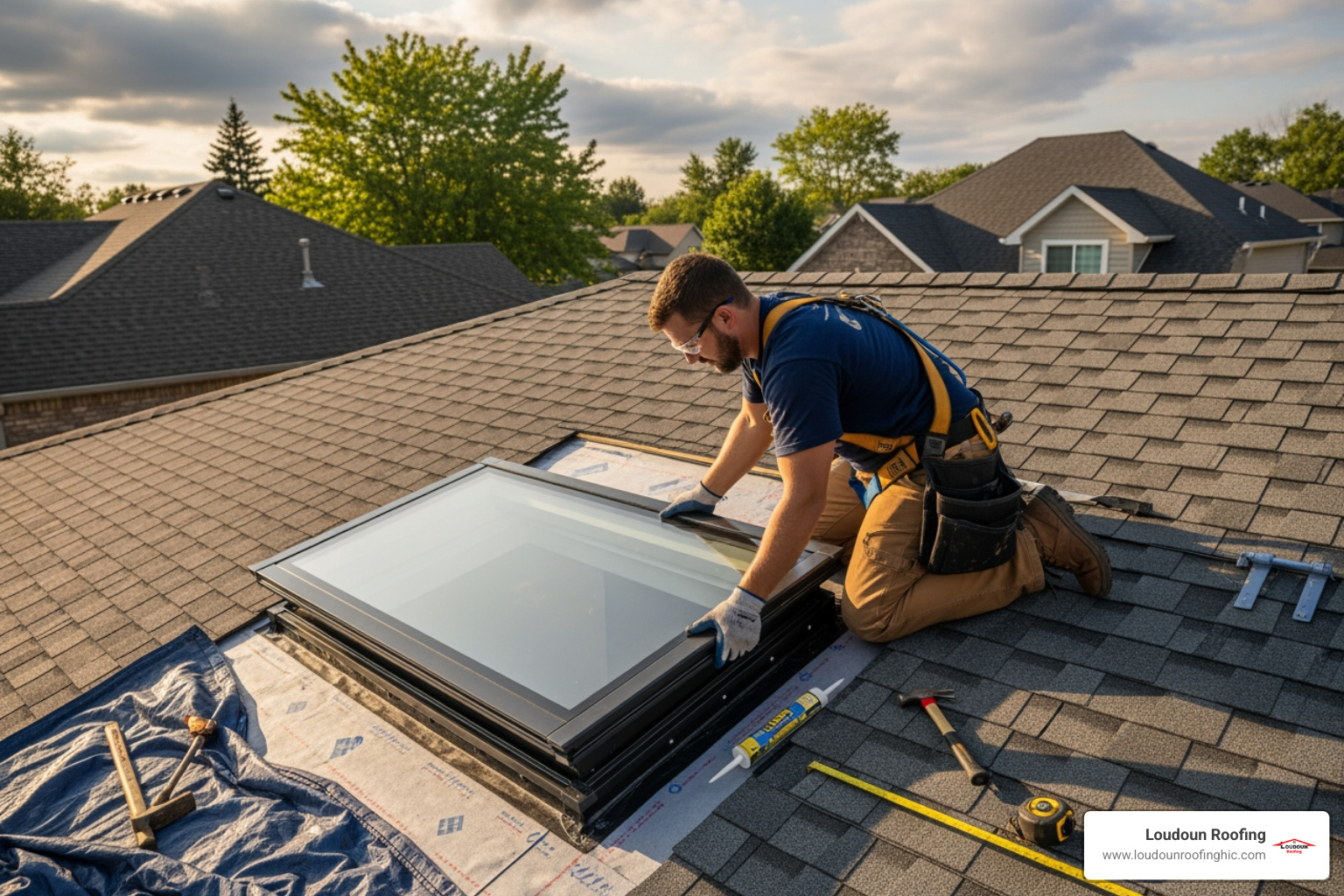
For minor leaks, a DIY repair can be a cost-effective solution if you are comfortable working on your roof and need professional roofing services. Always work on a dry, clear day, and allow at least 24 hours for sealant to cure.
First, clean the entire area around the skylight with a stiff brush, removing all leaves, dirt, and debris. This uncovers the true source of the leak and ensures sealant will adhere properly. Once clean, carefully inspect the perimeter to locate gaps in the sealant, lifted flashing, or cracks.
Step 1: Inspecting Flashing, Gaskets, and Weep Holes
Most leaks originate where the skylight meets the roof. Your inspection should focus on the flashing, as this is the source of roughly 40% of all skylight leaks.
- Flashing Inspection: Look for lifted, cracked, or rusted sections of the metal flashing. Pay close attention to corners and seams. Nail holes through the flashing are a sign of improper installation and a likely leak source.
- Gasket Condition: Check the rubber seals between the glass and frame. If they are hard, brittle, or cracked, they need to be replaced.
- Weep Holes: Clear any debris from the small drainage channels at the bottom of the skylight frame using a small wire. Clogged weep holes cause water to back up and leak inside.
- Surrounding Shingles: Examine the shingles above the skylight. Damaged or missing shingles can channel water toward the skylight, mimicking a skylight leak. If you see widespread damage, you may need comprehensive roof and gutter repair.
Step 2: Applying Sealant for a Watertight Skylight Leak Repair
Properly sealing the leak requires the right sealant and meticulous surface preparation. Skipping these steps will likely lead to a failed repair.
- Prepare the Surface: Use a putty knife to scrape away all old, cracked, or loose caulk. Clean the area thoroughly with a rag and rubbing alcohol to remove any dirt or oils. The surface must be completely dry.
- Choose the Right Sealant: Use roof cement for gaps in the flashing or under shingles. For the joint where the glass meets the frame, use a clear, 100% silicone sealant.
- Apply the Sealant: Cut the caulk tube tip at a 45-degree angle. Apply a smooth, continuous bead of sealant into the gap. Use a wet finger or caulking tool to smooth the bead, pressing it firmly into the joint.
- Allow Curing Time: Let the sealant cure for at least 24 hours, or as directed by the manufacturer, before it is exposed to rain.
Step 3: Implementing a Temporary Skylight Leak Repair Solution
If you find a major leak during a storm or cannot perform an immediate repair, a temporary fix is necessary to prevent further water damage.
Cover the entire skylight from the outside with a heavy-duty plastic tarp, extending it at least two feet beyond the skylight on all sides. Secure the tarp’s edges with bricks or sandbags placed on the roof surface, never on the skylight glass. This temporary fix buys you time to schedule a proper repair. For urgent situations that feel unsafe, call for emergency roof repair to prevent a minor issue from becoming a disaster.
When to Repair vs. Replace: Knowing When to Call a Professional
While DIY repairs can handle minor issues, some problems demand professional expertise. Deciding between repairing and replacing a skylight can be tough, but a few key factors make the choice clear.
Consider Replacement If:
- The Skylight is Old: If your skylight is over 20 years old and leaking, replacement is usually the best investment. Modern skylights offer superior energy efficiency, which can lower utility bills.
- The Glass is Cracked: Cracked or broken glass requires a full replacement. A crack compromises the skylight’s structural integrity, insulation, and safety.
- Seals Have Failed: Widespread seal failure, often indicated by condensation trapped between glass panes (fogging), cannot be fixed with caulk. This signifies a failed insulated glass unit that must be replaced.
- Flashing is Severely Damaged: Extensively corroded or improperly installed flashing often requires a complete tear-out. At this point, it’s cost-effective to replace the entire skylight unit at the same time.
Repair Costs vs. Replacement Costs
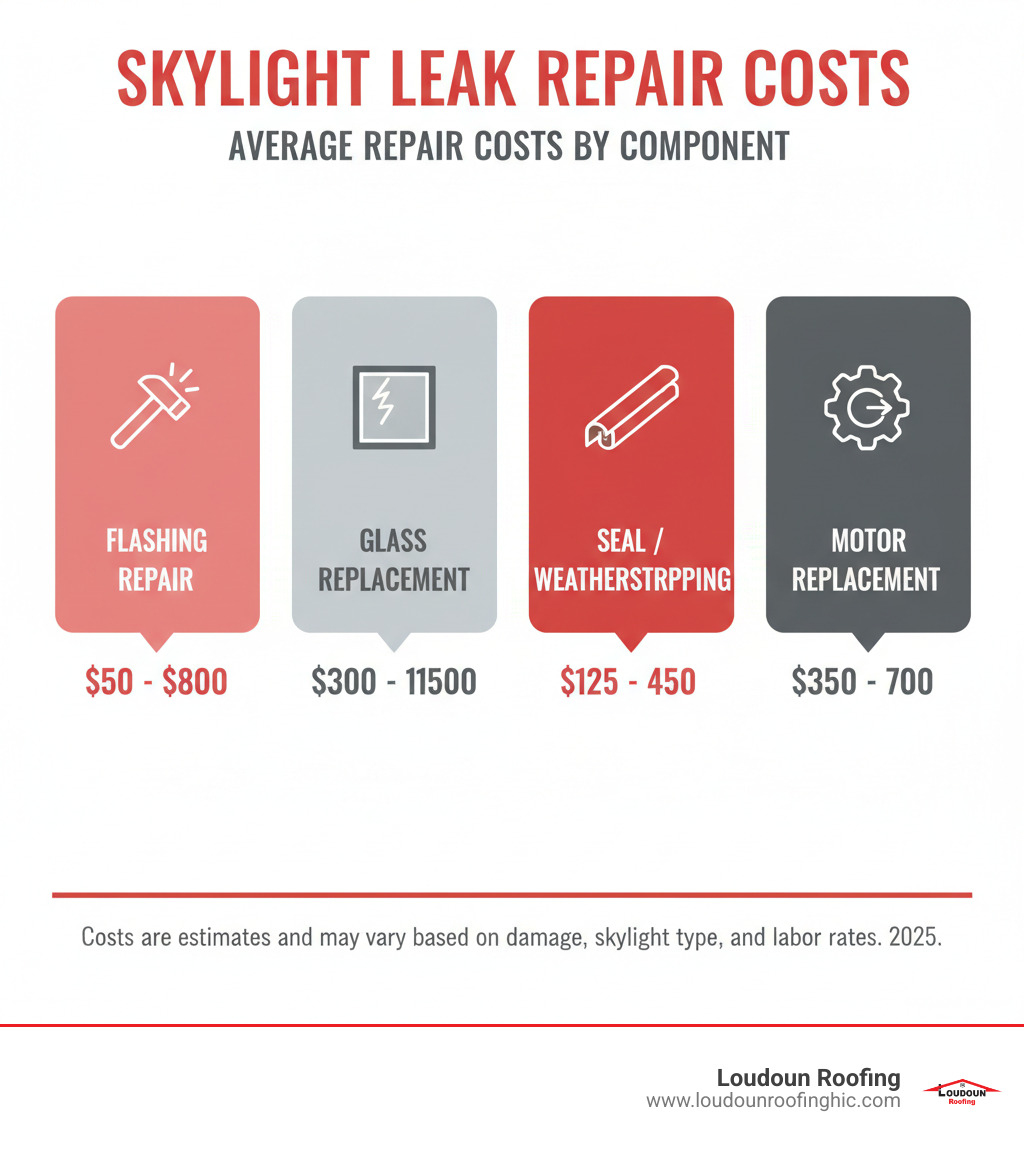
Compare the cost of repairs to a full replacement. A professional skylight leak repair can cost $350 to $1,500, while a full replacement is typically $800 to $2,400. If you are facing repeated, costly repairs on an old unit, you are likely throwing good money after bad. In this case, replacement is the more economical choice.
Replacing your skylight is also an upgrade. Today’s models offer superior styling, improved energy efficiency, and advanced leakproof flashing systems. Our team specializes in skylight installation and can guide you through the best options for your home.
If you are already planning a full roof replacement, that is the ideal time to replace your skylights. This ensures perfect integration and saves on labor costs, resulting in a completely refreshed, watertight roof.
Frequently Asked Questions about Skylight Leaks
Why does my skylight only leak during heavy rain?
Heavy, wind-driven rain can force water through minor imperfections in flashing or seals that don’t leak under normal conditions. This issue is often caused by faulty flashing, a low roof slope, or debris clogging drainage channels, which causes water to back up and find an entry point.
What is the average cost to repair a leaking skylight?
The average cost for a professional skylight leak repair is $350 to $800, but can exceed $1,500. The final price depends on the leak’s cause, skylight type, roof accessibility, and if surrounding materials need repair. For example, minor flashing repairs are less expensive than a full glass replacement.
Can I use roofing tar to fix a skylight leak?
Roofing tar (cement) should only be used for specific flashing repairs, typically under shingles. It should never be applied to the glass or frame. For sealing the joint between the glass and frame, use a clear, 100% silicone caulk, which provides a durable, flexible, and clean seal. Using the wrong product can cause damage or look unsightly.
Your Trusted Partner for Skylight and Roof Repairs
Fixing a leaking skylight promptly is crucial to protecting your home’s integrity and value. This guide has walked you through diagnosing issues, performing DIY repairs, and recognizing when to call a professional.
However, many skylight leak repair jobs are beyond a DIY scope. Complex leaks, structural damage, or full replacements require the specialized tools and safety protocols of a professional roofer. If you are uncomfortable working at heights, calling an expert is the safest choice. Your safety is paramount.
That’s where we come in. At Loudoun Roofing, we have served homeowners across Leesburg and Northern Virginia since 2001. We’ve seen every type of skylight problem and provide durable, expertly crafted solutions backed by industry-leading warranties. We believe every homeowner in Loudoun County deserves a leak-free home. Our goal is transparency—we’ll never recommend a replacement when a repair will suffice, nor will we patch a problem that needs a permanent solution.
Don’t let a small drip turn into a major headache. Water damage compounds quickly, escalating a minor inconvenience into thousands of dollars in repairs. Acting promptly protects your home, family, and financial investment.
For a thorough and dependable evaluation of your skylight or any roofing concern, reach out to Loudoun Roofing today for a free roof estimate. We’ll assess the situation honestly, explain your options clearly, and provide a solution that fits your needs and budget for expert roof repair in Leesburg, VA.