
Why Quick Leak Repairs Matter for Your Roof’s Health
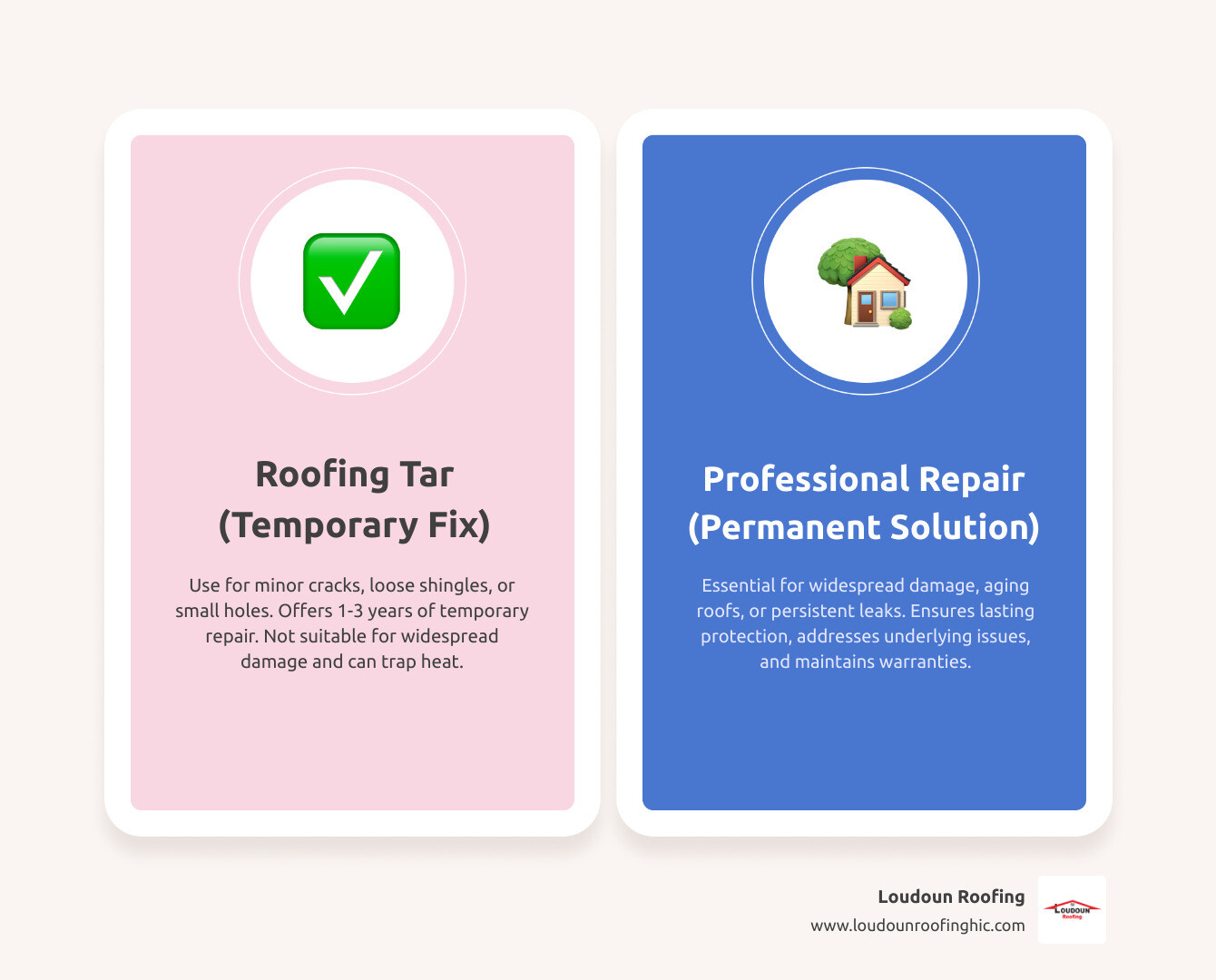
When you spot a leak, roofing tar on shingles can be an effective emergency repair for minor damage on asphalt roofs. Acting fast prevents costly interior damage, and for homeowners in Northern Virginia, a trusted Loudoun County roofing company can provide expert guidance. However, it’s important to understand that roofing tar is a temporary fix—the “duct tape” of roofing. It’s a quick, cheap band-aid, not a permanent cure.
Key Uses for Roofing Tar:
- Small crack repairs: Fill hairline cracks in shingles.
- Loose shingle securing: Reattach lifted or curled shingle tabs.
- Minor hole patching: Cover nail holes or small punctures.
- Flashing gaps: Seal small gaps around chimneys and vents.
Important Limitations:
- Only for temporary repairs (1-3 years maximum).
- Not suitable for widespread damage or entire roof coating.
- Can trap heat and accelerate shingle aging if overused.
I’m Esteban Marin of Loudoun Roofing. Since 2001, I’ve handled countless emergency repairs using roofing tar on shingles. My experience has taught me when these quick fixes work and, more importantly, when they don’t.
Understanding Your Repair Materials: Tar, Cement, or Sealant?
When facing a leaky roof, the hardware store presents a confusing array of products. Roofing tar, cement, and sealant all promise a fix, but they aren’t interchangeable. Choosing the right material for applying roofing tar on shingles is the difference between a lasting repair and a messy failure.
Roofing Tar, Cement, and Sealant Explained
- Roofing Tar: Primarily made from petroleum byproducts, modern roofing tar is used for waterproofing. Asphalt-based tar is the common choice for homeowners, while modified bitumen versions add polymers for flexibility in climates like Virginia’s. Tar can be cold-applied for DIY jobs or hot-applied by professionals for built-up roofing systems.
- Roofing Cement: Also called mastic, this is a thick, paste-like substance made from asphalt, fibers, and mineral spirits. It’s designed for patching and sealing. The fiber reinforcement adds strength, making it ideal for reattaching loose shingles or filling larger holes. It is always cold-applied and its thickness prevents it from running on vertical surfaces.
- Roof Sealants: This is a broader category of waterproofing products for creating barriers around roof features. While cement patches, sealants excel at creating watertight seals around chimneys, vents, and skylights. Options include asphalt-based, silicone, and polyurethane sealants.
| Feature | Roofing Tar | Roofing Cement | Roof Sealant |
|---|---|---|---|
| Composition | Petroleum byproducts, coal tar | Asphalt, fibers, mineral spirits | Varies (asphalt, silicone, polyurethane) |
| Consistency | More fluid (hot or cold-applied) | Thicker, paste-like | Varies (caulk-like to liquid) |
| Primary Use | Large surface waterproofing, BUR systems | Patching leaks, reattaching shingles | Sealing gaps around features |
| Application | Mop, brush | Trowel, putty knife, caulk gun | Caulk gun, brush |
| Durability | Good, especially hot-applied | Temporary to semi-permanent | Varies by type |
| Shingle Use | Not for entire roof coating | Excellent for spot repairs | Good for sealing edges and gaps |
For Asphalt Shingle Roofs, understanding these differences helps you avoid costly mistakes. You can learn more about different types of roofing materials to make informed decisions.
Choosing the Right Product for Asphalt Shingles
Compatibility is key to avoid damaging shingles or voiding your warranty.
- Trowel-grade cement is perfect for larger repairs like holes from tree branches or torn shingles. Its fibrous composition adds strength while maintaining flexibility.
- Caulk-tube sealants offer precision for smaller issues like nail holes or hairline cracks and often come in colors to match shingles.
Always read manufacturer instructions for temperature ranges and curing times. Most importantly, avoid coating entire shingles with tar or cement. This traps heat, causing premature aging and blistering. The goal is a targeted repair, not a complete coating.
Pre-Repair: Inspection, Safety, and Preparation
A thorough inspection and proper preparation are essential for a successful repair and your safety before applying roofing tar on shingles.
Spotting the Signs of a Leak
Roof leaks are sneaky. Look for these clues:
- Inside: Water stains on ceilings or walls, peeling paint, a musty smell in the attic, or the sound of dripping.
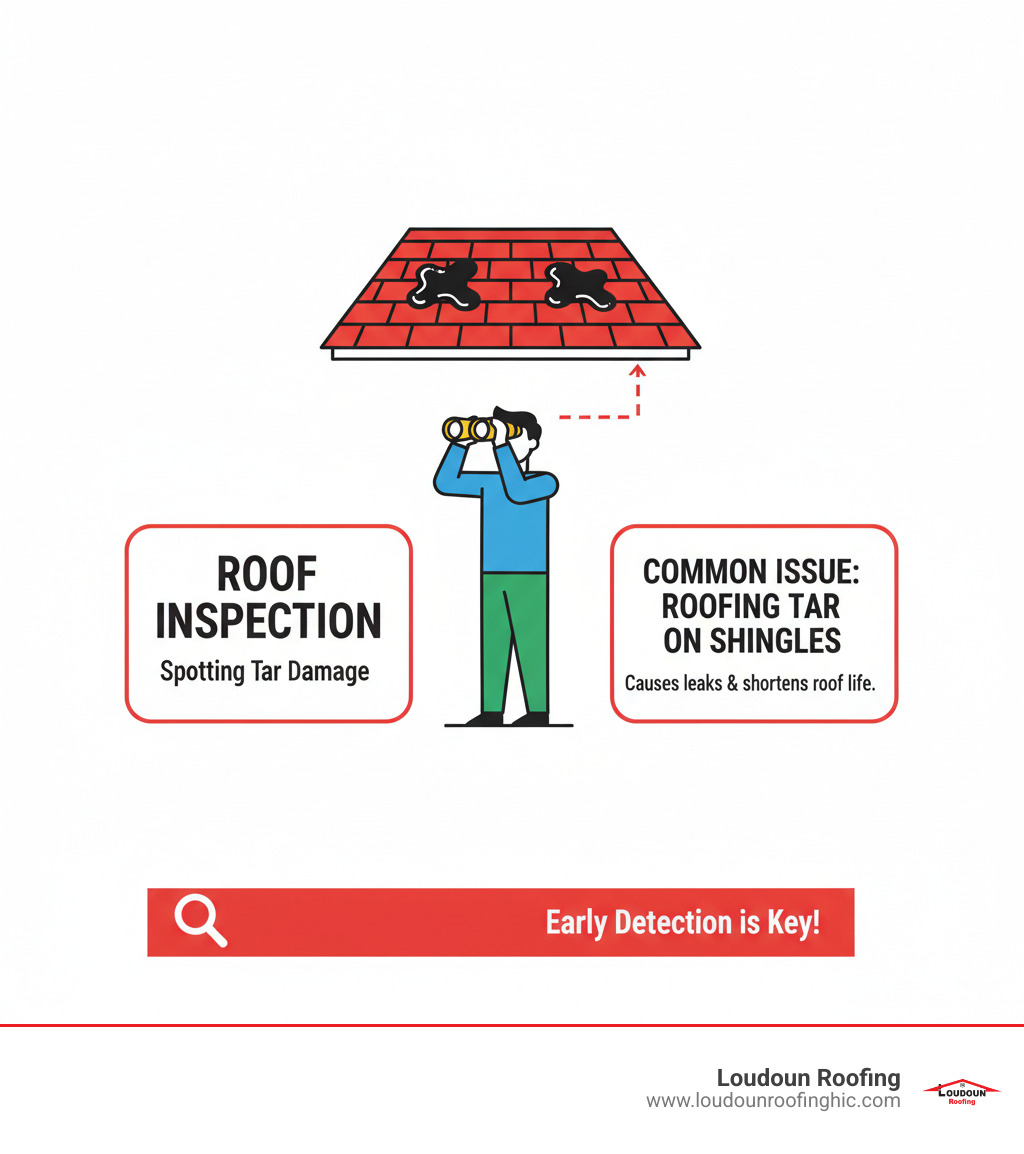
- Outside: Missing, cracked, or curled shingles; bent or rusted flashing around chimneys and vents; and piles of shingle granules in your gutters.
- In the Attic: Use a flashlight to check the underside of the roof decking for water stains, mold, or damp insulation.
Minor Issues vs. Major Problems
Knowing when to DIY and when to call a pro is crucial.
- Minor Issues for Tar/Cement: Small holes, a single lifted shingle tab, or minor gaps in flashing are good candidates for a patch.
- Major Problems for Professionals: Widespread shingle damage, multiple leaks, a sagging roof deck, or significant granule loss require a professional Roof Inspection to assess the full extent of the damage.
Essential Tools and Surface Prep
Safety on a roof is paramount. Always respect the height and conditions.
Required Tools & Materials:
- Safety Gear: Sturdy ladder, non-slip shoes, heavy-duty gloves, eye protection, and a safety harness for steep roofs. A respirator is essential when working with fumes.
- Repair Tools: Putty knife or trowel, caulk gun, utility knife, pry bar, hammer, roofing nails, a stiff-bristled brush, and asphalt-based roofing cement or sealant.
Surface Preparation Steps:
- Expose the Damage: Gently lift the shingle tabs above the damaged area with a pry bar, being careful not to cause more cracks.
- Clean Thoroughly: Use a stiff brush to remove all dirt, loose granules, and old, failing sealant from the area.
- Ensure It’s Dry: The repair area must be completely dry. Standard roofing cement will not adhere to wet surfaces. Allow at least 24-48 hours of dry weather after rain.
Proper preparation is the key to a temporary fix that lasts. Taking your time here will determine whether your patch holds for months or years.
The How-To Guide: Applying Roofing Tar on Shingles
With your inspection done and supplies gathered, it’s time to repair the leak. But first, a quick review of safety and timing.
Safety and Weather Conditions
Roof work is dangerous. Always wear your safety gear (non-slip shoes, gloves, eye protection) and use a sturdy ladder correctly positioned. Whenever possible, work with a partner on the ground.
The weather is also a critical factor. The ideal temperature for applying roofing tar on shingles is between 40°F and 70°F. Avoid extreme heat, which makes cement runny, and cold, which makes it stiff and difficult to bond. Crucially, never attempt a repair during or within 24-48 hours of expected rain, as the material needs time to cure on a dry surface.
Step 1: Expose and Clean the Damaged Area
This step is foundational for a lasting patch.
- Lift the Shingle: Gently use a pry bar to lift the damaged shingle tab and expose the area underneath. Be patient with brittle, older shingles to avoid creating new cracks.
- Remove Old Nails: Carefully pry out any rusted or loose nails.
- Clean the Surface: Use a stiff brush to thoroughly clean all dirt, debris, and loose granules from both the underside of the lifted shingle and the surface below. A clean surface is non-negotiable for proper adhesion.
Step 2: Apply Roofing Cement Correctly
The key is using the right amount in the right places.
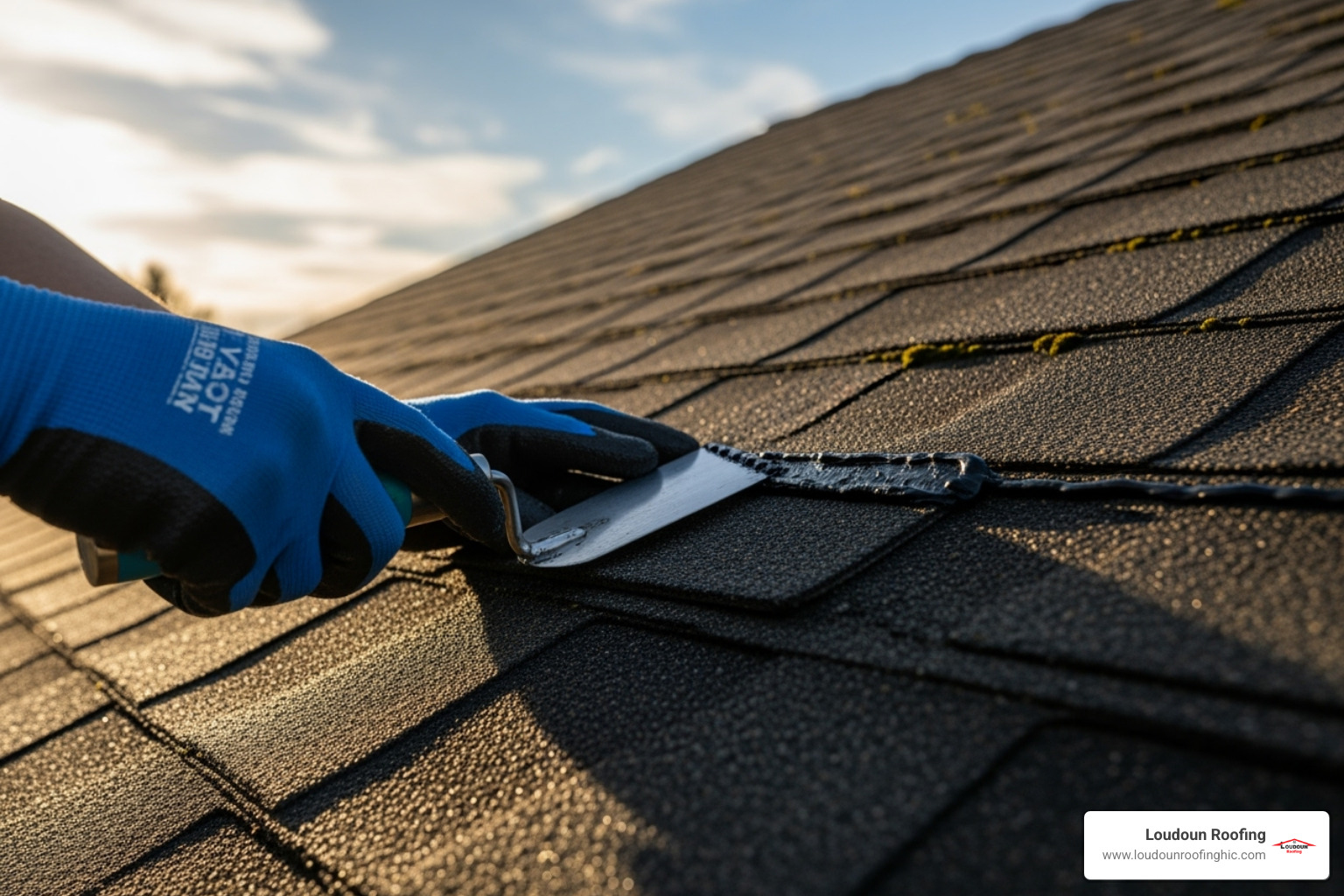
- Apply a Thin Layer: Using a trowel or caulk gun, apply a thin, even layer of roofing cement (about 1/8-inch thick) to the underside of the damaged shingle. Also, spread a thin layer directly over any cracks or holes.
- Avoid Over-Application: Using too much roofing tar on shingles is a common mistake. It can trap moisture, block water flow, and create an ugly, ineffective patch.
Step 3: Secure the Shingle and Seal the Repair
These final steps ensure your repair is watertight.
- Press the Shingle: Press the repaired shingle firmly into the cement to create a strong seal.
- Add New Nails: Secure the shingle with new roofing nails, driving them about one inch above the tab of the shingle below it. Use new nail locations for better grip.
- Seal the Nail Heads: Cover each new nail head with a small dab of roofing cement. This critical step prevents water from seeping through the new nail holes.
This proper temporary repair will stop immediate damage and buy you time to plan a permanent solution.
The “Duct Tape” Dilemma: When Tar Is Only a Temporary Fix
While a patch of roofing tar on shingles provides immediate relief, it’s a band-aid, not a cure. A DIY repair can stop a leak, but it’s crucial to understand its limitations and risks.
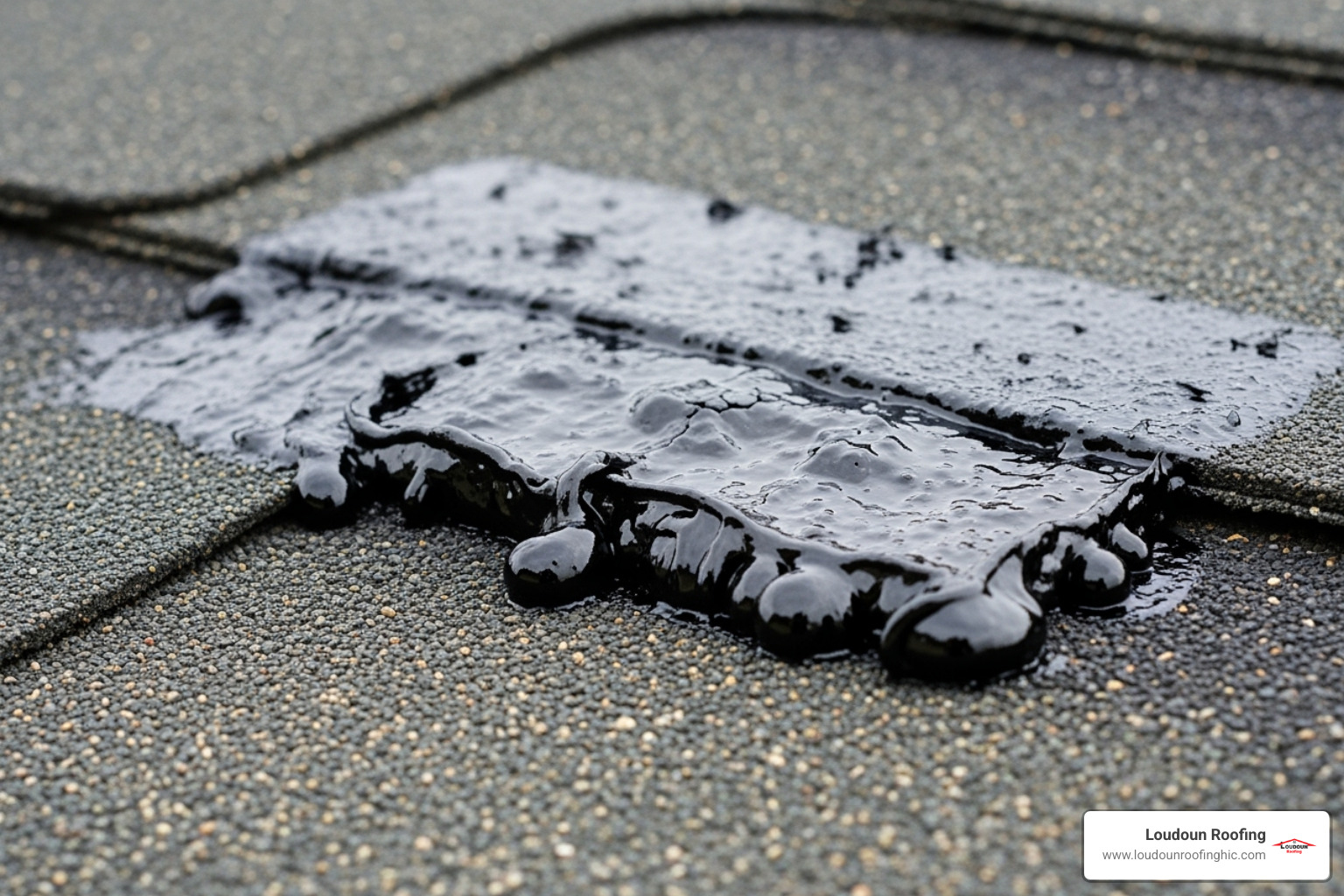
Over-application is a common mistake that causes bigger headaches. Here’s why:
- Trapped Moisture: Excessive tar can trap water underneath shingles, leading to rot and mold that you can’t see.
- Heat Absorption: Black tar gets extremely hot in the sun, accelerating shingle aging and causing them to become brittle and crack.
- Hiding Structural Problems: A patch might stop a drip but mask a more serious underlying issue like damaged decking or widespread deterioration.
Temporary Fix vs. Permanent Solution
Tar is an excellent stop-gap for small, isolated issues like a single missing shingle or a minor crack. It buys you time and prevents immediate water damage.
However, tar is not a solution for widespread damage or an aging roof. Multiple leaks, extensive granule loss, or numerous problem areas signal that your roof needs more than a patch. In these cases, you’re only delaying an inevitable, larger repair. For active leaks or significant storm damage, you need professional Emergency Roof Repair.
Improper tar use can also void roof warranties and lead to premature failure, requiring a full Roof Replacement sooner than expected. This is why regular Roofing Maintenance is so valuable—it helps you know when a patch is enough and when it’s time for a permanent solution.
Frequently Asked Questions about Using Roofing Tar on Shingles
Here are answers to common questions about using roofing tar on shingles for emergency repairs.
How long will a roof tar patch last?
A well-applied patch is a temporary fix that typically lasts 1 to 3 years. Its lifespan depends on the quality of the application, the type of damage, and climate factors like temperature swings and storm frequency in Northern Virginia. You should inspect any patched area regularly.
Can I apply roofing tar in the rain or on a wet surface?
No. Standard roofing tar and cement require a completely dry surface to bond correctly. Applying them to a wet roof will cause the repair to fail. For active leaks during a storm, specialized “wet patch” products can provide an ultra-temporary seal, but you will still need a professional Roof Leak Repair McLean once the weather clears.
Will using tar damage my asphalt shingles?
Yes, improper or excessive application can damage shingles. Black tar absorbs significant heat, which can cause the shingles underneath to blister, crack, and age prematurely. It can also trap moisture, leading to rot and mold. The key is to use roofing tar on shingles sparingly for small, targeted repairs only. If you need to patch multiple areas, it’s a sign you need a professional assessment.
Conclusion: Protect Your Home with a Professional Repair
Knowing how to apply roofing tar on shingles is a valuable skill for emergency first aid on your roof. A DIY patch is an excellent temporary fix for minor issues, preventing immediate water damage and buying you time. However, it is not a permanent solution for your roof’s long-term health.
For widespread damage, multiple leaks, or an aging roof, temporary patches only mask larger problems that are likely getting worse. Repeatedly patching an old roof can delay necessary repairs, leading to more extensive and costly structural damage down the line.
At Loudoun Roofing, we help homeowners distinguish between a problem that needs a quick patch and one that requires a professional solution. Our experienced team provides thorough assessments and durable repairs that protect your entire home. We use industry-leading materials and adhere to all local building codes, backing our work with solid warranties for your peace of mind.
Don’t let a temporary fix lead to a bigger headache. For a comprehensive assessment and a durable, warrantied repair, contact our team. We are your trusted local partner for all roofing needs throughout Leesburg, Ashburn, and the greater Northern Virginia area.
Call us today at (703) 777-0077 or request a free estimate for your asphalt shingle roof.