
Why Understanding Contractor Roles Matters for Your Project
When planning home improvements or repairs, knowing whether you need a roofer and builder can save you time, money, and headaches. If you’re unsure where to begin, talk with a trusted roofing and home improvement contractor. Here’s the key difference:
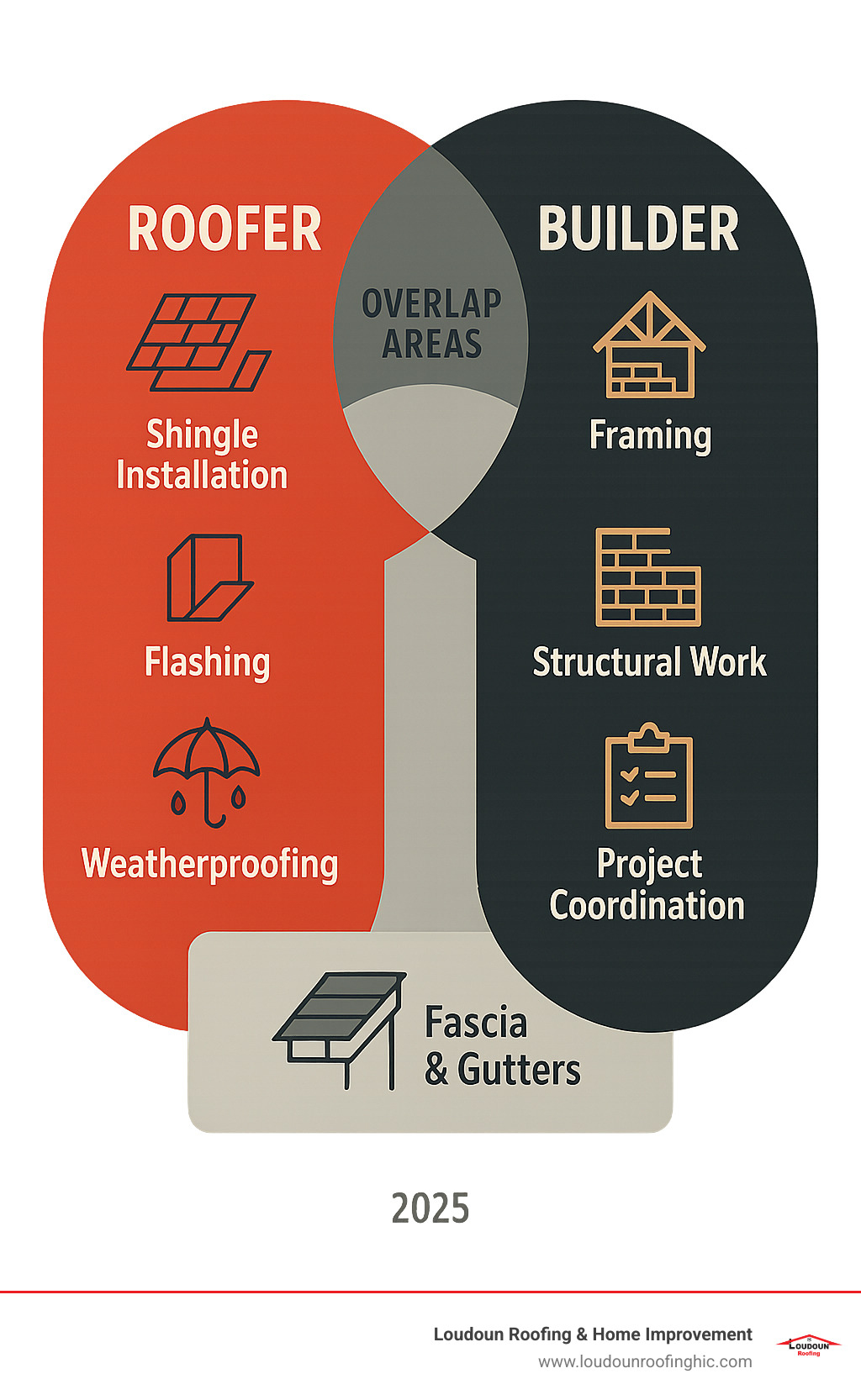
Roofer:
- Installs and repairs roofing systems (shingles, flashing, underlayment)
- Handles weatherproofing and water protection
- Specializes in roof-specific materials and techniques
Builder:
- Manages overall construction projects
- Handles structural work, framing, and foundations
- Coordinates multiple trades and subcontractors
Overlap Areas:
- Fascia, soffits, and gutters (responsibility varies by contract)
- Roof decking and structural support
- Home additions involving roofing work
Many homeowners get confused about who handles what, especially for components like fascia and gutters. According to industry discussions, builders typically handle these elements as part of their carpentry scope, while roofers focus on the actual roofing system.
The confusion often leads to project delays and disputes between contractors. Clear contracts defining each party’s responsibilities prevent these issues and ensure your project runs smoothly.
For complex projects involving both roofing and structural work, consider working with Northern Virginia roofing experts who can coordinate all aspects of your project.
I’m Esteban Marin, and I’ve been navigating the complexities of roofer and builder coordination since 2001, helping Northern Virginia homeowners understand exactly which professional they need for their specific project. My experience managing both roofing installations and home improvement projects has shown me how proper planning and clear role definition leads to successful outcomes.
Roofer and builder terms simplified:
The Specialist’s Domain: Defining the Roofer’s Role
When you think of a roofer and builder working on your home, the roofer is the specialist who lives and breathes everything above your walls. While a builder might handle the bones of your house, a roofer is the guardian of your home’s first line of defense against Mother Nature.
A roofer’s world revolves around one critical mission: keeping water out of your home. This means mastering every component of your roofing system – from the protective underlayment that goes down first, to the shingles that face the storm, to the intricate flashing that seals around chimneys and vents. It’s about weatherproofing your most valuable investment.
At Loudoun Roofing & Home Improvement, we’ve completed countless roofs over the years, and each one teaches us something new about the art and science of roofing. Our Residential Roofing Services cover every aspect of this specialized trade, because we understand that your roof isn’t just shingles – it’s a complete system working together.

Signs You Need a Roofer
Your roof has a way of telling you when it needs help – you just need to know how to listen. Think of it like your car making that weird noise before it breaks down completely. Ignore the signs, and a small problem becomes a big, expensive headache.
The most obvious cry for help is leaks. When you see water stains creeping across your ceiling like a slow-moving storm cloud, your roof is waving a white flag. We’ve rushed out to homes where water was dripping into the living room during family dinners – not exactly the ambiance anyone wants.
But leaks aren’t the only warning signs. Missing shingles after a storm leave your roof deck as exposed as a person without an umbrella in a downpour. Curling shingles that look like potato chips are telling you they’ve lost their grip and can’t protect your home anymore.
Here’s something many homeowners don’t know: those granules in gutters that look like coarse sand? They’re actually the protective coating washing off your shingles. It’s like your roof is slowly losing its armor, one tiny piece at a time.
The scariest sign is a spongy roof deck. If your roof feels soft underfoot (please don’t test this yourself – leave it to the professionals with proper safety equipment), it means water has already gotten through and is rotting the wooden structure beneath.
When you spot these warning signs, don’t wait. Our Roof Leak Repair in McLean, VA team has seen what happens when small problems turn into major disasters. A quick call today can save you thousands tomorrow.
Common Roofer Services
A professional roofer wears many hats – sometimes literally, when the sun’s beating down on a hot July day. We’re part detective (finding those sneaky leaks), part surgeon (precise repairs), and part fortune teller (predicting when your roof will need attention).
Roof Repair Services are our bread and butter. Whether it’s replacing a few wind-blown shingles or sealing persistent leaks around a chimney, repairs keep your existing roof healthy and extend its life. We’ve fixed everything from storm damage to the aftermath of a neighbor’s tree deciding to visit uninvited.
When repairs aren’t enough anymore, Full Roof Replacement Services become necessary. This is the big kahuna – stripping your roof down to the bones and building it back up with modern materials and techniques. Most Asphalt Shingle Roofs last 20-25 years, so replacement is more of a “when” than an “if.”
Roof Inspection Services are like annual check-ups for your roof. We climb up there so you don’t have to, checking every shingle, examining flashing, and catching problems before they catch you off guard. Think of it as preventive medicine for your home.
Emergency repairs don’t wait for convenient timing. When a storm hits at 2 AM on a Sunday, we understand that your roof can’t wait until Monday morning. Water damage doesn’t take weekends off, and neither do we when you need us most.
Gutter installation rounds out our services because gutters and roofs work as a team. The best roofing system in the world won’t help if water can’t get off your roof and away from your foundation properly.
Whether you need a simple repair or a complete roof overhaul, understanding what a roofer does helps you know exactly who to call when your home’s protection needs attention.
The Foundation Setter: Understanding the Builder’s Scope
If the roofer protects your home from above, the builder creates the solid foundation that makes it all possible. A builder’s world revolves around structural integrity – they’re the professionals who understand how every beam, wall, and foundation stone works together to create a safe, lasting structure.
When you’re planning major home improvements, understanding when you need a roofer and builder versus just one specialist can save you both time and money. Builders focus on the big picture: framing your home’s skeleton, ensuring load-bearing walls can handle the weight they’re designed for, and making sure your foundation won’t shift or settle over time.
Think of builders as the conductors of a construction orchestra. They don’t just hammer nails – they coordinate electricians, plumbers, and yes, roofers too. They make sure everyone shows up at the right time and does their work in the proper sequence. It’s like a carefully choreographed dance where timing is everything.

When to Hire a Builder
The question isn’t really whether you need a builder – it’s whether your project goes beyond surface-level changes into the bones of your home. If you’re moving walls, adding rooms, or changing your home’s footprint, you’re in builder territory.
New construction is the obvious one. Building from scratch means someone needs to manage everything from digging the foundation to installing the final light fixtures. That’s definitely a job for a experienced builder who can handle the complexity.
Home extensions are where many homeowners get confused about whether they need a roofer and builder. Adding a room or expanding your living space affects both the structure and the roof. The builder handles the foundation, framing, and structural connections, while coordinating with roofers for the new roof sections.
Loft conversions might seem simple – after all, the space is already there, right? Wrong. Converting an attic into livable space often requires strengthening floor joists, adding proper stairs, and sometimes modifying the roof structure for headroom. This kind of structural work needs a builder’s expertise.
Major renovations that involve moving walls or reconfiguring your home’s layout definitely call for a builder. They understand which walls you can safely remove and which ones keep your house from falling down. Trust us, this isn’t a DIY findy you want to make the hard way.
Key Responsibilities of a Builder on a Project
A good builder wears many hats, and honestly, some days it feels like they need superpowers to juggle everything. Their main job is keeping your project moving forward while making sure it’s safe, legal, and built to last.
Coordinating trades is probably the trickiest part of their job. Imagine trying to schedule five different professionals who all need to work in the same space, but in a specific order. The electrician can’t wire the walls until the framing is done, but the drywall can’t go up until the electrical is finished. It’s like solving a puzzle where all the pieces keep moving.
Managing subcontractors goes beyond just scheduling. Builders need to make sure everyone shows up when they’re supposed to, does quality work, and follows safety protocols. They’re essentially running a small army of specialists, each with their own expertise and opinions about how things should be done.
Adhering to building codes isn’t optional – it’s the law. Builders stay current on local regulations, pull necessary permits, and schedule inspections at the right times. They know that cutting corners on code compliance can create serious safety issues and legal headaches down the road.
Project timelines and budget management keep clients happy and projects profitable. Weather delays, material shortages, and unexpected structural issues can throw schedules off track. Good builders build buffer time into their estimates and communicate honestly about delays.
Most importantly, builders are responsible for ensuring structural safety. Every decision about materials, connections, and construction methods affects whether your home will stand strong for decades to come. It’s a responsibility they take seriously, because your family’s safety depends on getting it right.
The Overlap: Where a Professional Roofer and Builder Works Together
While roofers and builders each have their specialized domains, there’s a fascinating middle ground where their expertise intersects. Think of it as the architectural equivalent of a handshake – where the protective roof system meets the structural foundation of your home. This is where things can get interesting, and occasionally, where confusion arises.
The most common overlap areas involve components that bridge your roof and your home’s structure. Roof decking forms the foundation that your roofing system sits on, but it’s actually part of the structural framing. Fascia boards run along your roofline’s edge, soffits finish the underside of your eaves, and gutters channel water away from your home. Then there’s the drip edge – that crucial metal flashing that helps water flow properly into your gutters rather than behind them.

These components sit right at the junction where roofing meets carpentry, which explains why homeowners sometimes feel like they’re caught in the middle of a “not my job” conversation. Understanding who handles what can save you from project delays and finger-pointing between contractors.
When we work on projects involving both roofing and structural elements, clear communication and defined responsibilities become absolutely critical. That’s why our comprehensive approach to Roof and Fascia Repair ensures all these interconnected components work together seamlessly.
Who Handles Fascia, Soffits, and Gutters?
Here’s where things get interesting – and where many homeowners find themselves scratching their heads. The question of who installs fascia, soffits, and gutters has sparked more construction site debates than you might imagine. Let me break down the typical responsibilities based on industry standards and our years of experience.
Builders typically handle fascia and soffits as part of their carpentry and exterior finishing work. These components are structural elements that connect your roof to your home’s frame. The builder creates the proper foundation and framing that everything else builds upon. As one industry professional noted in a Reddit discussion on roofer vs builder responsibility, “The builder is always responsible as the roofer is a sub.”
Roofers focus on the actual roofing system – shingles, underlayment, and the flashing that integrates with these structural elements. We install drip edge that sits on top of the fascia, but we depend on that fascia being properly installed first. If we have to work around poorly installed fascia, it can compromise our roofing work and create headaches for everyone involved.
Siding contractors sometimes enter the picture too, as soffit and fascia installation often overlaps with exterior envelope work. This adds another layer to consider when planning your project.
The key lesson here? Contract clarity prevents confusion. Before any work begins, every contract should explicitly state who handles each component. We’ve seen projects stall because a homeowner, builder, and roofer all had different assumptions about who was installing the gutters. Clear agreements up front save time, money, and relationships.
Why Hire a Single Firm as Your Roofer and Builder?
Given the potential for overlap and occasional confusion between separate contractors, many homeowners ask us: “Wouldn’t it be simpler to work with one company that does both?” The answer is often yes, especially for projects that involve both roofing and structural work.
When you work with a single firm that serves as both roofer and builder, several advantages emerge naturally. Communication becomes streamlined because you have one point of contact for all your questions and concerns. No more playing telephone between different contractors when issues arise at the intersection of their work.
Accountability becomes crystal clear too. If a problem develops that touches both roofing and structural elements – say, a leak around a new dormer addition – one company takes full responsibility for resolving it. There’s no “that’s not our department” conversation because it’s all their department.
Scheduling coordination flows much more smoothly when one team manages both aspects. They understand exactly when the structural work needs to be complete for the roofing work to begin, and they can adjust timelines internally without external coordination headaches.
From a cost efficiency standpoint, while the initial quote might not always be lower, you often save money by avoiding delays, miscommunication, and duplicate project management fees. A unified team can leverage their resources more effectively across both aspects of your project.
Quality consistency becomes easier to maintain when the same standards apply to both the structural and roofing elements. The team understands how their structural work impacts the roofing installation, leading to better overall results.
Finally, problem-solving becomes more holistic. Issues that span both roofing and building require solutions that consider both structural integrity and weatherproofing simultaneously. A unified team can approach these challenges with a complete perspective rather than trying to coordinate separate solutions.
This integrated approach has proven especially valuable on complex projects like our Commercial Roofing Services in Great Falls, VA work, where structural modifications and roofing systems must work in perfect harmony. It’s like having a perfectly choreographed performance instead of two separate acts trying to share the same stage.
Vetting Your Team: Licensing, Certifications, and Best Practices
Choosing the right roofer and builder for your home project isn’t just about getting the best price – it’s about protecting one of your biggest investments. Think of it this way: you wouldn’t hire a babysitter without checking references, so why would you trust your roof to someone without proper credentials?
The vetting process might seem overwhelming at first, but it’s actually straightforward when you know what to look for. Proper licensing ensures your contractor is legally authorized to work in your area and has met basic competency requirements. Industry certifications show they’ve gone above and beyond to master their craft. Insurance coverage protects you from liability if something goes wrong.
Here’s what separates the professionals from the fly-by-night operators:
| Credential Type | What It Means | Why It Matters |
|---|---|---|
| State Licensing | Legal authorization to perform roofing/building work | Ensures basic competency and provides recourse if issues arise |
| Manufacturer Certifications | Training on specific roofing systems (like GAF Master Elite®) | Access to better warranties and proven expertise with materials |
| Industry Association Membership | Participation in professional organizations like NFRC | Commitment to ongoing education and industry best practices |
| Insurance Coverage | General liability and workers’ compensation | Protects you from financial responsibility for accidents |
| Bonding | Financial guarantee of work completion | Ensures project completion even if contractor defaults |
The difference between a certified professional and an unlicensed contractor can mean thousands of dollars in potential problems down the road. We’ve seen homeowners find too late that their “bargain” contractor wasn’t properly licensed, leaving them with substandard work and no legal recourse.
The Importance of Manufacturer Certifications
When it comes to roofing, manufacturer certifications are like a seal of approval from the companies that make the materials. GAF, North America’s largest roofing manufacturer, offers some of the most respected certifications in the industry.
A GAF Master Elite® contractor represents the top 3% of roofing professionals nationwide. These contractors have demonstrated exceptional expertise, maintain proper licensing and insurance, and have a proven track record of customer satisfaction. The GAF Certified™ program provides another level of assurance, showing that contractors have received specialized training on GAF products and installation techniques.
Why does this matter for your project? Improved warranties are the biggest benefit. While standard material warranties might cover defects, certified contractors can offer improved warranties that cover both materials and workmanship. This means if something goes wrong with your roof, you’re protected on multiple fronts.
Our team at Loudoun Roofing maintains GAF Certified Contractor status because we believe in providing our clients with the best possible protection. When you work with certified professionals, you’re not just getting quality installation – you’re getting peace of mind backed by industry-leading manufacturers.
The GAF residential product guide showcases the extensive range of products and systems available to certified contractors, giving you more options for your specific needs and budget.
How to Choose the Right Contractor
Finding the right roofer and builder requires more detective work than you might expect, but it’s time well spent. Start by checking online reviews across multiple platforms – Google, Better Business Bureau, and local review sites. Look for patterns in the feedback. Are customers consistently praising communication and cleanup? Are there recurring complaints about missed deadlines?
Verify licenses through your state’s licensing board. This simple step can save you from costly mistakes. Licensed contractors must meet ongoing education requirements and maintain proper insurance, which protects you throughout the project.
Ask for local references and actually call them. A reputable contractor will gladly provide contact information for recent customers in your area. When you speak with these references, ask about communication, timeliness, cleanup, and whether they’d hire the contractor again.
Get multiple estimates to understand the market rate for your project. Be wary of quotes that are significantly higher or lower than others – both can be red flags. The lowest bid often means corners will be cut, while the highest might indicate unnecessary upselling.
Here are essential questions to ask any potential contractor:
- Are you licensed and insured in our state?
- Can you provide local references from the past year?
- What manufacturer certifications do you hold?
- How do you handle unexpected issues or change orders?
- What’s your timeline for completion?
- Do you pull permits and handle inspections?
- What warranty do you provide on your work?
The NFRC guide on choosing a roofing contractor offers additional insights into the selection process, emphasizing the importance of proper vetting before making your final decision.
The right contractor will welcome your questions and provide clear, detailed answers. If someone seems evasive or pressures you to sign immediately, keep looking. Quality contractors are busy but never too busy to earn your trust properly.