
Why Understanding the Roof Replacement Process Matters
Replacing your roof is one of the most significant home improvement projects you can undertake, making it crucial to partner with a trusted Northern Virginia roofing company. With most homeowners spending between $10,000 and $20,000, understanding the process helps you make informed decisions and protect your investment for decades. This guide breaks down everything you need to know.
Key Steps in the Roof Replacement Process:
- Inspection: A professional assesses damage and material needs.
- Material Selection: Choose from asphalt, metal, tile, or other options.
- Contractor Hiring: Verify licenses, insurance, and get written estimates.
- Tear-Off: Remove old roofing down to the deck.
- Deck Repair: Replace any damaged or rotted decking.
- Installation: Apply underlayment, flashing, and new roofing material.
- Cleanup: Thorough debris removal and magnetic nail sweep.
- Final Inspection: A final walkthrough ensures quality and addresses concerns.
For homeowners in Leesburg and Loudoun County, knowing when to replace versus repair can save thousands. A replacement is typically needed for roofs over 20 years old or with widespread damage, while repairs suffice for localized issues on younger roofs. If you see water stains or missing shingles, a professional inspection is your best first step.
A typical roof replacement takes 3-4 days. Labor generally accounts for 60% of total costs, with materials making up the other 40%. As owner of Loudoun Roofing & Home Improvement, I’ve ensured every project since 2001 meets the highest standards, from inspection to final walkthrough.
Replacing your roof vocab to learn:
Is It Time for a New Roof? Key Signs and Lifespan
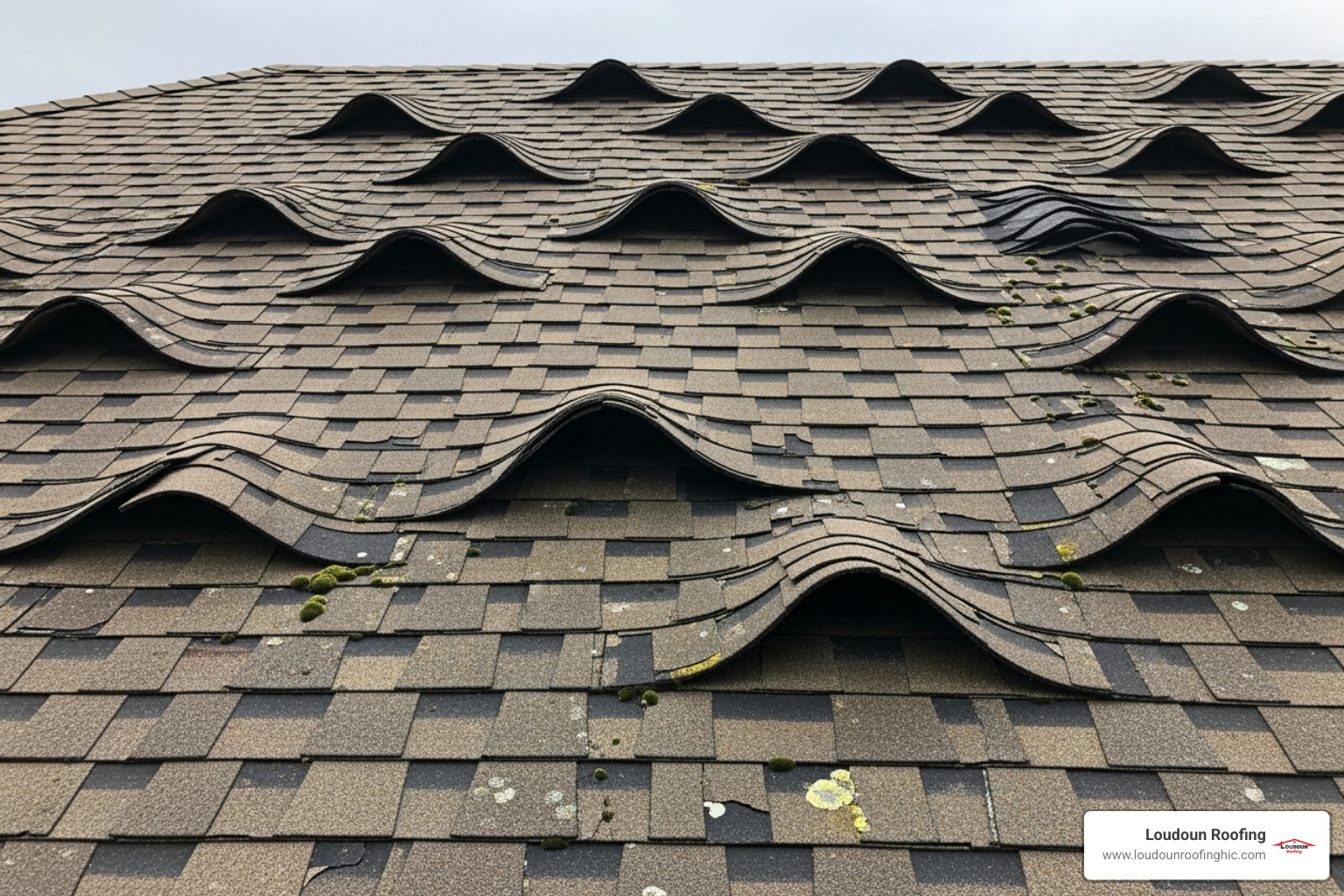
Recognizing the warning signs that your roof needs replacement can save you from costly water damage down the road. It’s not just about age; it’s about performance. Here are the key indicators that it might be time for replacing your roof.
- Roof Age: An asphalt shingle roof’s lifespan is typically 20-25 years. If your roof is approaching this age, it’s time for an inspection, even if it looks fine from the ground.
- Curling or Buckling Shingles: Shingles that curl at the edges or buckle in the middle are a clear sign of moisture infiltration and material failure. They no longer lie flat, creating entry points for water.
- Missing Shingles: Gaps left by missing shingles expose the underlying roof deck to water, which can lead to rot. High winds or old age are common culprits.
- Granules in Gutters: Finding excessive shingle granules in your gutters means your shingles are losing their protective layer against UV damage and are nearing the end of their life.
- Water Stains: Brown spots or peeling paint on interior ceilings or walls are a red flag that water has already breached your roofing system.
- Sagging Roof Deck: A sagging or dipping roofline is an emergency. It indicates severe structural damage, likely from rotted decking, and requires immediate professional attention.
- Daylight in Attic: If you can see daylight through your roof boards from the attic, it means you have direct entry points for rain, pests, and drafts.
- Moss or Algae Growth: While some staining is cosmetic, thick moss growth traps moisture against shingles, accelerating their deterioration and signaling underlying moisture issues.
A professional roof inspection can confirm the extent of any damage. For more insights, this guide from CAA-Quebec offers helpful information.
What is the Typical Lifespan of Different Roofing Materials?
Your choice of material directly impacts how long your new roof will last. Investing in durable roofing solutions can dramatically reduce long-term costs.
- Three-Tab Asphalt Shingles: The most affordable option, lasting 20-25 years.
- Architectural Asphalt Shingles: A more durable and visually appealing option, lasting 30 years or more.
- Metal Roofs: An excellent long-term investment, lasting 40-80 years with superior durability and wind resistance.
- Wood Shakes and Shingles: Offer natural beauty and can last 30-50 years with proper maintenance, though they require more upkeep.
- Clay and Concrete Tiles: Exceptionally durable, with lifespans of 50-100+ years, but their weight may require structural reinforcement.
- Slate: The pinnacle of longevity, lasting 60-150+ years. A slate roof is a once-in-a-lifetime installation.
Understanding Your Roofing System and Material Options
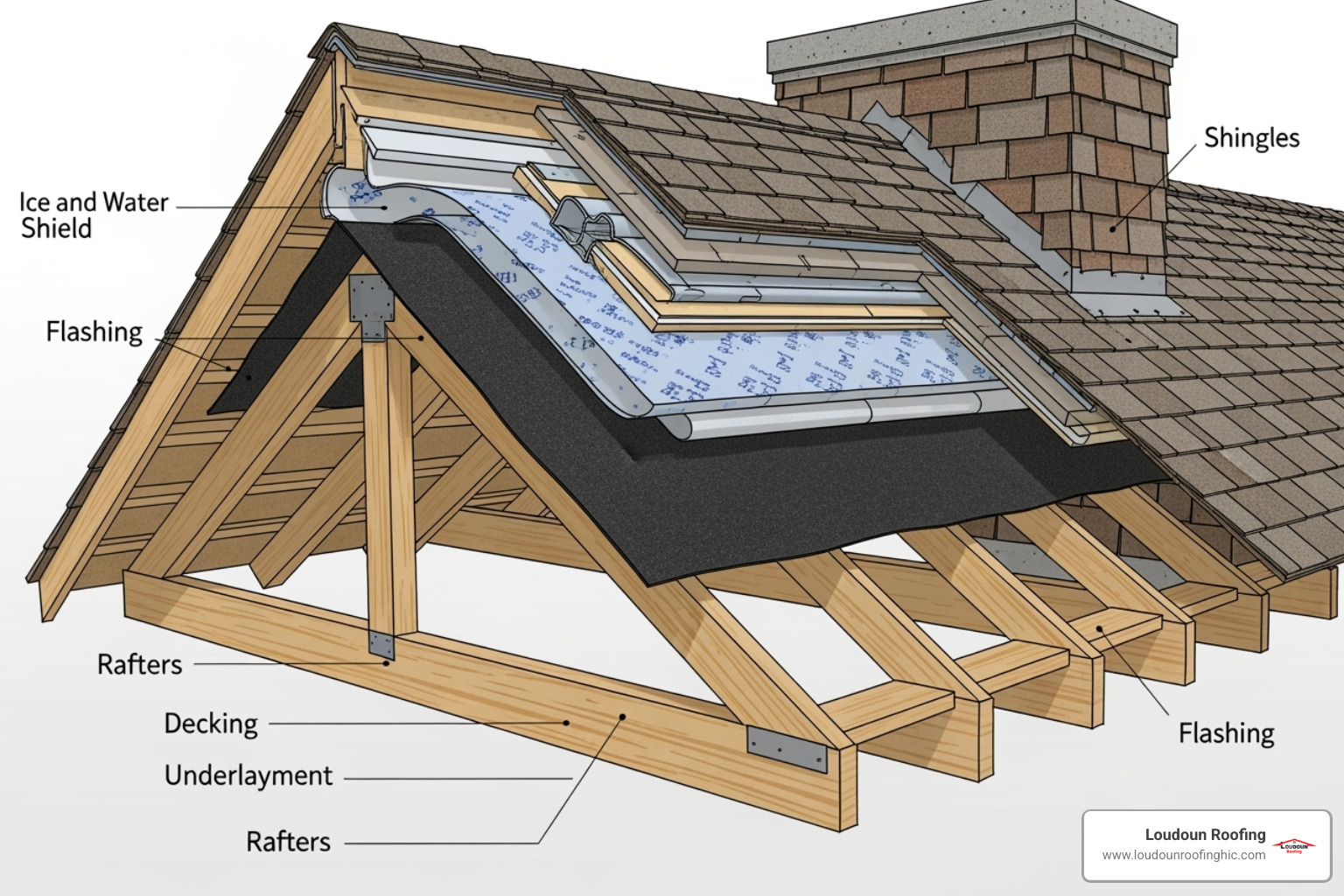
A roof is a sophisticated system of layers working together to protect your home. Understanding these components is key when replacing your roof.
- Roof Decking: The plywood or OSB foundation that supports the entire roof system.
- Underlayment: A water-resistant barrier installed over the decking as a secondary defense against moisture.
- Ice and Water Shield: A self-adhering waterproof membrane applied to vulnerable areas like eaves and valleys to prevent leaks from ice dams and wind-driven rain.
- Flashing: Metal pieces installed around chimneys, vents, and in valleys to create watertight seals.
- Vents: Components that allow hot, moist air to escape the attic, preventing heat buildup and condensation.
- Shingles/Covering: The outermost layer that sheds water and provides the primary aesthetic.
- Ridge Cap: Shingles that cover the peak of the roof, sealing the joint between two slopes.
Professional roof installation ensures every layer is installed correctly for a fully functional system.
What Are the Different Types of Roofing Materials?
The material you choose affects your home’s appearance, energy bills, and long-term maintenance.
- Asphalt Shingles: America’s most popular choice due to affordability and a wide variety of styles. They are reliable in most climates but have a shorter lifespan (20-30 years) than premium materials.
- Metal Roofing: Incredibly durable (40-80 years), energy-efficient, and low-maintenance. The upfront cost is higher, but it provides excellent long-term value.
- Cedar Shake Roofs: Offer timeless, natural beauty and good insulation. They require more maintenance than other materials and are not ideal for fire-prone areas.
- Tile Roofs: Exceptionally durable (50-100+ years) with a distinctive look. They are heavy and may require structural reinforcement, making installation more costly.
- Slate: The ultimate in longevity (60-150+ years) and beauty. Slate is a natural, fireproof stone, but it is the most expensive and heaviest option, requiring specialized installation.
Energy Efficiency and Your New Roof
Replacing your roof is a prime opportunity to improve your home’s energy efficiency. Cool roof technology, found in specially designed shingles and metal roofing, reflects solar heat instead of absorbing it. According to ENERGY STAR, this can significantly lower attic temperatures and reduce air conditioning costs. An energy efficient metal roof can cut cooling costs by up to 25%. Proper attic ventilation is also critical, as it allows hot air to escape, reducing the load on your HVAC system year-round. The Cool Roof Rating Council provides independent ratings for roofing products.
The Step-by-Step Guide to Replacing Your Roof
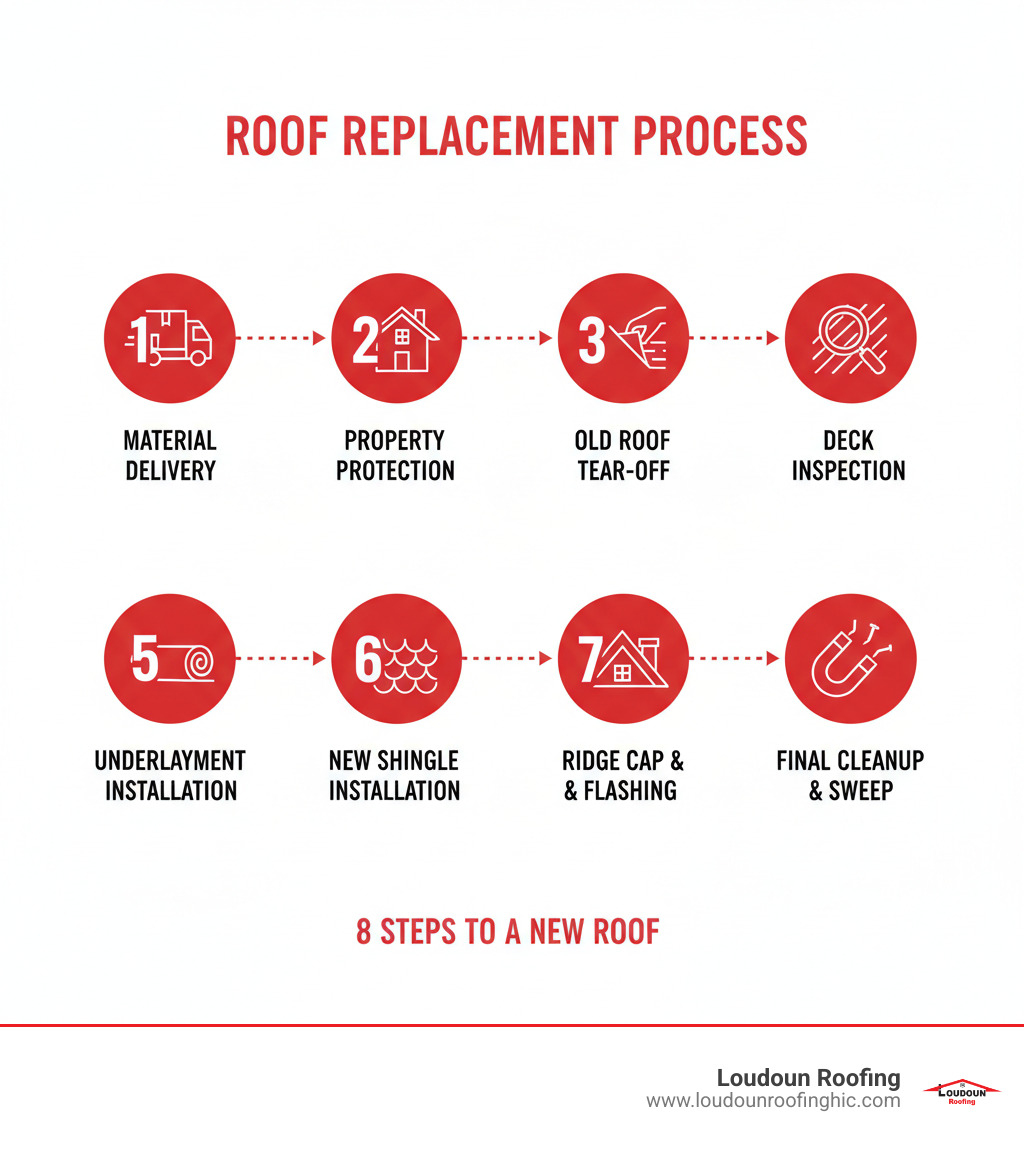
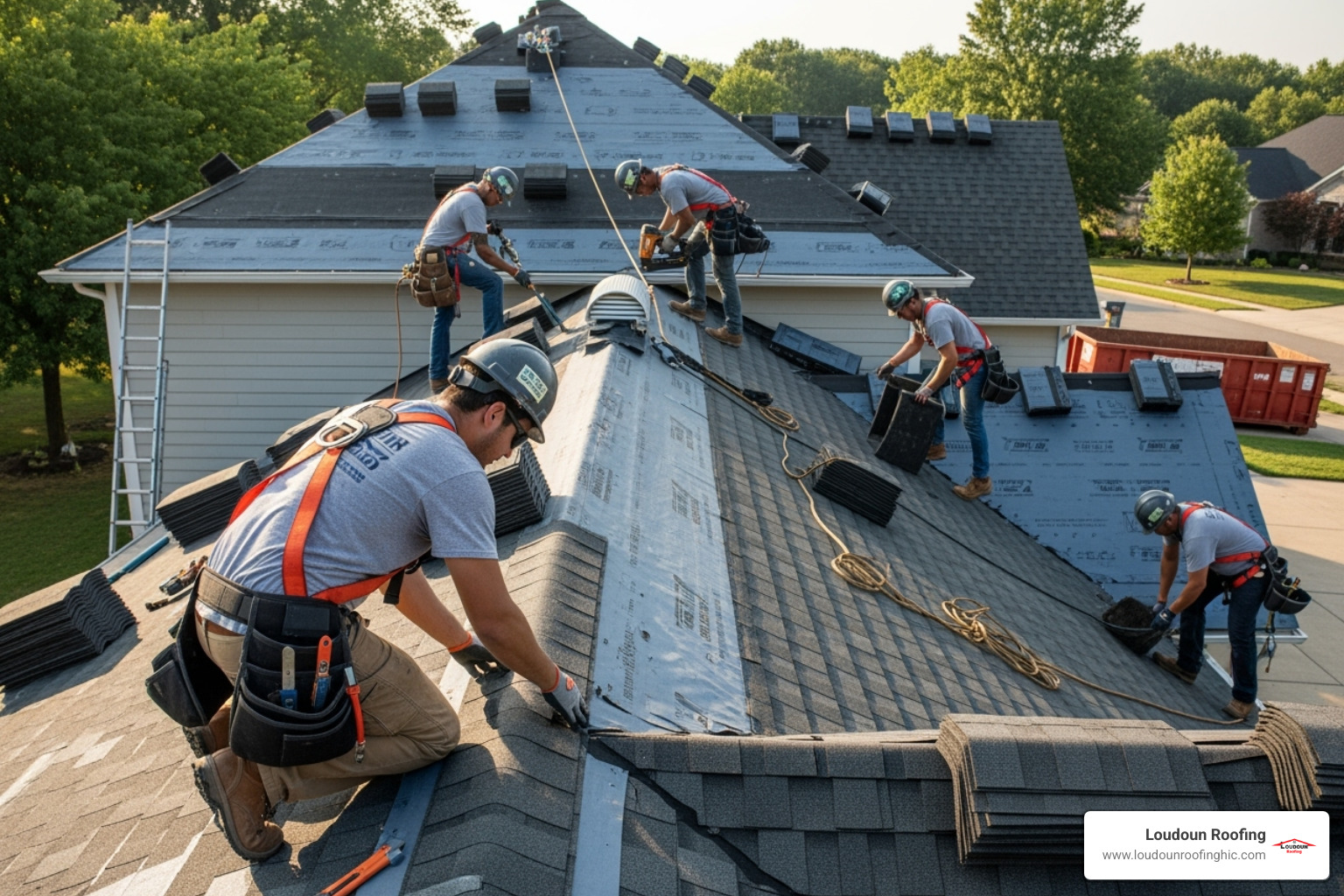
Understanding the roof replacement process helps set clear expectations for the project, which typically takes three to four days for a standard home. Our process is refined for efficiency and minimal disruption.
The Process of Replacing Your Roof: From Tear-Off to Cleanup
- Material Delivery: Supplies are delivered to your property, typically on the driveway, a day before work begins.
- Property Protection: Our crew covers landscaping, siding, and other features with tarps and boards to prevent damage.
- Old Roof Tear-Off: The existing shingles and underlayment are systematically removed down to the bare roof deck.
- Decking Inspection & Repair: We inspect every square foot of the decking for rot or damage and replace any compromised sections to ensure a solid foundation.
- Installation of New Components: We install a complete system, including drip edge, ice and water shield, underlayment, new flashing, and proper ventilation.
- Shingle Installation: New shingles are installed according to manufacturer specifications for proper alignment, nailing, and sealing to ensure performance and warranty compliance.
- Site Cleanup: We thoroughly clean the property, including using powerful magnets to collect stray nails, leaving your yard pristine.
- Final Walkthrough: We conduct a final inspection with you to ensure your complete satisfaction with the work. Learn more about our Roof Installation process.
Roof Overlay (Re-Roofing) vs. Full Tear-Off
When replacing your roof, you can either overlay new shingles on top of the old ones or perform a full tear-off.
- Roof Overlay: This is a faster, cheaper option that involves laying new shingles over the existing layer. However, it prevents inspection of the roof deck for rot, adds significant weight, and can result in a lumpy appearance. Most building codes limit roofs to two layers, and manufacturer warranties may be voided.
- Full Tear-Off: This method involves removing all old materials down to the deck. While it costs more upfront, it is the only way to properly inspect and repair the underlying structure. A full tear-off ensures a smooth finish, maximum lifespan, and full warranty protection. The cost to tear off and replace a roof delivers far superior long-term value.
When Is the Best Time of Year to Replace a Roof?
The ideal time for a roof replacement in Northern Virginia is during periods of moderate, dry weather, typically from late spring through early fall. Temperatures between 50 and 80 degrees Fahrenheit are optimal for asphalt shingle adhesive to seal properly. Scheduling during peak season means booking your contractor well in advance. While winter installations are possible, they require special techniques to ensure a proper seal and may not be covered by all manufacturer warranties. If you have an active leak, however, waiting for ideal weather is not an option.
Navigating the Financials: Costs, Contracts, and Contractors
Replacing your roof is a major financial decision. Understanding the costs, choosing a reputable contractor, and reviewing the contract carefully are essential steps to protect your investment.
Key Factors That Influence the Cost of Replacing Your Roof
Several variables determine the final price of a roof replacement. For a detailed breakdown, Angi’s article on roof replacement cost is a valuable resource.
- Roof Size & Pitch: Larger and steeper roofs require more materials and labor, increasing the cost.
- Material Choice: Costs vary significantly, from budget-friendly asphalt shingles ($3.50 – $6.00 per sq. ft.) to premium materials like slate ($4 – $11+ per sq. ft.).
- Labor Costs: Labor typically accounts for about 60% of the total project cost and is influenced by roof complexity.
- Tear-Off & Disposal: Removing and disposing of the old roof adds to the cost, generally $0.40 – $2.00 per square foot.
- Permit Fees: Most municipalities require building permits, and the fees vary by location.
How to Choose a Qualified and Reputable Roofing Contractor
Selecting the right contractor is the most critical decision you’ll make. The cheapest bid is rarely the best value.
- License & Insurance: Verify the contractor holds a valid state license, general liability insurance, and workers’ compensation.
- Certifications: Look for manufacturer certifications, like being a GAF Certified Contractor, which can provide access to improved warranties.
- Reviews & References: Check online reviews and ask for references from recent customers.
- Written Estimates: Get at least three detailed, written estimates that break down all costs. Compare the scope of work, not just the final price.
- Warranties: Ensure the contractor offers both a manufacturer’s warranty on materials and a workmanship warranty on their labor.
Our guide on finding the best roof replacement contractors offers more in-depth advice.
Understanding Your Roofing Contract and Warranties
Your contract is your legal protection. It should clearly detail:
- Scope of Work: A full description of all tasks, from tear-off to cleanup.
- Material List: The specific brand, type, and color of all materials being used.
- Payment Schedule: A clear schedule for payments. Never pay the full amount upfront.
- Timeline: An estimated start and completion date.
- Warranties: Separate details on the manufacturer’s material warranty and the contractor’s workmanship warranty.
Your contractor should also handle all aspects of understanding local roofing permits and codes.
Frequently Asked Questions about Roof Replacement
What are potential hidden costs in a roof replacement?
The most common hidden cost is the replacement of damaged or rotten roof decking, which is only visible after the old roof is removed. This typically costs $2.20 to $3.00 per square foot. Other potential costs include replacing damaged fascia and soffit boards along the roof’s edge, which can run from $2.80 to $8.62 per linear foot. Sometimes, more extensive Roof and Fascia Repair is needed. Upgrading to premium underlayment or replacing flashing around chimneys can also add to the final cost. A reputable contractor will discuss these possibilities with you upfront.
How can I finance a roof replacement?
Since replacing your roof is a significant expense, many homeowners use financing. Common options include:
- Home Equity Loans or HELOCs: Often offer competitive rates by borrowing against your home’s equity.
- Personal Loans: An unsecured option from a bank or credit union.
- Contractor Financing: Many roofing companies partner with lenders to offer convenient payment plans.
- Homeowner’s Insurance: If your roof was damaged by a covered event like a major storm, your insurance policy may cover a large portion of the replacement cost. We can help you steer the storm damage claims process.
What benefits does a new roof offer besides weather protection?
A new roof provides much more than just shelter from the elements. Key benefits include:
- Increased Home Value: Roof replacement consistently ranks as a top home improvement for return on investment, recouping 60-70% of its cost at resale.
- Improved Curb Appeal: A new roof instantly transforms your home’s appearance.
- Improved Energy Efficiency: Modern cool-roofing materials and proper ventilation can lower your heating and cooling bills by 10-15%.
- Peace of Mind: A professionally installed roof with new warranties eliminates the stress of leaks and potential water damage for decades.
- Better Health: A new, properly sealed roof prevents moisture that leads to mold and mildew, improving indoor air quality.
Your Home’s Best Defense Starts at the Top
Replacing your roof is a significant undertaking, but it is one of the most important investments you can make in your home’s safety, value, and efficiency. By understanding the signs of failure, the materials available, and the replacement process, you are empowered to make the best choice for your property. For homeowners in Loudoun County, choosing a trusted, local expert is key. Loudoun Roofing is committed to providing durable, expertly crafted roofing solutions backed by industry-leading warranties. If you’re ready to give your home the protection it deserves, request your free estimate online.