
Why Preventative Roof Maintenance Protects Your Biggest Investment
Preventative roof maintenance is the single most effective way to maximize your roof’s lifespan and protect your property from water damage. For homeowners in Northern Virginia, a proactive approach is essential to avoid costly emergencies. By partnering with a trusted expert for comprehensive roofing services, you can ensure your home is shielded from seasonal weather extremes. A robust maintenance program includes biannual inspections, gutter cleaning, shingle and flashing assessments, and professional reviews to catch hidden issues.
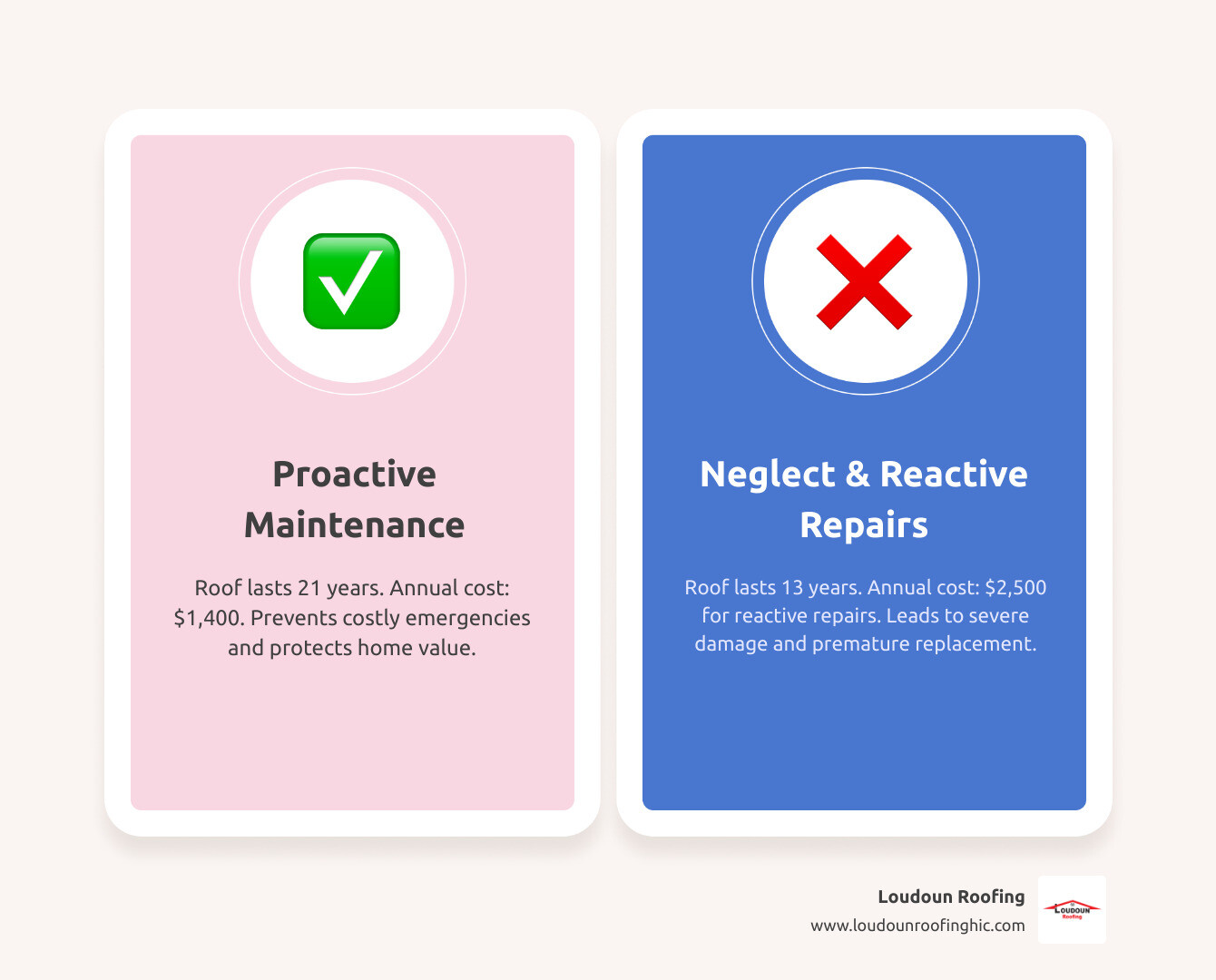
Many homeowners ignore their roof until a leak appears, but by then, the damage is often extensive. Research shows that roofs with proactive maintenance last an average of 21 years, compared to only 13 years for neglected roofs. This eight-year difference can translate to nearly $20,000 in savings. In Loudoun County, where weather varies from summer heat to winter ice, a structured maintenance plan is critical to prevent minor issues from becoming emergency roof repairs.
I’m Esteban Marin, owner of Loudoun Roofing. Since 2001, I’ve helped hundreds of property owners implement maintenance programs that extend roof life and prevent expensive surprises.
Why Proactive Roof Care is Non-Negotiable
Your roof is your home’s first line of defense against the elements. When it fails, the consequences can affect your entire property. Most homeowners ignore their roof until a leak appears, but by then, significant damage may have already occurred. The National Roofing Contractors Association states that after proper installation, maintenance is the single most important factor in determining a roof’s lifespan and lifetime cost. Neglecting preventative roof maintenance allows minor, fixable issues to escalate into major structural problems.
The Financial Case for Preventative Roof Maintenance
The financial argument for proactive care is compelling. Research shows a stark contrast in longevity and cost between maintained and neglected roofs:
- Extended Lifespan: Roofs with consistent maintenance last an average of 21 years, while unmaintained roofs last only 13 years.
- Significant Savings: Annual maintenance costs average around $1,400, whereas reactive repairs on a neglected roof average $2,500 per year. This adds up to nearly $20,000 in savings over the roof’s lifetime, money that would otherwise be spent on avoidable emergency roof repairs.
Beyond repair costs, neglect leads to other expensive problems:
- Water Damage: Leaks can destroy insulation, drywall, and personal belongings.
- Mold Growth: Trapped moisture creates health hazards requiring costly professional remediation.
- Pest Infestations: Deteriorated areas provide easy entry for rodents and insects.
- Reduced Property Value: Roof problems are a major red flag for home inspectors and potential buyers.
Boosting Energy Efficiency Through a Healthy Roof
A well-maintained roof also plays a crucial role in your home’s energy efficiency, directly impacting your monthly utility bills. Key components work together to regulate your home’s temperature:
- Insulation: Dry, effective attic insulation acts as a thermal barrier, preventing heat loss in winter and heat gain in summer. Even minor moisture from a leak can compromise its R-value.
- Ventilation: A balanced system of intake and exhaust vents prevents heat and moisture buildup in the attic. This stops shingles from “baking” in the summer and prevents the formation of destructive ice dams in the winter.
- Air Sealing: Sealing gaps around chimneys, vents, and other penetrations stops conditioned air from escaping, reducing the workload on your HVAC system.
For those considering a new roof, options like an energy efficient metal roof can reduce cooling costs by 10-25% by reflecting solar heat. A healthy roof keeps your home more comfortable and your energy bills lower.
Anatomy of a Roofing System: What Every Owner Should Know
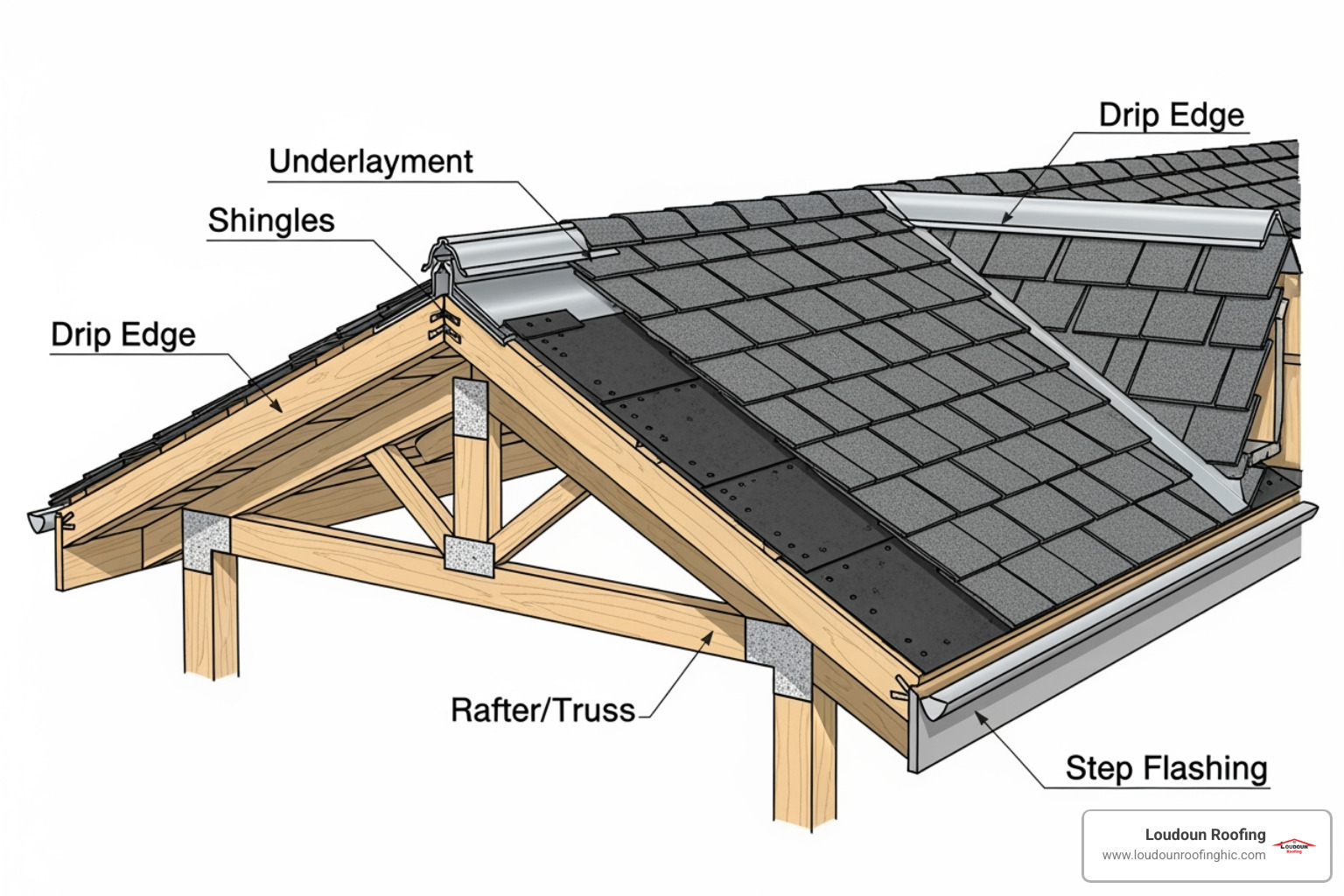
To maintain your roof, you must understand its components. A roof is an engineered system where each part has a specific function. Failure in one area can compromise the entire residential roofing system.
The core components include:
- Roof Decking: The structural foundation (usually plywood or OSB) that supports the entire system.
- Underlayment: A water-resistant barrier that acts as a secondary defense against moisture.
- Surface Material: The visible layer (shingles, metal, etc.) that takes the direct impact of weather.
- Flashing: Metal pieces that seal joints and prevent leaks around chimneys, vents, and skylights.
- Gutters and Downspouts: The drainage system that channels water away from your foundation.
- Fascia and Soffit: Boards along the roof’s edge that support gutters and provide ventilation.
- Ventilation System: Vents that allow air to circulate, controlling heat and moisture in the attic.
The Critical Role of Flashing, Gutters, and Ventilation
In any preventative roof maintenance program, three components require special attention as they are common points of failure.
Flashing is your roof’s most critical seal. Damaged or improperly installed roof and window flashing is a leading cause of leaks. Even a small gap can channel water directly into your attic, causing hidden damage. Inspections should focus on checking for rust, loose fasteners, and deteriorating sealant.
Gutters manage the immense volume of water that hits your roof. When clogged with debris, water backs up, overflowing onto fascia, siding, and pooling around your foundation. This can lead to rot, basement flooding, and foundation damage. Gutters should be cleaned at least twice a year.
Attic ventilation is essential for roof longevity and energy efficiency. In summer, it prevents heat buildup that damages shingles. In winter, it removes moist air that can cause condensation, mold, and ice dams. A balanced system is key to preventing these issues and extending your roof’s life.
The Ultimate Preventative Roof Maintenance Checklist
Consistent preventative roof maintenance is your best defense against costly surprises. This checklist outlines tasks for visual inspection and clarifies when to call a professional for a thorough roof inspection. Catching issues early saves money and prevents major headaches.
Exterior Checks: Your First Line of Defense
Many warning signs are visible from the ground, especially with binoculars. Perform these checks seasonally and after major storms.
- Shingles: Look for missing, broken, cracked, or curling shingles. These are signs of wear that expose your roof’s underlayment.
- Granule Loss: A large accumulation of shingle granules in gutters indicates that your shingles are nearing the end of their life.
- Moss or Algae: Dark streaks (algae) or green growth (moss) retain moisture and can accelerate shingle deterioration. Our roof and siding cleaning services can safely remove them.
- Flashing: Inspect the metal around chimneys, vents, and skylights for rust, damage, or cracked sealant. Flashing failure is a primary cause of leaks.
- Gutters: Ensure gutters and downspouts are clear of debris and that water is directed away from your foundation.
- Roofline: Check for any sagging, which could indicate a serious structural problem requiring immediate professional attention.
- Trees: Trim any branches that are touching or overhanging the roof to prevent abrasion and debris buildup.
- Post-Storm Check: Always perform a visual post-storm roof inspection for damage from hail or high winds.
Interior Checks: Spotting Hidden Dangers
Interior signs often mean water has already breached your roof. Address these immediately.
- Water Stains: Yellow or brown stains on ceilings or walls are a classic sign of a leak.
- Peeling Paint: Moisture seeping into walls can cause paint to bubble or peel, especially near the ceiling.
- Damp Spots: Check for moisture around fireplaces, as chimneys are common leak points.
- Attic Issues: In the attic, look for damp insulation, mold, a musty smell, or sagging decking.
- Blocked Vents: Ensure insulation is not blocking soffit vents, which are crucial for proper airflow.
- Light Beams: On a sunny day, turn off the attic lights. If you see daylight, you have a hole that lets in water.
Best Practices for Safe DIY Preventative Roof Maintenance
Your safety is paramount. Most inspection work can and should be done from the ground.
- Use Binoculars: A good pair of binoculars allows for detailed inspection of shingles and flashing from the safety of the ground.
- Ladder Safety: If using a ladder, ensure it is on stable ground and extends three feet above the roofline. Maintain three points of contact while climbing.
- Stay Off the Roof: Walking on a roof can be dangerous and may damage shingles. Never walk on a wet, icy, or mossy roof.
- Know Your Limits: If a task feels unsafe or you are unsure what you’re seeing, call a professional. It’s better to be safe. Contact us at (703) 745-5153 for expert help.
Professional Maintenance and Material-Specific Care
While DIY checks are important, they cannot replace the trained eye of a certified roofer who can spot subtle issues before they escalate. Professional inspections are a critical part of protecting your investment.
Why and When to Schedule a Professional Inspection
A professional roof inspection is a comprehensive evaluation of your entire roofing system.
- Frequency: We recommend twice-yearly inspections (spring and fall) as the foundation of a solid preventative roof maintenance program.
- After Storms: An inspection is non-negotiable after any severe weather, especially events involving high winds or storm hail damage, as damage can be invisible from the ground.
- Expertise: Certified roofers use specialized tools and training to identify hidden vulnerabilities. After an inspection, we provide a detailed report and a clear quote.
- Insurance Claims: Maintaining a record of professional inspections can be invaluable when filing roof insurance claims, as it demonstrates proper upkeep.
Maintenance for Different Roofing Materials
Different roofing materials require specific care. As experts in roofing for Leesburg, VA, we tailor our maintenance to your roof type.
- Asphalt Shingles: The most common material, Asphalt Shingle Roofs require checks for granule loss, curling or cracked shingles, and algae growth. Proper ventilation is key to preventing premature aging.
- Metal Roofs: Known for longevity, Metal Roofing maintenance involves checking fasteners and screws, inspecting sealant at seams, and touching up any scratches to prevent rust.
- Low-Slope and Flat Roofs: These systems require specialized attention. According to the NRCA’s Repair Manual for Low-slope Membrane Roof Systems, key concerns are ponding water, membrane tears, and seam integrity.
Roof Repair vs. Roof Replacement: Making the Call
Deciding whether to repair or replace depends on several factors. We provide an honest assessment to help you make the best choice.
- Age of Roof: If your roof is approaching the end of its typical lifespan (15-20 years for asphalt), replacement may be more economical than frequent repairs.
- Extent of Damage: A targeted roof repair is ideal for isolated damage. Widespread issues like extensive shingle loss or rot often warrant a full roof replacement.
- Cost Analysis: If repair costs are approaching 25-30% of the cost of a new roof, replacement is generally the smarter long-term investment.
Frequently Asked Questions about Preventative Roof Maintenance
How often should I have my roof professionally inspected?
For optimal protection, a professional roof inspection should be conducted twice a year: once in the spring to assess winter damage and once in the fall to prepare for cold weather. An inspection is also essential after any major weather event, such as a hailstorm or high winds. For roofs over 15 years old, these biannual checks are critical for catching age-related issues early.
What are the biggest risks of neglecting roof maintenance?
Neglecting your roof is a costly gamble. The primary risks include:
- Catastrophic Water Intrusion: Leads to damaged insulation, rotted framing, and ruined interiors.
- Toxic Mold Growth: Moisture creates a breeding ground for mold, posing health risks and requiring expensive remediation.
- Voided Warranties and Denied Insurance Claims: Most manufacturers and insurers require proof of regular maintenance.
- Premature Roof Failure: Neglect drastically shortens a roof’s lifespan, forcing a costly roof replacement years ahead of schedule. As the Canadian Roofing Contractors Association notes, this can cost tens of thousands of dollars.
Can regular cleaning really extend my roof’s life?
Yes, absolutely. A professional roof and siding cleaning is a vital maintenance task. It removes debris that traps moisture, prevents the growth of damaging algae and moss that degrade shingles, and ensures your gutters can effectively channel water away from your home. This simple step prevents water damage and significantly extends the life of your roofing materials.
Protect Your Investment with a Proactive Maintenance Plan
Treating preventative roof maintenance as an option is a mistake; it is the single best investment you can make in your home’s safety, value, and longevity. A well-maintained roof lasts nearly 60% longer, saving you thousands in premature replacement costs and emergency repairs. By being proactive, you transform your roof from a potential liability into a reliable shield.
You don’t have to manage it alone. Partnering with a local professional who understands Northern Virginia’s weather is key. At Loudoun Roofing, we have protected investments for homeowners in Leesburg and throughout Loudoun County since 2001. We offer custom roofing maintenance programs custom to your roof’s specific needs. Our goal is to provide honest, expert advice that extends your roof’s life and gives you peace of mind.
Ready to protect your biggest investment? Contact the experienced team at Loudoun Roofing today to schedule your comprehensive roof inspection or explore our complete roofing solutions for Loudoun County.