
Your Guide to a Lasting Metal Roof
Metal roof care is essential for maximizing the 50+ year lifespan that makes these systems a valuable investment for Northern Virginia homeowners. While famously low-maintenance, a proactive approach ensures your roof continues to protect your home for decades. As a trusted local partner providing comprehensive residential and commercial roofing services, Loudoun Roofing has seen how proper care preserves these durable systems.
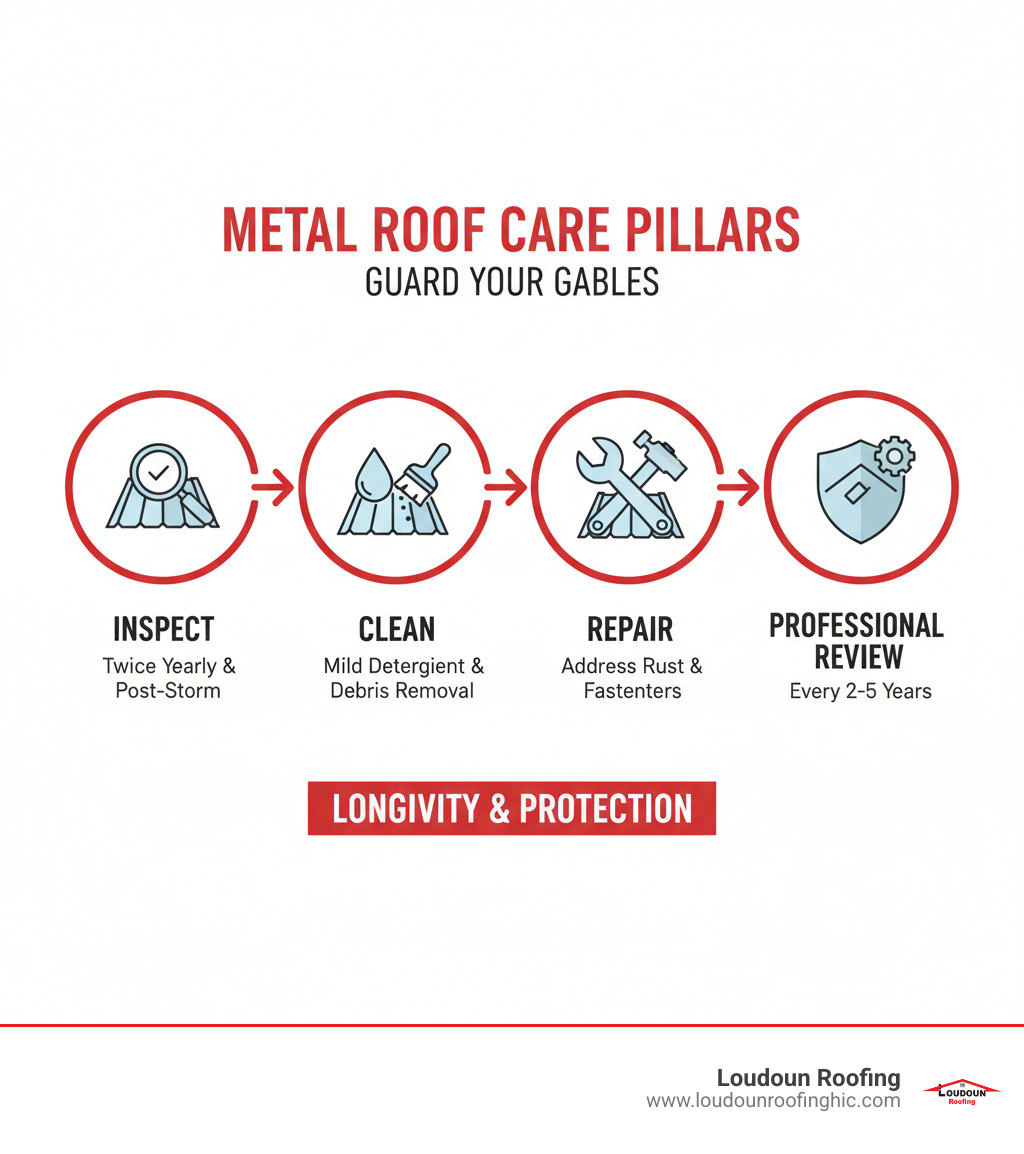
Key Metal Roof Care Tasks:
- Inspect twice yearly (spring and fall) and after severe weather
- Clean gently to remove debris, dirt, and stains
- Check fasteners and seams for loosening or corrosion
- Address rust immediately with a wire brush, primer, and paint
- Maintain gutters to prevent moisture buildup
- Trim overhanging branches to avoid scratches
- Schedule professional inspections every 2-5 years
Research confirms that metal roofs can last over 60 years when maintained, but neglect can shorten that lifespan. The quality of sealants and installation are deciding factors in a roof reaching its full potential. Small issues like trapped debris, minor rust, or loose screws can escalate into costly repairs if ignored. Since 2001, Loudoun Roofing has specialized in metal roofing installation and maintenance throughout Loudoun County, helping homeowners protect their investment with proper metal roof care.
The Foundation of Longevity: Routine Metal Roof Inspection
Routine inspections are your roof’s regular checkup, catching small problems before they become expensive emergencies. A twice-yearly inspection schedule in spring and fall, plus an extra check after any severe storm, is the cornerstone of effective metal roof care. This proactive approach protects your investment, as early detection of issues can save thousands in future repairs. For expert attention, our team at Loudoun Roofing has helped Northern Virginia homeowners maintain their roofs since 2001.
What to Look For During an Inspection
Start your inspection safely from the ground using binoculars to survey the entire roof surface. Look for the following:
- Debris accumulation: Leaves, pine needles, and branches trap moisture against the metal, leading to corrosion. Clear this buildup from valleys, gutters, and around chimneys regularly.
- Scratches and scuffs: Minor scratches in the coating expose the metal to moisture, causing rust. Address them promptly with touch-up paint.
- Dents or punctures: Impacts from hail or branches require immediate attention. While shallow dents are cosmetic, deeper damage can cause leaks. Document any damage for potential insurance claims.
- Fading or chalking paint: This indicates UV degradation of the protective finish. Excessive chalking signals it’s time to consider a new coating to restore protection.
- Overhanging tree branches: Trim branches at least six inches from the roof to prevent scratches, debris accumulation, and pest access.
- Gutter and downspout blockages: Clogged gutters cause water to back up onto the roof edge, accelerating corrosion. Clean gutters at least twice a year.
- Signs of pests: Birds, squirrels, or insects can create nests that trap moisture and damage your roof. Early detection simplifies removal.
Key Inspection Points and Safety
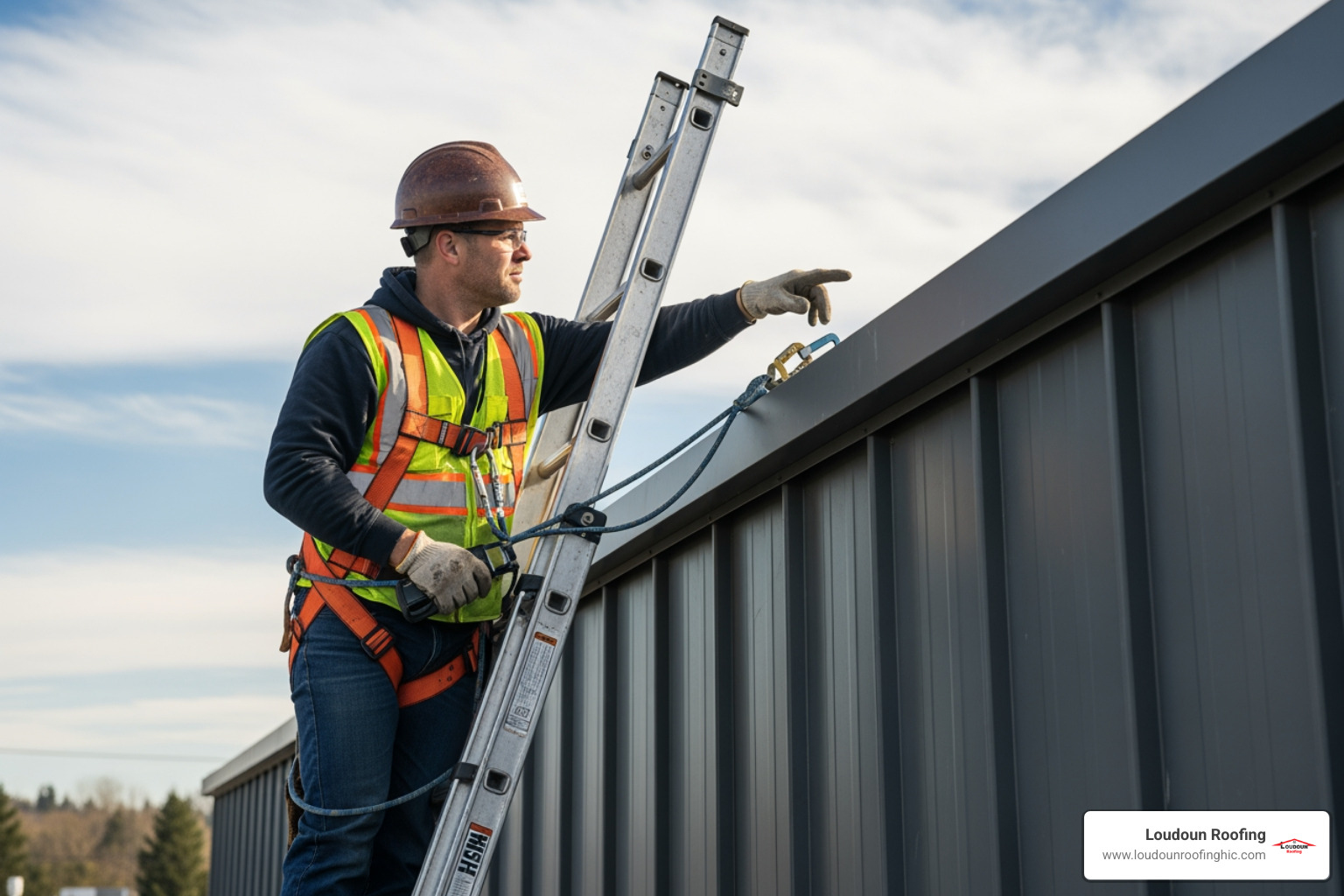
Safety is non-negotiable for roof work, as metal roofs are slippery. If you go on the roof, wear rubber-soled shoes for grip and walk only on the flat parts of the panels over structural supports. Avoid stepping on seams or ribs, which can dent and are unstable. Always use a spotter on the ground to steady your ladder.
Walking on a metal roof can cause dents, scratches, and damage seams, leading to leaks. If your roof is steep, you’re uncomfortable with heights, or you see significant damage, call a professional. Our team is equipped to perform thorough inspections safely as part of our Durable Roofing Solutions.
Common Metal Roof Types and Considerations
Understanding your roof type helps tailor your maintenance approach.
- Standing seam roofs: Featuring interlocking raised seams and concealed fasteners, these roofs are highly durable (50-60+ years). Maintenance focuses on checking sealants at penetrations and ensuring seams are tight.
- Corrugated panels: These wavy panels use exposed fasteners (screws and washers) that require more frequent inspection due to direct exposure to UV rays and weather.
- Metal shingles and tiles: These mimic traditional materials like slate or tile with the durability of metal. Maintenance involves checking that individual pieces remain interlocked and secure.
The key distinction is exposed vs. concealed fasteners. Exposed fasteners require regular inspection as their rubber washers degrade from UV exposure. Concealed systems protect these components, leading to fewer fastener-related issues.
Essential Metal Roof Care: Cleaning and Surface Upkeep
A clean metal roof protects your investment by preventing dirt and debris from trapping moisture, which can cause corrosion. Regular cleaning is a straightforward but essential part of metal roof care that prevents costly problems down the road.
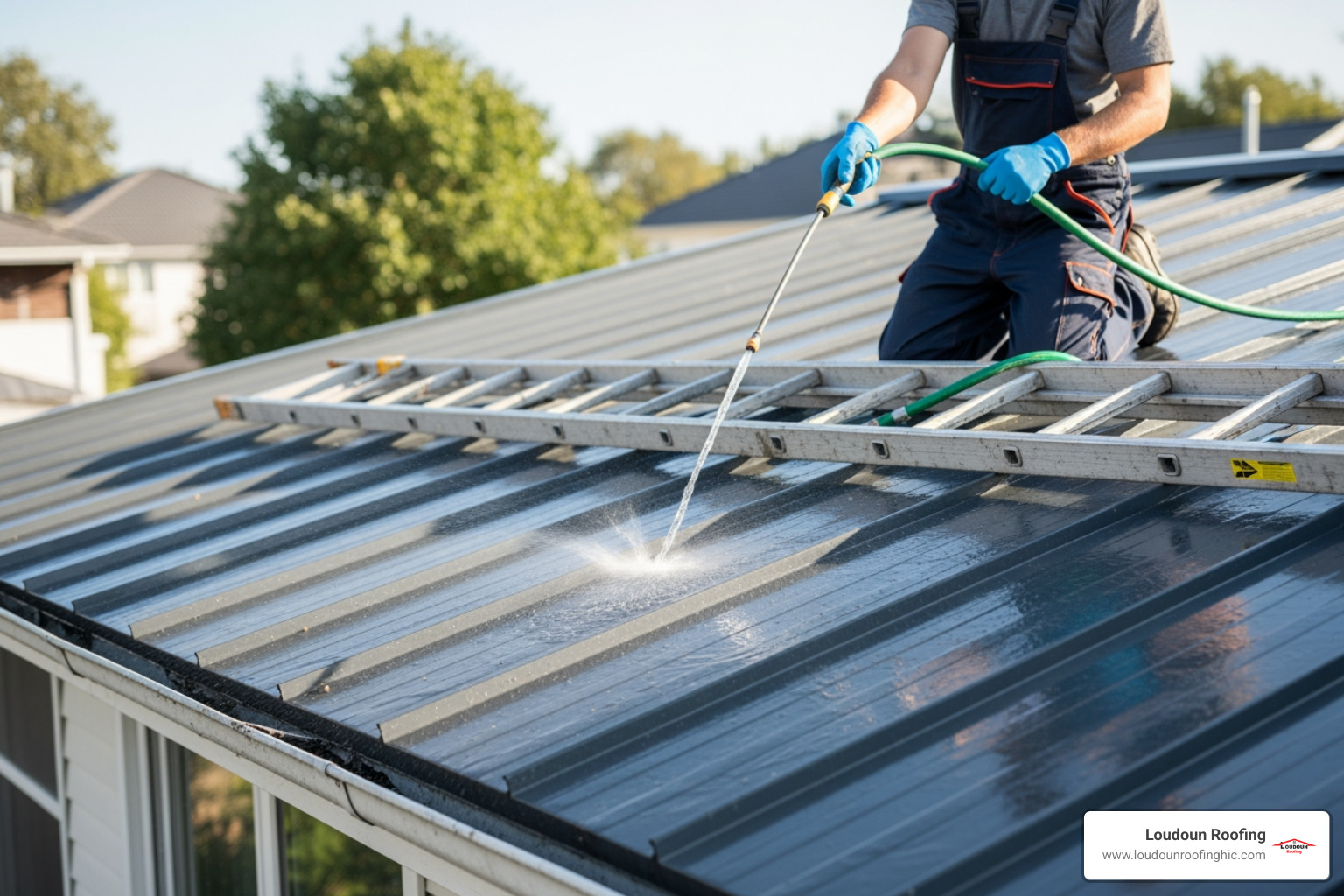
How to Properly Clean Your Metal Roof
Clean your metal roof gently, like you would a car. For general grime, use a solution of mild detergent and water applied with a soft brush or sponge, working from top to bottom. Rinse thoroughly with a garden hose to remove all soap residue.
For mildew or algae, a diluted bleach solution can be used, but apply it sparingly and rinse immediately and thoroughly to protect the roof’s finish and your landscaping. Never use abrasive cleaners, steel wool, or harsh chemicals, as they can damage the protective coating. For stubborn spots like tar, use mineral spirits followed by a detergent wash and rinse. Preventing debris buildup is key, as trapped organic matter accelerates corrosion by holding moisture against the metal.
Preventing and Treating Rust and Corrosion
Modern metal roofs are rust-resistant, but damage to the coating can expose the bare metal to moisture and oxygen, causing rust. A specific threat is galvanic corrosion, which occurs when dissimilar metals (like Galvalume® and copper) touch in the presence of water. According to industry resources on galvanic corrosion, this can attack the more active metal. Proper installation prevents this, but it’s a key watch-out during repairs.
Address small rust spots immediately. Gently scrub the rust with a wire brush, apply a metal primer to the bare spot, and finish with matching touch-up paint. For extensive corrosion, panel replacement may be necessary. Our team at Loudoun Roofing can assess the damage and recommend the best solution.
Repainting and Pressure Washing Precautions
While a paint job can last decades, widespread fading or chalking signals it’s time for a repaint. Repainting repairs damage, adds protection, and improves curb appeal. It can also boost the performance of an energy efficient metal roof by restoring its reflective properties. Always use paint specifically formulated for metal roofing.
Use caution with pressure washing. High pressure can strip paint, force water under seams, and void warranties. If you pressure wash, use the lowest effective pressure with a wide-angle tip (40-degree), keeping the nozzle 12-18 inches from the surface and away from seams. When painting, use a brush or roller instead of a sprayer to prevent overspray and ensure even coverage.
Protecting Your Investment: Structural Maintenance and Repairs
Structural components like sealants and fasteners are critical for a weather-tight roof and are a key part of metal roof care. A clean surface won’t prevent leaks if the underlying structure is compromised.
The Role of Sealants, Flashing, and Coatings
The quality of sealants and flashing determines a metal roof’s service life. Research shows proper sealant application is a deciding factor in a roof reaching its 60+ year potential.
- Sealant Inspection: Check sealants at seams and penetrations for cracking or deterioration. Re-seal any gaps promptly with a compatible, high-quality sealant to maintain a waterproof barrier.
- Flashing Integrity: Flashing directs water away from vulnerable areas like valleys and chimneys. Damaged or loose flashing is a common source of leaks, so inspect these areas for damage.
- Roof Penetrations: Areas around vents and skylights are common failure points. Rubber boots on vent pipes degrade from UV exposure and need periodic replacement. When adding attachments like solar panels, use non-penetrating mounting solutions like S-5! clamps to avoid creating new leak points.
- Specialized Coatings: Coatings can add UV resistance and improve thermal performance. A reflective coating can improve an energy efficient metal roof’s performance.
Caring for Metal Roof Screws
On roofs with exposed fasteners, the screws are critical for a watertight seal and require vigilant monitoring. Screws can fail over time due to thermal expansion of panels or gasket deterioration from UV exposure. Heavy snow and ice can add further stress.
Inspect screws twice yearly. Look for loose, crooked, missing, or corroded screws. A loose screw may have a gap under its head or spin freely. When replacing screws, use manufacturer-recommended fasteners and the correct torque setting; overtightening can damage the washer, while undertightening creates a poor seal. The washer should be compressed just enough to create a seal without being crushed.
If you find widespread fastener issues or are uncomfortable with the repair, call a professional. Our roofing maintenance team can address these problems before they cause leaks.
When to Call a Professional: Repair vs. Replacement
While many metal roof care tasks are DIY-friendly, some issues require professional expertise to prevent further damage. Knowing when to call an expert saves time, money, and stress.
Signs Your Metal Roof Needs Professional Attention
- Significant Punctures or Large Dents: A large puncture or major dent can compromise the roof’s integrity and waterproofing and requires a professional.
- Widespread or Severe Rust: While small rust spots are a DIY fix, extensive rust requires professional assessment and likely panel replacement.
- Loose or Separating Panel Seams: This is a common source of leaks and compromises the entire system. A professional repair is needed for a permanent solution.
- Damaged Flashing: Compromised flashing around chimneys or vents is a primary cause of leaks and requires immediate professional repair.
- Multiple Loose or Missing Fasteners: Widespread fastener issues may indicate a systemic problem that needs a professional evaluation.
- Water Leaks in the Attic: Any sign of moisture in your attic is an urgent issue that can lead to mold and structural damage, requiring immediate professional emergency roof repair.
Deciding Between Repair and Replacement
Deciding between repair and replacement depends on several factors. Our team at Loudoun Roofing can help you make an informed choice.
- Extent of Damage: Localized damage often makes repair cost-effective. Widespread damage may make replacement a better long-term investment.
- Age of the Roof: On an older roof, continual repairs can become more expensive than replacement over time.
- Cost-Effectiveness: If the cost of extensive repairs approaches that of a new roof, replacement is the smarter choice. A Leesburg Metal Roof Replacement is often best for severe panel damage or systemic issues.
- Warranty Considerations: Improper DIY repairs can void your warranty. Always consult a professional before undertaking major repairs.
| Issue | DIY Repair Feasible | Professional Intervention Recommended |
|---|---|---|
| Minor dirt/debris accumulation | Yes | If unsafe or extensive |
| Small scratches (touch-up paint) | Yes | If unsure of method |
| Minor rust spots (wire brush, prime, paint) | Yes | For widespread rust |
| Clogged gutters/downspouts | Yes | If high or unsafe |
| Trim overhanging branches | Yes (small, low branches) | For large or high branches |
| A few loose screws (exposed fastener) | Yes (with correct tools/screws) | For widespread issues |
| Large dents or punctures | No | Yes, always |
| Widespread or severe rust | No | Yes, always |
| Loose or separating panel seams | No | Yes, always |
| Damaged flashing (chimneys, vents) | No | Yes, always |
| Water leaks in attic/interior | No | Yes, always (emergency) |
| Ice dam formation/prevention | Limited (DIY checks) | Yes (professional solutions) |
Frequently Asked Questions about Metal Roof Maintenance
How often should I have my metal roof professionally inspected?
A professional inspection every 2-5 years is the gold standard, supplementing your own biannual checks. In Northern Virginia’s varied climate, more frequent checks can catch sealant degradation, hidden corrosion, or fastener wear early. In areas with harsh weather, annual inspections are recommended. Our team at Loudoun Roofing has served the Leesburg area since 2001 and can attest that proactive inspections extend a roof’s life by identifying issues invisible from the ground.
Can I walk on my metal roof?
You should only walk on a metal roof when absolutely necessary and with extreme caution. Foot traffic can cause dents, scratches, and seam damage that may void your warranty. If you must go on the roof, walk only on the flat parts of the panels over the supports. Wear soft, rubber-soled shoes for grip and never walk on a wet or icy metal roof. For anything beyond a quick visual check, hiring a professional is the safest choice, as our trained team has the right equipment to access your roof without causing damage.
What is the biggest threat to a metal roof’s lifespan?
Improper installation is the single greatest threat to a metal roof’s lifespan. It can cause leaks, panel detachment, and corrosion, regardless of material quality. This is why choosing an experienced contractor is critical.
After installation, trapped moisture is the most significant ongoing risk. Debris like leaves and pine needles holds moisture against the panels, accelerating corrosion and degrading the protective finish. Research confirms that trapped debris and poor drainage are primary causes of premature roof failure. Therefore, regular cleaning and gutter maintenance are essential metal roof care practices. A clean roof is a dry roof, which ensures maximum longevity.
Protect Your Investment with Expert Care
Your metal roof is a long-term investment that can protect your home for over 50 years. Following these metal roof care practices—regular inspections, gentle cleaning, and prompt repairs—ensures your roof delivers on that promise and thrives for decades.
Think of metal roof care as a partnership. Proactive maintenance, like clearing debris and tightening screws, saves money and maximizes your roof’s lifespan. Knowing when to call for professional help is also key to protecting your investment as a Loudoun County homeowner.
When you need professional support, Loudoun Roofing is here to help. For over two decades, we’ve provided comprehensive Roofing Maintenance services. Whether you need a storm damage assessment, rust treatment advice, or a full inspection, our expert team is ready.
We understand your roof is a shield for your family. We apply the same attention to detail on every maintenance call as we do on new installations, committed to helping your metal roof reach its full potential.
Don’t wait for small problems to become big expenses. Contact us today for a consultation. Let’s work together to protect your investment and ensure your metal roof performs beautifully for decades to come.