
Why Hiring the Right Roofing Professional Protects Your Home
Finding licensed roofers in my area is the most critical step to ensure quality workmanship and protect your home. Homeowners in Leesburg and Loudoun County who partner with a qualified contractor avoid costly mistakes and receive durable, expertly crafted roofing solutions. Our team at Loudoun Roofing is committed to helping you secure your investment with a professionally installed roof.
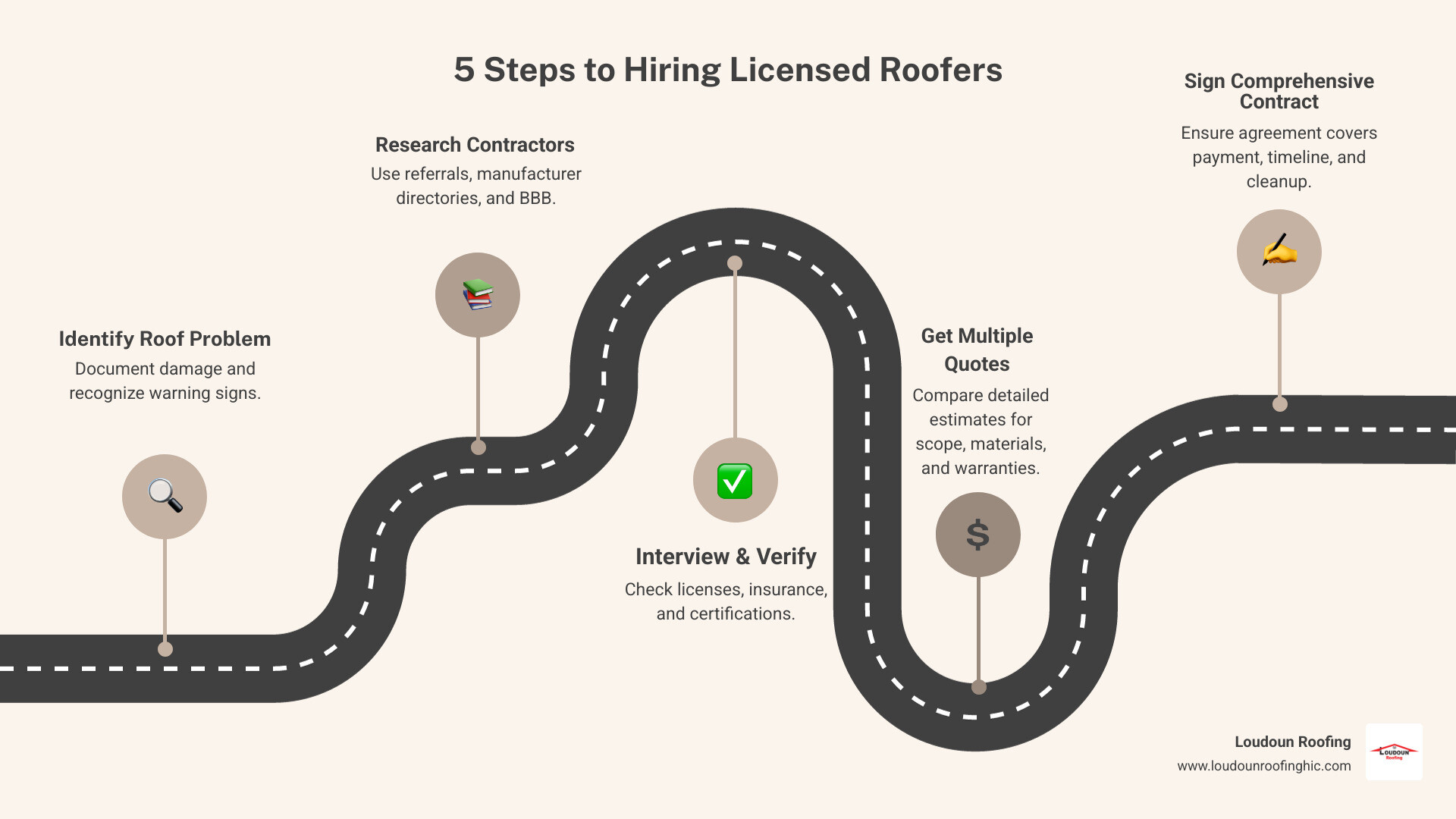
Quick Guide to Finding Licensed Roofers:
- Verify Licensing & Insurance: Confirm active licenses and liability coverage.
- Check Certifications: Look for manufacturer certifications like GAF Master Elite®.
- Read Reviews: Search the Better Business Bureau and other online platforms.
- Get Multiple Quotes: Request at least three detailed, written estimates.
- Review References: Contact past clients to verify satisfaction.
- Examine Contracts: Ensure agreements detail scope, costs, and warranties.
Your roof is your home’s primary defense against weather. While an unlicensed operator may offer a lower price, the risks are immense: poor workmanship, voided warranties, and building code violations. This guide provides a clear roadmap to finding and hiring professional local roofers in my area who meet the highest standards.
First Steps: Identifying Roof Problems and Why a Pro is Essential
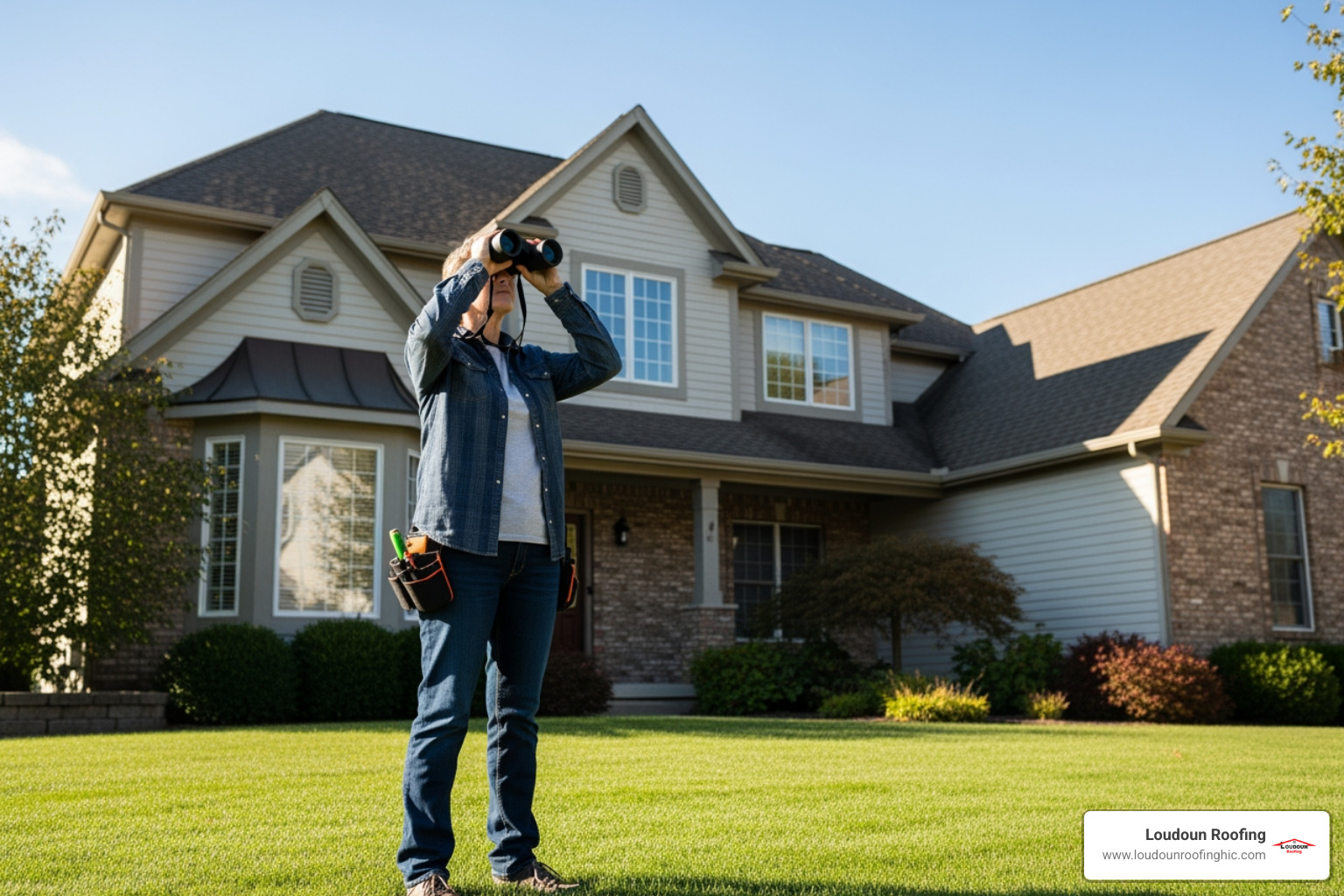
Before calling contractors, it’s important to understand your roof’s condition. While only a professional inspection offers a complete diagnosis, you can spot many warning signs from the ground. At Loudoun Roofing, we know that homeowners who recognize these indicators early can prevent minor issues from becoming major structural damage. A roof’s age is a primary factor; asphalt shingle roofs in Northern Virginia typically last 20-25 years. If yours is nearing this age, it’s time to plan for a replacement.
Common Signs Your Roof Needs Repair or Replacement
Look for these critical indicators to determine if you need a repair or a full replacement:
- Damaged Shingles: Curling, buckling, or missing shingles compromise your roof’s protective barrier.
- Granules in Gutters: An accumulation of these sand-like particles means your shingles are aging and losing their UV protection.
- Leaks or Water Stains: Stains on your ceiling or in the attic demand immediate attention to prevent mold and wood rot.
- Sagging Roof Deck: A drooping roofline signals serious structural problems requiring urgent professional assessment.
For a professional evaluation of these issues, explore our Northern Virginia roofing services.
The Risks of DIY vs. Hiring a Professional
DIY roof repair seems like a way to save money, but it often creates problems that cost thousands to fix properly. The risks are not worth the savings.
- Safety Hazards: Roofing is inherently dangerous. Professionals use safety gear to prevent falls, which cause thousands of serious injuries annually.
- Voiding Warranties: Manufacturers typically require installation by a certified professional to honor their material warranties. A DIY job can void this protection.
- Improper Installation: Incorrect nailing, flashing, or ventilation leads to leaks and premature failure. Fixing these mistakes is often more expensive than hiring a pro initially.
- Lack of Insurance: You are personally liable for accidents or property damage. Licensed contractors carry general liability and workers’ compensation insurance, protecting you from financial disaster.
- Code Violations: Professionals understand local building codes in Leesburg and Loudoun County, ensuring your project is compliant and avoiding future legal issues.
To avoid these pitfalls, it’s always best to find a roofer with the right training and insurance.
How to Find and Vet Licensed Roofers in My Area
Finding a qualified roofer requires due diligence to ensure they are licensed, insured, and reputable. This systematic approach protects you from poor workmanship and scams. When you need a trusted roofing contractor, taking these steps ensures you’re making an informed decision.
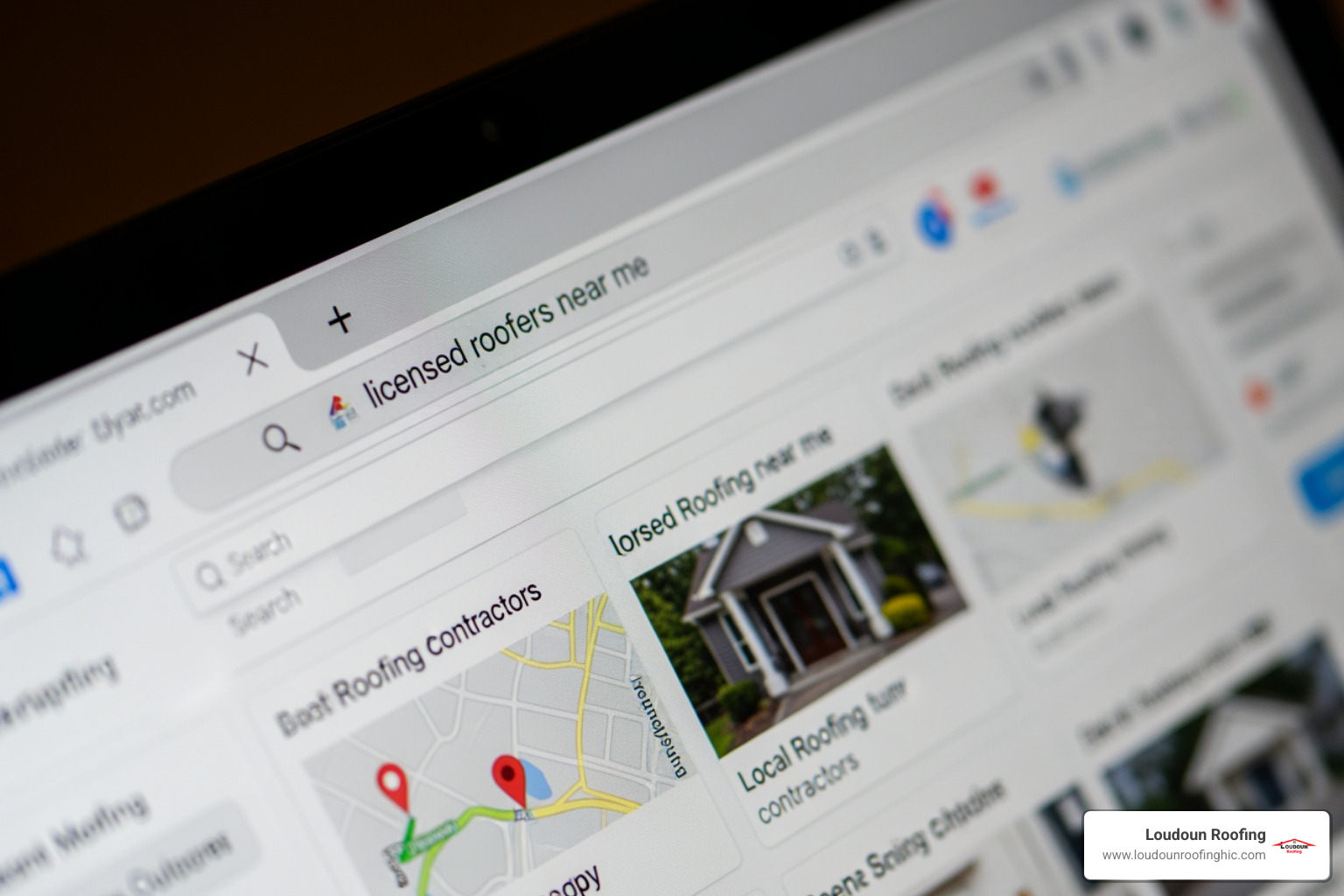
Step 1: Where to Find Reputable Roofing Contractors
Build a list of potential contractors from reliable sources:
- Personal Referrals: Ask friends, family, and neighbors in Leesburg or McLean for recommendations.
- Manufacturer Directories: Leading manufacturers like GAF list certified contractors online. You can find GAF Roofing Contractors in Northern Virginia who meet high standards and offer improved warranties.
- Online Vetting: Use the Better Business Bureau to check ratings and complaint histories.
Step 2: Key Questions to Ask Every Potential Roofer
Interview each contractor to gauge their professionalism and reliability:
- Are you licensed and insured in Virginia? This is non-negotiable. They must have a valid Virginia contractor’s license and carry both general liability and workers’ compensation insurance. Ask for certificates.
- How long have you been in business? Longevity indicates stability. Loudoun Roofing has served Northern Virginia for over two decades.
- Do you use subcontractors? If so, confirm they are also properly insured.
- What is your warranty on labor? A strong workmanship warranty shows the contractor stands behind their installation.
For more guidance, see a guide to finding a roofer company near me.
Step 3: How to Research and Verify Information
Verify every claim a contractor makes. Transparency is the mark of a professional.
- Check Licenses: Verify their license with the Virginia Department of Professional and Occupational Regulation (DPOR) online.
- Verify Insurance: Request certificates of insurance directly from the insurance carrier.
- Read Online Reviews: Look for patterns in feedback on Google and other platforms.
- Contact Local References: Speak with recent customers about their experience.
- Review Their Portfolio: Ask for photos of previous work similar to your project.
To learn about our commitment to quality, visit our about us page.
Understanding the Fine Print: Contracts, Costs, and Warranties
A detailed contract is your most important form of protection; never proceed with only a verbal agreement. At Loudoun Roofing, we believe transparency in contracts, pricing, and warranties is the foundation of trust.
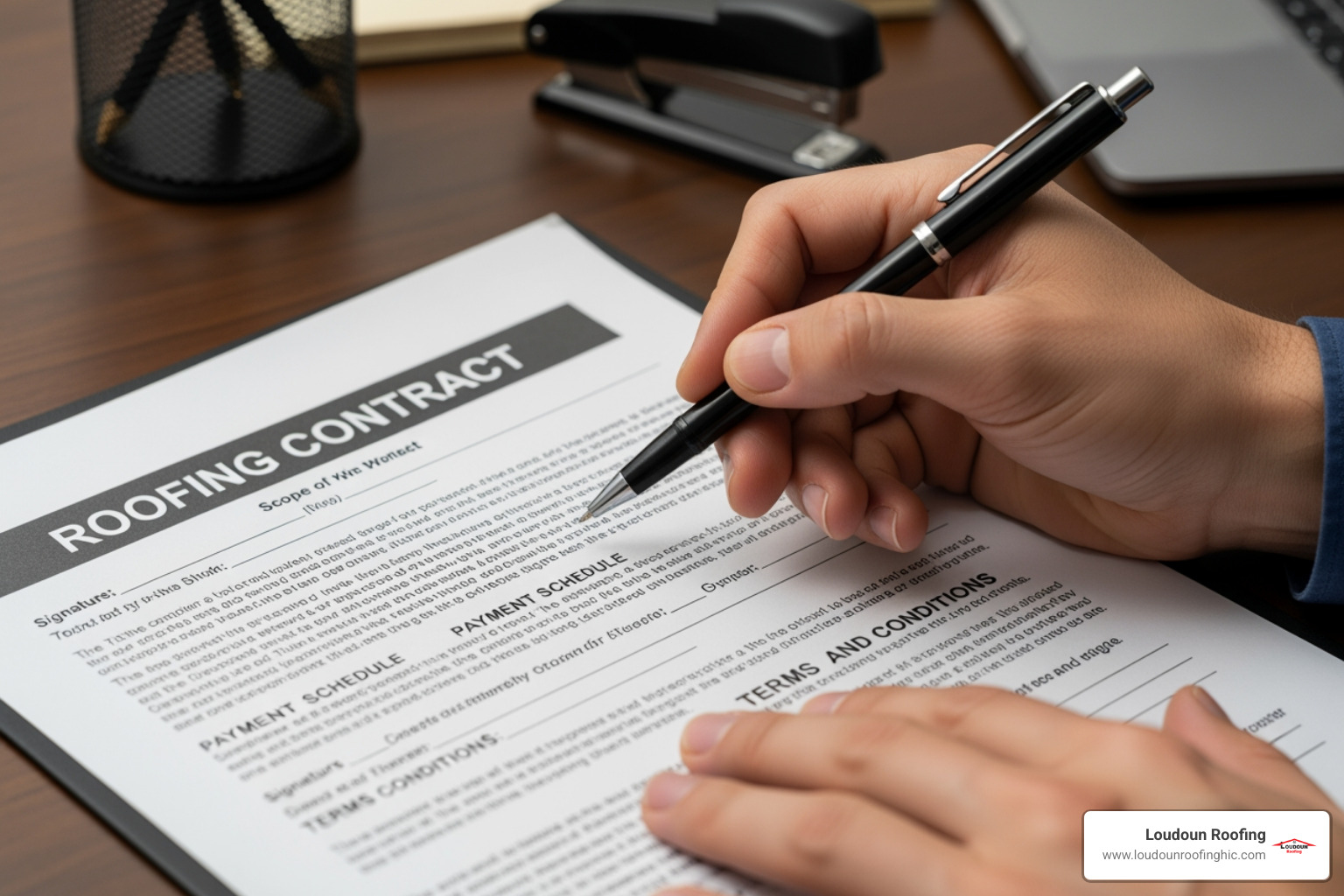
What Must Be Included in a Roofing Contract
A comprehensive contract protects both you and the contractor. Ensure your agreement includes these essential elements:
- Contractor Information: Full business name, address, and license number.
- Detailed Scope of Work: A clear outline of all tasks, from tear-off to final cleanup.
- Specific Materials: Brand names, product lines, and colors for all components.
- Itemized Costs: A breakdown of materials, labor, disposal fees, and permits.
- Payment Schedule: A modest down payment (10% is standard), with the final payment due upon satisfactory completion. Never pay the full amount upfront.
- Project Timeline: Estimated start and completion dates.
- Lien Release Clause: Protects you from liens if the contractor fails to pay suppliers.
- Warranty Details: A clear description of both material and labor warranties.
For reliable and transparent contracting, consider our Leesburg VA roofing services.
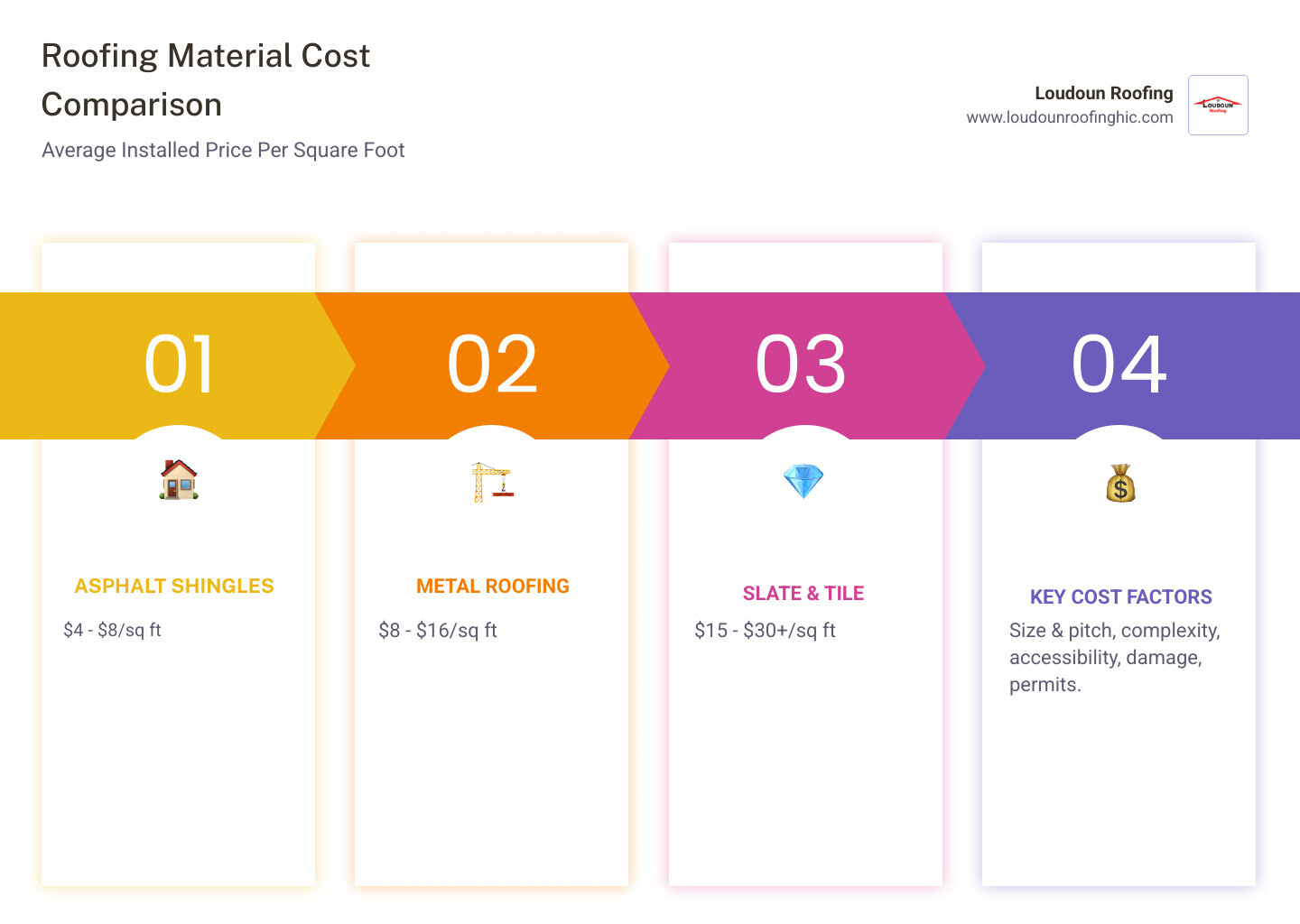
Typical Costs for Roof Repair and Replacement
Roofing costs vary based on size, materials, and complexity, which is why getting at least three detailed quotes is essential. Key factors influencing the final price include:
- Roof Size and Pitch: Larger or steeper roofs require more materials and labor.
- Material Choice: Asphalt shingles are affordable, while metal or slate are premium options with greater longevity.
- Complexity: Features like chimneys and skylights increase labor time.
- Existing Damage: Underlying rot or structural issues will add to the cost.
When comparing quotes, focus on overall value, not just the lowest price.
Navigating Roofing Warranties: Materials vs. Labor
Understanding warranties ensures your investment is protected. There are two main types:
- Material Warranty: From the manufacturer (e.g., GAF), this covers defects in the materials. Coverage can range from 20 years to a lifetime.
- Workmanship Warranty: From your contractor, this covers installation quality. It protects you from leaks or other issues caused by improper installation. A strong warranty lasts at least 5-10 years.
Ask about prorated vs. non-prorated coverage (non-prorated is better) and transferability. The best protection often comes from improved system warranties, offered by certified installers like GAF Master Elite® contractors, which cover the entire roofing system. You can download GAF’s residential product guide for more details.
Key Project Considerations: Materials, Maintenance, and Insurance
Beyond hiring the right pro, understanding your material options, maintenance needs, and how to handle storm damage will ensure your roof’s longevity. For those in Great Falls, our Great Falls VA roofing guide 2025 provides localized insights.
How to Choose the Right Roofing Materials for Your Home
The material you choose impacts your home’s curb appeal, energy efficiency, and durability. Discuss these common options with your contractor:
- Asphalt Shingles: The most popular choice, offering a balance of affordability, versatility, and durability.
- Metal Roofing: Known for exceptional longevity (50+ years), durability, and energy efficiency.
- Slate and Tile: Premium materials offering unparalleled beauty and lifespan, but at a higher cost.
- Wood Shakes: Provide a natural, rustic aesthetic but require more maintenance.
Extending Your Roof’s Lifespan with Routine Maintenance
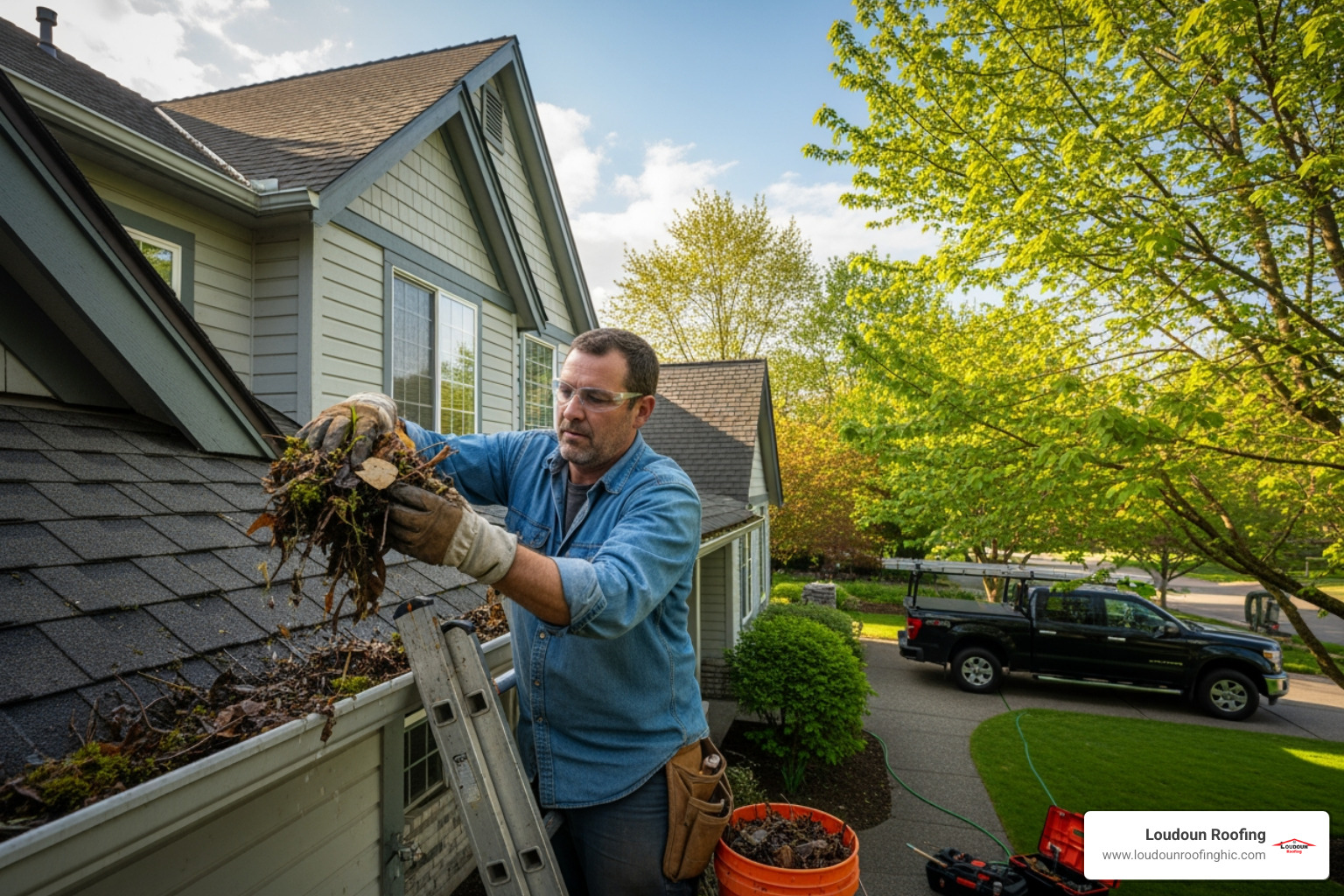
Proactive maintenance is the key to maximizing your roof’s lifespan and preventing costly repairs.
- Clean Gutters: Clogged gutters cause water to back up, leading to fascia damage and ice dams.
- Remove Debris: Keep your roof clear of leaves and branches that trap moisture.
- Inspect After Storms: Look for missing shingles or other damage after severe weather.
- Schedule Professional Inspections: An annual inspection can identify subtle issues you might miss.
The Process for Filing an Insurance Claim for Storm Damage
If a storm damages your roof, acting quickly is essential. A roofer experienced in handling claims can be a valuable partner.
- Document Damage: Take clear photos and videos of all visible damage.
- Make Temporary Repairs: If safe, use a tarp to prevent further water intrusion and keep receipts.
- Contact Your Insurance Agent: Notify your insurance company promptly to start the claims process.
- Find a Reputable Roofer: Choose a contractor experienced with insurance claims to provide a detailed estimate.
- Meet the Adjuster: Have your roofer present when the insurance adjuster inspects the damage to ensure a thorough assessment.
- Review the Claim Summary: Carefully review the insurance summary to ensure it covers all necessary repairs.
Frequently Asked Questions about Hiring Roofers
How do I protect myself from common roofing scams?
To protect yourself, never pay the full amount upfront; a 10% deposit is standard. Be wary of high-pressure “storm chasers” who appear after severe weather. Always insist on a detailed, written contract before work begins, and never rely on a verbal agreement. If a contractor claims to have spotted damage, get a second opinion from another reputable roofer before signing anything. Finally, independently verify their Virginia contractor’s license and insurance.
What are the weather requirements for a roof replacement?
Weather is a critical factor. Most asphalt shingles require temperatures above 40-45°F (4-7°C) for their adhesive strips to seal properly. Installing them in colder weather can compromise the roof and void the manufacturer’s warranty. Furthermore, professional roofers will not install a roof when rain is imminent, as trapped moisture can lead to rot and mold. A reputable contractor will reschedule if conditions are not suitable, which is a sign of professionalism, not an inconvenience.
How do I find the best licensed roofers in my area?
Finding the best licensed roofers in my area involves a systematic approach:
- Start with local recommendations from friends and neighbors in Northern Virginia.
- Vet contractors online using the Better Business Bureau (BBB) and manufacturer directories like GAF’s certified contractor search.
- Interview at least three contractors, asking about their license, insurance, and warranties.
- Verify their credentials independently with the state licensing board and their insurance carrier.
- Get detailed, written quotes to compare scope and value, not just the price.
When you’re ready to work with a trusted local expert who meets all these criteria, contact Loudoun Roofing at (703) 777-0070 for a free, no-obligation inspection and detailed quote.
Conclusion
Hiring a licensed and insured roofer is the most effective way to protect your home and ensure a long-lasting, durable roof. By following these steps—identifying your needs, conducting thorough research, asking the right questions, and demanding a detailed contract—you can confidently select a qualified professional. For homeowners in Northern Virginia, Loudoun Roofing offers expert craftsmanship, industry-leading warranties, and a commitment to customer satisfaction. If you’re ready to start your project with a trusted local expert, contact us at (703) 777-0070 or find a roofer near me for a free, no-obligation inspection.