
The Silent Threat: Why Professional Leak Detection Roof Services Matter
A small water stain on your ceiling is more than a minor issue; it’s a critical warning sign of a hidden roof leak. As a trusted local partner for comprehensive roofing solutions in Northern Virginia, we know that unaddressed leaks lead to catastrophic damage. These repairs cost homeowners an average of $4,000 and commercial properties upwards of $89,000. Professional leak detection roof services are essential for finding the source of water intrusion before it causes widespread structural rot, mold, and costly repairs.
What is Leak Detection Roof?
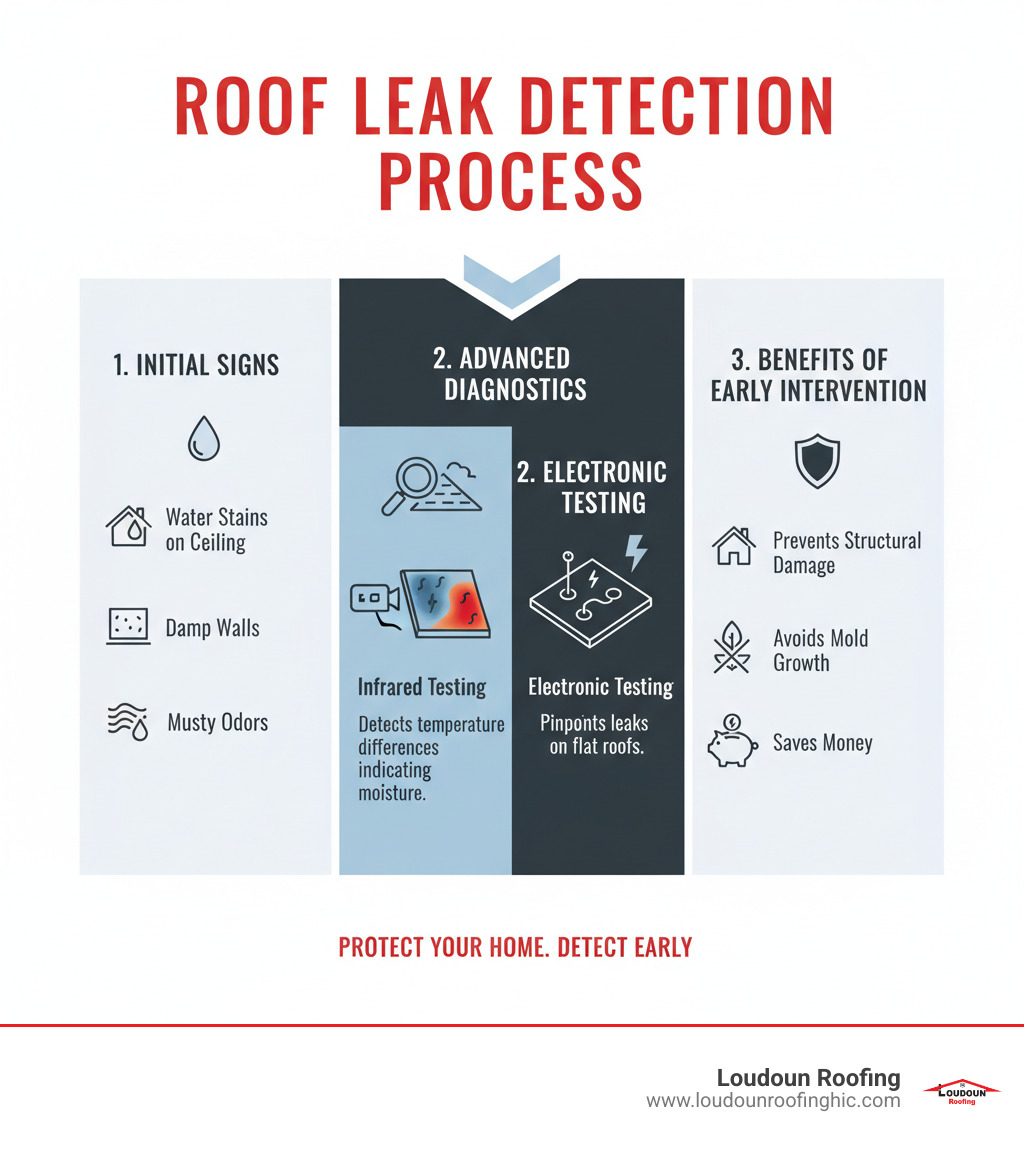
- Purpose: To precisely find where water is getting into your roof system.
- Goal: Stop damage before it spreads and becomes costly.
- Methods: It uses different techniques, from simple visual checks to advanced technologies.
- Benefits: Protects your home’s structure, prevents mold, and saves you money on major repairs.
Early detection is crucial to stop small issues from becoming expensive disasters. This guide explains the causes of roof leaks, the advanced methods used to find them, and why expert intervention is the key to protecting your property and achieving lasting peace of mind.
I’m Esteban Marin, Owner and President of Loudoun Roofing & Home Improvement. With a focus on advanced waterproofing and leak detection roof techniques since 2001, I bring precision and quality to every project. This ensures your roofing needs are met with the highest standards.
Common Culprits: Understanding the Causes of Roof Leaks
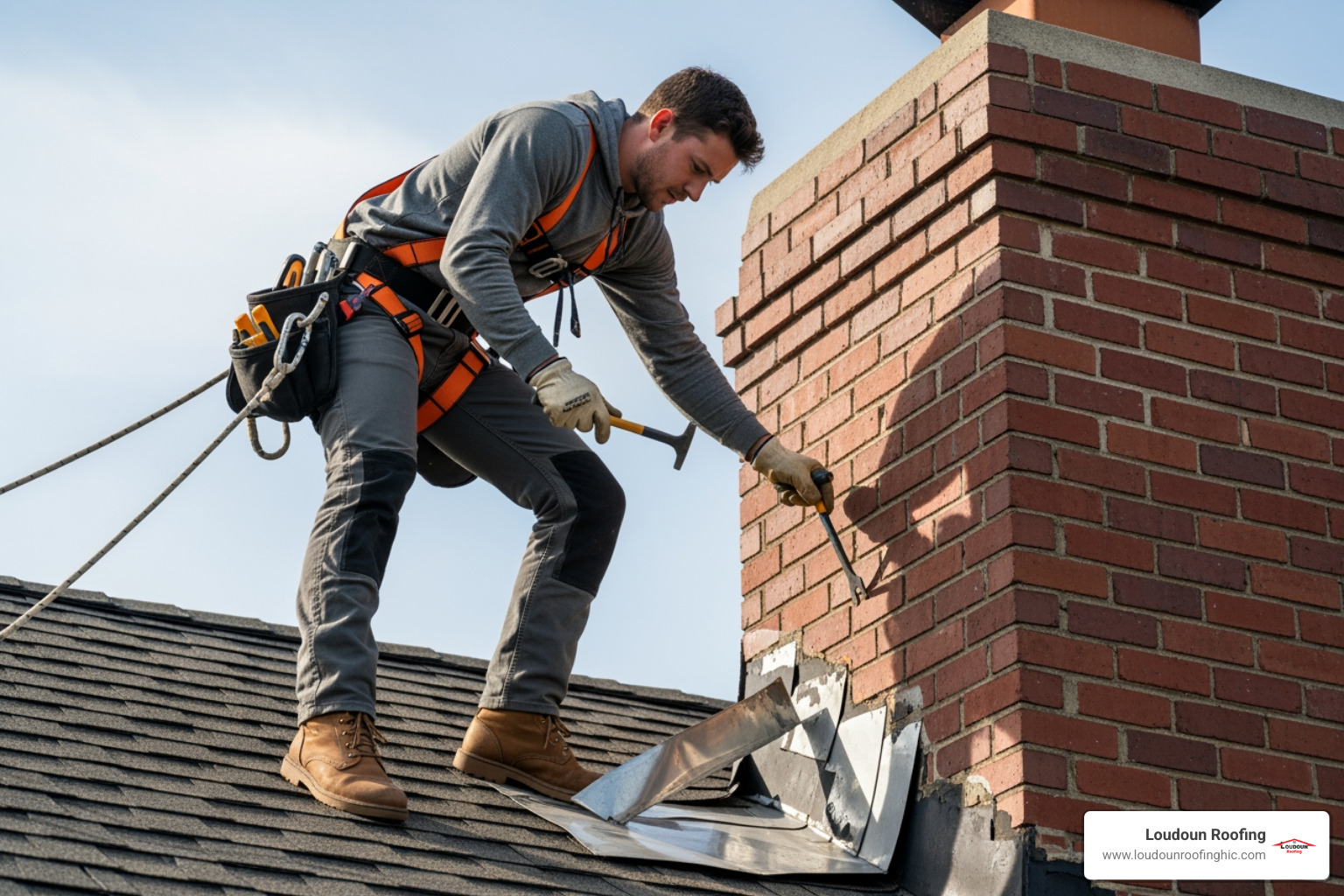
A ceiling drip rarely reveals a leak’s true origin. Water follows the path of least resistance, so an interior stain may be far from the roof’s entry point. This makes a thorough leak detection roof process vital. In Leesburg, VA, and across Loudoun County, common culprits include damaged flashing, missing shingles, storm damage, and improper installation. Addressing these issues promptly with professional Roof and Gutter Repair can prevent extensive water damage.
Material Degradation and Age
Roofing materials naturally degrade over time, creating vulnerabilities for water intrusion. Key signs of age-related failure include:
- Aging Shingles: Shingles on Asphalt Shingle Roofs can become dry, brittle, and cracked, allowing water to seep underneath.
- Granule Loss: Protective granules on asphalt shingles wear away, exposing the asphalt layer to UV rays and accelerating deterioration.
- Cracked Sealant: Sealant around vents and skylights dries out and fails, creating direct water paths.
- Corroded Flashing: Metal components weaken and develop holes, especially in damp areas.
- UV Exposure: The sun’s rays slowly break down roofing materials, shortening their lifespan.
Storm Damage and Environmental Factors
Northern Virginia’s weather places significant stress on roofing systems, often causing sudden leaks. Common environmental causes include:
- Hail Impacts: Hailstones can bruise or crack shingles, creating weak spots where water can penetrate. Our guide explains How to Spot Hail Damage on Your Roof.
- Wind-Lifted Shingles: High winds can tear off or lift shingles, exposing the underlayment.
- Fallen Tree Limbs: Can puncture the roof deck or dislodge shingles with significant force.
- Ice Dams: Formed by poor attic ventilation, these trap melting snow at the eaves, forcing water under shingles and into your home.
- Debris in Valleys: Blocked water channels cause backups and seepage under shingles.
Annually, roof repairs in the US cost over $12 billion, much of it due to storm damage. A Post Storm Roof Inspection is always a wise decision after a significant weather event.
Flashing, Valleys, and Penetrations
Roof penetrations and transition areas are inherently vulnerable to leaks if not perfectly installed and maintained. Key problem areas include:
- Skylights: Improperly sealed flashing is a common leak source. We specialize in Skylight Leak Repair.
- Chimney Flashing: Cracked mortar or rusted metal around chimneys allows water entry.
- Vent Pipe Boots: The rubber or metal seals around plumbing and exhaust vents can crack and deteriorate.
- Roof Valleys: As critical water channels, damaged or clogged valleys are prime locations for leaks.
Our expertise in Roof and Window Flashing ensures these vulnerable points are secure.
A Spectrum of Solutions: Modern Leak Detection Roof Methods
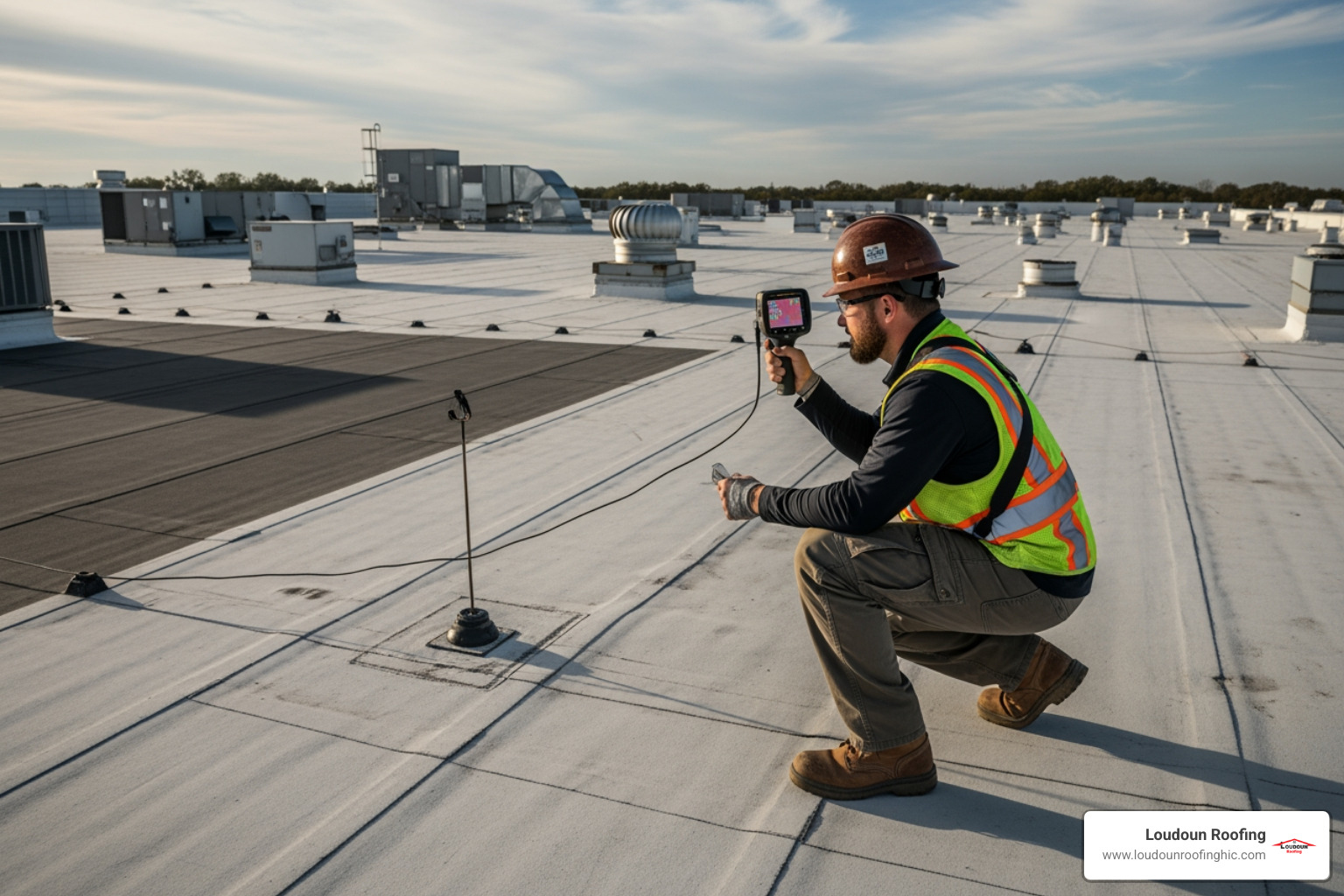
Modern technology has replaced guesswork in locating roof leaks, saving time and preventing unnecessary damage. For precise leak detection roof services across Loudoun County, we employ a spectrum of methods, from visual inspections to advanced diagnostics like infrared thermography and Electronic Leak Detection (ELD).
The Traditional Approach: Visual Inspection and Water Testing
Traditional methods provide a crucial starting point. A visual inspection begins in the attic, searching for water stains on the roof deck, damp insulation, or mold. On the interior, we look for stained ceilings, peeling paint, or musty odors. For elusive leaks, a controlled water test simulating rain can help trace the water’s path. However, these methods have limitations and may not pinpoint the exact entry point, which is why advanced diagnostics are often necessary. Our House Roof Inspection Guide offers more insights for homeowners.
Advanced Diagnostics: Infrared and Moisture Surveys
Advanced diagnostics allow us to “see” trapped moisture invisible to the naked eye.
- Infrared (IR) Thermography: IR cameras detect temperature differences on the roof’s surface. Wet areas retain heat longer than dry materials, appearing as warm spots on the camera and mapping out hidden moisture. This is highly effective for flat roofs.
- Moisture Surveys: Tools like Nuclear Moisture Gauges (detecting hydrogen in water) and Electrical Capacitance Meters (measuring electrical properties) provide quantitative data on moisture content within the roof system.
These surveys are essential for planning major roof work and for ongoing Roofing Maintenance.
The Gold Standard for a Leak Detection Roof: How ELD Works
Electronic Leak Detection (ELD) is the gold standard for finding breaches in flat and low-slope roofs, offering best precision. This non-destructive method creates an electrical field across the roof membrane to find leaks.
- Low-Voltage Method: A light wetting of the roof surface allows a small electrical pulse to be sent across the membrane. A breach completes a circuit with the conductive deck below, allowing a specialized probe to trace the current directly to the pinhole.
- High-Voltage Method: Used on dry, exposed membranes, a charged “broom” creates a spark when it passes over a breach, audibly and visibly identifying the leak.
ELD’s key benefit is its ability to pinpoint breaches as small as a pencil tip without damaging the roof, making it ideal for quality assurance and finding elusive leaks. The NRCA provides a technical overview of electronic leak detection for those interested in more detail.
Comparing Your Options: ELD vs. Other Detection Methods
Choosing the right leak detection roof method depends on the roof type, suspected issue, and property goals. While traditional methods have their place, advanced diagnostics offer superior accuracy. This table compares the most common methods:
| Method | Accuracy | Cost | Speed | Roof Type Suitability | Finds Breach or Moisture? |
|---|---|---|---|---|---|
| Visual Inspection | Low to Medium | Very Low | Slow (time-consuming) | All (initial check) | Breach (if visible) |
| Water Testing | Medium | Low | Medium | All (can be slow) | Breach (if active) |
| Infrared Survey | High | Medium to High | Fast | Flat/Low-slope (identifies trapped moisture) | Moisture |
| Moisture Survey (Nuclear/Capacitance) | High | Medium to High | Medium | Flat/Low-slope (identifies trapped moisture) | Moisture |
| Electronic Leak Detection (ELD) | Very High (Pinpoint) | Medium to High | Fast | Flat/Low-slope (identifies actual breach) | Breach |
Advantages of Electronic Leak Detection (ELD)
For flat and low-slope roofs, Electronic Leak Detection (ELD) offers significant advantages:
- Pinpoint Accuracy: ELD locates the exact point of a breach, eliminating guesswork and enabling focused, efficient repairs.
- Finds Pinhole Breaches: It is sensitive enough to detect tiny perforations invisible to the naked eye that can cause major damage over time.
- Non-Destructive: The testing process does not damage the roof membrane, preserving its integrity.
- Quality Assurance: It’s an ideal method for verifying the integrity of newly installed roofing and waterproofing membranes.
- Versatility: ELD is effective on both wet and dry surfaces, making it a reliable tool in various conditions.
This technology is a smart investment for commercial property owners needing Flat Roofing Repair.
Challenges of Flat Roofs vs. Pitched Roofs
Different roof types present unique leak detection challenges.
- Flat Roofs: Common on commercial buildings, their low slope can lead to ponding water, which stresses the membrane. The primary challenge is that water can travel far under the membrane before appearing inside, making the leak’s origin difficult to trace without tools like ELD or infrared. Our Commercial Flat Roof Repair services are designed for these complexities.
- Pitched Roofs: Typical on homes, gravity causes water to run down rafters and framing. A leak can enter near a chimney but appear on a living room ceiling. Tracing this convoluted path back to the entry point requires professional experience, a core part of our Residential Roofing expertise.
Proactive Protection and Professional Intervention
The most effective way to manage roof leaks is through proactive prevention. A combination of homeowner monitoring and scheduled professional inspections provides the best defense against water damage for property owners in Loudoun County.
DIY Monitoring vs. Professional Roof Inspection
While professional inspections are recommended, property owners can perform several DIY monitoring tasks:
- Ground-Level Checks: Use binoculars to scan for missing shingles, debris buildup in valleys, or sagging.
- Gutter Cleaning: Keep gutters and downspouts clear to prevent water backup under the eaves.
- Interior Checks: Regularly look for water stains, peeling paint, or musty smells in the attic and living spaces.
Call a professional when:
- Safety is a concern: Professionals have the training and equipment for safe roof access.
- The roof is complex: Multiple valleys, skylights, and penetrations make leak-finding difficult.
- After severe weather: High winds or hail can cause hidden damage that warrants a professional Roof Inspection.
- Leaks are persistent: If a leak continues or reappears after a fix, expert leak detection roof assessment is needed.
The Cost of Detection: An Investment in Prevention
The cost of professional leak detection roof services is an investment in prevention that saves you a fortune. While detection costs vary based on roof size, complexity, and method, they are a fraction of potential repair costs. Water damage repairs average US$4,000 for homes and can exceed US$89,000 for commercial buildings. These figures don’t include the cost of the initial leak detection. Therefore, early detection is the most fiscally responsible strategy, and we offer a Free Roof Estimate to help you understand the scope and costs.
How Early Detection Prevents Catastrophic Damage
Catching a leak early prevents catastrophic damage. Proactive leak detection roof services help you:
- Prevent Structural Rot: Protects rafters, trusses, and sheathing from moisture that compromises your roof’s integrity.
- Avoid Mold Growth: Eliminates the damp conditions mold needs to thrive, protecting indoor air quality and avoiding costly remediation.
- Protect Insulation: Keeps insulation dry and effective, maintaining your home’s energy efficiency and preventing high utility bills.
- Mitigate Fire Hazards: Prevents water from contacting electrical wiring, which can cause short circuits and fires.
- Preserve Property Value: A well-maintained, leak-free roof is critical for your property’s value and appeal.
For urgent issues, our Emergency Roof Repair services can minimize damage quickly.
Frequently Asked Questions about Roof Leak Detection
We understand that when you’re dealing with a potential leak, you have a lot of questions. Here are some of the most common inquiries we receive about our leak detection roof services, answered to help put your mind at ease.
Can a roof leak be detected without rain?
Yes. Advanced leak detection roof methods do not require active rain. Infrared thermography detects trapped moisture by identifying temperature differences, while Electronic Leak Detection (ELD) can find breaches in a roof’s membrane in any weather. For intermittent leaks, professionals can also perform a controlled water test, carefully simulating rain on specific areas to trace the source.
Is electronic leak detection safe for my roof?
Yes, it is completely safe. Low-voltage ELD is a non-destructive testing method. It uses a very low electrical current that is harmless to all common roofing membranes, including single-ply systems and EPDM. The process is designed to accurately find breaches without posing any risk of damage to your roof.
How long does a professional roof leak detection take?
The duration of a professional leak detection roof service depends on the roof’s size, complexity, and the method used. A visual inspection on a small, simple roof may take one to two hours. A comprehensive investigation on a large commercial flat roof using advanced methods like ELD or infrared scanning could take a full day or more to ensure accurate results.
Conclusion: Secure Your Property with Expert Leak Detection
A roof leak is a direct threat to your property’s structure, health, and value. As we’ve explored, the key to avoiding catastrophic repair costs—which average $4,000 for homes and $89,000 for commercial properties—is early, professional leak detection roof services. Investing in modern diagnostics like Infrared Thermography and Electronic Leak Detection (ELD) prevents structural rot, mold, and safety hazards before they escalate. It is the most fiscally responsible approach to managing your roofing asset.
For homeowners and building managers in Leesburg, VA, and throughout Northern Virginia, Loudoun Roofing provides expert diagnostics backed by over two decades of experience. Your roof is the shield protecting your investment, and we have the technology to ensure it remains intact.
Don’t wait for a drip to become a disaster. If you’ve noticed a suspicious stain, weathered a recent storm, or want the security of proactive maintenance, our team is ready to help. Contact us for a comprehensive roof repair assessment and let our expertise protect your peace of mind.