
Why Choosing the Right Flat Roof Specialist Matters
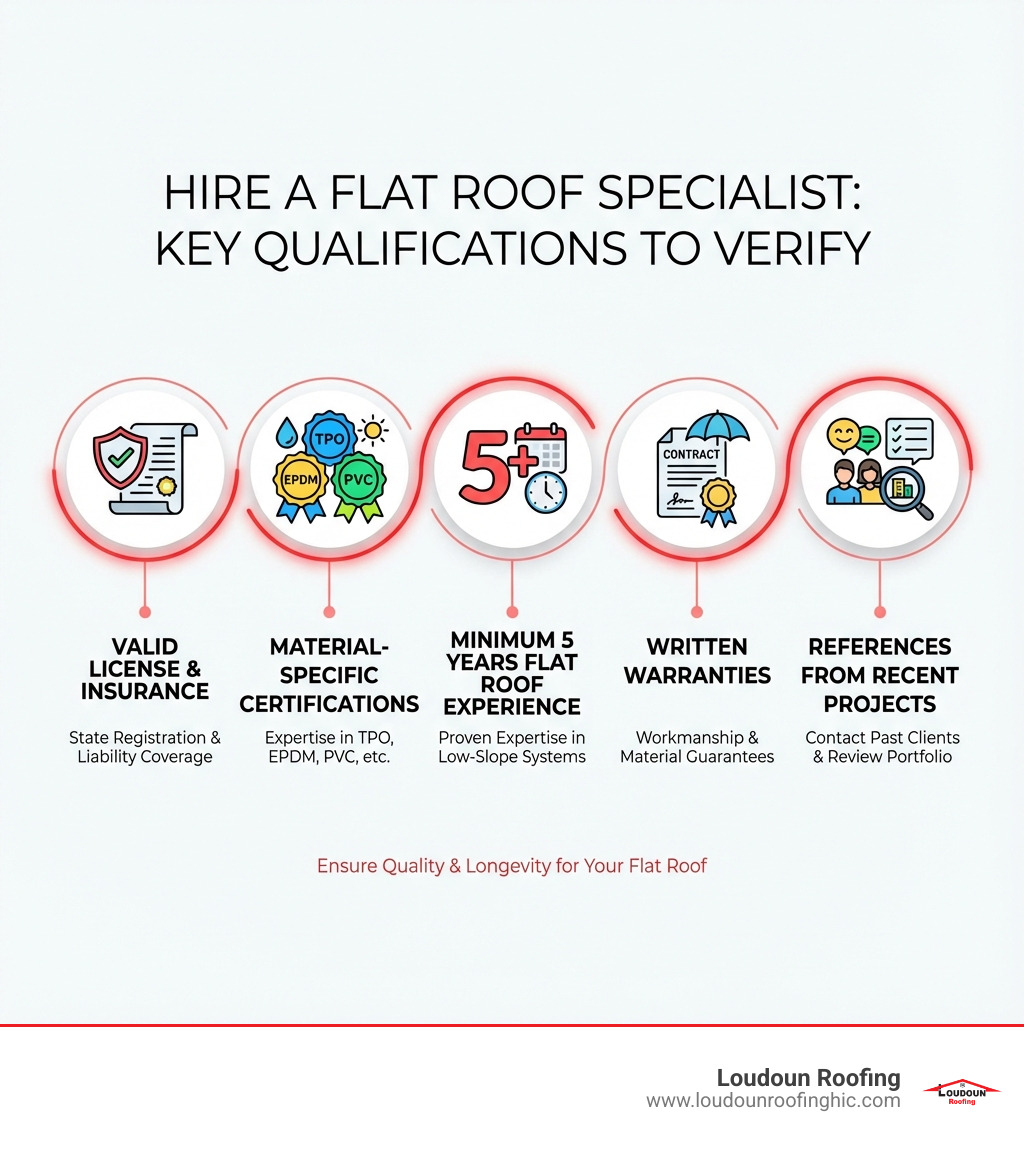
Flat roof specialists are contractors with the training, experience, and certifications to properly install, repair, and maintain flat or low-slope roofing systems. A flat roof’s lifespan—whether 10 or 30 years—often depends on the quality of your contractor. Finding trusted local roofing services with flat roof expertise is essential, as these systems demand precise installation and maintenance that general roofers may not understand. When searching for a specialist, look for:
- Licensed and insured contractors with flat roofing expertise
- Material-specific certifications (TPO, EPDM, PVC, Modified Bitumen)
- Local experience with your region’s climate challenges
- Industry certifications like GAF Master Elite status
- Proven track record with verifiable references and completed projects
Flat roofs are popular for commercial and modern residential properties in Northern Virginia. They offer excellent space utilization and lower installation costs but are prone to challenges like ponding water and UV degradation. As Esteban Marin, owner of Loudoun Roofing & Home Improvement, I’ve specialized in complex roofing systems since 2001. My hands-on approach ensures every flat roof project meets the exacting standards these systems require.
Understanding Flat Roofs: Materials, Pros, and Cons
Flat roofs, or low-slope roofs, offer a distinctive aesthetic and functional appeal. Their unique design makes them a popular choice for commercial buildings and modern homes, especially for properties seeking to maximize usable space or achieve a sleek, contemporary look.
Compared to pitched roofs, flat roofs generally offer:
- Better Space Utilization: The surface can be used for HVAC units, solar panels, or rooftop gardens.
- Lower Installation Cost: Simpler framing and fewer materials can make them more economical.
- Easier Access: The low slope provides safer access for inspections and maintenance.
- Architectural Versatility: They complement modern designs and create clean architectural lines.
However, these benefits come with specific considerations, especially regarding drainage and maintenance.
Common Types of Flat Roofing Materials
Choosing the right material is paramount for a flat roof’s longevity. Our expertise as flat roof specialists allows us to guide you through these choices to find the perfect fit for your Leesburg, VA, or Loudoun County property.
| Material Type | Cost (per sq ft) | Lifespan (Years) | Durability | Installation Complexity | Primary Use |
|---|---|---|---|---|---|
| TPO | $5 – $9 | 15-20 | Puncture, tear, UV, chemical resistant | Moderate | Commercial, Residential |
| PVC | $6 – $10 | 20-30 | Excellent chemical, fire, wind, UV resistance | Moderate | Commercial, Residential |
| EPDM | $4 – $8 | 20-30 | Highly flexible, UV resistant, durable, waterproof | Moderate | Commercial, Residential |
| Modified Bitumen | $4 – $7 | 10-20 | Good elasticity, puncture resistance, easy repair | Moderate | Commercial, Residential |
| Built-Up Roof (BUR) | $4 – $8 | 20-30 | Multi-layered, strong, fire-resistant | High | Commercial |
Here’s a closer look at the most common materials:
- Thermoplastic Olefin (TPO): A single-ply membrane, TPO is durable, energy-efficient, and resistant to UV rays and punctures. Its white surface reflects sunlight, reducing cooling costs, while heat-welded seams create a watertight bond.
- Polyvinyl Chloride (PVC): This single-ply membrane offers superior durability and chemical resistance, making it ideal for restaurants or industrial sites. Like TPO, it has heat-welded seams for robust waterproofing.
- EPDM (Ethylene Propylene Diene Monomer): Known as “rubber roofing,” EPDM is a flexible and durable synthetic rubber membrane. It resists UV radiation and extreme temperatures, suiting Northern Virginia’s climate. It is a reliable and cost-effective choice with a long lifespan. Learn about EPDM rubber roofing from a manufacturer.
- Modified Bitumen: An asphalt-based system, Modified Bitumen is improved with polymers for flexibility and temperature resistance. It’s installed in layers, providing excellent waterproofing and durability for roofs with foot traffic.
- Built-Up Roofs (BUR): A traditional system, BUR uses multiple layers of asphalt and reinforcing fabrics, topped with gravel or a coating. This creates an exceptionally durable, waterproof, and fire-resistant roof.
Choosing the right material is a significant decision. As experienced flat roof specialists, we can help you steer these options. For more insights, explore our resources on durable roofing solutions.
Advantages and Disadvantages of a Flat Roof
Flat roofs offer distinct benefits but also come with challenges that specialized knowledge helps overcome.
Pros of Flat Roofs:
- Usable Space: Flat roofs can be repurposed for HVAC units, green spaces, or patios, maximizing property utility.
- Lower Installation Cost: The initial installation can be more economical than a complex pitched roof.
- Easier Access: Inspections and maintenance are simpler and safer, potentially lowering service costs.
- Solar Panel Compatibility: They provide an ideal surface for mounting solar panels, which can raise a home’s value by an average of 4.1%.
Cons of Flat Roofs:
- Drainage Issues: The main challenge is drainage; their minimal slope can lead to water accumulation if not designed correctly.
- Ponding Water Risk: Water that stands for more than 48 hours (“ponding”) can accelerate material degradation and lead to leaks.
- Debris Accumulation: Leaves and branches can accumulate, clogging drains and trapping moisture.
- Higher Maintenance Needs: Flat roofs require more frequent inspections and cleaning to prevent issues and prolong their lifespan.
Common Flat Roof Issues and When to Call a Pro
Even the most robust flat roof will eventually show signs of wear. Recognizing these indicators early is critical to prevent minor issues from becoming significant water damage and costly repairs. As your local flat roof specialists in Northern Virginia, we emphasize prompt action to prevent problems from escalating.
Key Signs Your Flat Roof Needs Repair
Being vigilant about your flat roof’s condition can save you headaches and money. Here are the key signs that your flat roof needs professional attention:
- Leaks and Water Stains: Water stains on ceilings or walls after rain are the most obvious sign of a leak. These breaches can be hard to pinpoint, so call an expert immediately if you suspect one.
- Ponding or Standing Water: Water remaining on your roof for more than 48 hours indicates poor drainage or sagging and can lead to structural issues.
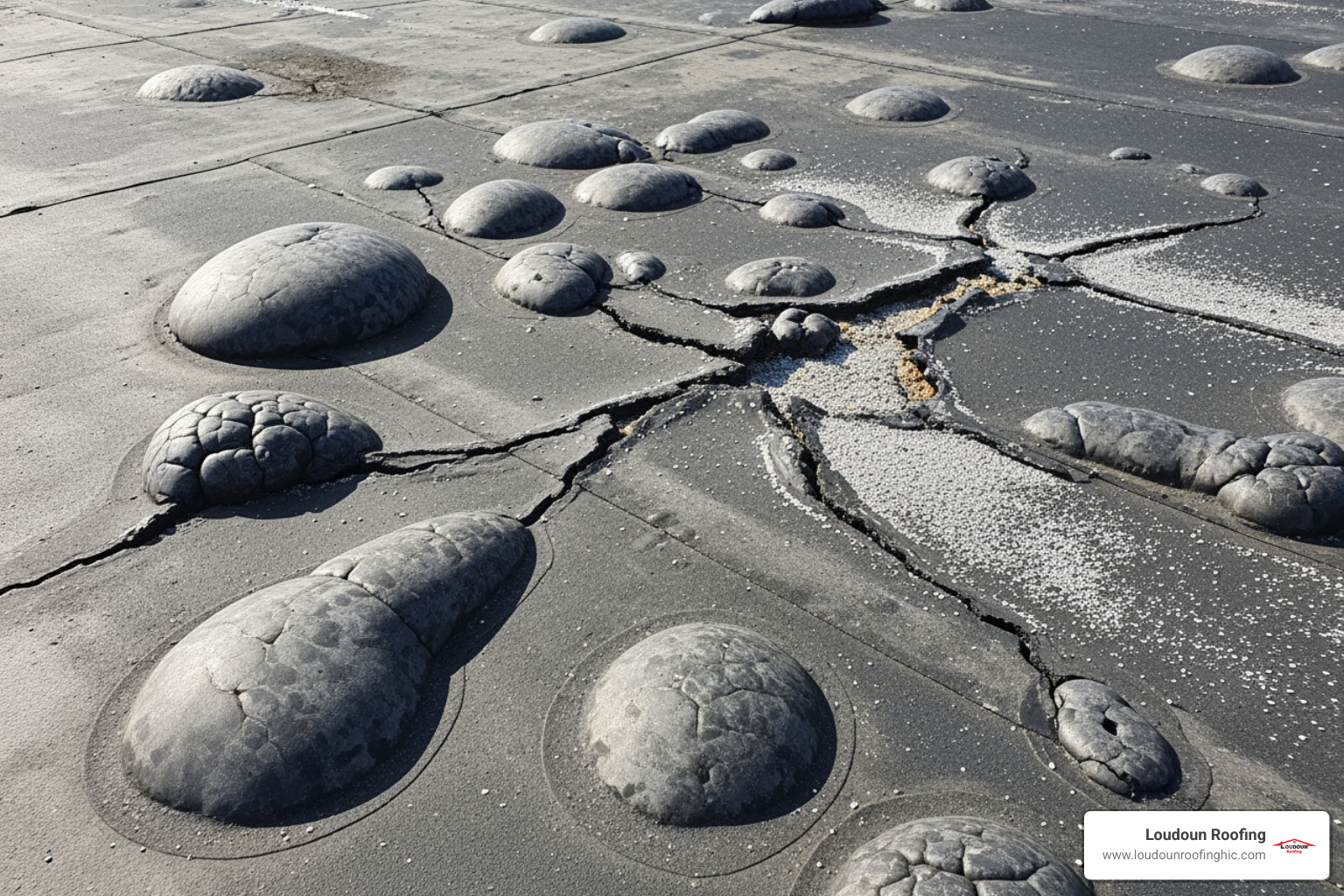
- Blisters and Bubbles in the Membrane: These raised areas trap moisture or air, weakening the membrane and making it vulnerable to punctures.
- Cracks and Punctures: Exposure to UV rays, temperature changes, or physical damage can cause breaches that compromise the roof’s waterproofing.
- Flashing and Seam Deterioration: If flashing around vents and walls or the seams between membrane sheets are lifting or cracking, leaks are imminent.
- UV Damage: Prolonged sun exposure can make roofing materials brittle and discolored, often appearing as a chalky or cracked surface.
If you notice any of these issues, contact us immediately. Delaying repairs can turn a minor fix into a major emergency roof repair scenario.
Repair, Restoration, or Replacement: Making the Right Choice
When your flat roof shows signs of distress, understanding the best course of action is crucial. Our flat roof specialists can assess your roof’s condition and provide honest recommendations for your property in Leesburg, VA, and the surrounding areas.
- Repair: This involves fixing localized issues like small punctures or lifting seams on an otherwise sound roof. It’s ideal for minimal, isolated damage.
- Restoration: This process applies a new protective coating over an existing, structurally sound roof to extend its lifespan without a full tear-off. It’s recommended for widespread minor deterioration.
- Replacement: A full replacement is necessary when the roof is extensively damaged, has reached the end of its service life, or the underlying structure is compromised. This involves a complete tear-off and installation of a new system.
The decision depends on the damage extent, roof age, material, and your budget. We’ll provide a thorough inspection to help you decide between a flat roofing repair or a full roof replacement.
The Professional Process: Installation, Maintenance, and Lifespan
A quality flat roof, installed correctly, can last 20-30 years with proper maintenance. This longevity hinges on material quality, installation expertise, and diligent maintenance, especially given Northern Virginia’s climate of intense sun and freezing winters.
Essential Steps in a Professional Flat Roof Installation
A professional flat roof installation is a meticulous process. Our flat roof specialists follow a proven methodology to ensure every installation in Leesburg, VA, and Loudoun County meets the highest standards.
- Property Evaluation: We assess your building’s structure, existing roof, and drainage needs to recommend the best material and system.
- Detailed Estimate: We provide a transparent, itemized estimate outlining all costs, materials, and project timelines.
- Roof Deck Preparation: We ensure the roof deck is clean, dry, and structurally sound, making repairs as needed.
- Insulation Installation: Proper insulation is installed to improve energy efficiency and create a stable base for the membrane.
- Membrane Application: The chosen roofing membrane (TPO, PVC, EPDM) is carefully laid out and secured according to manufacturer specifications.
- Seam Welding/Sealing: Seams are heat-welded (for TPO/PVC) or sealed with adhesives (for EPDM) to create a monolithic, watertight surface.
- Flashing Installation: Flashing is installed around all penetrations, walls, and edges to prevent leaks.
- Final Inspection: A thorough final inspection ensures the installation meets our rigorous quality standards.
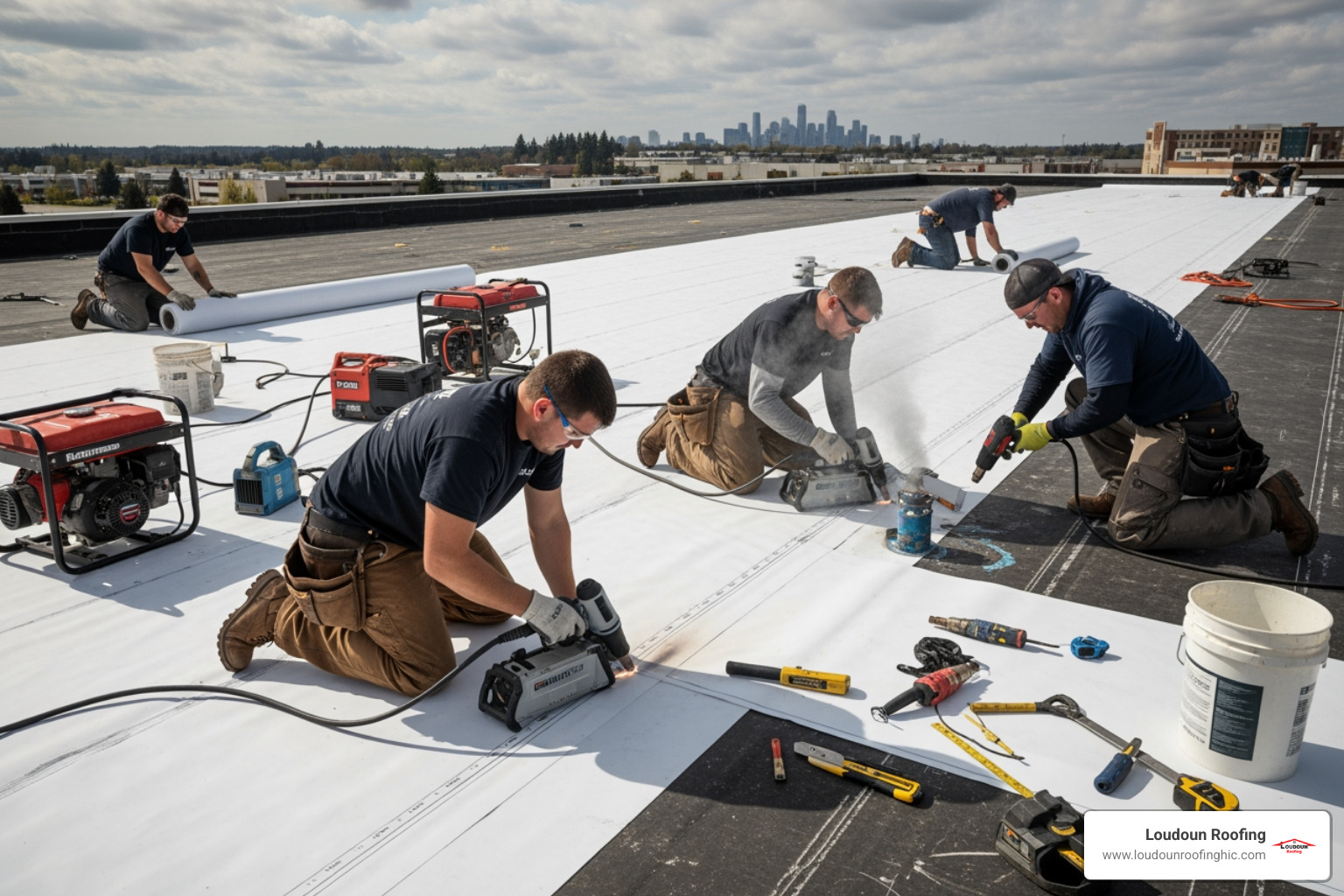
This systematic approach maximizes your roof’s lifespan. You can find more details on our flat roof installation process.
Best Practices for Routine Flat Roof Maintenance
Regular maintenance is essential for prolonging your flat roof’s life and preventing costly repairs.
- Semi-Annual Inspections (Spring and Fall): Inspect your roof twice a year to find minor issues like cracks, holes, or damaged seals before they worsen.
- Debris Removal: Keep the roof clear of leaves, branches, and other debris that can trap moisture and cause damage.
- Drain and Gutter Cleaning: Ensure all drains and gutters are clear to prevent ponding water, a primary cause of leaks.
- Seam and Flashing Checks: Regularly inspect seams and flashing for any signs of lifting or deterioration and address them promptly.
- Prompt Repairs: Repair any damage, no matter how small, as soon as possible to prevent it from spreading.
Following these practices can significantly extend your flat roof’s life. For comprehensive care, explore our roofing maintenance services.
Integrating Modern Solutions like Solar Roofing
Flat roofs are an excellent platform for energy-efficient solutions like solar roofing.
- Solar Panel Benefits: Solar systems convert sunlight into electricity, saving you money on utility bills and reducing your carbon footprint. They can also increase a home’s value by an average of 4.1%.
- How Solar Systems Integrate with Flat Roofs: Their low slope allows for easy angling of panels for optimal sun exposure using racking or ballasted systems, the latter of which avoids roof penetration.
- Protective Qualities of Solar Panels: When professionally installed, solar panels can shield the roof membrane from direct UV exposure and physical damage, potentially extending its life.
Integrating solar requires specialized knowledge to ensure proper installation and waterproofing. Our flat roof specialists can design and install systems that combine protection with energy generation. Learn more about energy-efficient options by checking out our page on energy-efficient metal roofs.
Hiring the Right Flat Roof Specialists for Your Project
Finding the right flat roof specialists for your project in Leesburg, VA, or Loudoun County is a crucial investment in protecting your property. Vetting potential contractors is paramount.
What to Look for in a Flat Roof Specialist
When hiring a contractor for a specialized system like a flat roof, ensure they possess the necessary expertise and professionalism. Here’s what to look for:
- Experience with Specific Materials: Verify the contractor’s proven track record with your chosen material (TPO, PVC, EPDM) by asking for references and project examples.
- Certifications: Look for manufacturer-specific certifications, which indicate the contractor has undergone rigorous training.
- Insurance and Licensing: Always verify that the contractor is fully licensed and insured to protect you from liability.
- Local Reputation: Check online reviews, testimonials, and local references to gauge customer satisfaction.
- Detailed Estimates: A reputable specialist provides a transparent, written estimate outlining all costs, materials, and timelines.
- Written Contracts: Insist on a detailed contract covering the project scope, payment schedule, warranties, and cleanup procedures.
- Understanding of Local Codes: Ensure your contractor is knowledgeable about and adheres to all local roofing permits and codes.
Why Choose GAF Certified Flat Roof Specialists?
Certifications from leading manufacturers like GAF provide an invaluable layer of assurance. Choosing a GAF Certified flat roof specialist means working with a contractor committed to quality.
- GAF Master Elite Qualifications: Fewer than 3% of roofers nationwide earn the GAF Master Elite status. GAF vets their background, ensures they are fully licensed and insured, and confirms they have received extensive training.
- Rigorous Training: GAF Master Elite contractors undergo continuous training on the latest products and installation techniques, ensuring your roof is installed to the highest standards.
- Access to Superior Warranties: A key benefit is access to GAF’s industry-leading warranties, like the Golden Pledge Warranty. It provides a lifetime warranty on shingles and up to a 30-year workmanship warranty, offering unparalleled peace of mind.
By choosing a GAF Certified Contractor, you get a complete roofing system installed by highly trained professionals and backed by one of the strongest warranties in the business. Find more about why work with a GAF Certified Contractor and explore GAF roofing systems.
Cost, Climate, and Warranty Considerations
Understanding the financial, environmental, and protective aspects is fundamental when planning a flat roofing project.
- Typical Cost Considerations: For a small residential flat roof (approx. 1,000 sq ft) in Northern Virginia, repairs can range from $2,000-$5,000, while replacement costs typically range from $6,000-$12,000. Commercial costs vary but generally start around $5 per square foot.
- Climate Impact: Northern Virginia’s climate, with its intense summer sun and freezing winters, requires materials and installation techniques designed to withstand these specific weather patterns for optimal performance.
- Warranty Options: Always clarify both material warranties (from the manufacturer) and workmanship warranties (from the contractor). GAF’s Golden Pledge Warranty offers comprehensive protection for both. Ensure you understand all terms and conditions.
Navigating these considerations requires expertise. For specific guidance on your Leesburg flat roof replacement or any other project, our team is here to help.
Frequently Asked Questions about Flat Roofs
We often get asked common questions about flat roofs. Here are some of the most frequent inquiries from property owners in Northern Virginia:
What is the typical lifespan of a flat roof?
A professionally installed flat roof using quality materials can last 20 to 30 years. Lifespan is influenced by the material type (e.g., TPO, EPDM), installation quality, local climate, and the consistency of routine roofing maintenance. For instance, a well-maintained PVC roof can easily exceed 20 years, while a Modified Bitumen roof might be closer to 10-20 years. Regular maintenance is the single most important factor in achieving maximum longevity.
How often should I have my flat roof inspected?
It is best practice to have your flat roof professionally inspected at least twice a year, typically in the spring and fall. These seasonal inspections allow us to identify and address minor issues like debris buildup, clogged drains, or small membrane imperfections before they escalate. Additionally, you should always schedule a post-storm roof inspection after any severe weather events, such as heavy rainfall, high winds, or significant snow.
Can you walk on a flat roof?
While many flat roofs are considered “walkable” due to their low slope, frequent foot traffic can cause punctures, tears, and accelerated wear on the membrane. It’s best to limit access to essential maintenance or servicing of rooftop equipment like HVAC units. If regular access is necessary, we recommend installing designated walkways or protection pads to distribute weight and protect the roof membrane. Always exercise caution and, ideally, have a professional accompany you or perform the necessary tasks to avoid accidental damage.
Conclusion
Choosing the right flat roof specialists is the most critical decision for your roofing project. These unique systems require specialized knowledge in material selection, precise installation, and diligent maintenance. The longevity and performance of your flat roof depend directly on your contractor’s expertise.
By understanding the advantages and disadvantages of flat roofs, recognizing signs of damage, and prioritizing contractors with certifications and comprehensive warranties, such as those offered by GAF Master Elite specialists, you can ensure your investment is well-protected.
For expert guidance on your flat roof project in the Leesburg, VA, Loudoun County, or Northern Virginia area, trust the certified professionals at Loudoun Roofing. We are dedicated to providing durable, expertly crafted roofing solutions backed by industry-leading warranties and an unwavering commitment to customer satisfaction.
Schedule your Leesburg roof replacement today. Let us help you protect what matters most.