
When Water Finds Its Way In: Understanding Condo Roof Repair Responsibility
Condo roof repair responsibility can be a puzzle. One moment you’re enjoying your morning coffee, the next you’re staring at a water stain on your ceiling. The big question hits immediately: Who pays for this? Navigating this issue requires understanding your governing documents and insurance policies. As a trusted local partner providing comprehensive roofing services in Northern Virginia, we’ve seen how quickly small leaks become major headaches when responsibility isn’t clear.
Quick Answer for Condo Roof Repair Responsibility:
- HOA is typically responsible for the roof itself (a common element).
- Unit owner may pay for interior damage from leaks.
- Check your CC&Rs—they override general rules.
- Insurance coverage varies by policy type (“bare walls-in” vs. “all-in”).
- Negligence can shift responsibility to the at-fault party.
Nearly 40% of all condo property damage claims stem from water intrusion, with roof leaks leading the pack. A small stain rarely tells the whole story, as leaks can travel through insulation and behind drywall before appearing. Your HOA might own the roof, but you could still face thousands in repair costs due to weather damage, delayed maintenance, or insurance gaps. This guide will help you understand the complexities of Northern Virginia roofing services for condos.
Who’s Responsible? Decoding Your Condo’s Governing Documents
When water is dripping into your living room, your first step shouldn’t be grabbing a bucket, but your condo’s governing documents. These Covenants, Conditions, and Restrictions (CC&Rs) are the ultimate authority on who pays for condo roof repair.
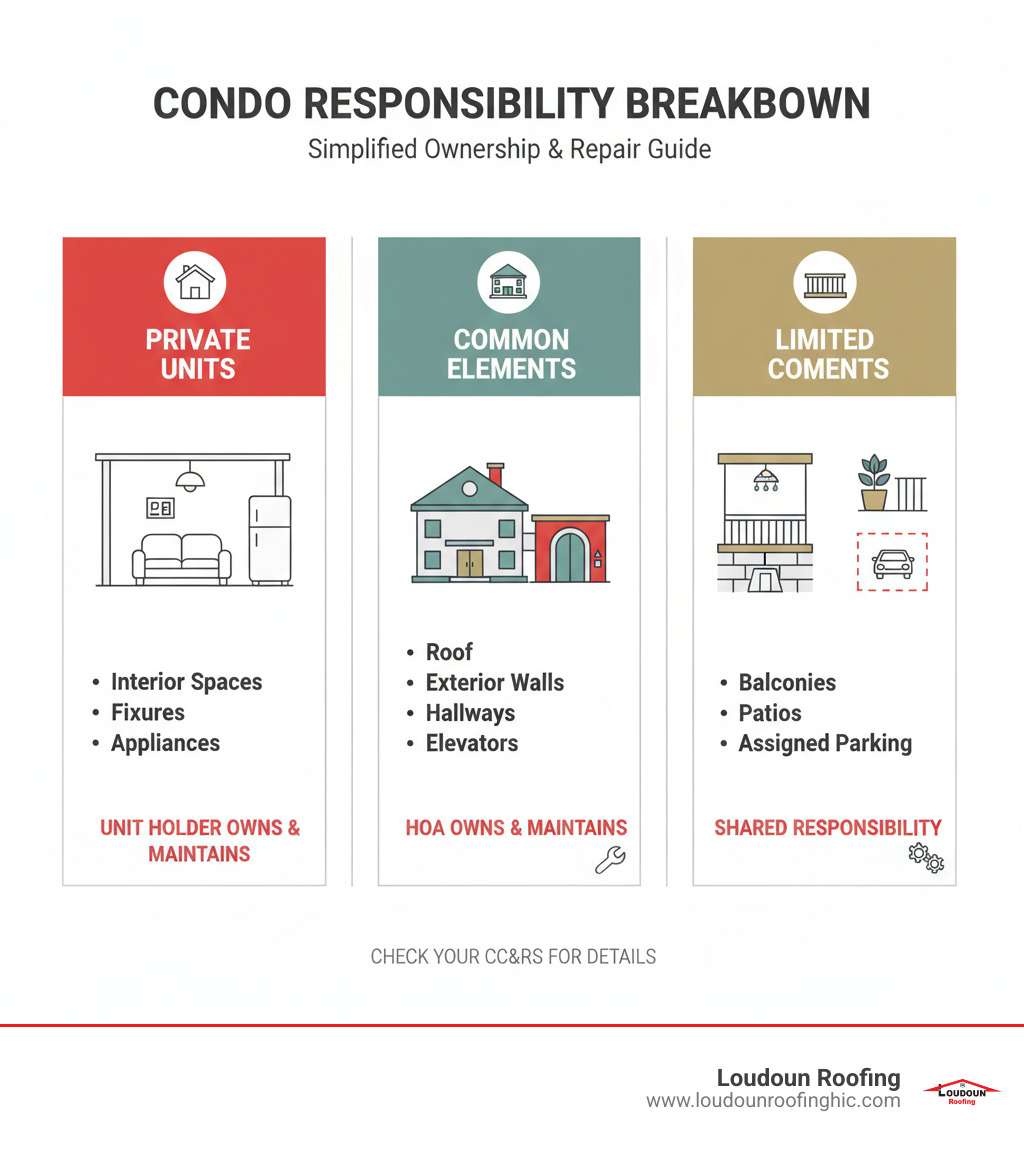
Unlike a single-family home, condo ownership divides the property into private units, common elements, and limited common elements. This division directly impacts who pays when your roof needs attention. Understanding your governing documents is essential for protecting your investment.

Understanding Common vs. Limited Common Elements
The distinction between common elements and limited common elements is key to determining who pays for a condo roof repair.
Common elements are parts everyone owns together, like the building’s main roof. Since it serves everyone, the HOA typically handles its maintenance, repair, and replacement, funded by your HOA fees.
Limited common elements are trickier. These are spaces for specific units but owned by the association, like a private balcony or patio. If your balcony’s roof or overhang needs repair, responsibility depends on your CC&Rs. Some associations classify these as limited common elements (HOA pays), while others make them the unit owner’s responsibility. This complexity is why we specialize in multi-family roofing, helping both HOAs and owners steer the process.
How Condo Association Rules (CC&Rs) Dictate Responsibility
Your CC&Rs are your financial lifeline, spelling out maintenance obligations, repair vs. replacement policies, and funding mechanisms.
- Maintenance obligations: The HOA usually handles routine tasks like gutter cleaning and roof inspections, while owners maintain their interiors.
- Repair vs. replacement: An HOA might cover a small patch (repair) but require a special assessment for a full roof overhaul (replacement). Some set dollar thresholds to differentiate the two.
- Funding mechanisms: Well-managed associations have reserve funds for major projects. Others use special assessments, which mean unexpected bills for owners.
Before acting, check your state’s laws, like the Utah Condominium Ownership Act, as similar statutes in Virginia provide additional guidance.
The Role of Negligence and Weather
Weather-related damage from events like hailstorms typically falls to the HOA, as the roof is a common element covered by the master insurance policy. We handle many Storm Hail Damage assessments, and the process is usually straightforward.
However, negligence complicates things. If the HOA ignored warning signs like loose shingles, they might be liable for resulting interior damage. Similarly, if a previous contractor performed faulty work, they should be held responsible. While less common, a unit owner could be found negligent if they made a modification that compromised the roof. Determining fault requires a professional investigation and clear documentation to resolve disputes quickly.
Paying for the Fix: Condo Fees, Assessments, and Insurance
Once responsibility for the condo roof repair is clear, the next question is how to pay for it. Roof repairs can range from a few thousand dollars to hundreds of thousands for large buildings. Fortunately, condo communities have several funding sources to handle these costs.

Condo Fees and Special Assessments Explained
Your monthly condo fees contribute to a reserve fund, which is a community savings account for big-ticket items like roof replacements. A well-managed HOA grows this fund over time to cover major expenses.
However, if a severe storm damages a roof prematurely or the reserve fund is insufficient, the HOA board can levy a special assessment. This is an extra bill sent to all unit owners to cover the shortfall. While unwelcome, it’s often necessary to protect the building’s structural integrity. Smart HOAs conduct reserve studies every 3-5 years to predict future costs and avoid surprise assessments.
Navigating Insurance: “Bare Walls-In” vs. “All-In”
Condo insurance involves two key policies: the HOA’s master policy and your individual HO-6 policy. Understanding the difference is crucial.
The HOA’s master policy typically covers the roof, but there are two main types:
- “Bare Walls-In” Coverage: This protects the building’s structure and exterior but stops at your unit’s bare walls. If a roof leak damages your floors or personal items, you’ll need to file a claim with your own HO-6 policy.
- “All-In” Coverage: This is more comprehensive, often covering fixtures, appliances, and improvements within your unit. The HOA’s policy might cover interior damage, saving you from using your own coverage.
According to the Insurance Information Institute, water damage is a leading cause of condo property claims. Your individual HO-6 policy fills the gaps left by the master policy, covering personal belongings and upgrades. Before starting repairs, document everything and check both policies. For more guidance, see our guide on how Roof Insurance Claims Explained.
From Drip to Disaster: Signs You Need Condo Roof Repair
A roof rarely fails overnight; it usually shows subtle signs of distress first. Catching these early can mean the difference between a manageable condo roof repair and a financial disaster. In condos, water can travel along beams and behind walls, so a stain on a ceiling may indicate a more extensive problem elsewhere.
Common Signs Your Condo Roof is Failing
Your roof works 24/7 against the elements. Here are common signs it needs attention:
- Water stains and interior damage: Yellow or brown spots on ceilings, peeling paint, or warped flooring are clear red flags.
- Age: Most condo roofs last 15 to 30 years. If your roof is approaching this age, it’s time for a professional inspection.
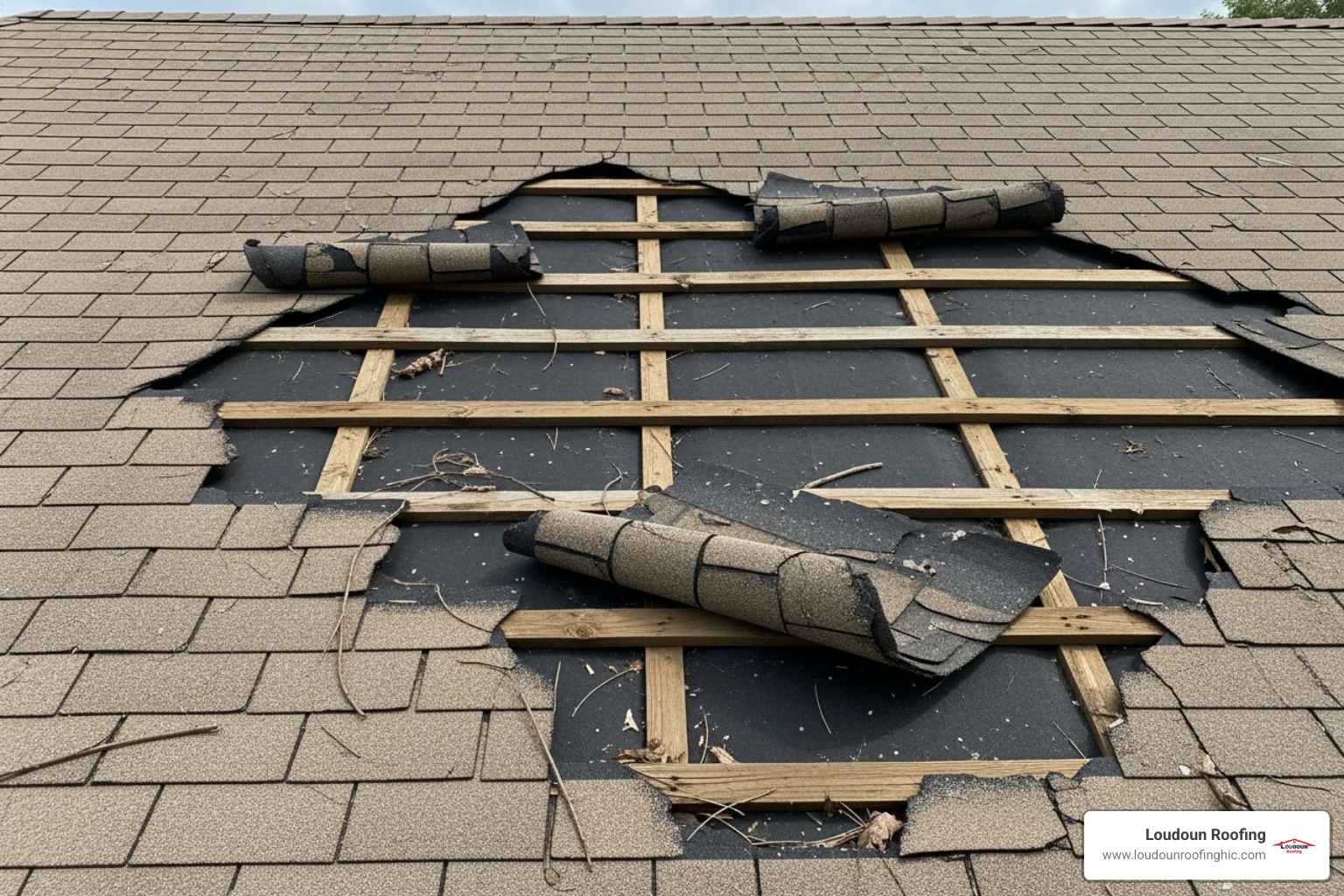
- Missing or damaged shingles: Wind can tear off shingles, while age causes curling and granule loss, weakening your roof’s protective layer.
- Sagging areas: A dipping or sagging roof indicates potential structural problems or trapped water and requires immediate professional attention, sometimes including emergency roof repair.
- Moss and algae growth: These organisms trap moisture, accelerating material deterioration and creating leak paths.
- Damaged flashing and pipe collars: Cracks or gaps in the metal flashing around chimneys, vents, and skylights are common entry points for water.
The High Cost of Delaying a Condo Roof Repair
Ignoring roof problems is a gamble with your building’s future. A minor issue can quickly escalate, leading to severe consequences:
- Structural damage: Prolonged water exposure can rot wooden roof decking, rafters, and support walls.
- Spreading interior damage: A small leak can ruin drywall, insulation, electrical systems, and flooring in multiple units.
- Mold and mildew: Damp environments create serious health risks and require expensive remediation.
- Escalating repair costs: A simple patch can turn into a full roof replacement and interior restoration, costing tens of thousands more.
- Decreased property values: Visible roof damage deters potential buyers and lowers your property’s market value.
- Legal liability: HOAs that neglect necessary repairs may face lawsuits if damage or health issues occur.
Proactive maintenance and timely condo roof repair are always more cost-effective than waiting for an emergency.
The Repair Process: A Homeowner and HOA Action Plan
When a roof issue strikes, a solid action plan is more effective than panic. Condo roof repair projects involve multiple stakeholders and careful coordination, but the right approach can protect your investment and restore peace of mind. It’s crucial to move quickly but stay organized, as rushing without proper documentation can create bigger problems.
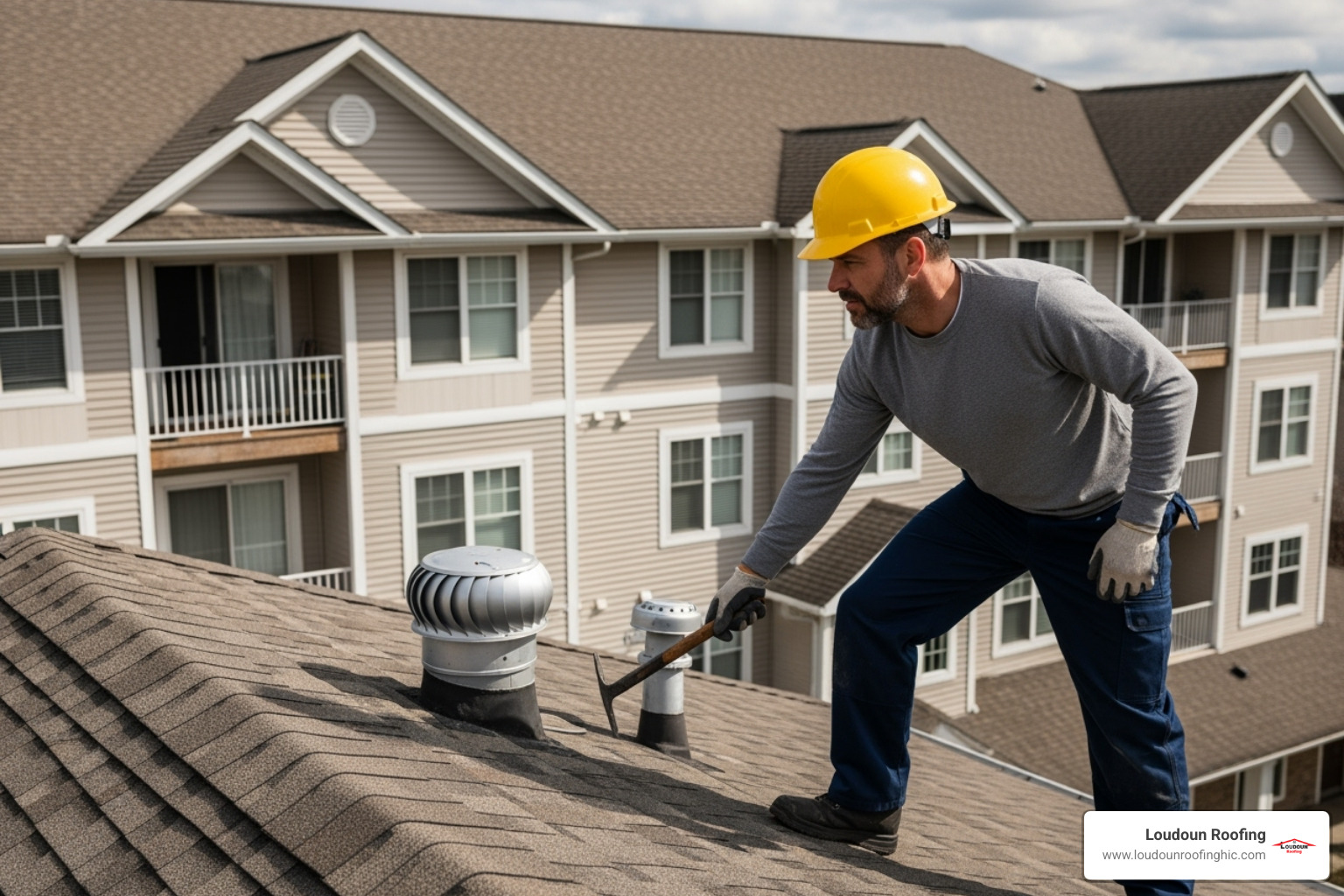
First Steps When a Roof Leak Occurs
When you spot a water stain, take these steps in the right order to save time and money:
- Document everything. Take clear photos and videos of all visible damage, noting the date and time. This is crucial for insurance claims.
- Contact your HOA or property manager immediately. Use their emergency contact procedures. They are typically responsible for coordinating the response for a common element like the roof.
- Get a professional assessment. A qualified roofer can perform a Roof Inspection to pinpoint the leak’s source and provide expert documentation.
- Mitigate further damage. Place buckets to catch drips and move valuables. For severe leaks, professional emergency tarping may be necessary to prevent further damage without voiding insurance claims.
Best Roofing Materials for a Condo Roof Repair or Replacement
Choosing the right material balances cost, longevity, and maintenance. This decision will affect your community for decades.
| Material | Cost (per sq. ft.) | Lifespan (Years) | Durability | Maintenance |
|---|---|---|---|---|
| Asphalt Shingles | $4 – $8 | 12 – 30 | Good, but susceptible to wind and hail | Moderate (regular inspections, shingle replacement) |
| Metal Roofing | $5 – $8 | 20 – 70 | Excellent (weather, fire, impact resistant) | Low (minimal repairs, occasional cleaning) |
| TPO/EPDM | $4 – $8 | 20 – 50 | Excellent (puncture, UV, chemical resistant) | Low (seam inspections, patching) |
| Tile Roofing | Up to $30 | 50 – 100 | Excellent (fire, rot, pest resistant) | Moderate (fragile, may crack) |
- Asphalt shingles are a cost-effective and popular choice for sloped roofs. Our Asphalt Shingle Roofs offer excellent value and can last 20-30 years.
- Metal roofing is incredibly durable, with a lifespan of up to 70 years. Though the upfront cost is higher, long-term savings are significant. Our Metal Roofing systems are ideal for areas with severe weather.
- TPO and EPDM membranes are the standard for flat or low-slope roofs. These waterproof systems can last up to 50 years. Our Commercial Flat Roof Repair expertise ensures a proper installation.
How to Hire the Right Contractor for the Job
Hiring a contractor for a multi-family project requires careful vetting, as the stakes are high for the entire community.
- Verify credentials. Ensure any contractor is fully licensed, bonded, and insured. Ask for and verify certificates to protect the HOA from liability.
- Look for multi-family experience. Condo projects have unique challenges. Seek contractors with proven experience in multi-family roofing.
- Check their track record. Ask for references from other condo associations and check them thoroughly. Inquire about communication, timeliness, and problem-solving.
- Understand the warranty. A reputable contractor offers comprehensive warranties on materials and labor. Ensure it’s documented and transferable.
- Get detailed proposals. Obtain at least three written bids outlining the scope, materials, timeline, and payment schedule. Don’t just choose the cheapest bid; quality saves money long-term. As one of the region’s Best Roof Replacement Contractors, we understand that every condo project deserves expert care.
Frequently Asked Questions about Condo Roof Repairs
After helping hundreds of condo associations and unit owners, we’ve heard the same questions repeatedly. Here are the answers that matter most when you’re dealing with a roof leak.
Who is typically responsible for a condo roof leak?
In most cases, the HOA is responsible for repairing the roof itself, as it is a “common element.” Your monthly condo fees and the association’s reserve fund are intended to cover these repairs. However, interior damage from that leak (to drywall, flooring, or personal items) often falls to the unit owner and their individual HO-6 insurance policy. Your CC&Rs are the final authority and can override these general rules, so always check them first.
What if my HOA refuses to make necessary roof repairs?
If your HOA is unresponsive, start by documenting all communication in writing. Your CC&Rs likely outline dispute resolution procedures, which are your first step. Send a formal demand letter to the HOA board detailing the problem and citing relevant clauses from your governing documents. If the HOA continues to neglect repairs that threaten property, you may need to consult an attorney who specializes in HOA law to understand your legal options.
Can the HOA make me pay a special assessment for a new roof?
Yes, they can. If the reserve fund is insufficient to cover a major condo roof repair or replacement, the HOA board can levy a special assessment on all unit owners. This authority is spelled out in your CC&Rs, along with the required approval process. While no one likes an unexpected bill, this mechanism protects the entire community’s investment by ensuring a failing roof is addressed before it causes widespread damage and devalues the property.
Your Partner in Protecting Your Condo Investment
When it comes to condo roof repair, knowledge is power. Understanding your CC&Rs, recognizing warning signs, and acting proactively can save you thousands of dollars and significant stress. The key takeaways are simple: proactive maintenance is always better than reactive repairs, and clear communication between owners and the HOA is crucial.
When repairs are needed, professional expertise makes all the difference. At Loudoun Roofing, we understand that condo projects are about protecting entire communities. Since 2001, we’ve worked with property managers and HOA boards throughout Leesburg, Ashburn, Sterling, and across Northern Virginia. We know how to steer the unique challenges of multi-unit properties, from coordinating with stakeholders to minimizing disruption for residents.
Every project comes with our commitment to durable, expertly crafted solutions backed by industry-leading warranties. We believe quality workmanship is the standard that protects your home and investment.
For an expert assessment and repair of your condo, townhouse, or HOA property, trust our specialized multi-family roofing team. We’re here to help you understand your options and provide the highest quality condo roof repair and replacement services.
Don’t let a small leak turn into a major disaster. Contact us today for a free estimate at (703) 777-0009 and let us help protect your home and your peace of mind.