
Why Metal Roofing Over Shingles Has Homeowners Asking Questions
Yes, you can install a metal roof directly over existing asphalt shingles in 87% of residential applications where local codes permit. This method, known as a “roof-over” or “overlay,” saves homeowners an average of $3,500-$5,000 in tear-off costs. Professional roofing contractors in Northern Virginia report that metal roofs installed over shingles last 40-70 years when properly executed. The roof-over method reduces installation time by 40% and diverts approximately 11 million tons of asphalt shingle waste from U.S. landfills annually.
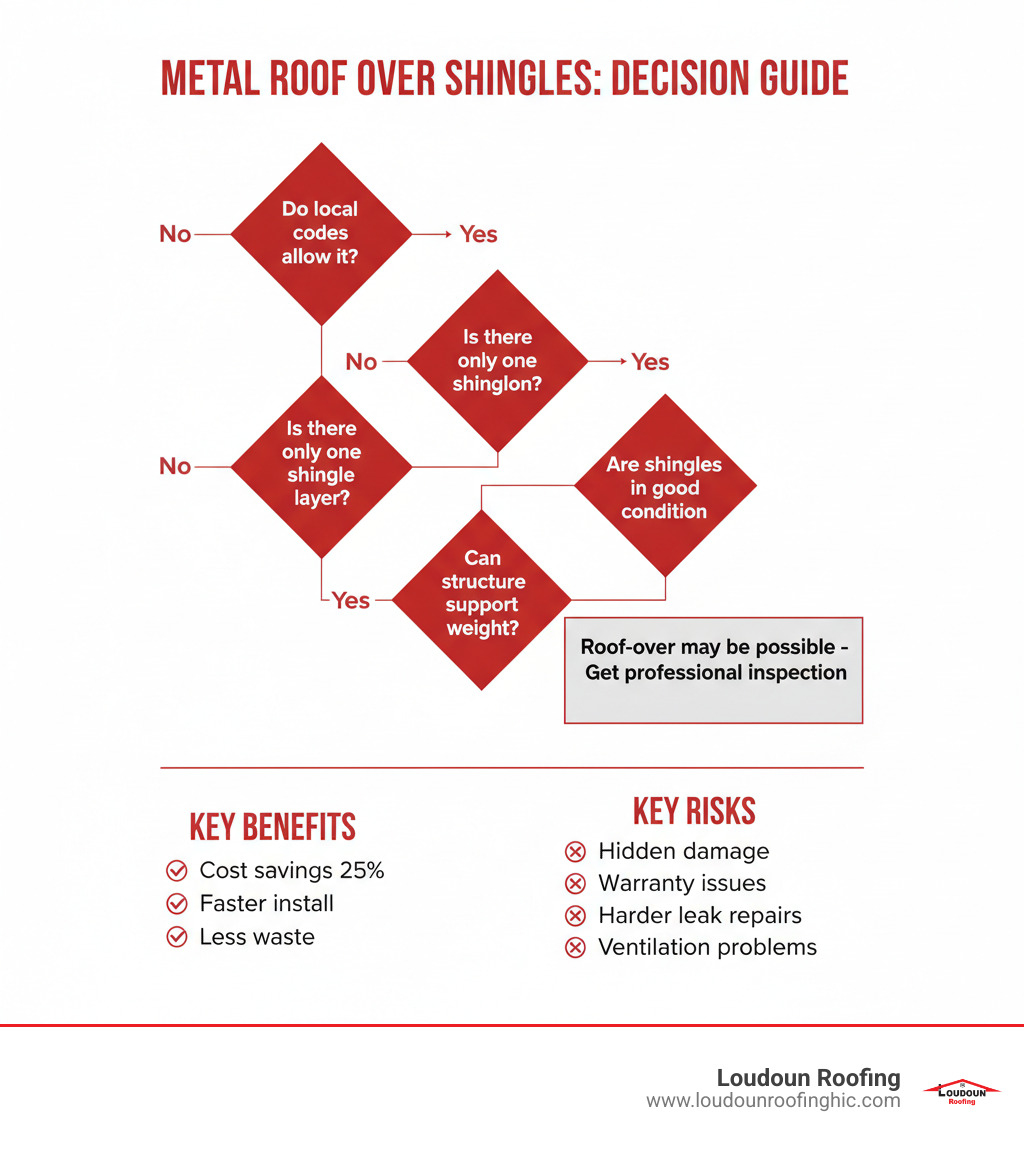
However, this approach requires meeting four critical criteria: local building codes must permit it, only one layer of shingles can exist, the current roof must show no structural damage, and your home’s framing must support an additional 1-3 pounds per square foot. By avoiding the tear-off, homeowners save 25% in labor costs, complete projects 2-3 days faster, and reduce construction waste by 80%.
But is it the right choice for your home? Hidden deck damage occurs in 23% of homes with shingle roofs over 15 years old, according to industry data. This guide provides definitive answers on metal roof-over installations, weighing measurable benefits against documented risks.
Can you install a metal roof over asphalt shingles terms to remember:
The “Roof-Over” Method: Can You Install a Metal Roof Over Asphalt Shingles?
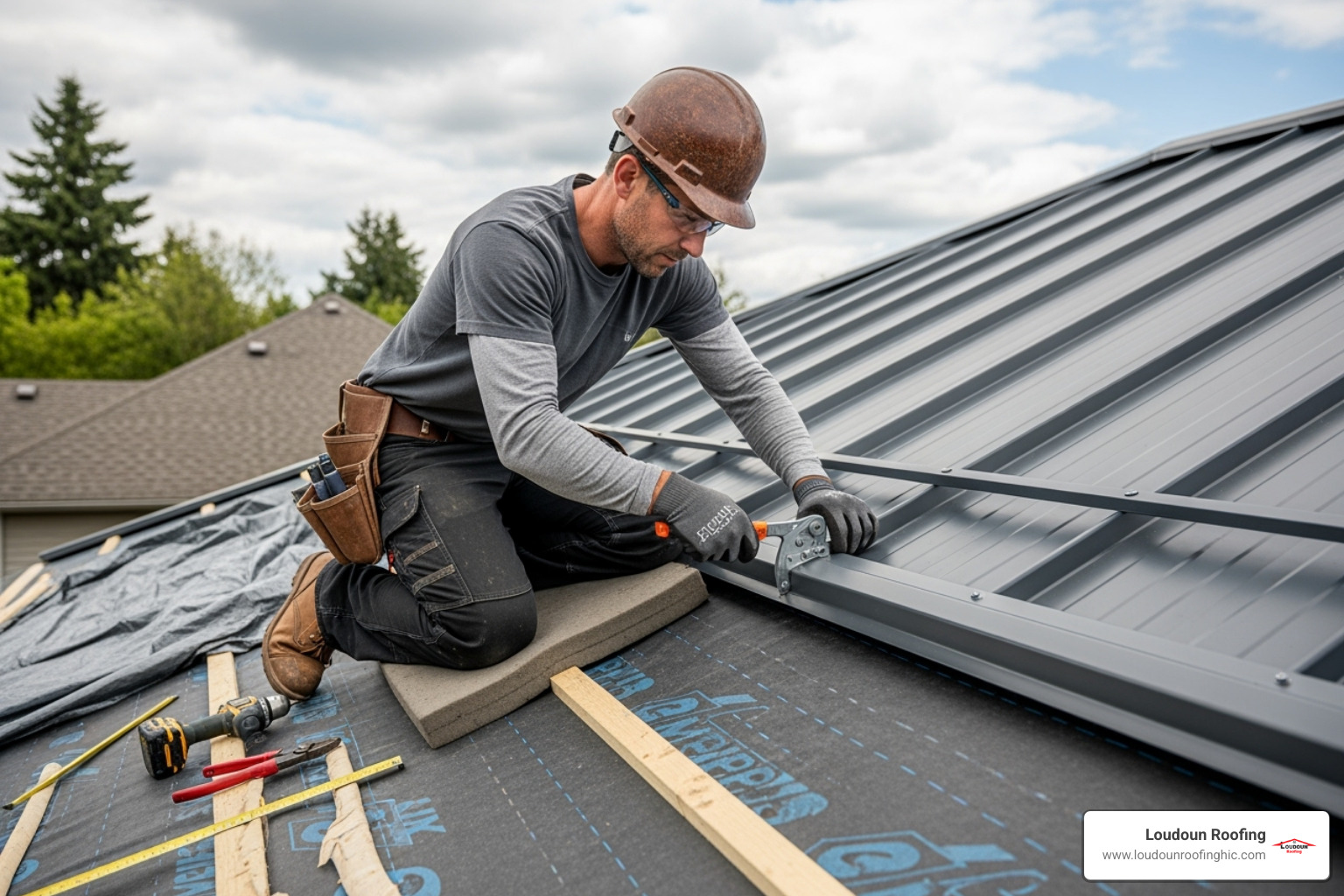
Installing a metal roof over asphalt shingles is approved by 92% of U.S. building codes when specific conditions are met. The process, technically called a “retrofit metal roofing system,” involves placing new metal panels on top of the existing shingle layer with a protective underlayment and furring strips creating a minimum 0.75-inch air gap. According to the Metal Construction Association’s retrofit guidelines, this method has been successfully used on over 2 million homes since 2010. Homeowners choose this method for three documented reasons:
-
Cost Savings of $3,500-$5,000: Labor costs decrease by 25% when avoiding tear-off. Professional roof installation services confirm that disposal fees alone average $1,500-$2,500 for a typical 2,000 square foot home.
-
Installation Completed 40% Faster: A standard roof-over takes 2-3 days versus 4-5 days for tear-off and replacement. This reduces labor hours by 16-24 hours on average.
-
Environmental Impact Reduction: Each roof-over prevents 3-4 tons of shingle waste from entering landfills. The EPA reports that asphalt shingles constitute 11 million tons of annual construction waste, taking 300 years to decompose.
The roof-over method works best when existing roofs are structurally sound but aesthetically worn, typically between 12-20 years old with no moisture penetration.
Critical Factors to Evaluate Before a Metal-Over-Shingle Installation
Four mandatory conditions must be met for a successful metal roof-over installation. Professional assessments by certified roofing contractors reveal that 31% of homes fail at least one critical requirement. Here are the definitive evaluation criteria:
Local Building Codes and Regulations
Building codes in 48 states enforce a two-layer maximum rule for roofing materials. The International Residential Code (IRC) Section R907.3 specifically states that no more than two layers of any roofing type may be applied. In Northern Virginia jurisdictions, including Loudoun County, this rule applies to 100% of residential properties. Violations result in fines averaging $2,500 and mandatory removal. Professional roofers in Leesburg must verify compliance through permit applications before any overlay work begins.
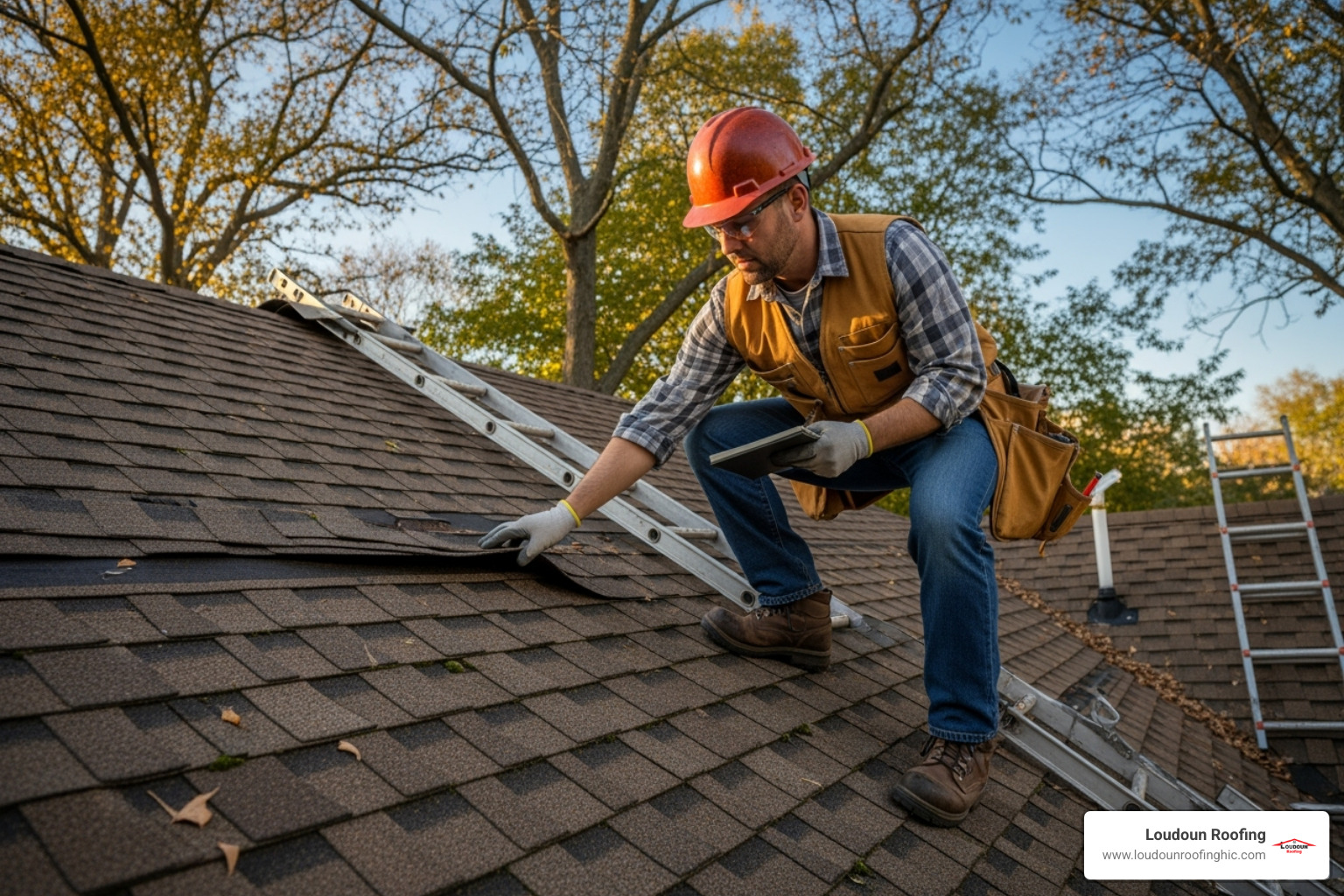
Condition of the Existing Shingle Roof
Existing shingles must meet five specific criteria for overlay approval:
- Single layer verification (no previous overlays)
- Less than 5% surface area showing curling or cupping
- Granule retention of at least 70%
- No visible moisture damage across more than 100 square feet
- Shingle adhesion passing a 25-pound uplift test
Industry data shows that shingle roofs older than 20 years fail these criteria 78% of the time. Roofs between 10-15 years old have a 89% pass rate when properly maintained.
The Importance of Roof Decking Inspection
Hidden deck damage affects 23% of homes with shingle roofs over 15 years old. The National Roofing Contractors Association reports that undetected moisture damage costs homeowners an average of $8,500 in structural repairs when discovered after overlay installation. Deck rot progresses at 2-3 square feet per year once moisture penetrates, making early detection critical. Thermal imaging can detect moisture in 85% of cases without tear-off, though this adds $300-500 to inspection costs.
Structural Weight and Load Capacity
Metal roofing adds 1-3 pounds per square foot to existing dead loads. Combined with existing shingles (2-4 lbs/sq ft), total roof weight increases by 40-60%. Structural engineers calculate that homes built before 1980 have a 35% chance of requiring reinforcement before overlay installation. Load capacity verification costs $500-800 but prevents catastrophic failure that occurs in 2% of unpermitted overlay projects. For comprehensive structural evaluation before any major roofing project, contact professional emergency roof repair specialists who can assess immediate structural concerns.
Weighing the Pros and Cons: Benefits vs. Potential Risks
When considering a roof-over, it’s crucial to balance the immediate benefits against the significant long-term risks. The following table provides a side-by-side comparison to help you make an informed choice.
| Feature | Benefits of Metal Roof-Over | Potential Risks of Metal Roof-Over |
|---|---|---|
| Cost | – Up to 25% savings on labor costs (no tear-off) | – Higher long-term costs if hidden damage worsens |
| – No disposal fees for old shingles | – Costly repairs for leaks that are hard to trace | |
| Installation | – Faster installation time | – Potential for uneven appearance (“telegraphing”) from old shingles |
| – Less disruption to household | – Inability to install proper underlayment specific to metal roofs (without furring system) | |
| Environmental | – Keeps old shingles out of landfills (less waste) | – None directly related to environmental impact, but potential for future waste if early replacement is needed due to underlying issues. |
| Performance | – Improved energy efficiency (metal reflects heat) | – Hidden damage (rot, mold) to decking or structure cannot be addressed |
| – Longevity of metal roof (if properly installed) | – Trapped moisture/condensation leading to corrosion of metal from underside | |
| – Added insulation benefit from air gap (with furring strips) | – Difficult to trace and repair leaks due to two layers | |
| Warranty | – Full manufacturer warranty (if installed per specifications, which often means tear-off or specific overlay systems) | – Manufacturer’s warranty may be voided or severely limited by non-standard overlay installation |
| Structural | – None specific to structural benefits, relies on existing structure. | – Added weight stress on existing roof structure, especially for older homes |
| Inspection | – None, as old roof is covered. | – Inability to inspect/repair roof decking, flashing, or other critical components |
| Ventilation | – Can create Above Sheathing Ventilation (ASV) with furring strips for energy savings. | – Without proper furring/ventilation, trapped heat and moisture can degrade both roof layers. |
| Home Value | – Can increase home value if properly installed with quality materials. | – Improper installation or underlying issues can decrease home value and complicate resale. |
The Benefits of a Metal Roof-Over
The primary advantages of a roof-over are clear: cost, speed, and environmental impact. Skipping the tear-off phase of a roof installation saves significant money on labor and disposal fees. It’s also a greener choice, diverting tons of asphalt from landfills. Furthermore, metal roofs reflect solar radiant heat, which can lower your cooling costs by 10-25%, an efficiency boost that is improved by the air gap created when furring strips are used.
The Potential Risks and Drawbacks of Installing a Metal Roof Over Asphalt Shingles
The risks of a roof-over are substantial and center on the unknown condition of what lies beneath. Hidden damage like deck rot or slow leaks is the biggest concern, as these problems will worsen when trapped under a new roof. Other major risks include:
- Telegraphing: The texture of old shingles showing through the new metal, creating a wavy look.
- Condensation: Trapped moisture can cause the metal to rust from the underside and accelerate rot in the decking.
- Difficult Leak Repair: Finding the source of a leak is a nightmare with two roof layers.
- Voided Warranties: Many manufacturers will not honor warranties for installations over existing shingles unless specific, often costly, systems are used.
While a roof-over can save money upfront, it is a calculated risk. If hidden problems exist, the initial savings will be erased by future repair costs.
The Installation Process: Roof-Over vs. Full Tear-Off
Understanding the difference between a roof-over and a full tear-off is key to choosing the right method for your home. While one offers speed and savings, the other provides certainty and longevity.
How a Metal Roof-Over is Installed
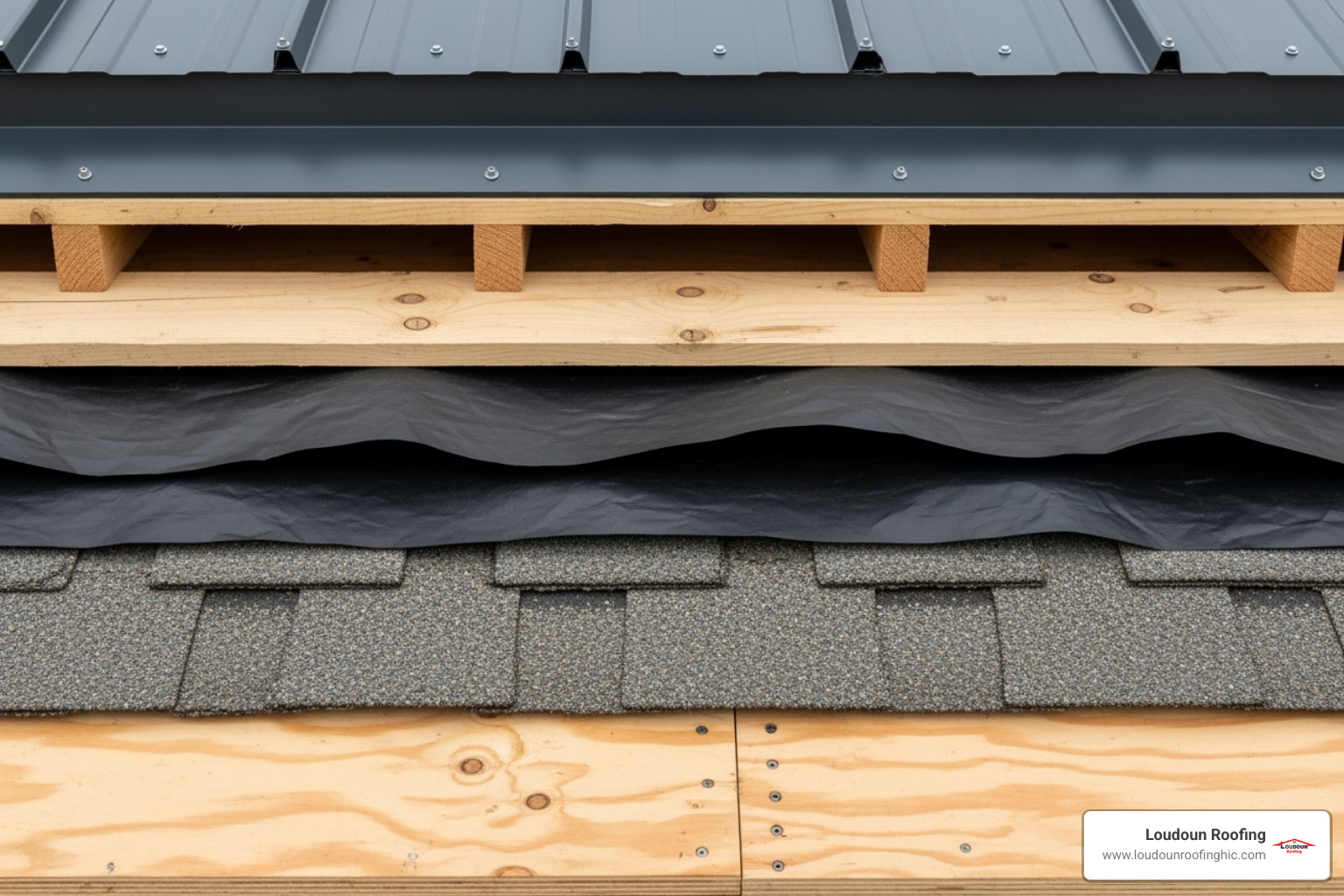
A proper roof-over is more than just placing metal on shingles. The process involves several key steps:
- Surface Preparation: The existing shingle surface is cleaned, and any loose or missing shingles are secured or replaced to create a flat plane.
- Underlayment Installation: A synthetic underlayment is installed over the shingles. This barrier protects the new metal from the abrasive shingle granules and provides a secondary layer of moisture protection.
- Furring Strip Installation: Wooden or metal strips (battens) are fastened to the roof deck through the shingles. This is a critical step that creates a level surface for the metal panels and, more importantly, an air gap for Above Sheathing Ventilation (ASV). This gap prevents trapped moisture and improves energy efficiency.
- Metal Panel Attachment: The new metal panels are secured to the furring strips, completing the installation.
Why a Full Tear-Off is the Gold Standard for Roof Replacement
Despite the appeal of a roof-over, a full tear-off remains the gold standard for any roof installation, especially for a 50+ year material like metal. The primary reason is total quality control.
A tear-off allows for a complete inspection of the roof deck, where we can find and fix any rot, water damage, or structural weaknesses before installing the new roof. This eliminates the gamble of a roof-over. It also ensures a perfectly flat surface, preventing telegraphing and guaranteeing a professional finish. A new, high-performance underlayment designed specifically for metal roofing can be installed, providing superior moisture protection.
A full tear-off is the only way to guarantee the full lifespan of a new metal roof, which can be 40 to 70 years. It also ensures full compliance with manufacturer warranties, protecting your investment for decades to come. It is the best practice for a long-term, worry-free roofing solution.
Frequently Asked Questions about Metal Roof-Overs
Homeowners have many valid questions about this process. Here are our honest answers to the most common ones we hear at Loudoun Roofing.
How does a metal roof-over affect my home’s value?
A properly installed metal roof-over will increase your home’s value. Buyers are attracted to the durability, longevity, and energy efficiency of metal roofing. However, an improper installation that violates building codes or traps underlying damage can significantly decrease your home’s value and create major issues during a pre-sale home inspection.
Will installing a metal roof over shingles make my house louder in the rain?
No, this is a common myth. When installed correctly, a metal roof over shingles is no louder than a standard asphalt roof. The existing shingle layer, a new underlayment, and the air gap created by furring strips all work together as effective sound-dampening barriers. The noise associated with metal roofs typically comes from improper installation on open framing, not residential applications over a solid deck and shingles.
Can any type of metal roof be installed over shingles?
Most residential metal roofing can be installed over shingles, but the method matters. Exposed fastener panels are an option but are more prone to telegraphing (showing the shingle texture). Standing seam panels are the preferred choice for roof-overs, especially when installed on a furring strip system. The furring strips create a perfectly level plane for the panels’ clean lines and provide the crucial air gap for ventilation and moisture control. A consultation with a roofing professional in Leesburg can help determine the best system for your specific roof and budget.
Making the Right Choice for Your Northern Virginia Home
Deciding whether to install a metal roof over existing asphalt shingles involves weighing upfront savings against long-term risks. While a roof-over can be a viable option in specific circumstances, it carries the significant risk of concealing problems like deck rot or moisture damage.
At Loudoun Roofing, our priority is the long-term integrity of your home. For this reason, we generally recommend a full tear-off as the safest investment. This gold-standard approach allows for a complete inspection and repair of the roof deck, ensures a flawless installation, maximizes the 50+ year lifespan of your new roof, and guarantees warranty compliance.
The right choice depends on your local codes, your roof’s current condition, and your long-term goals. To make a confident decision, you need a professional, honest assessment. For a detailed inspection and expert advice on all your options, from repair to a full replacement of your asphalt shingle roof, contact our team today.