
Why Identifying Wind Damage Roof Shingles Matters for Northern Virginia Homeowners
After a storm in Northern Virginia, identifying wind damage roof shingles is crucial to prevent leaks, structural decay, and costly repairs. Knowing the warning signs can save you thousands and protect your home’s interior from water damage. As a trusted roofing partner serving the area since 2001, we’ve seen how even subtle issues can escalate. This guide will help you spot the signs and take action.
Quick Signs of Wind Damage to Look For:
- Missing shingles – Entire shingles blown off, exposing the roof deck
- Lifted or curling edges – Shingles peeling up at corners or edges
- Creased or torn shingles – Visible folds or tears in shingle material
- Granule loss – Excessive granules in gutters or downspouts
- Damaged flashing – Bent or loose metal around chimneys and vents
- Interior water stains – Discoloration on ceilings or walls
High winds create powerful uplift forces that tear shingles from your roof. Winds between 58-74 mph can cause significant damage, while winds over 75 mph often result in widespread roof failure. Not all damage is immediately visible; latent damage, like broken sealant bonds, can lead to deterioration months later. Whether you’ve had a recent storm or want to be proactive, understanding wind damage is the first step. For immediate help, our storm damage assessment service provides expert inspections. I’m Esteban Marin, owner of Loudoun Roofing, and my hands-on approach ensures every inspection and repair meets the highest standards.
How to Spot Wind Damage on Your Roof: A Visual Inspection Guide
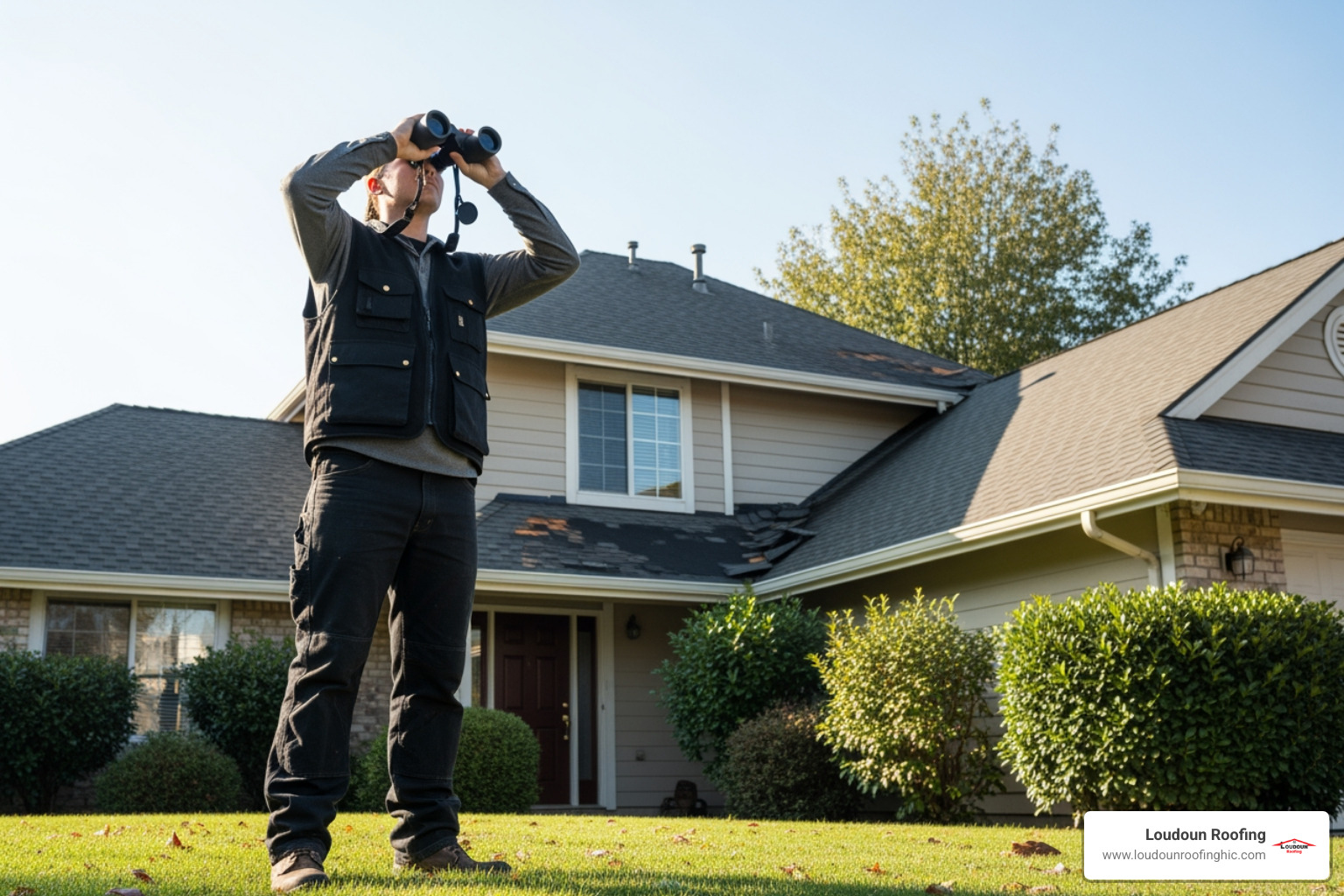
After a Northern Virginia windstorm, assessing your roof is the first step. Wind damage roof shingles often present as subtle issues, not dramatic destruction. Wind targets vulnerable areas like edges, ridges, and loose spots, concentrating its force there. The good news is you can spot many warning signs from the ground. For homeowners who want professional eyes on their roof, our roof inspection service provides comprehensive assessments that catch issues you might miss.
Exterior Signs of Damage
Your safety is paramount. Never climb onto a wet or damaged roof; this is a job for professionals. Instead, use binoculars and a camera from the ground to document your findings. Scan your roof section by section for these red flags:
- Missing shingles: This is the most obvious sign. Shingles in your yard or bare spots on the roof confirm wind damage, exposing your roof deck to rain and immediate risk of water damage.
- Loose or lifted shingles: Wind can get underneath shingles and break the sealant bond. Look for edges that are flapping or corners that no longer lie flat. These are vulnerable to being torn off in the next storm.
- Curling or peeling shingle edges: When wind repeatedly lifts shingle edges, the material may start to curl upward or peel away. On newer roofs, this is a telltale sign of wind damage, creating entry points for water.
- Creased or folded shingles: These occur when wind lifts a shingle but doesn’t tear it off, leaving a permanent fold. This weakened area can channel water under the shingle.
- Excessive granule loss: Check your gutters for large accumulations of sand-like granules. While some loss is normal, a large amount indicates your shingles are losing their protective layer and aging rapidly.
- Damaged flashing: High winds can bend, crack, or dislodge the metal flashing around chimneys, skylights, and vents. Compromised flashing is a direct path for water intrusion.
- Damaged gutters and downspouts: Dented, twisted, or detached gutters indicate significant wind force, suggesting your roof likely sustained damage as well.
- Damaged soffit and fascia: Wind can tear off these boards on your roof’s overhang, exposing your attic to weather and pests.
Interior Signs of Damage
Sometimes the first clue of roof damage appears inside your home. These signs often point to leaks from wind-damaged areas.
- Water stains on ceilings: Brown or yellow rings or wet spots on your ceiling are a classic warning sign of a leak.
- Peeling paint near your roofline: Moisture seeping in can cause paint on walls or ceilings to bubble and peel, often before stains are visible.
- Discolored interior walls: Look for streaks or dark spots near the roofline, as water can travel along beams before becoming visible.
- Musty odor in your attic: A damp, moldy smell indicates hidden moisture, often from a slow leak.
- Daylight through roof boards: If you can see daylight from your attic, you have a serious breach that needs immediate professional attention.
- Wet or compressed insulation: Discolored or dripping insulation is a clear sign of an active leak.
If you spot any of these interior signs, time is critical. Our team specializes in roof leak repair in McLean and throughout Northern Virginia, stopping leaks before they cause structural damage or mold.
Understanding the Mechanics of Wind Damage Roof Shingles
Understanding how wind damages your roof is key to protecting your home. Wind creates complex pressures that can tear away even properly installed shingles. The damage is a result of aerodynamic forces, sealant failures, and your roof’s specific characteristics.
How Wind Lifts and Tears Shingles
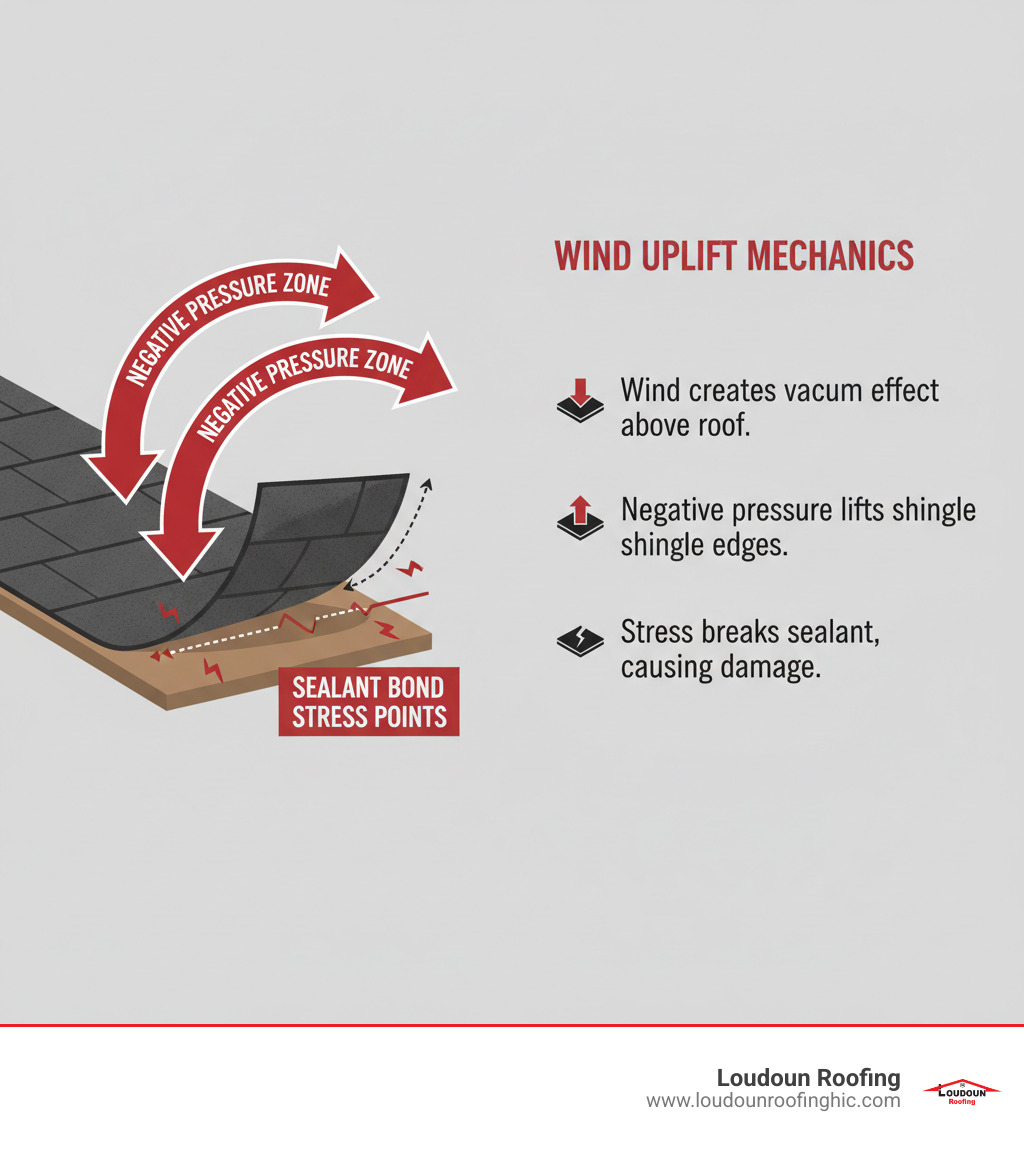
Wind damage is primarily caused by aerodynamic lift. As wind flows over your roof, it creates suction, or negative pressure zones, that pull shingles upward. This is the main threat to your roof’s integrity. The strongest suction occurs along roof edges, corners, and ridges, which is why wind damage roof shingles often start there.
Each shingle has a cantilevered portion extending beyond the sealant strip. This acts as a lever, amplifying the wind’s lifting force. When wind gets under this edge, it stresses the adhesive strip. Repeated lifting breaks the sealant bond, creating a “flapper” that is easily torn away. Tearing occurs when the shingle material rips, while puncturing is caused by wind-blown debris. Complete removal happens when uplift forces overpower both the sealant and the fasteners.
Wind speed directly correlates with damage severity, as noted by the National Weather Service:
- 45-57 mph: Slight damage begins, especially to older or loose shingles.
- 58-74 mph: Significant damage occurs. Properly installed shingles can tear off.
- 75+ mph: Widespread roof damage is common, and structural integrity is a concern.
For immediate help after a major storm, our emergency roof repair team is available 24/7.
Factors That Increase a Roof’s Vulnerability
Not all roofs react to wind the same way. Several factors determine a roof’s wind resistance.
- Roof age and condition: This is the primary factor. Shingle sealant degrades after 4-5 years, making older roofs highly susceptible. One study found 70% of surveyed roofs had a substantial number of unsealed shingles.
- Roof shape and slope: Hip roofs generally perform better than gable roofs. Steeper slopes shed wind more effectively, while complex designs with more edges create more points of vulnerability.
- Construction quality: Proper fastener installation—using the right number and placement of nails—is critical. Hand-sealing shingles in high-wind zones provides extra protection.
Scientific evidence confirms that unsealed shingles dramatically reduce wind resistance. Our asphalt shingle roofs are installed with superior fastening and hand-sealing techniques to withstand severe weather in Loudoun County.
Is It Wind Damage or Something Else?
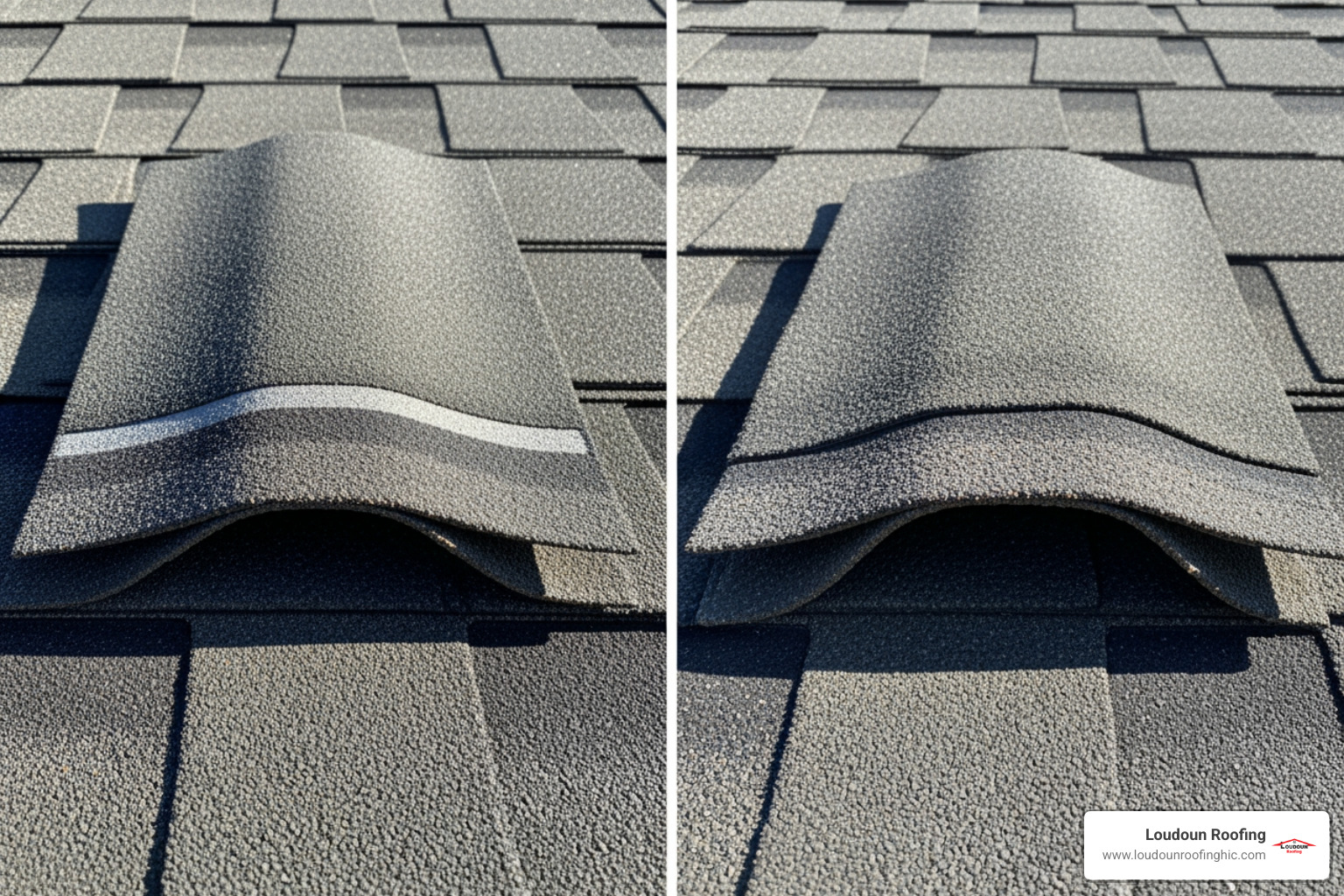
After a storm in Northern Virginia, it’s easy to assume all roof issues are wind-related. However, it’s important to distinguish storm damage from normal aging, manufacturing defects, or other issues. This understanding is key for accurate insurance claims and necessary repairs.
Differentiating Wind Damage from Normal Wear and Tear
True wind damage roof shingles have specific patterns, like creases, tears, or missing tabs, often concentrated on windward edges and ridges. This differs from age-related deterioration:
- Cupping and clawing: These are signs of natural aging, where shingle edges curl up (cupping) or down (clawing) due to thermal cycling and moisture absorption over many years.
- Splitting and cracking: Shingles can develop splits from thermal stress as they age. While wind can worsen existing cracks, it rarely causes the initial split.
- Blistering: These bubbles on the shingle surface are almost always a manufacturing defect, not wind damage.
- Sealant deterioration: Sealant naturally degrades over time. Unsealed shingles without other signs of wind stress (like creases) are typically a sign of age.
Wind damage also differs from other storm effects. For example, hail creates distinct circular bruises or dents, a pattern we detail in our guide on spotting hail damage.
Debunking Common Misconceptions About Wind Damage Roof Shingles
Several myths complicate wind damage assessment. Here are the facts:
- Myth: Wind damage is always obvious. Fact: Subtle issues like broken sealant bonds or minor creases are considered latent damage. They compromise your roof’s integrity and can lead to failure months or years later, making professional inspection essential.
- Myth: Unsealed shingles automatically mean wind damage. Fact: Adhesion fails for many reasons, including improper installation, contamination, and age. A true wind damage diagnosis requires physical evidence of stress, like creases or tears, not just a failed bond.
- Myth: Lab tests reflect real-world performance. Fact: Standardized tests (like ASTM D3161) evaluate new shingles under ideal conditions. An aged, weathered roof will not perform to the same standard as a brand-new product in a lab.
At Loudoun Roofing, we provide honest assessments based on years of experience. Our commitment to durable roofing solutions means we only recommend repairs you truly need.
What to Do After a Wind Storm: Repair, Replacement, and Insurance
Finding wind damage roof shingles is stressful, but taking swift, correct action can prevent bigger problems and smooth out the recovery process. Here’s what Northern Virginia homeowners should do next.
Repairing Wind Damage Roof Shingles
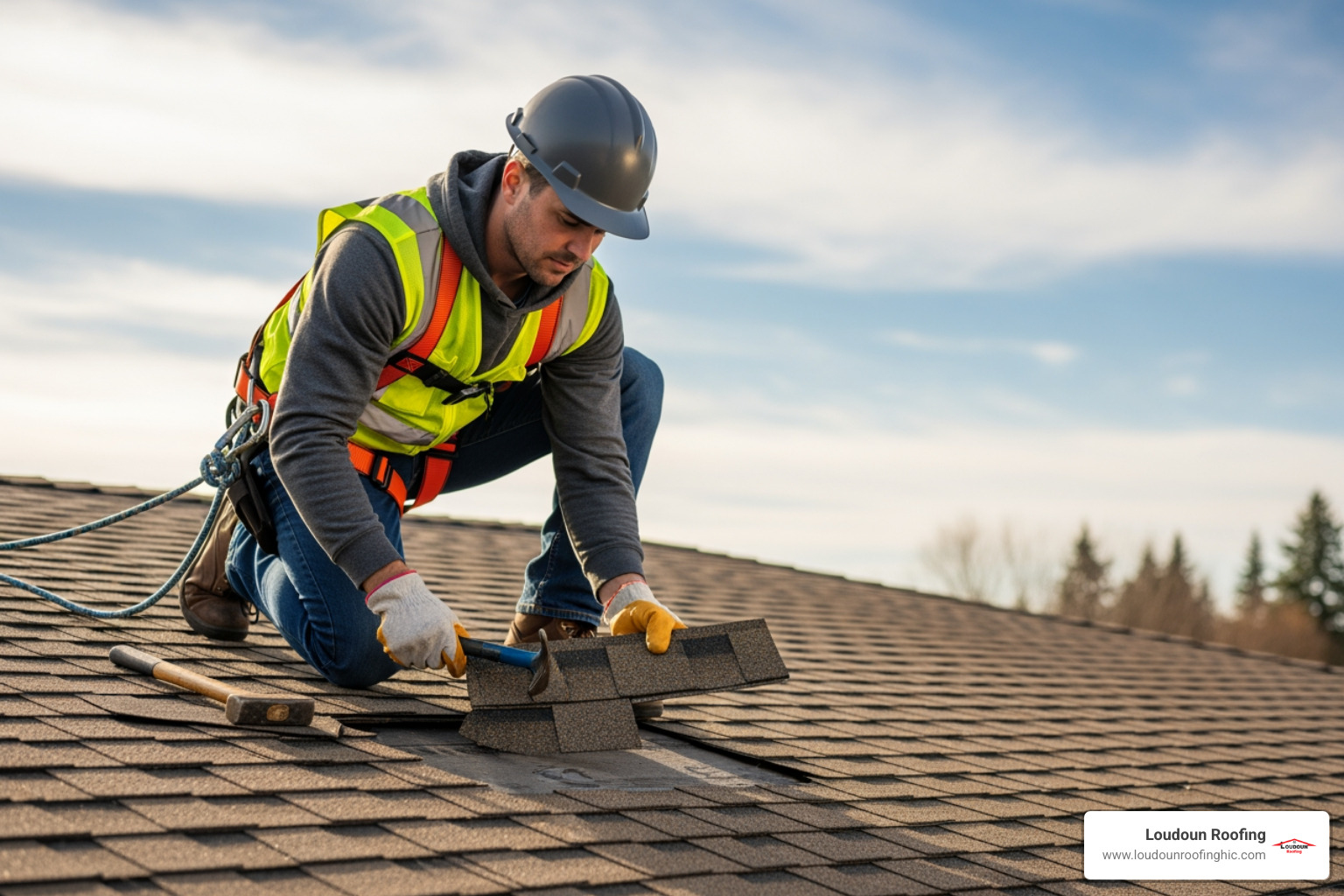
Once you spot potential wind damage, act fast to protect your home.
- Document Everything: Before any cleanup, take extensive photos and videos of the damage, both outside and inside. This documentation is crucial for your insurance claim.
- Perform Temporary Tarping: If you have missing shingles or holes, a temporary tarp is essential to prevent water intrusion. This is a key step in emergency roof repair and is best handled by a professional for safety and effectiveness.
- Get a Professional Assessment: Call a trusted local roofing contractor like Loudoun Roofing. We can safely inspect your roof, identify all damage (including hidden issues), and provide an honest report.
For fixing wind damage roof shingles, common methods include:
- Shingle Replacement: Missing or badly torn shingles must be replaced. This involves removing the damaged shingle and old nails, then properly installing and securing a new one.
- Hand-Sealing: Lifted shingles that are otherwise intact can be re-adhered. We apply roofing cement under the lifted edge and press it down, creating a bond that is often stronger than the original factory seal.
Whether you need a small fix or a major job, our comprehensive roof repair services will restore your roof’s integrity.
Navigating Roof Insurance Claims
Dealing with insurance can be complex, but we can help guide you.
- Review Your Policy: Understand your homeowners insurance coverage for wind damage, your deductible, and any exclusions related to roof age or specific wind events.
- File a Claim Promptly: Contact your insurance company immediately. Provide them with all your documentation, including photos, videos, and our professional assessment.
- Work with the Adjuster: An insurance adjuster will inspect your roof. It is highly beneficial to have your roofer present to ensure all damage is identified and accurately reported. Our team in Leesburg, VA, has extensive experience working with adjusters.
- Choose Your Contractor: Your insurance company may suggest a contractor, but the choice is yours. Select a reputable local company with a proven track record, like Loudoun Roofing.
For a detailed walkthrough, see our guide on roof insurance claims explained.
Frequently Asked Questions about Wind Damaged Shingles
After a storm hits Northern Virginia, homeowners have urgent questions about wind damage roof shingles. Here are answers to the most common concerns.
How fast does wind have to be to damage roof shingles?
Damage can start with winds as low as 45 mph, especially on older or previously loosened shingles. According to the National Weather Service, the threat becomes serious in the severe wind category of 58-74 mph, which can tear off even properly installed shingles. Winds exceeding 75 mph often cause widespread roof damage to homes and commercial buildings. The key takeaway is that even moderate winds can exploit existing roof vulnerabilities.
Can wind-lifted shingles reseal themselves?
No. Once the factory sealant bond on a shingle is broken by wind, it will not reseal on its own. When a shingle lifts, the adhesive strip is immediately contaminated by dust, debris, and moisture, which prevents it from re-bonding. Think of it like a sticker that has been peeled up; it never sticks the same way again. Lifted shingles must be professionally inspected and either hand-sealed with roofing cement or replaced to restore wind resistance and prevent future leaks.
Does homeowners insurance cover wind damage to a roof?
Most standard homeowners insurance policies do cover roof damage from wind. However, coverage details are critical. Factors include the age of your roof, the extent of the damage, and any specific policy exclusions. Some policies have higher deductibles for wind claims or may reduce coverage if poor maintenance contributed to the failure. It is vital to review your policy details to understand your coverage limits and deductibles before you need to file a claim. When damage occurs, thorough documentation is your best asset. Our team at Loudoun Roofing frequently works with insurance adjusters to ensure all wind damage roof shingles are properly identified, helping homeowners steer the process. Our roof insurance claims guide offers more detailed information.
Your Local Experts in Wind Damage Repair
When a storm passes, you need a trusted roofing partner who understands Northern Virginia weather. Since 2001, Loudoun Roofing has helped homeowners in Leesburg and throughout Loudoun County address wind damage roof shingles before they become major headaches.
A damaged roof is not something to postpone. Even minor wind damage creates an entry point for water, which can lead to mold, rotted decking, and structural problems. Acting quickly after a storm can be the difference between a simple repair and a costly full replacement.
Our team specializes in accurately assessing wind damage roof shingles, distinguishing storm damage from normal wear, and providing repairs that last. We understand the subtle signs of damage that are often missed. When I personally inspect your roof, I examine every detail to ensure today’s thoroughness prevents tomorrow’s emergency.
We also know dealing with insurance can be overwhelming. We work directly with you and your adjuster to ensure all damage is documented for your claim. Our experience with storm and hail damage claims means we can advocate for you effectively.
Whether you need emergency tarping, a few shingles replaced, or a comprehensive repair, we respond quickly. Don’t wait for a small problem to become a big one. If you suspect your roof has been damaged by wind, contact us today for a thorough inspection and honest assessment. We’ll provide the peace of mind that comes from knowing your home is protected by experts.