

Why Flat Roofing Repair Demands Your Immediate Attention
Flat roofing repair is essential for preventing minor leaks from becoming costly structural disasters. A seemingly low-maintenance flat roof can be deceptive; water damage from leaks accounts for nearly 40% of expensive structural repairs in commercial buildings annually. As a trusted local partner for homeowners and businesses, we know that timely intervention is key. Unlike sloped roofs, flat roofs depend on a flawless waterproof membrane and proper drainage. When this system fails, water gets in.
Quick Answer: Essential Steps for Flat Roof Repair
- Inspect twice yearly for ponding water, cracks, blisters, and damaged flashing.
- Clean and dry the damaged area completely before any repair.
- Use compatible materials (e.g., EPDM patches for rubber roofs).
- Apply roofing cement with fiberglass mesh for small cracks.
- Call a professional for widespread damage or structural issues.
Most flat roof problems start small and are fixable. The key is catching them early through regular inspections. This guide will walk you through the inspection process, common repair techniques, and help you decide when to tackle a repair yourself versus when to call for expert Northern Virginia roofing services.
My name is Esteban Marin, and I’ve been solving flat roofing challenges across Northern Virginia since 2001. I’ve seen how timely repairs save property owners thousands. Let’s protect your investment.
First, Find the Failure: A Guide to Flat Roof Inspection & Common Problems

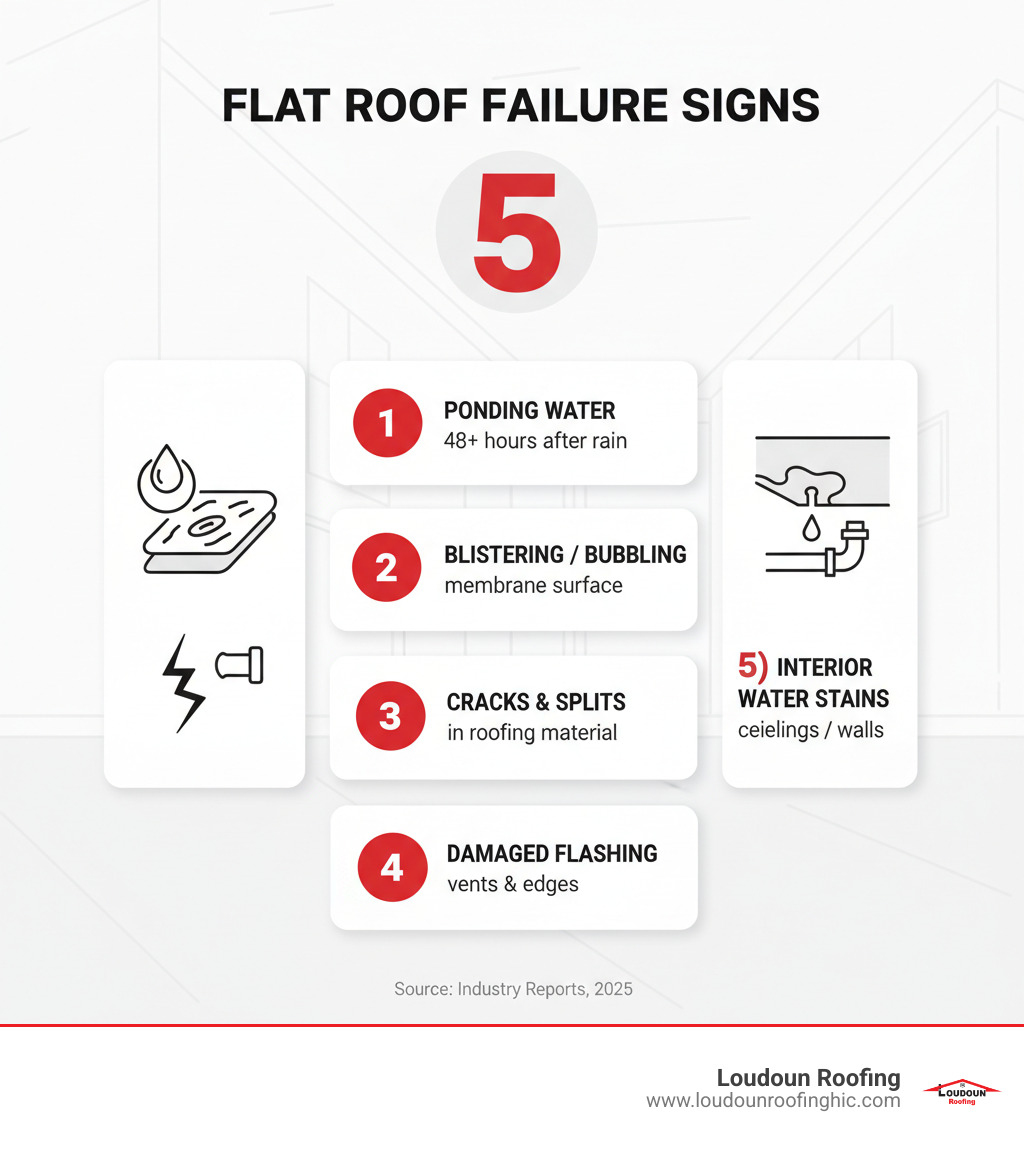
The best defense against expensive flat roofing repair is catching problems early. A thorough inspection should be performed twice a year—in spring and fall—and after any severe weather. The primary threat is ponding water, which is any water that remains on a roof for more than 48 hours. This standing water accelerates the breakdown of the roofing membrane and can lead to structural issues. Fortunately, most problems are easy to spot if you know what to look for.
Common Flat Roof Materials
Understanding your roof’s material is the first step in proper repair. Each type has unique characteristics.
- EPDM (Rubber Roofing): A durable, flexible black rubber membrane lasting 20-25 years. It’s DIY-friendly to repair with compatible patches but absorbs heat. A reflective white coating can improve its moderate energy efficiency.
- TPO (Thermoplastic Polyolefin): A popular white, energy-efficient material with heat-welded seams for a strong bond. It lasts 15-20 years, but repairs often require professional heat-welding tools.
- PVC Roofing: A premium option with excellent chemical resistance and a 20-30 year lifespan. Its heat-welded seams are strong, but it is more expensive and requires professional repair.
- Modified Bitumen: A flexible, tear-resistant material with a granulated surface for UV protection. It lasts 10-20 years and is repaired with asphalt-based patches. Reflective coatings can extend its life.
- Built-Up Roofing (BUR): A traditional multi-layered roof that is durable but heavy. It’s prone to cracking (alligatoring) over time and has a lifespan of 15-30 years depending on maintenance. Repairs involve tar and asphalt-based products.
If you’re unsure of your roof type, a professional roof inspection can identify it and assess its condition.
The Inspection Checklist: What to Look For
During your inspection, look for these eight key warning signs:
- Ponding Water: Water remaining for 48+ hours after rain signals poor drainage or sagging.
- Blistering and Alligatoring: Blisters are bubbles from trapped moisture, while alligatoring is a pattern of cracks from UV damage. Both compromise the waterproof barrier.
- Cracks and Splits: Direct entry points for water. Even hairline cracks can cause significant intrusion.
- Membrane Shrinkage: The material pulls away from edges or penetrations, exposing seams.
- Damaged Flashing: Look for bent, loose, or cracked flashing around all roof penetrations and edges.
- Clogged Drains and Scuppers: Debris buildup prevents proper drainage, causing water to back up.
- Debris Accumulation: Leaves and branches trap moisture and can damage the membrane.
- Weather Damage: Look for impact marks from hail or areas where wind has lifted the membrane.
Identifying Leaks Around Flashing and Penetrations
Flashing—the material sealing joints where the roof meets a vertical surface like a chimney or vent—is responsible for more flat roof leaks than any other issue. It expands and contracts with temperature changes, making it a common failure point.
Look for these signs:
- Cracked Sealant: Dried or separated sealant creates gaps for water entry.
- Gaps: Any separation between the flashing and the wall allows water to seep behind it.
- Rusted Metal: Rust indicates the protective coating has failed and holes may soon develop.
- Damaged Membrane: Tears or lifting where the membrane meets the flashing are critical vulnerabilities.
Water can travel over 10 feet from the entry point before appearing as a leak inside. This makes finding the source difficult. If you suspect a leak but can’t find it, or if the flashing damage is widespread, it’s time to call for expert roof leak repair in McLean to diagnose and fix the problem correctly.
The DIY Flat Roofing Repair Toolkit: Fixing Minor Issues Yourself
Before starting any repair, prioritize safety. Always work on a dry, non-slippery roof, use a sturdy ladder, and wear non-slip shoes. Over 60% of flat roof failures start as small, fixable problems. Addressing these yourself can prevent costly water damage. However, if you’re ever unsure, calling for professional Northern Virginia roofing services is the safest choice.
How to Perform a Minor Flat Roofing Repair
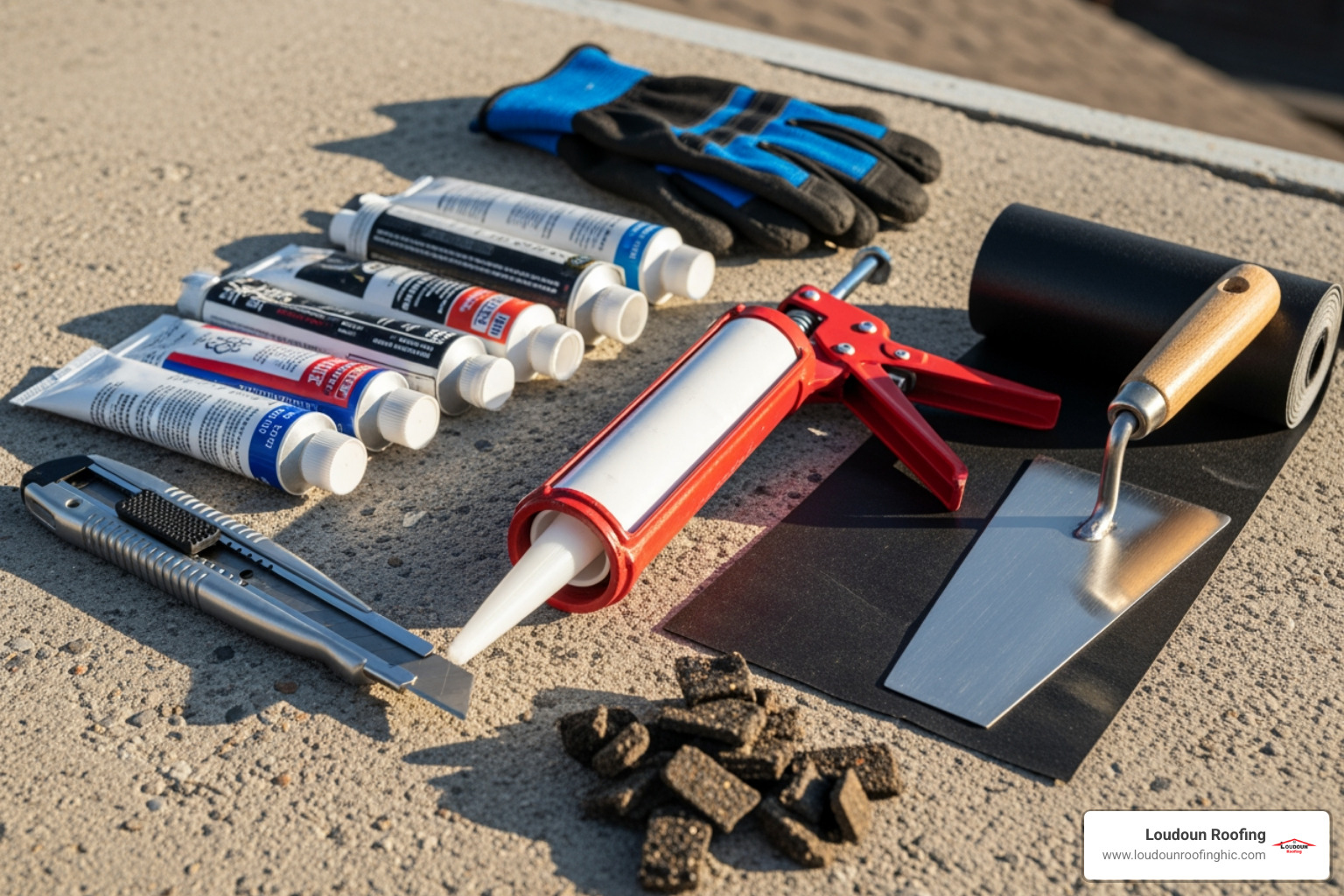
Successful DIY repair depends on proper preparation. You’ll need basic safety gear, a utility knife, a stiff brush, a trowel, roofing cement, reinforcing fabric, a compatible patch, and a hand roller. The process is straightforward:
- Clean the Area: Remove all debris, dirt, and loose material. Use a stiff brush and rubbing alcohol for a perfectly clean surface.
- Dry the Surface: This step is non-negotiable. Adhesives will not bond to a damp surface. Use a leaf blower or allow ample time for it to air dry.
- Trim Damaged Material: Use a utility knife to cut away any frayed or loose membrane to create a stable edge.
- Apply Patch/Sealant: Use a product compatible with your roof type (e.g., EPDM patch for an EPDM roof). Mismatched materials will fail.
- Ensure a Watertight Seal: Use a hand roller firmly from the center outward to eliminate air bubbles and ensure strong adhesion. This step is crucial for a long-lasting repair.
Patching Small Cracks, Holes, and Blisters
For small cracks and holes, clean and dry the area. Spread a 1/8-inch thick layer of roofing cement over the damage, extending about 6 inches around it. Press a piece of fiberglass mesh into the wet cement, then cover the mesh completely with another, thicker layer of cement.
For blisters, carefully cut an ‘X’ into the center. Peel back the flaps, clean and dry the area underneath completely. Apply roofing cement to the exposed sublayer, press the flaps back down, and then cover the entire cut area with more cement. Place a compatible patch over the repair, extending 2 inches beyond the cuts, and cover it with a final layer of cement.
Repairing Flashing and Seams
Leaking flashing is a top cause of flat roof leaks. To repair it, first scrape away all old, cracked sealant down to a clean surface. Clean the area with a brush and ensure it’s completely dry.
Apply a new, continuous bead of high-quality polyurethane sealant along the seams. For larger gaps, embed reinforcing fabric into the wet sealant and then apply another layer over it. This creates a flexible seal that can handle temperature changes. If you can’t find the leak source, a professional water test may be needed. For persistent issues, expert roof leak repair in McLean is recommended to prevent further damage.
DIY vs. Calling a Pro: Knowing Your Limits
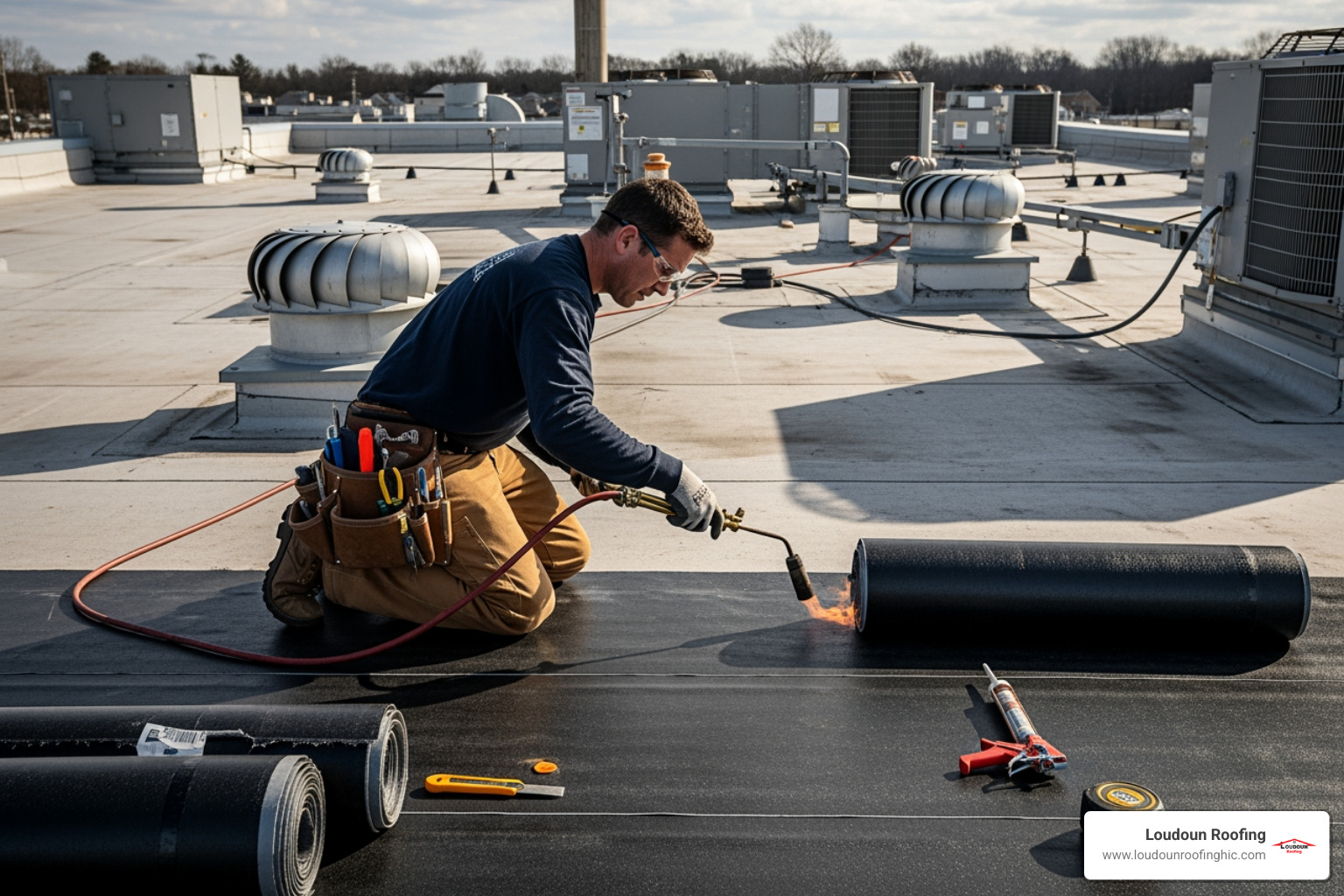
DIY repairs are effective for small, isolated problems like a minor crack or blister. However, when damage is extensive or complex, flat roofing repair requires professional expertise. A botched DIY fix can trap moisture, leading to hidden rot and far more expensive structural decay later. Knowing when to call a professional is one of the smartest decisions a property owner can make.
When to Call a Professional for Flat Roof Repair
Step back and call an expert in these situations:
- Widespread Leaks: Damage covering more than 10% of your roof signals a systemic problem that patching won’t solve.
- Structural Issues: Any visible sagging indicates a serious problem with water saturation or the roof deck that requires immediate professional assessment.
- Electrical Hazards: If damage is near any electrical components, call a professional immediately.
- Hard-to-Find Leaks: Professionals use tools like infrared cameras to pinpoint hidden water intrusion that you can’t find.
- Old Roofs: If your roof is over 15-20 years old, it may be nearing the end of its life. A pro can advise if replacement is more cost-effective than repair.
- Warranty Requirements: Many warranties are voided by DIY repairs. Check your paperwork first.
- Significant Storm Damage: Widespread tears or impact damage from a storm are beyond the scope of a simple DIY fix. For these issues, explore professional Northern Virginia roofing services.
Choosing a Qualified Contractor
Selecting the right contractor is critical. Look for these qualifications:
- License and Insurance: Verify they have both general liability and workers’ compensation insurance.
- Local Reviews: Check references from property owners in your area.
- Material-Specific Experience: Ensure they have experience with your roof type (EPDM, TPO, etc.).
- Detailed Written Estimate: The quote should clearly outline the scope of work, materials, and total cost.
- Guarantees: Understand the warranty offered on the repair work. Our ultimate guide to roof contractors offers more advice.
Understanding Flat Roofing Repair Costs
Costs vary based on damage, materials, and labor. Here are typical ranges:
- DIY Repair: $50-$150 for materials for a small patch.
- Professional Maintenance: $4-$13 per square foot for routine inspections and minor repairs, which can prevent costly replacements, according to the National Roofing Contractors Association (NRCA).
- Extensive Repairs or Replacement: $7-$30 per square foot. If your roof needs a full roof replacement, a professional quote is necessary.
Play the Long Game: Proactive Maintenance to Extend Your Roof’s Life
Think of your flat roof like a car—it needs regular tune-ups. Proactive maintenance is the most effective way to maximize its lifespan. According to The National Roofing Contractors Association (NRCA), a regular maintenance program can add five to ten years to a roof’s life, saving thousands in premature replacement costs by catching small issues before they escalate.
Essential Seasonal Maintenance Tasks
- Spring/Summer: After winter, inspect for new cracks or damage from ice. Thoroughly clear all drains and scuppers to prevent ponding water. Trim overhanging tree branches that could drop debris or cause damage in summer storms.
- Fall/Winter: Before leaves fall, clear the entire roof surface and all drainage points to prevent clogs that lead to ice dams. Inspect flashing seals around vents and chimneys to ensure they are watertight for melting snow.
For comprehensive seasonal care, consider professional roofing maintenance services for year-round expert attention.
The Role of Protective Coatings and Sealants
Protective coatings act like sunscreen for your roof, shielding it from the elements.
- Reflective Coatings: These light-colored coatings reflect sunlight, reducing surface temperature and minimizing UV damage that causes cracking. They also lower cooling costs, making your building more energy-efficient.
- Elastomeric Sealants: These flexible, rubber-like coatings create a seamless waterproof barrier that expands and contracts with temperature changes, preventing cracks and leaks.
Proper application of these products can add 5 to 10 years to a roof’s life.
Improving Drainage, Insulation, and Ventilation
- Drainage: Flat roofs must have a slight slope (at least 1/4-inch per foot) to guide water to drains and scuppers. Keeping these clear is critical to prevent ponding water.
- Insulation: Quality insulation under the roof deck prevents condensation from forming when warm indoor air meets the cold roof, which can degrade the deck over time.
- Ventilation: Good ventilation allows trapped heat and moisture to escape, preventing membrane blistering and preserving the roof’s structural integrity.
Frequently Asked Questions about Flat Roof Repair
You’ve got questions about flat roofing repair, and we’ve got answers. Here are the most common questions we hear from property owners.
How long does a typical flat roof last?
Most modern flat roofs, such as EPDM and TPO, are designed to last between 20 to 25 years. PVC systems can sometimes last up to 30 years. However, a roof’s actual lifespan depends heavily on the quality of the initial installation, local climate, and how consistently it is maintained. A well-maintained roof can easily exceed its expected lifespan, while a neglected one may fail in as little as 10-15 years.
Can you walk on a flat roof?
Yes, you can walk on most flat roofs for inspection, but foot traffic should be kept to a minimum. Repeated walking can cause scuffs and wear that weaken the waterproof membrane. When you must walk on the roof, always wear soft-soled shoes and step carefully, avoiding seams and flashing. Using ladders to inspect from the edge when possible is the best practice.
What is the most common cause of a flat roof leak?
The single most common cause of a flat roof leak is failing flashing around penetrations like vents, chimneys, and skylights. The sealant around these areas cracks and degrades over time, creating an entry point for water. Other frequent causes include separated seams between membrane sheets and ponding water, which is standing water that accelerates material breakdown.
Protect Your Investment with Professional Care
Taking immediate action on flat roof issues is crucial for protecting your property from costly water damage. While this guide equips you for minor DIY fixes, complex problems demand a professional touch. A well-maintained roof is your home’s primary defense, and knowing when to call in experts can save you thousands.
The team at Loudoun Roofing has provided expert roof repair in Loudoun County for over two decades. We specialize in all types of flat roofing repair and understand the challenges of Northern Virginia’s climate. For homeowners in Leesburg, VA, and the surrounding areas, we offer peace of mind.
Don’t let uncertainty turn into structural decay. If you’re facing extensive damage or a hard-to-find leak, contact our certified team by exploring our Northern Virginia roofing services to schedule a comprehensive inspection and receive a transparent estimate.