
Why Multi-Family Roofing Requires Specialized Solutions
Managing roofing for apartments, condos, or townhouses is a high-stakes responsibility that goes far beyond typical residential projects. For property managers and HOA boards, these large-scale jobs involve complex decisions that impact dozens or hundreds of residents. As a trusted local roofing partner, we know that protecting your building’s value and ensuring tenant satisfaction requires specialized solutions. The stakes are considerably higher, demanding expertise in project management, material selection, and resident communication.
Key Multi-Family Roofing Solutions:
- Steep-slope systems: Asphalt shingles, architectural shingles, and metal roofing.
- Low-slope systems: TPO, EPDM, and PVC membranes for flat roofs.
- Project management: Coordinated scheduling and phased installations.
- Material selection: Balancing durability, cost, and aesthetics.
- Maintenance programs: Biannual inspections to maximize roof lifespan.
These projects are more challenging and expensive than single-family jobs, often involving coordination with HOAs, managing resident disruptions, and ensuring compliance with commercial building codes. For property owners, selecting experienced Northern Virginia roofing services is critical. As owner of Loudoun Roofing, Esteban Marin brings over two decades of hands-on experience to ensure every large-scale multi-family roofing project meets the unique demands of apartment complexes, condominiums, and townhouse communities.
Why Multi-Family Roofing Demands Specialized Expertise
Multi-family roofing is far more complex than residential work, demanding specialized expertise from a roofing contractor who understands the unique challenges. Choosing the right partner can mean the difference between a smooth renovation and a logistical nightmare.
Project Scale
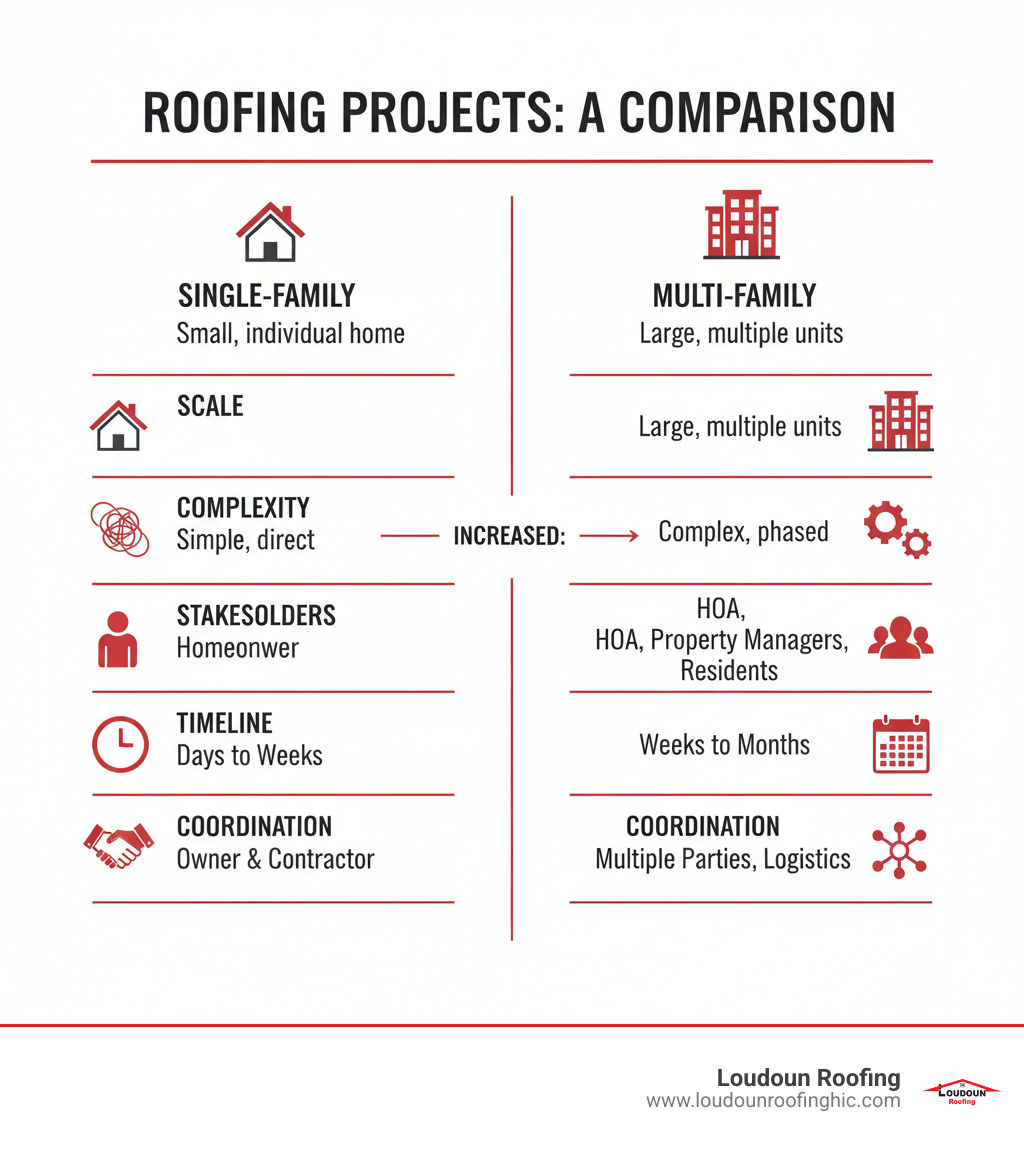
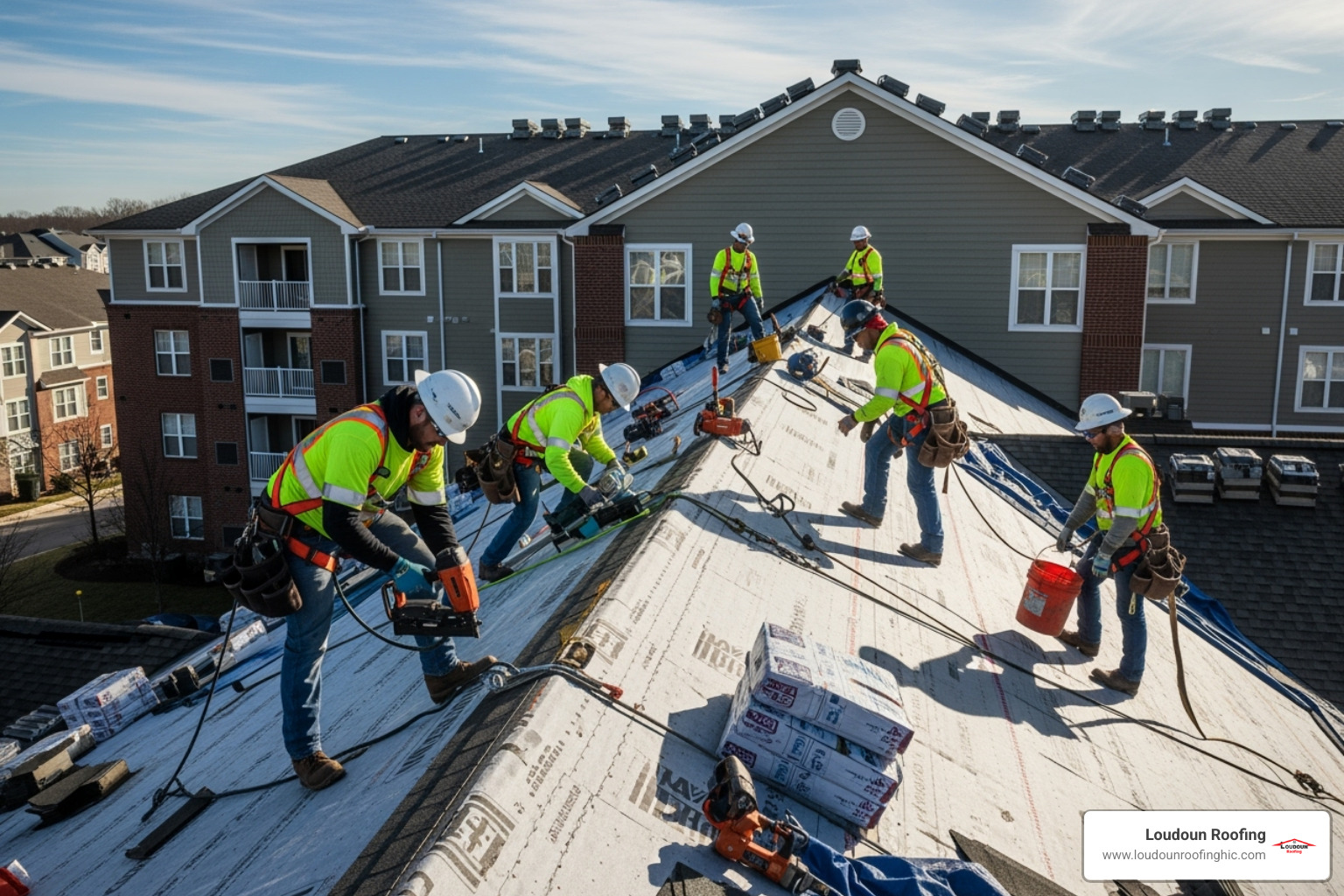
The project scale alone transforms the work. A single-family home may have 2,000 square feet of roofing, but apartment complexes often feature 20,000 to 50,000 square feet or more. This massive increase means more materials, specialized equipment, and extended timelines that can stretch from days into weeks or months. Planning is critical, requiring advance material coordination and multiple crews working simultaneously.
Logistical Complexity
Managing the logistical complexity requires military-level precision. We coordinate equipment, establish safe pedestrian pathways, and manage waste removal for dozens of units, all while ensuring residents can access their homes. Multi-family roofs often feature complex combinations of slopes, skylights, and HVAC units, demanding intricate planning to keep the building watertight every night.
Multiple Stakeholders
Multiple stakeholders—including property managers, residents, and insurance providers—create a web of competing priorities. Property managers focus on budget and timelines, residents want minimal disruption, and insurers require detailed documentation. Successfully navigating these interests requires exceptional communication and diplomatic finesse.
HOA & Condo Boards
Working with HOA & Condo Boards adds another layer of complexity. These bodies have strict aesthetic guidelines, pre-approved material lists, and formal approval processes. Missing a monthly board meeting can delay a project significantly. We present detailed proposals with clear options to help boards make informed decisions efficiently. Our Commercial Roofing Contractor Guide offers more insight into managing these relationships.
Resident Communication
Effective resident communication is non-negotiable. Roofing work is inherently noisy and disruptive. Unlike a homeowner, residents in a multi-family building didn’t choose to have their roof replaced. We provide detailed work schedules, safety guidelines, and regular progress updates to maintain goodwill and minimize complaints.
Budgeting & ROI
The financial stakes in budgeting & ROI are substantial, with investments often running into the hundreds of thousands or millions. Property owners and HOAs need comprehensive proposals that detail not just immediate costs but also long-term value through improved property values, reduced energy costs, and extended roof lifespan. We provide annual estimate updates to help property management teams plan budgets accurately.
Selecting the Best Roofing Materials for Durability and Value
Choosing the right materials for a multi-family roofing project is a high-stakes balancing act between cost, performance, and aesthetics. The best choice isn’t always the most expensive—it’s the one that fits your property’s specific needs. At Loudoun Roofing, we guide property managers and HOA boards through this critical decision-making process.
Key factors to consider include:
- Material Lifespan: A roof that lasts 50 years instead of 20 means fewer disruptions and a better return on investment.
- Cost-Effectiveness: Durable, low-maintenance materials often provide a smarter financial choice over time, despite higher upfront costs.
- Aesthetics: The right roof improves curb appeal, resident pride, and property values.
- Weather Resistance: In Northern Virginia, materials must withstand scorching summers, freezing winters, and heavy storms.
- Energy Efficiency: Modern roofing can improve a building’s thermal performance, lowering energy bills.
| Material Type | Steep/Low Slope | Average Lifespan (Years) | Cost Range per sq. ft. | Best Use Cases |
|---|---|---|---|---|
| Asphalt Shingles | Steep | 15-25 | $3.50-$7.50 | Budget-conscious projects, traditional aesthetics |
| Architectural Shingles | Steep | 20-30 | $4.00-$8.00 | Improved durability, dimensional appearance |
| Metal Roofing | Steep | 40-60+ | $7.00-$12.00 | Long-term value, energy efficiency |
| TPO | Low | 15-20 | $7.00-$12.00 | Energy efficiency, commercial applications |
| EPDM | Low | 20-30 | $6.00-$10.00 | Cost-effective flat roofing |
| PVC | Low | 20-30 | $8.00-$14.00 | Chemical resistance, high-performance |
Common Steep-Slope Roofing Materials
Asphalt shingles are the industry workhorse, offering reliable performance at an accessible price. They are ideal for budget-conscious projects with traditional aesthetics.
Architectural shingles offer a significant upgrade in durability and appearance. With wind ratings up to 130 mph and warranties up to 50 years, they provide superior performance and visual depth.
Premium shingles mimic natural materials like slate or cedar shake, delivering high-end curb appeal with the practical benefits of asphalt technology and often come with lifetime warranties.
Metal roofing is a option for multi-family roofing, with a 60+ year lifespan that means most properties will never need another replacement. It’s low-maintenance and integrates seamlessly with solar panels. The Metal Roofing Alliance offers extensive resources on metal roofing innovations. Our Roof Installation team ensures every panel is installed to exact specifications.
Common Low-Slope (Flat) Roofing Materials
Low-slope roofs require specialized systems to prevent water pooling and ensure long-term performance.
TPO (Thermoplastic Polyolefin) is the top choice for energy-conscious owners. Its white, reflective surface reduces cooling costs, and heat-welded seams create a monolithic, waterproof barrier.
EPDM (Ethylene Propylene Diene Monomer), or rubber roofing, offers exceptional value and flexibility. It handles temperature extremes well, providing reliable waterproofing for 20-30 years.
PVC (Polyvinyl Chloride) excels in environments with exposure to grease or chemicals from systems like kitchen exhausts, making it a durable, fire-resistant choice.
Modified Bitumen systems offer robust, multi-layer protection ideal for high-traffic roofs or areas with heavy mechanical equipment.
Green roofs are a cutting-edge sustainable solution, providing superior insulation, managing stormwater, and extending the underlying membrane’s life. Industry leaders like GAF offer comprehensive large-scale solutions for multi-family properties engineered for these unique demands.
The Complete Guide to Your Multi-Family Roofing Project
Executing a multi-family roofing project can feel overwhelming, but breaking it down into manageable steps simplifies the process. Unlike residential jobs, success hinges on the intricate coordination of materials, crews, residents, and stakeholders at every phase. Here’s how a well-managed project unfolds.
Step 1: Identifying the Need for a New Multi-Family Roof
Recognizing when a roof has reached the end of its life is the first step. On multi-family properties, this assessment is critical, as delays can affect hundreds of residents.
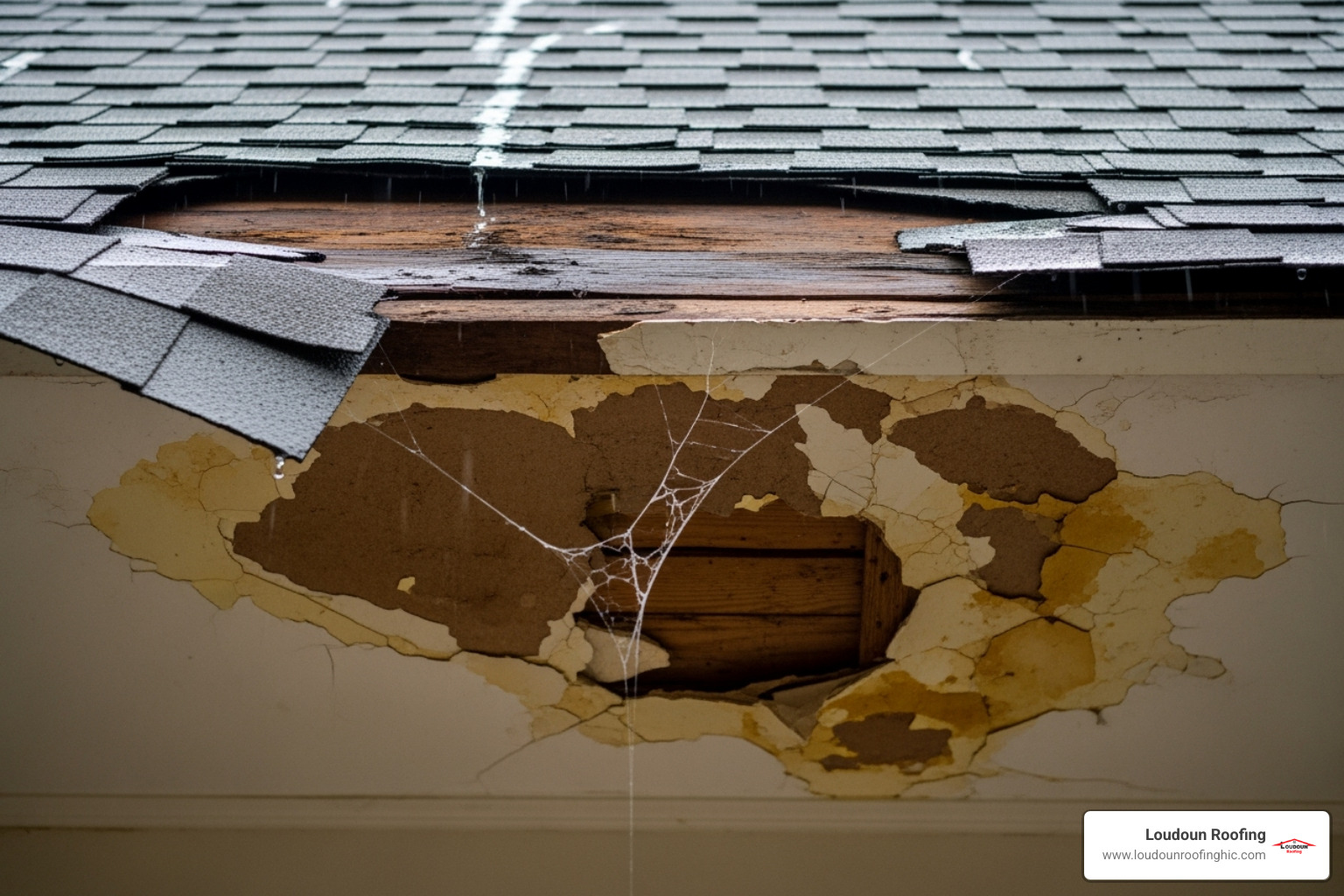
- Leaks and Water Damage: Ceiling stains, peeling paint, or mold are clear signs of water intrusion that can affect multiple units and create liability issues.
- Sagging Roof Sections: Sagging indicates serious structural concerns, often from water accumulation or compromised decking, and poses a safety risk that cannot be ignored.
- Missing or Damaged Shingles: Exposed underlayment accelerates deterioration. With asphalt shingles lasting 15-25 years, aging roofs require proactive inspections.
- Energy Efficiency Decline: A sudden spike in heating or cooling costs across multiple units can signal failing roof insulation or ventilation.
Regular professional inspections catch problems before they become emergencies. We recommend scheduling a roof inspection biannually and after severe weather.
Step 2: Budgeting, Planning, and Hiring a Contractor
Once a replacement is needed, financial planning begins. Key cost factors include:
- Building Size and Complexity: A large, simple roof costs less per square foot than a complex one with multiple levels and penetrations.
- Material Selection: Premium materials like metal cost more upfront but offer superior longevity and long-term value.
- Labor Costs: Specialized multi-family roofing requires experienced crews who command higher rates but prevent costly mistakes.
- Underlying Repairs: Always budget an extra 10-20% for unforeseen issues like rotted decking or inadequate insulation.
Financing options range from HOA reserve funds and special assessments to commercial property loans. When selecting a contractor, vet their multi-family roofing experience, verify their insurance and licensing, and check references. We provide detailed free roof estimates to help you plan accurately.
Step 3: Navigating the Multi-Family Roofing Replacement Process
This phase turns plans into reality while minimizing resident disruption. Success depends on clear communication and coordination.
- Project Timelines: Multi-family projects take weeks or months, requiring a phased approach to keep the building watertight and accessible.
- Resident Communication: A clear notification plan detailing work hours, noise levels, and parking restrictions is essential to prevent complaints.
- Safety Protocols: Comprehensive safety measures, including perimeter protection and daily site cleanup, are critical in occupied buildings.
- Debris Removal: Daily waste management prevents hazards for residents and vehicles.
- Final Inspections: A final walk-through with property management ensures every detail meets quality standards.
When you’re ready to begin, our team specializes in large-scale projects. Find out more about working with professional roof replacement contractors near me who understand these unique demands.
Protecting Your Investment for Decades to Come
Your multi-family roofing system is one of your property’s largest investments. Like any major asset, it requires ongoing attention to deliver maximum value and protect residents for decades. A proactive approach to maintenance and a clear understanding of your warranties are key.
The Importance of a Proactive Roof Maintenance Plan
Preventative roof maintenance is like routine health care—small, consistent efforts prevent major problems. On multi-family properties, this is especially crucial, as a small issue can quickly escalate and impact multiple units.
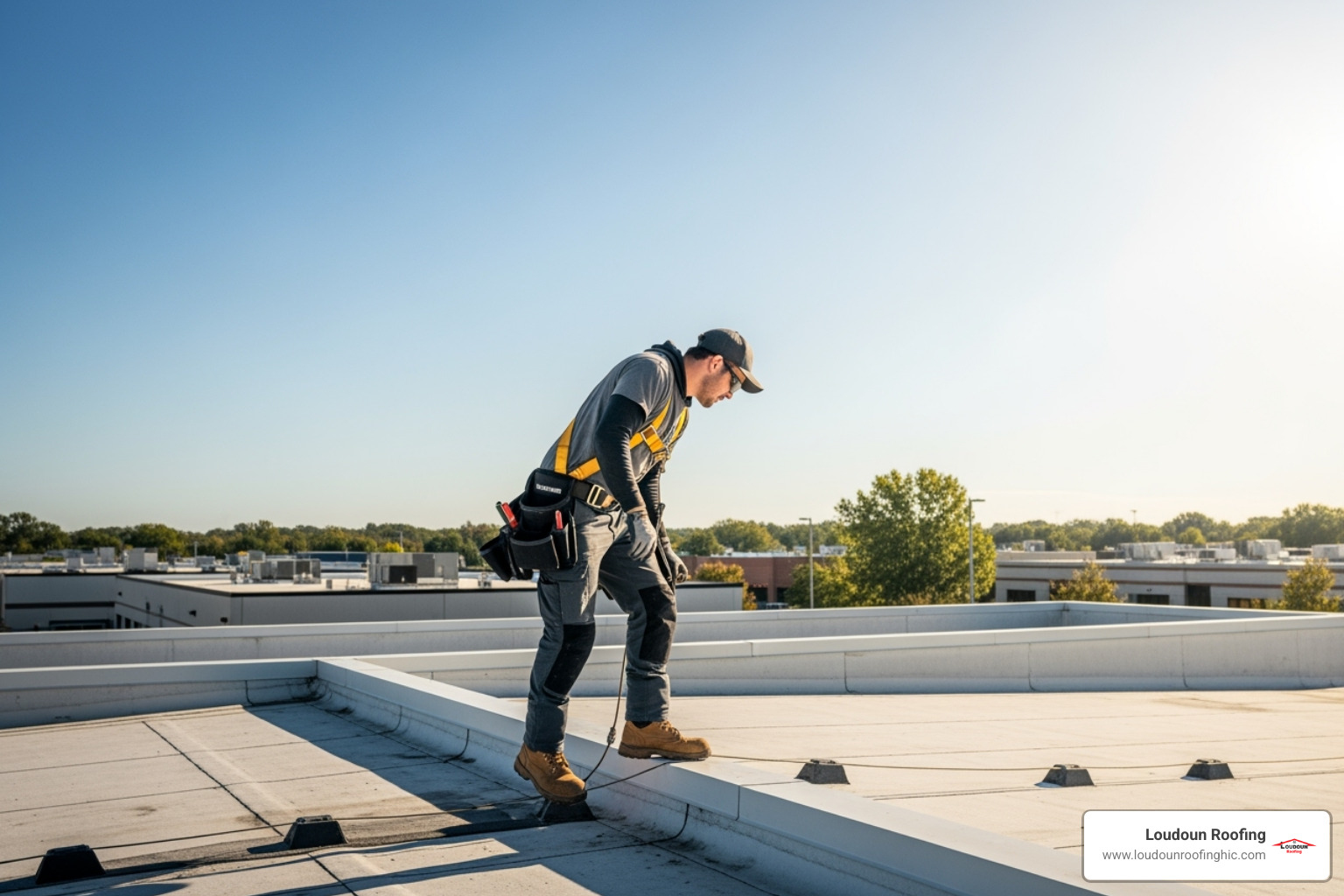
An effective maintenance program includes:
- Biannual Inspections: A professional should inspect your roof every spring and fall to spot loose flashing, minor damage, or early signs of wear before they become emergencies.
- Gutter and Debris Cleaning: Clogged gutters and trapped debris cause water to back up, leading to leaks and structural damage. Regular cleaning is essential for proper water management.
- Prompt Minor Repairs: Fixing a few loose shingles or sealing a small crack costs a fraction of what you’d pay for widespread water damage repairs later.
Most roofs are designed to last 15-30 years, but regular care can help yours exceed that lifespan. Our Roofing Maintenance programs are designed specifically for multi-family properties to simplify this process.
Understanding Your Multi-Family Roofing Warranties
Warranties are your financial safety net, but you must understand what they cover. Multi-family roofing warranties typically come in two types:
- Manufacturer Warranties: These cover defects in the roofing materials. Coverage varies by product, from 10-25 years for basic shingles to 50 years or even lifetime for premium options.
- Workmanship Guarantees: This covers the quality of the installation. For a large investment like a multi-family roof, look for contractors who offer a substantial workmanship warranty of at least 5-10 years.
Also, consider warranty transferability, which adds value if you sell the property. Always review the duration and scope of your warranties, as some are prorated. The NRCA (National Roofing Contractors Association) provides valuable resources on industry standards. A warranty is only as good as the company behind it, making your choice of an established, local contractor paramount.
Frequently Asked Questions about Multi-Family Roofing
Property managers, HOA boards, and building owners often have similar questions when considering a multi-family roofing project. Here are answers to the most common concerns.
How often does a multi-family roof need to be replaced?
The lifespan of a multi-family roof depends on the material. Asphalt shingle roofs typically last 15-25 years, while metal roofing can last 60+ years. Low-slope systems like TPO and EPDM generally offer 15-30 years of service. However, the ultimate lifespan is determined by installation quality, weather exposure, and consistent maintenance. Professional inspections every six months are the best way to maximize your roof’s longevity and plan for replacement proactively.
Who is responsible for the cost of a roof replacement?
Responsibility for the cost depends on the property’s ownership structure. In properties governed by a Homeowners Association (HOA), the association typically pays using reserve funds or a special assessment levied on all owners. For rental properties like apartment complexes, the landlord or property owner is fully responsible for all costs. In some cases, property insurance may cover replacement if the damage is from a covered event like a storm, but it will not cover failure due to age or neglect.
How can we minimize disruption to residents during the project?
Minimizing disruption is achieved through planning, communication, and professionalism. An experienced multi-family roofing contractor will:
- Provide a detailed work schedule and communicate it clearly to all residents.
- Establish designated work zones and safe pathways to keep construction contained.
- Manage noise and debris with daily site cleanup and efficient work practices.
- Give advance notice for any necessary parking restrictions or utility disruptions.
Working with a crew that is trained to complete sections efficiently while keeping the building watertight is the most effective way to reduce the project’s overall timeline and impact on residents.
Conclusion: Partnering for a Successful Roofing Project
Multi-family roofing is more than a construction project—it’s a critical investment in your property’s value and your residents’ safety. The complexities of scale, logistics, and communication all point to one crucial truth: the partner you choose makes all the difference.
An experienced contractor anticipates challenges before they become problems, from coordinating material deliveries to maintaining a watertight and safe environment throughout the project. At Loudoun Roofing, we specialize in delivering durable, code-compliant solutions with minimal disruption to daily life.
By choosing the right materials, ensuring expert installation, and committing to a proactive maintenance plan, you are not just fixing today’s problems—you are securing your property’s future for decades. Protect your investment and your residents with a team that understands the unique demands of multi-family properties.
Secure your property’s future with expert Multi-Family Roofing Services