
Transform Your Home with Natural Light: The Ultimate Guide
Skylight installation is a powerful way to bring natural light, improved ventilation, and increased value to your property. As a premier provider of expert home improvement solutions, we know that a single skylight can add 30% more light than a window, making any space feel larger and more open. When installed correctly by a team providing expert roofing services, a skylight is a durable, long-lasting addition to your home. The process involves cutting openings in your roof and ceiling, installing the unit with a waterproof flashing system, and finishing the interior.
Key Steps in Skylight Installation:
- Planning: Choosing the skylight type, size, and location.
- Structural Work: Cutting and framing the roof opening.
- Installation: Mounting the unit with a proper flashing system.
- Finishing: Completing interior drywall and paint.
Proper flashing installation is the critical factor that prevents leaks and ensures decades of performance. Since 2001, our team at Loudoun Roofing & Home Improvement has mastered skylight installation techniques across Northern Virginia, ensuring every project meets the highest standards for waterproofing and durability.
Why Install a Skylight? The Surprising Benefits
Skylight installation offers transformative benefits that improve both your home’s atmosphere and your quality of life. The advantages extend far beyond simple aesthetics.
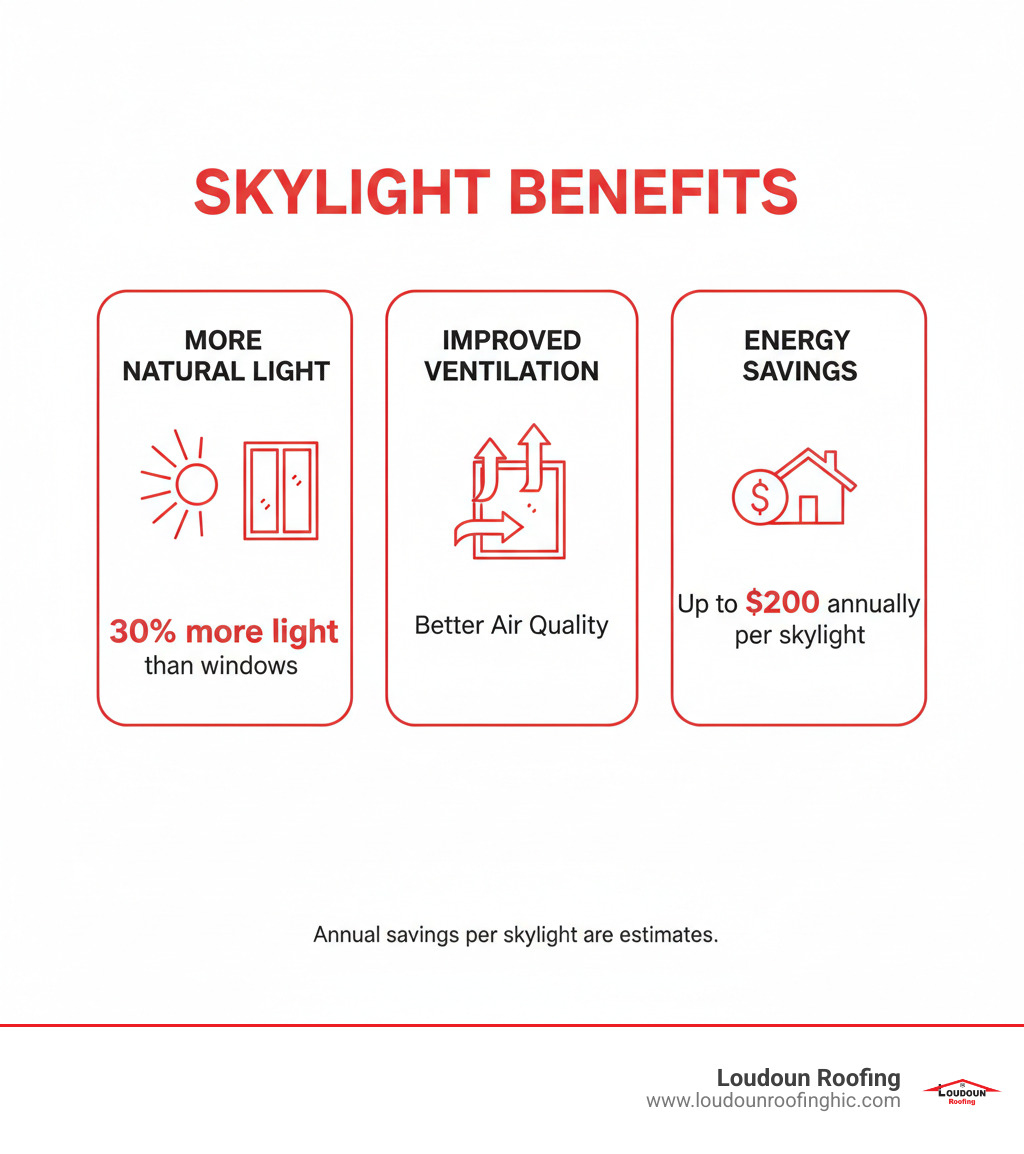
- Abundant Natural Light: A skylight delivers up to 30% more illumination than a vertical window of the same size. This influx of natural light helps regulate circadian rhythms and boosts Vitamin D production, enhancing mental well-being.
- Improved Air Quality and Ventilation: Venting skylights are essential for managing indoor air quality, especially in kitchens and bathrooms. They allow hot, stale air, steam, and odors to escape, which significantly reduces humidity and helps prevent mold growth.
- Significant Energy Savings: By maximizing daylight, skylights reduce the need for artificial lighting and lower electricity bills. Modern energy-efficient models with features like low-E coatings and argon gas fills also provide solar heat gain in the winter, reducing heating costs.
- Increased Home Value: A well-placed skylight adds architectural interest and makes rooms feel larger, increasing your home’s market value. Furthermore, certain energy-efficient models may qualify for federal solar tax credits, offering an immediate financial return on your investment.
Ready to brighten your home with professional expertise? Learn more about our comprehensive Skylights services and find how we can transform your living space.
Choosing the Right Skylight for Your Home
Choosing the right skylight involves matching its type and features to your specific needs. Understanding the options ensures you select a unit you’ll love for decades.

Types of Skylights: Fixed, Venting, and Tubular
- Fixed skylights are designed solely to let in light. As they do not open, they are highly leak-resistant when installed correctly, making them ideal for living rooms or hallways where extra light is the primary goal.
- Venting skylights offer both light and ventilation. They can be opened manually or electronically. Solar-powered models with automatic rain sensors are perfect for kitchens and bathrooms where removing humidity and odors is crucial.
- Tubular skylights, or sun tunnels, are the ideal solution for small or difficult-to-reach spaces like closets and interior bathrooms. They use a reflective tube to channel sunlight from a small dome on the roof down to a diffuser in the ceiling.

Deck-Mounted vs. Curb-Mounted Skylights
The choice between deck-mounted and curb-mounted installation depends on your roof’s pitch.
- Deck-mounted skylights are installed directly onto the roof deck for a sleek, low-profile look. They are best suited for roofs with a pitch between 14 and 85 degrees (a 3:12 slope or steeper).
- Curb-mounted skylights are liftd on a wooden frame (the “curb”). This design is necessary for flat or low-slope roofs (less than a 3:12 pitch) to ensure proper water drainage.
| Feature | Deck-Mounted Skylight | Curb-Mounted Skylight |
|---|---|---|
| Installation | Nailed directly to the roof deck, creating a sleek, low-profile appearance. | Sits atop a wooden frame (curb) built around the roof opening, raising the skylight above the roof surface. |
| Roof Pitch | Best for roofs with a pitch between 14 and 85 degrees (a ratio of 3-to-12 or steeper). | Ideal for flat roofs up to a 60-degree pitch (a ratio of less than 3-to-12) or low-slope roofs. |
| Profile | Lower profile, integrating more seamlessly with the roofline. | Higher profile, as it sits on the raised curb. |
| Best Use Cases | New installations on sloped roofs where a finished interior shaft is desired. Known for energy efficiency. | Retrofit situations where matching an existing opening is difficult, or for flat/low-slope roofs to ensure drainage. |
Key Features: Glazing, Materials, and Energy Efficiency
The longevity and performance of your skylight depend on its features.
- Glazing: Laminated glass is the standard for safety, as it holds together if broken. It also blocks UV rays and reduces noise.
- Insulation: Look for double or triple-pane construction with argon gas fills to maximize insulation.
- Coatings: Low-E (low-emissivity) coatings are invisible films that reflect heat, keeping your home cooler in summer and warmer in winter.
- Certification: Always choose Energy Star certified skylights. These high-performance units can significantly reduce your energy costs.
For more detailed specifications, this Skylight Window Buying Guide is a helpful resource.
How to Choose the Right Size and Placement
Proper size and placement are critical for maximizing a skylight’s impact.
- Sizing: As a general rule, a skylight should cover about 5% of the floor area in a well-lit room. For darker spaces, aim for 15% of the floor area.
- Placement: South-facing skylights provide the most light and heat, while north-facing ones offer soft, consistent illumination. We strategically place skylights to avoid roof valleys where water can collect.
- Structural Considerations: Standard skylights often fit between existing roof trusses. Wider units may require cutting structural members, which necessitates an engineer’s input. We assess your attic for obstructions during the planning phase.
- Ceiling Type: Installation is simplest with vaulted ceilings. Flat ceilings require a framed light shaft to channel light from the roof to the room below, which adds to the project’s complexity and cost.
Understanding Skylight Installation Costs
Planning for a skylight installation means understanding the factors that shape the final price. Breaking down the costs helps you budget effectively.

Factors That Influence the Price of a Skylight Installation
The cost of your skylight installation depends on several key factors:
- Skylight Type and Size: A basic fixed skylight is the most affordable, while larger, solar-powered venting models are at the premium end.
- Roof Pitch and Material: Installing on standard asphalt shingle roofs is most straightforward. Metal or tile roofs require specialized techniques, increasing costs by 20-30%.
- Accessibility: Steep or multi-story roofs require additional safety equipment and labor, which affects the price.
- Structural Modifications: If roof rafters must be cut, a structural engineer’s assessment is needed, typically adding $300-$500 to the project.
- Interior Finishing: Building a drywall light shaft for a flat ceiling is a significant cost, often adding $1,000-$1,500 for carpentry and finishing.
For an accurate assessment for your Northern Virginia home, we invite you to Request a Free Roof Estimate.
Average Cost Breakdown
While prices vary, here is a general breakdown to help you budget for your skylight installation.
- Total Project Cost: The national average for a complete installation ranges from $900 to $2,300, with most homeowners spending around $1,500.
- Material Costs: A standard 2×4-foot fixed skylight unit with a flashing kit costs $150 to $500. Venting models range from $300 to over $1,000, depending on features.
- Labor Costs: Labor typically includes cutting the opening ($200+), installing and flashing the unit ($200-$300+), and building a light shaft if needed ($1,000-$1,500).
- Federal Tax Credits: You can achieve substantial savings with the federal solar tax credit. This credit applies to solar-powered venting skylights and covers 30% of the total project cost, including materials and installation.
The Professional Skylight Installation Process
Installing a skylight is a complex process that combines carpentry, roofing, and interior finishing. It requires precision and expertise to ensure a beautiful, watertight result.
DIY vs. Professional Skylight Installation
While tempting, skylight installation is not a suitable DIY project for most homeowners. The risk of improper installation, which almost always leads to leaks, is too high. A single mistake in the complex flashing process can cause thousands of dollars in water damage. Professionals who specialize in roofing services have the required expertise, safety equipment, and training to work on roofs. Furthermore, professional installation is often required to validate manufacturer warranties, such as the VELUX 10-year “No Leak Promise.” For a secure, watertight result, always trust a certified installer from our Roof Installation services team.
Permits, Codes, and Preparation
A successful installation starts with meticulous planning. In Northern Virginia communities like Leesburg, building permits are typically required for any structural roof modifications. We handle all permit applications and ensure the project complies with local building codes, which often mandate safety features like laminated glass for overhead applications. Before any work begins, we conduct a thorough structural assessment to identify and plan around any wiring, plumbing, or HVAC systems in the attic, ensuring a smooth installation process.
A Step-by-Step Guide to a New Skylight Installation
Our professional installation process is a precise sequence of steps designed to ensure a beautiful, leak-proof result:
- Layout: We mark the exact skylight position on both the interior ceiling and the exterior roof.
- Cutting the Opening: Our team carefully cuts through the roof decking and interior ceiling, managing debris to protect your home.
- Framing: We construct a sturdy, perfectly square wooden frame to support the skylight. If needed, we also build the light shaft at this stage.
- Installing the Unit: The skylight is carefully positioned, leveled, and secured to the roof deck.
- Waterproofing: We apply a self-adhering ice and water shield around the entire frame as the first layer of defense.
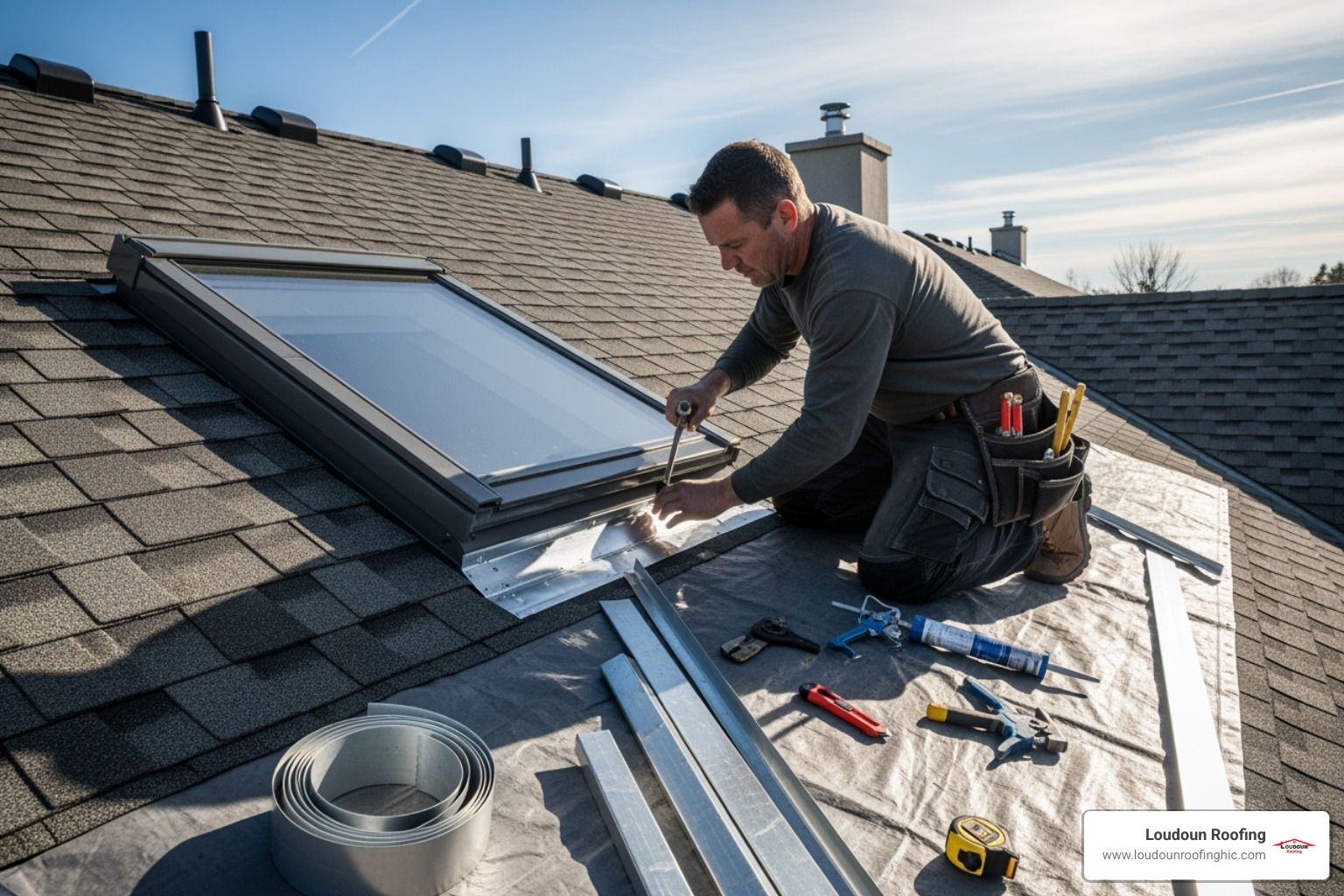
- Flashing: This is the most critical step. We install a multi-part flashing system (sill, step, and saddle flashing) that integrates with the shingles to divert water away from the opening.
- Re-installing Roofing: We carefully replace the shingles around the skylight to complete the watertight seal.
- Interior Finishing: Finally, we install and finish the drywall for the light shaft, then tape, spackle, and paint to match your ceiling.
This comprehensive process typically takes one to three days. For more on advanced techniques, this guide on How To Install an Angled Skylight offers additional insight.
Skylight Maintenance and Common Repairs
Proper skylight maintenance is straightforward and can extend your unit’s life by decades. Knowing what to look for also helps you catch potential issues early.
Routine Maintenance for Longevity
A few simple maintenance habits can significantly extend your skylight’s life:
- Clean Regularly: Wash the glass twice a year with a soft cloth and mild, non-abrasive cleaner.
- Inspect Seals and Flashing: Periodically check for cracks or gaps in the seals from inside and ensure the exterior flashing is intact.
- Clear Debris: Remove leaves and twigs from around the skylight, especially at the top edge, to ensure proper water drainage.
- Check Weep Holes: Many skylights have small drainage holes (weep holes) around the frame. Keep them clear of debris to allow moisture to escape.
Signs Your Skylight Needs Repair or Replacement
Be aware of these warning signs that indicate your skylight needs professional attention:
- Leaks or Water Stains: Any sign of water intrusion on the ceiling or walls requires immediate action.
- Condensation Between Panes: Moisture trapped between the glass layers means the thermal seal has failed and the unit is no longer energy-efficient.
- Cracks or Discoloration: Cracks in the glass are a safety hazard, while yellowed or hazy plastic affects light quality.
- Drafts or Heat Loss: Air movement near the unit indicates failing seals.
- Operational Issues: A venting skylight that is difficult to open or close needs mechanical repair.
Our Roof Skylight Repair Ultimate Guide offers more detailed troubleshooting advice.
Repairing vs. Replacing an Old Skylight
Deciding whether to repair or replace depends on the age of the unit and the extent of the damage.
Repairing is a good option for newer skylights with minor, isolated issues like a small sealant failure. However, repeatedly patching an old unit is often not cost-effective.
Replacement is the smarter choice in several scenarios:
- Age: Skylights over 15 years old are nearing the end of their typical 10-20 year lifespan.
- Failed Seals: Condensation between panes cannot be repaired; the unit must be replaced to restore energy efficiency.
- Significant Damage: Widespread frame deterioration or large cracks require a full replacement.
- Poor Original Installation: If persistent leaks are due to flawed installation, a replacement by certified professionals is the only permanent solution.
Replacing an existing skylight is often quicker than a new installation, sometimes taking as little as four hours. Whether you need a targeted fix or a full upgrade, our Roof Repair services team can provide a lasting solution.
Frequently Asked Questions about Skylight Installation
Here are answers to the three most common questions we receive about skylight installation.
Do skylights always leak?
No. Modern skylights, when installed by a certified professional, are engineered to be completely watertight. Leaks are almost always the result of improper installation, particularly incorrect flashing techniques, rather than a failure of the skylight unit itself. This is why leading manufacturers like VELUX offer a “No Leak Promise” warranty, but only when their products are installed by certified experts who follow precise specifications.
How long does it take to install a skylight?
The timeline for a skylight installation varies by project type. A simple replacement of an existing skylight with a new unit of the same size can often be completed in as little as four hours. A brand-new installation is more involved and typically takes one to three days. This longer timeframe accounts for cutting the new opening, framing the structure, installing the complex flashing system, and completing the interior drywall and paint work.
Can a skylight be installed on any roof?
Yes, skylights can be installed on virtually any roof. The key is to use the correct products and installation methods for your specific roof.
- For Roof Pitch: Curb-mounted skylights are used for flat or low-slope roofs to ensure proper drainage, while deck-mounted units are ideal for steeper pitches.
- For Roofing Material: While asphalt shingles are the most straightforward, we have specialized flashing kits and techniques for metal, tile, and other roofing materials.
- For Structure: Most skylights fit between existing roof rafters. If a wider unit is desired that requires cutting a rafter, we bring in a structural engineer to ensure the roof’s integrity is maintained.
Brighten Your Home with Confidence
A skylight installation is one of the most impactful investments you can make, changing your home with natural light and delivering tangible benefits. From a 30% increase in daylight to improved air quality and potential energy savings, skylights improve how you live in your space.
However, the success of this investment hinges entirely on the quality of the installation. A professionally installed skylight provides decades of leak-free performance, while an improper job can lead to costly damage. The process is complex, requiring expertise in framing, waterproofing, and roofing integration. This is why manufacturer warranties, like the VELUX 10-year “No Leak Promise,” are tied to installation by certified professionals.
If you’re ready to transform your Northern Virginia home with the beauty of natural light, trust the experts to do it right the first time. Our team has the experience to ensure your skylight is a source of joy for years to come.
Contact us today at (703) 777-0000 or explore our skylight services to start your journey toward a brighter, more beautiful home.