
Why Finding the Right Local Commercial Roofer is Critical for Your Business
Finding a reliable local commercial roofer isn’t just about fixing a leak—it’s about protecting your entire business operation. Commercial roofs face unique challenges that residential contractors simply aren’t equipped to handle, from complex drainage systems to specialized equipment penetrations.
Key factors to consider when hiring a local commercial roofer:
- Experience with commercial systems – TPO, EPDM, PVC, and built-up roofing
- Local licensing and insurance – BBB accreditation and proper coverage
- Emergency response capability – 24/7 availability for urgent repairs
- Comprehensive services – From inspections to complete replacements
- Knowledge of local codes – Understanding Northern Virginia building requirements
- Written warranties – Clear guarantees on materials and workmanship
Commercial roofs are typically flat or low-slope, much larger than residential roofs, and require specialized knowledge of construction around HVAC units, smokestacks, and drainage systems. The research shows that commercial roofing involves “efficient roofing technologies, familiar with construction around smoke stacks, air flow organizations, and outside piping.”
The cost of neglecting your commercial roof is substantial. Minor problems can quickly escalate into expensive structural damage, interior water damage, and business interruption if not addressed promptly by qualified professionals.
For businesses in Northern Virginia, partnering with a trusted commercial roofing contractor ensures your property receives the specialized attention it deserves. Whether you need routine maintenance, emergency repairs, or a complete roof replacement, the right local partner makes all the difference.
I’m Esteban Marin, owner and president of Loudoun Roofing & Home Improvement, with over two decades of experience serving both residential and commercial clients throughout Northern Virginia. My hands-on approach to every local commercial roofer project—from initial inspection to final walkthrough—ensures consistent quality and personalized service for businesses across our region.
Simple local commercial roofer word guide:
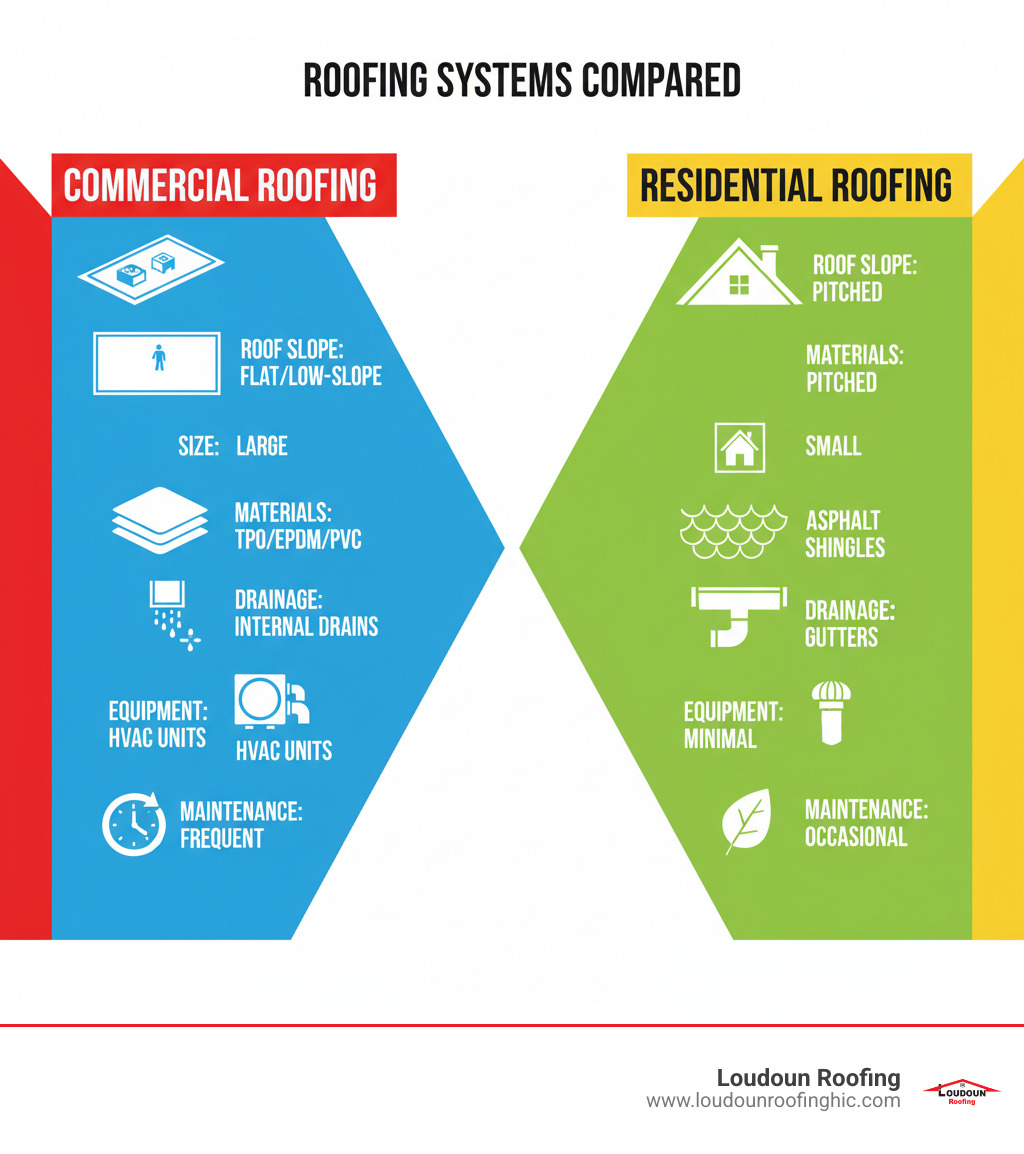
Commercial vs. Residential Roofing: Understanding the Critical Differences
Your business’s roof faces challenges that would overwhelm most residential systems. While both protect against weather, commercial roofing operates in an entirely different league—one that demands specialized expertise, materials, and maintenance approaches that your typical residential contractor simply can’t provide.
Think of it like comparing a neighborhood clinic to a major hospital. Both serve important healthcare needs, but you wouldn’t expect your family doctor to perform complex cardiac surgery. The same principle applies when choosing between residential and commercial roofing specialists. A local commercial roofer brings the specialized knowledge, equipment, and experience necessary to handle the unique demands of commercial properties.
Understanding these fundamental differences isn’t just technical knowledge—it’s critical business intelligence that can save you thousands of dollars and prevent costly operational disruptions.
Structural and Design Distinctions
The most striking difference between commercial and residential roofs lies in their basic architecture and engineering requirements.
Roof slope represents the most visible distinction. Residential roofs feature steep pitches designed to shed water quickly through gravity. Commercial roofs take the opposite approach—they’re typically flat or have minimal slope, creating vast horizontal surfaces that maximize interior space and accommodate essential rooftop equipment.
Building size creates exponentially different challenges. While a typical home might have 2,000 square feet of roof area, commercial properties often span tens of thousands of square feet. This massive scale requires different materials, installation techniques, and project management approaches that only experienced commercial contractors can handle effectively.
Flat roofs dominate commercial construction for practical reasons. They provide accessible space for equipment, simplify structural engineering, and maximize usable interior height. However, this design introduces complex drainage challenges that don’t exist on sloped residential roofs.
Low-slope roofs still maintain slight pitches—typically between 0.25:12 and 2:12—to guide water toward designated drainage points. This subtle engineering prevents water accumulation while maintaining the practical benefits of flat design.
Drainage systems on commercial buildings are sophisticated networks of scuppers and internal drains that must handle massive water volumes during storms. Unlike simple residential gutters, these systems channel water through the building’s interior or direct it off the roof through carefully engineered overflow systems.
Structural load capacity requirements far exceed residential standards. Commercial roofs must support not just snow loads, but the substantial weight of HVAC systems, industrial equipment, and maintenance personnel. This demands reinforced structural engineering and specialized installation techniques.
Equipment and Penetrations
Commercial rooftops serve as equipment platforms in ways that residential roofs never do. This creates a complex landscape of penetrations, each representing a potential failure point without proper installation and maintenance.
HVAC units dominate most commercial rooftops—massive systems that require robust mounting, vibration isolation, and meticulous flashing around their bases. These units often weigh several tons and operate continuously, creating unique maintenance challenges.
Smokestacks from restaurants, manufacturing facilities, or heating systems penetrate the roof membrane and expose it to extreme temperatures. Sealing around these requires specialized high-temperature materials and techniques.
Airflow systems include exhaust fans, ventilation ducts, and industrial process venting that create dozens of roof penetrations on a single building. Each requires custom flashing and regular inspection to maintain watertight integrity.
External piping for gas lines, plumbing vents, and industrial processes adds another layer of complexity. These systems often require modifications during building upgrades, demanding roofing contractors who understand how to maintain roof integrity during equipment changes.
Vents and skylights on commercial buildings are typically larger and more numerous than residential versions. Industrial skylights might span hundreds of square feet, requiring specialized structural support and weatherproofing.
Specialized flashing becomes critical with so many roof penetrations. Commercial roofers must master complex flashing techniques using materials like EPDM, TPO, and modified bitumen to create permanent watertight seals around every penetration point.
| Feature | Residential Roofing | Commercial Roofing |
|---|---|---|
| Slope | Steeply pitched (e.g., 4:12 or greater) | Low-slope or flat (e.g., 0.25:12 to 2:12) |
| Size | Typically smaller, covering a single-family home | Much larger, covering extensive commercial buildings |
| Materials | Asphalt shingles, tile, slate, wood shake | TPO, EPDM, PVC, Modified Bitumen, Built-Up, Metal |
| Drainage Systems | External gutters and downspouts | Internal drains, scuppers, parapet walls |
| Equipment/Penetrations | Minimal (vents, chimneys, small skylights) | Numerous (HVAC units, smokestacks, vents, large skylights) |
| Maintenance Needs | Periodic inspections, less frequent repairs | Regular, proactive inspections and maintenance |
These distinctions explain why choosing a qualified local commercial roofer isn’t just preferable—it’s essential for protecting your business investment. The specialized knowledge required to steer these complex systems simply can’t be improvised by contractors who primarily work on residential projects.
Why Choosing the Right Local Commercial Roofer is Your Most Important Business Decision
Your commercial roof represents far more than protection from the elements—it’s a critical business asset that directly impacts your operations, energy costs, and bottom line. When problems arise, the difference between a quick, professional solution and a prolonged nightmare often comes down to one crucial decision: choosing the right local commercial roofer.
The stakes couldn’t be higher. A reliable commercial roofing contractor becomes your trusted partner for the life of your roof, ensuring quality workmanship, regulatory compliance, and genuine peace of mind. Make the wrong choice, and you’re looking at costly repairs, business disruptions, and the kind of headaches that keep you awake at night.
We get it—you have a business to run. Worrying about your roof shouldn’t consume your time or energy. That’s exactly where the right local commercial roofer makes all the difference.
Key Factors in Selecting a Local Commercial Roofer
When evaluating roofing contractors, look beyond flashy advertisements and rock-bottom prices. The best local commercial roofer demonstrates expertise through measurable credentials and proven performance.
Experience tells the whole story. Companies with over 20 years in both residential and commercial roofing bring invaluable knowledge to every project. This longevity indicates they’ve weathered industry changes, mastered evolving technologies, and developed the problem-solving skills that only come from handling thousands of unique challenges.
Licensing and insurance are non-negotiable. Any reputable contractor will be fully licensed to operate in Virginia and carry comprehensive liability plus worker’s compensation insurance. This protects both their crew and your business if something goes wrong—and in construction, things occasionally do go wrong.
Safety compliance matters more than you might think. WSIB and OSHA compliance demonstrates professionalism and a commitment to safety on your property. When contractors follow proper safety protocols, it reduces liability risks and shows they take their work seriously.
Better Business Bureau (BBB) accreditation provides independent validation. This accreditation signifies a commitment to ethical business practices and customer satisfaction. It’s third-party proof that the company operates with integrity.
Manufacturer certifications open up superior warranties. Certifications from leading material manufacturers like CertainTeed, along with specialized training in EPDM and TPO installation, mean the contractor can offer improved warranties on both materials and workmanship. This translates to better long-term protection for your investment.
Local reputation speaks volumes. What do other Northern Virginia businesses say about their experience? Strong local testimonials and positive reviews from companies in Leesburg, Ashburn, and Sterling provide real insight into reliability and quality.
Written estimates eliminate confusion. Professional contractors provide detailed, written estimates that clearly outline costs, materials, timeline, and scope of work. This transparency prevents unwelcome surprises and establishes clear expectations from the start.
Robust warranties demonstrate confidence. The best contractors stand behind their work with comprehensive warranties on both materials and labor. Some offer 10-year guarantees on roof replacement and 30-year warranties on premium materials, providing genuine long-term peace of mind.
The Comprehensive Services of a Local Commercial Roofer
A truly valuable local commercial roofer serves as your complete roofing solution, handling everything from routine maintenance to complex installations under one reliable partnership.
Thorough roof inspections form the foundation of proactive roof management. Regular professional assessments identify potential issues before they become expensive emergencies, saving money and preventing business disruptions.
Advanced leak detection uses specialized techniques to pinpoint water intrusion sources quickly and accurately. When leaks threaten your inventory, equipment, or operations, rapid identification and repair become critical.
Expert commercial roof repair addresses everything from minor patches to significant damage. Professional repairs use materials and methods that integrate seamlessly with existing roof systems, maintaining structural integrity and appearance.
Preventative maintenance programs extend roof lifespan while maintaining warranty validity. Custom maintenance plans keep commercial roofs in optimal condition year-round, preventing minor issues from escalating into major problems.
Complete roof replacement services guide you through the entire process when repairs are no longer sufficient. From material selection to final installation, professional contractors ensure seamless, high-quality replacement that serves your business for decades.
New construction roofing partners with architects and general contractors to install durable, high-performance systems from the ground up. This collaboration ensures optimal integration with overall building design and function.
24/7 emergency services provide critical support when disasters strike. Roofing emergencies don’t wait for convenient business hours, so reliable contractors maintain emergency response teams ready to minimize damage and restore protection quickly.
Professional gutter systems ensure proper drainage and protect your building’s foundation. Installation, repair, and maintenance of commercial gutters prevent water damage and extend overall building lifespan.
For complete details about available services, visit our comprehensive services page.
The Best Benefits of Hiring Locally
Choosing a local commercial roofer delivers strategic advantages that extend far beyond simple convenience, especially in Northern Virginia’s unique business environment.
Local building code expertise prevents costly compliance issues. Building regulations can vary significantly even within neighboring municipalities. Local contractors steer these requirements effortlessly, ensuring projects meet all relevant codes in Leesburg, Ashburn, Purcellville, and throughout Northern Virginia.
Regional weather understanding directly impacts material selection and installation techniques. Northern Virginia’s climate presents unique challenges—humid summers, cold winters, heavy rainfall, occasional snow, high winds, and significant temperature fluctuations. Local contractors understand exactly how these conditions affect commercial roofs and recommend solutions proven to perform in our specific environment.
Rapid emergency response can save thousands in damage costs. When storms hit or leaks develop, local contractors respond within hours rather than days. This proximity advantage limits damage and gets businesses back to normal operations faster.
Community accountability drives superior service quality. Local businesses thrive on their neighborhood reputation. As your neighbors, local contractors are deeply invested in maintaining their standing within the Northern Virginia business community, fostering higher accountability and dedication to customer satisfaction.
Economic community investment strengthens the local business ecosystem. Choosing local contractors keeps dollars circulating within Northern Virginia, creating jobs and supporting the economic foundation that benefits all area businesses.
The decision to partner with the right local commercial roofer ultimately determines whether your roof serves as a reliable business asset or becomes a constant source of stress and unexpected expenses. Choose wisely—your business depends on it.
The Commercial Roofing Project: From Materials to Execution
Starting on a commercial roofing project can feel overwhelming, but it doesn’t have to be. Whether you’re facing an emergency repair or planning a complete roof replacement, understanding what lies ahead makes all the difference. A successful project is well-planned and transparent. Understanding the materials, process, and your role as the business owner will ensure a smooth experience with minimal disruption to your operations.
At Loudoun Roofing, we’ve guided hundreds of Northern Virginia businesses through this process. Our approach is simple: we keep you informed, involved, and confident every step of the way. As your trusted local commercial roofer, we believe that knowledge is power—and the more you understand about your roofing project, the better decisions you can make for your business.
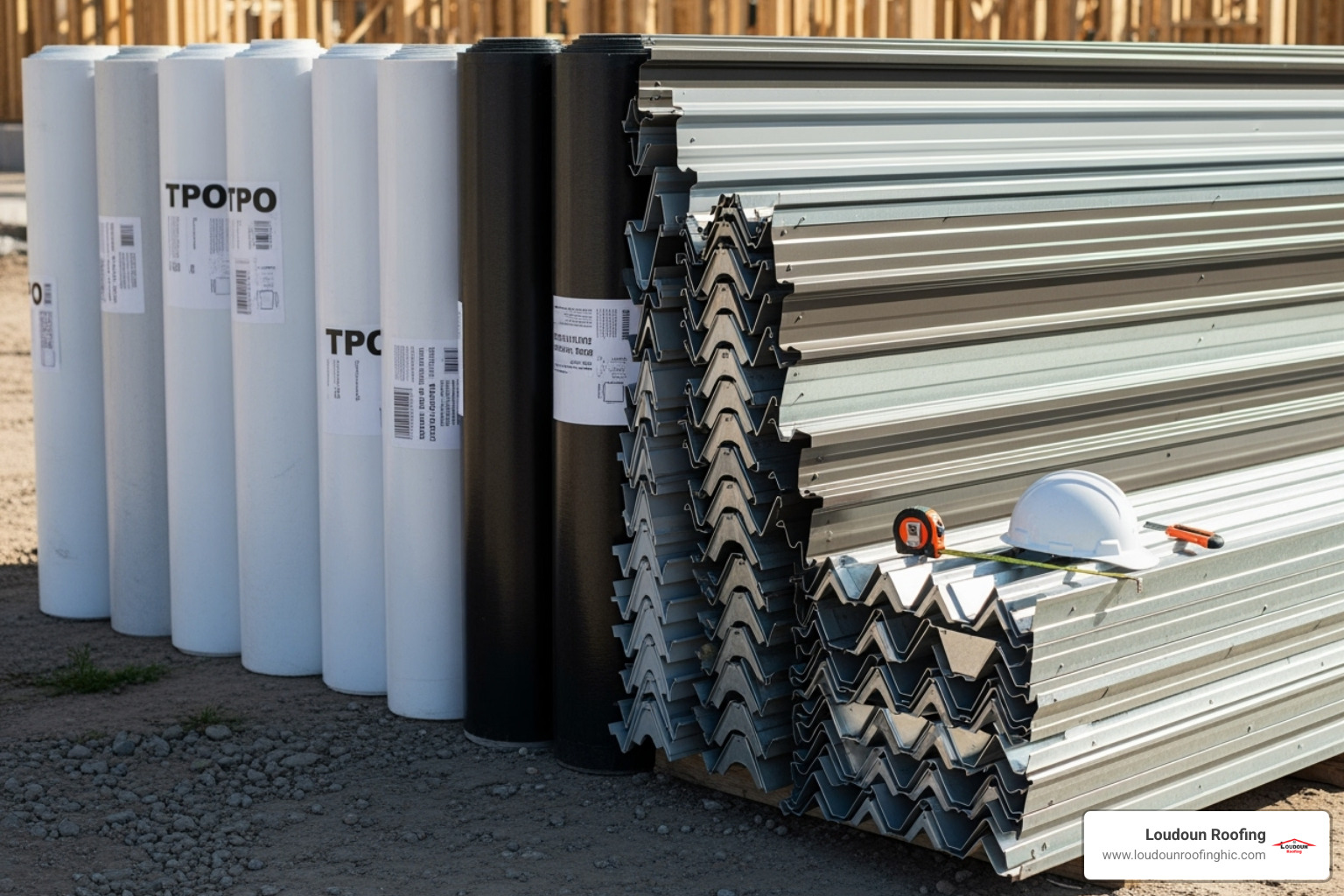
Common Commercial Roofing Materials
Choosing the right material for your commercial roof isn’t just about upfront costs—it’s about finding the perfect balance of durability, performance, and value for your specific building and budget. Each material brings unique strengths to the table, and understanding these differences helps you make an informed decision.
TPO (Thermoplastic Olefin) has become increasingly popular among Virginia business owners, and for good reason. This single-ply membrane reflects heat beautifully, which can significantly reduce your cooling costs during those sweltering Northern Virginia summers. TPO’s flexibility allows it to expand and contract with temperature changes without cracking, making it ideal for our region’s variable climate.
EPDM (Ethylene Propylene Diene Monomer) is the reliable workhorse of commercial roofing. Often called rubber roofing, EPDM has been protecting commercial buildings for decades. It handles temperature extremes like a champ and repairs easily when needed. Many of our clients appreciate its proven track record and straightforward maintenance requirements.
PVC (Polyvinyl Chloride) membranes excel in challenging environments. If your business involves grease, chemicals, or frequent rooftop foot traffic, PVC’s superior resistance to punctures and chemical damage makes it worth the investment. Restaurants and industrial facilities particularly benefit from PVC’s robust protection.
Modified Bitumen offers the reliability of traditional asphalt with modern improvements. The polymer modifications give it flexibility and temperature stability that standard asphalt lacks. This multi-layer system creates an exceptionally durable barrier against the elements.
Built-Up Roofing (BUR) represents time-tested commercial roofing technology. These multi-layer systems use alternating layers of asphalt and reinforcing materials to create an incredibly tough, waterproof membrane. A commercial built-up roof typically costs between $5.50 and $8.50 per square foot in materials and labor, making it a cost-effective option for many businesses.
Metal Roofing has evolved far beyond the basic corrugated panels of the past. Today’s commercial metal roofs offer exceptional longevity—often lasting 40 to 60 years or more—with superior fire resistance and energy efficiency. A new metal shingle roof costs roughly $8 to $10 per square foot, but the long-term value often justifies the investment.
Green Roofs and Roof Coatings represent innovative approaches to commercial roofing. Green roofs incorporate vegetation for environmental benefits, while coatings can extend your existing roof’s life and improve energy efficiency without a complete replacement.
Special Considerations for Flat Roofs
Flat roofs dominate the commercial landscape for good reasons—they maximize interior space, simplify building design, and provide convenient areas for essential equipment. However, these practical advantages come with specific challenges that require expertise from a qualified local commercial roofer.
Proper drainage stands as the most critical factor in flat roof success. Despite their name, flat roofs actually have a slight slope to direct water toward drainage points. When gutters become blocked or drainage systems fail, problems develop quickly. Gutters, downspouts, and scuppers all play vital roles in preventing water accumulation that can damage your roof and building.
Ponding water poses a constant threat to flat roof systems. Even small depressions can collect water that sits for days after rainfall, gradually breaking down the roofing membrane. Regular inspections help identify these problem areas before they become expensive repairs.
Seam integrity requires special attention on flat roofs using single-ply membranes. The points where membrane sheets join together represent potential weak spots if not properly installed or maintained. Professional installation and regular maintenance ensure these critical connections remain watertight.
Membrane durability must withstand unique challenges on flat roofs. Unlike sloped roofs that shed debris naturally, flat roofs collect leaves, dirt, and other materials. The membrane must also resist UV radiation, handle temperature fluctuations, and endure foot traffic from maintenance crews accessing rooftop equipment.
Regular inspections become even more important for flat roof systems. The lack of visible slope makes it harder to spot developing problems from ground level. Professional inspections catch minor issues before they escalate into major headaches.
For businesses dealing with flat roof challenges, our commercial flat roof repair services provide expert solutions custom to your specific situation.
How to Prepare Your Business for a Roofing Project
A well-prepared business experiences minimal disruption during roofing work. While some inconvenience is inevitable, smart planning keeps your operations running smoothly and ensures everyone’s safety. We work closely with each client to develop a preparation plan that fits their unique business needs.
Notify tenants and employees well before work begins. Clear communication about project timelines, potential noise levels, and any access restrictions helps everyone adjust their expectations and schedules. We recommend providing at least a week’s notice for major projects, with daily updates as work progresses.
Secure a perimeter around the work area to protect employees, customers, and visitors. Safety barriers prevent accidents and give our crews the space they need to work efficiently. We help establish these safety zones and provide appropriate signage to guide people around work areas.
Protect sensitive equipment inside and outside your building. Cover computer systems, inventory, and machinery near the work area to prevent damage from dust or debris. If your business uses precision equipment sensitive to vibration or noise, consider temporary relocation during the most disruptive phases.
Plan for noise by scheduling the loudest work phases during your least critical business hours when possible. Some operations, like removing old roofing materials or installing new decking, generate significant noise that can’t be avoided. We work with you to minimize these disruptions while maintaining project efficiency.
Clear access for crews by removing vehicles, equipment, and other obstacles from the work area. Our teams need safe, unobstructed pathways to transport materials and equipment. Ensuring clear access from the start prevents delays and keeps the project moving smoothly.
Discuss project timeline expectations upfront and maintain regular communication throughout the work. Weather, unexpected structural issues, or material delivery delays can affect schedules. We keep you informed of any changes and work together to minimize their impact on your business operations.
Protecting Your Investment: Maintenance, Longevity, and Cost
Your commercial roof represents one of your most significant business investments—often tens of thousands of dollars protecting everything beneath it. Like any valuable asset, it demands attention and care to perform at its best. Proactive maintenance is the key to maximizing its lifespan, ensuring performance, and avoiding the catastrophic costs associated with neglect. Think of it as preventive medicine for your building.
When we work with business owners across Northern Virginia, we often see the same pattern: those who invest in regular maintenance enjoy decades of reliable protection, while those who adopt a “fix it when it breaks” mentality face expensive emergencies and premature replacements. The difference isn’t luck—it’s strategy.
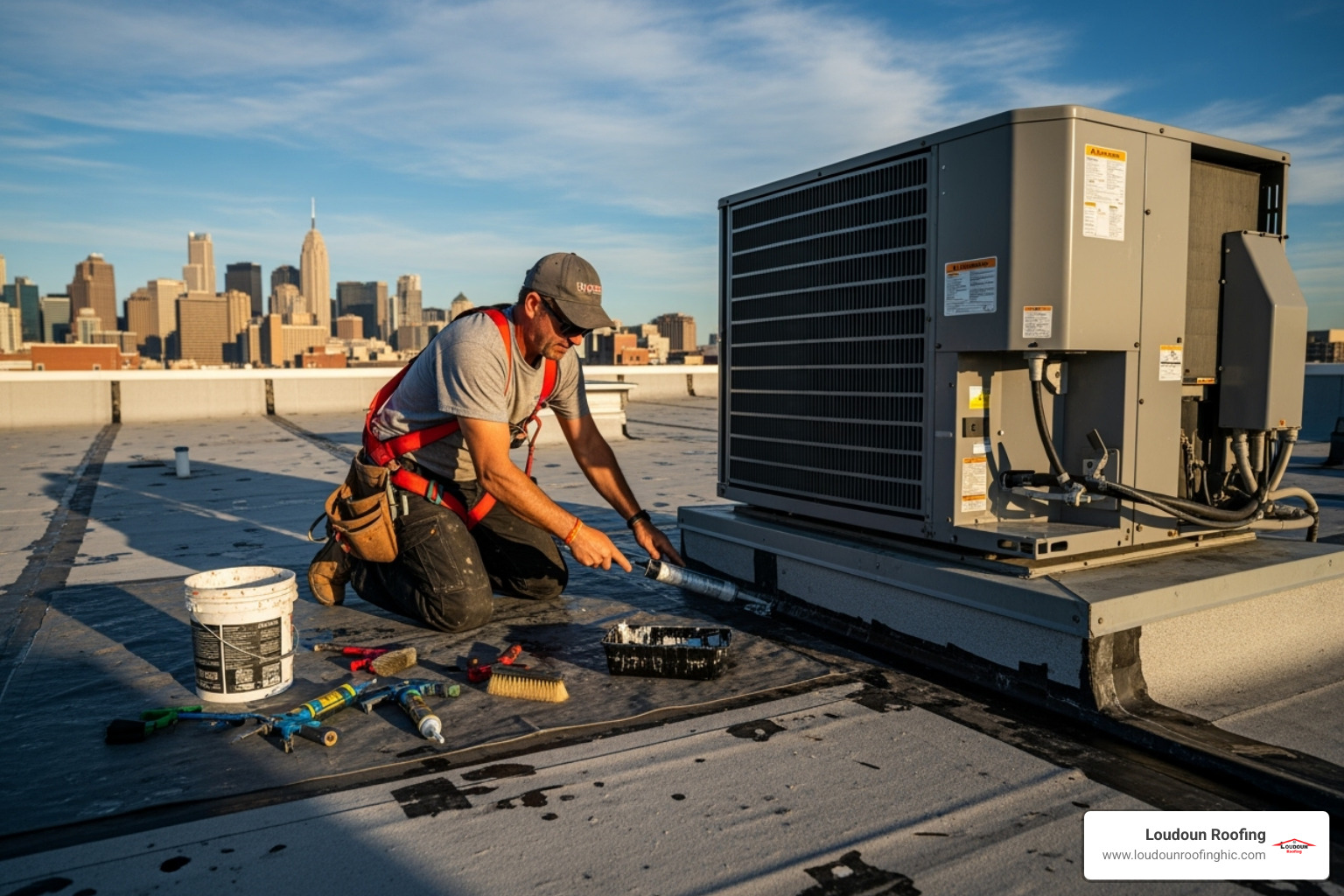
Signs Your Commercial Roof Needs Attention
Your roof constantly communicates its condition—you just need to know how to listen. Being vigilant about these warning signs can save you thousands of dollars and prevent the headaches that come with emergency repairs.
Visible water leaks are the most obvious red flag. Any drip or puddle inside your building signals that your roof’s protective barrier has been compromised. Don’t wait for a small drip to become a flood—water damage accelerates quickly once it starts.
Ceiling stains often appear before actual dripping begins. Those brown or yellow discolorations on ceiling tiles or walls are your roof’s early warning system, indicating moisture infiltration that needs immediate attention from a qualified local commercial roofer.
Ponding water on flat roofs deserves special attention. Water that remains standing for more than 48 hours after rainfall indicates drainage problems or structural settling. This standing water accelerates membrane degradation and creates weak spots that will eventually leak.
Bubbling or blistering membrane signals trapped moisture or gases beneath your roofing material. These bubbles weaken the membrane’s integrity and often precede more serious failures. Cracked or peeling sealant around roof penetrations and edges compromises your roof’s waterproofing. Since these sealants protect critical junction points, their failure often leads to multiple leak sources.
Damaged flashing represents another critical vulnerability. Flashing provides watertight seals where your roof meets walls, vents, or equipment. When flashing fails, water finds its way into your building through these transition points.
Loose materials anywhere on your roof—whether membrane sections, fasteners, or edge details—create opportunities for water intrusion and wind damage. Increased energy bills can also indicate roof problems, as deteriorating insulation or air leaks force your HVAC system to work harder.
The Importance of Regular Maintenance and Longevity
Regular roof maintenance isn’t just a recommendation—it’s a business imperative that directly impacts your bottom line. The research consistently shows that proactive care can double or even triple your roof’s functional lifespan while preventing costly emergency repairs.
Extending roof lifespan represents the most significant benefit of regular maintenance. A well-maintained TPO or EPDM roof can serve your business reliably for 20-30 years, while a neglected roof might fail in half that time. This difference translates to tens of thousands of dollars in avoided replacement costs.
Preventing major damage through early intervention saves exponentially more money than reactive repairs. A small crack in your membrane might cost $200 to fix today but could lead to $20,000 in structural damage if water infiltrates your building’s interior over several months.
Maintaining warranty validity requires documented regular maintenance for most commercial roofing systems. Manufacturer warranties often become void without proof of proper care, leaving you financially exposed when major issues arise.
Improving energy efficiency through maintenance helps control operational costs. A roof in good condition maintains its insulating properties and prevents air leaks that force your HVAC system to work overtime. Many business owners notice immediate energy savings after addressing roof maintenance issues.
Ensuring safety for anyone accessing your roof—whether maintenance crews or emergency responders—requires keeping walkways clear and structural elements sound. The National Roofing Contractors Association (NRCA) best practices emphasize that well-maintained roofs reduce liability risks and create safer working environments.
The High Cost of Neglecting Your Roof
Even minor roofing problems can escalate into heavy expenses when left untreated. The cost of neglect compounds quickly, turning manageable maintenance issues into business-threatening emergencies.
Structural damage from water infiltration can compromise your building’s framework, requiring repairs that extend far beyond the roof itself. We’ve seen cases where a $500 leak repair became a $50,000 structural renovation because the problem was ignored for too long.
Interior water damage affects everything inside your building—ceilings, walls, flooring, electrical systems, and equipment. These repairs often cost more than roof replacement itself and can take weeks to complete, disrupting your operations.
Mold growth thrives in the moist environment created by roof leaks. Beyond health risks to employees and customers, mold remediation requires specialized contractors and can force temporary business closure during treatment.
Damaged inventory represents pure loss for many businesses. Whether you store products, equipment, or documents, roof leaks can destroy valuable assets that insurance may not fully cover.
Business interruption from severe roof damage can halt operations entirely. Lost revenue during closure, combined with customer inconvenience and potential reputation damage, often exceeds the cost of the roof repairs themselves.
Premature roof replacement becomes inevitable when maintenance is deferred too long. Instead of getting 25-30 years from your roofing investment, neglect might force replacement after just 10-15 years.
Voided warranties leave you without manufacturer protection precisely when you need it most. Major roofing system failures that should be covered become your full financial responsibility when maintenance requirements haven’t been met.
The message is clear: investing in regular maintenance with a trusted local commercial roofer protects both your property and your business’s financial future. The question isn’t whether you can afford maintenance—it’s whether you can afford to skip it.
The Business of Roofing: Quotes, Estimates, and Insurance
Understanding the financial side of commercial roofing doesn’t have to feel overwhelming. When you’re facing a major roofing decision, having clear information about costs, timelines, and insurance processes makes all the difference. As your trusted local commercial roofer, we’ve streamlined these business aspects to be as straightforward as possible, because you shouldn’t have to become a roofing expert just to protect your building.
The truth is, most business owners approach roofing projects with a mix of urgency and uncertainty. You know something needs to be done, but the process can feel like navigating uncharted territory. That’s exactly why transparency in estimates and insurance handling separates professional contractors from the rest.
The Process for Getting a Commercial Roofing Quote
Getting an accurate quote for your commercial roofing project follows a systematic approach that ensures nothing gets overlooked. We’ve refined this process over years of working with Northern Virginia businesses, and it starts the moment you reach out to us.
Initial contact sets everything in motion. During our first conversation, we gather essential details about your property, current concerns, and timeline expectations. This isn’t just small talk—understanding your specific situation helps us prepare for a thorough evaluation.
The on-site inspection represents the heart of our assessment process. A qualified local commercial roofer will spend significant time on your roof, examining every detail from membrane condition to drainage systems. We’re looking at flashing around HVAC units, checking for ponding water, and evaluating the integrity of seams and penetrations. This isn’t a quick walkthrough—it’s a comprehensive examination that forms the foundation of our recommendations.
Damage assessment involves documenting our findings with detailed photos and notes. We identify existing problems, potential weak spots, and areas that may need attention in the near future. This documentation becomes invaluable, whether you’re dealing with insurance claims or planning future maintenance.
Our material and system recommendations reflect your building’s specific needs, local climate conditions, and budget considerations. We’ll discuss whether TPO, EPDM, metal, or another system makes the most sense for your situation. These aren’t one-size-fits-all suggestions—they’re custom recommendations based on our assessment and experience.
The detailed proposal delivery provides you with a comprehensive, written document that breaks down every aspect of the project. This proposal serves as both an estimate and a roadmap for the work ahead.
Finally, our Q&A session ensures you understand every aspect of the proposal. We walk through each line item, explain our recommendations, and answer all your questions. No question is too small when you’re making a significant investment in your property.
What to Look for in a Commercial Roofing Estimate
A professional commercial roofing estimate tells the complete story of your project. Our research emphasizes the importance of “written estimates for projects to minimize confusion” and ensuring they are “fair and accurate.” The difference between a quality estimate and a basic quote often determines the success of your entire project.
Itemized material lists should detail everything from the roofing membrane type to the specific fasteners and adhesives being used. This level of detail protects you from surprise charges and ensures quality materials throughout the project. When you see “TPO membrane, 60-mil thickness” rather than just “roofing material,” you know you’re working with professionals.
Labor cost breakdowns help you understand the investment in skilled workmanship. This includes crew size, estimated hours, and the expertise level required for your specific project. Commercial roofing demands specialized skills, and quality labor costs reflect this expertise.
Project timelines should include realistic start dates, completion estimates, and major milestone markers. Weather can affect schedules, but a professional contractor provides honest timeframes based on project complexity and crew availability.
Payment schedules outline when payments are due, typically structured around project milestones rather than large upfront demands. Reputable contractors understand that payment should align with work completion.
Warranty details specify both material warranties from manufacturers and workmanship warranties from the contractor. Understanding these protections helps you evaluate the long-term value of your investment.
Proof of insurance documentation protects your business from liability concerns. This includes both general liability and workers’ compensation coverage, ensuring you’re not responsible for accidents on your property.
Cleanup plans might seem minor, but they reflect a contractor’s professionalism. Commercial roofing projects generate significant debris, and a clear cleanup plan keeps your property functional throughout the project.
Permit fees and responsibilities should be clearly outlined. Professional contractors handle permit applications and ensure all work meets local building codes, but the estimate should specify these costs and responsibilities.
How Roofing Companies Handle Insurance Claims
Dealing with insurance after roof damage can feel like learning a new language while under pressure. A professional local commercial roofer transforms this challenging process into a manageable experience by serving as your advocate and expert guide.
Damage documentation begins immediately after we assess your roof. We create detailed photo records and comprehensive reports that insurance adjusters need to process your claim effectively. This documentation goes beyond obvious damage to include subtle issues that untrained eyes might miss.
Meeting with adjusters involves our team working directly with your insurance company’s representatives. We provide expert interpretation of the damage, explain necessary repairs, and ensure adjusters understand the full scope of work required. This professional interaction often results in more comprehensive claim approvals.
Negotiating scope of work means we advocate for complete repairs rather than minimal fixes. Insurance companies sometimes approve only obvious damage, but our expertise helps identify related issues that should be included in the claim. We push for solutions that restore your roof to proper condition, not just temporary patches.
Direct communication with insurers streamlines the entire process. Rather than playing telephone between multiple parties, we handle technical discussions directly with insurance representatives. Our research suggests you should “inform your insurance agent about using this company for claims,” establishing this direct communication channel from the start.
Streamlining the claims process leverages our experience with commercial insurance procedures. We understand what documentation insurers require, how to present repair scopes effectively, and how to expedite approvals. This expertise helps you receive fair settlements more quickly, getting your business back to normal operations sooner.
The reality is that insurance claims can be complex, but having an experienced local commercial roofer managing the technical aspects allows you to focus on running your business while we handle the roofing details.
Frequently Asked Questions about Local Commercial Roofers
When it comes to your business’s biggest investment—its roof—you naturally have questions. As your local commercial roofer, we’ve heard them all, and we’re here to provide the clear, honest answers you deserve.
How much does a commercial roof replacement cost?
The truth about commercial roof replacement costs is that there’s no one-size-fits-all answer, and anyone who gives you a price over the phone without seeing your building is probably not someone you want to trust with your investment.
Commercial roof replacement costs typically range from $5.50 to over $10.00 per square foot, but this range exists for good reason. Your final cost depends on several critical factors that make each project unique.
The size of your roof is obviously a major factor—a 10,000 square foot warehouse will cost significantly more than a small office building. But beyond size, the material you choose makes a substantial difference. A commercial built-up roof replacement generally costs between $5.50 and $8.50 per square foot in materials and labor, while a new metal shingle roof typically runs $8-$10 per square foot.
The complexity of your building’s design also impacts pricing. A simple rectangular roof with minimal penetrations will cost less than a complex structure with multiple HVAC units, skylights, and rooftop equipment that requires careful flashing and sealing work.
Accessibility matters too. If your building is surrounded by tight parking or landscaping that makes it difficult for our crews and equipment to access the roof, that can add to the overall project cost.
The only way to get an accurate price custom to your specific building and needs is through a detailed, on-site estimate from a qualified local commercial roofer. We take the time to measure your roof, assess its condition, understand your building’s unique challenges, and provide a comprehensive written estimate that eliminates surprises.
How long does a commercial roof last?
A well-maintained commercial roof can serve your business for decades, but the exact lifespan depends on three critical factors: the material you choose, the quality of installation, and most importantly, how well you maintain it.
TPO and EPDM roofs typically last 20-30 years when properly installed and maintained. These single-ply membrane systems have proven themselves reliable workhorses in the commercial roofing world, offering excellent durability and weather resistance throughout Northern Virginia’s challenging climate.
Metal roofing systems are the marathon runners of commercial roofing, often lasting 40-60 years or more. While the initial investment is higher, the longevity makes metal roofing an excellent value proposition for businesses planning to stay in their location long-term.
Built-up roofing systems can also achieve impressive lifespans of 20-30 years, especially when they receive regular maintenance and timely repairs.
Here’s the key point that many business owners don’t realize: the quality of installation and ongoing maintenance has more impact on your roof’s lifespan than the material itself. A premium roofing system installed poorly will fail much sooner than a standard system installed correctly by experienced professionals.
Regular inspections and timely repairs are absolutely paramount to achieving maximum lifespan from any commercial roofing system. Small issues caught early—like a clogged drain or minor membrane crack—can be fixed inexpensively. Ignored, these same issues can cut your roof’s life in half.
Can you perform roofing work in the winter?
Yes, professional commercial roofers can perform most repairs and even complete replacements during winter months, despite what you might have heard. This is one of those persistent myths that can actually cost businesses money by delaying necessary repairs.
Winter roofing work requires specialized knowledge and techniques, which is exactly why you need an experienced local commercial roofer who understands how to work safely and effectively in cold weather conditions.
Certain materials do have temperature limitations—some adhesives and coatings require specific temperature ranges for proper application. However, skilled contractors use cold-weather materials, specialized equipment, and proven techniques to ensure quality work regardless of the season.
The reality is that roofing emergencies don’t wait for spring. If your roof is leaking in January, waiting until April for repairs will likely result in significantly more damage to your building’s interior, inventory, and operations. Water damage doesn’t pause for better weather.
Emergency repairs are absolutely possible in winter conditions, and often necessary to prevent catastrophic damage. For larger projects like complete replacements, we work with you to determine the best timing, but we never leave you vulnerable to the elements because of the calendar.
Northern Virginia’s winter weather patterns actually provide many workable days between storms, and our experienced crews know how to take advantage of suitable weather windows to complete your project safely and effectively.
The bottom line is this: it’s far better to address roofing issues promptly than to let them worsen over months of winter weather. As your trusted local partner, we’ll always advise you on the best approach for your specific situation and timeline.
Your Partner in Protecting Your Business
When it comes to your commercial property, choosing the right local commercial roofer isn’t just another vendor decision—it’s one of the most important partnerships you’ll form for your business. Your roof protects everything that matters: your employees, your equipment, your inventory, and your daily operations. Getting this choice right impacts your business’s safety, budget, and continuity for years to come.
The difference between a good roofing contractor and a great one lies in their commitment to being more than just a service provider. A truly reliable local commercial roofer becomes your long-term partner, someone who understands your property’s unique needs and is invested in protecting your business investment.
Experience matters tremendously in commercial roofing. Every building presents its own challenges, from complex drainage systems to specialized equipment installations. By prioritizing a contractor with extensive experience, comprehensive services, and an unwavering commitment to quality, you secure a partner who’s genuinely dedicated to protecting your investment.
At Loudoun Roofing, we’ve proudly served the Northern Virginia business community for years, building our reputation one roof at a time. We deliver expert craftsmanship and unparalleled customer service because we understand something crucial: your success is our success. We’re not just another contractor passing through—we’re deeply rooted in this community.
We understand the unique challenges of our region better than anyone. Northern Virginia’s weather patterns, from humid summers to unpredictable winter storms, create specific demands on commercial roofing systems. We’ve seen how these conditions affect different materials and building types across Leesburg, Ashburn, Sterling, Purcellville, and throughout Loudoun County.
What sets us apart is our local commitment. We know the ins and outs of commercial roofing regulations in Virginia. We understand which materials perform best in our climate. Most importantly, we’re your neighbors, genuinely committed to the success and safety of your business. When you call us, you’re not reaching a call center—you’re talking to people who live and work in the same community.
We’re ready to provide a durable, long-lasting solution custom specifically to your property. Whether you need emergency repairs, routine maintenance, or a complete roof replacement, our team brings decades of combined experience to every project. We don’t just fix problems; we prevent them.
Your commercial roof deserves attention from professionals who understand its critical role in your business operations. To ensure your commercial roof is in peak condition and to discuss how our expertise can benefit your property, contact our team at (703) 345-0601. We’re always happy to answer questions and provide guidance, even if you’re just exploring your options.
Ready to move forward? Request your free, no-obligation roof replacement estimate today. We’ll assess your property thoroughly and provide you with clear, honest recommendations that make sense for your business and budget.
We look forward to partnering with you and becoming the local commercial roofer you can count on for years to come.