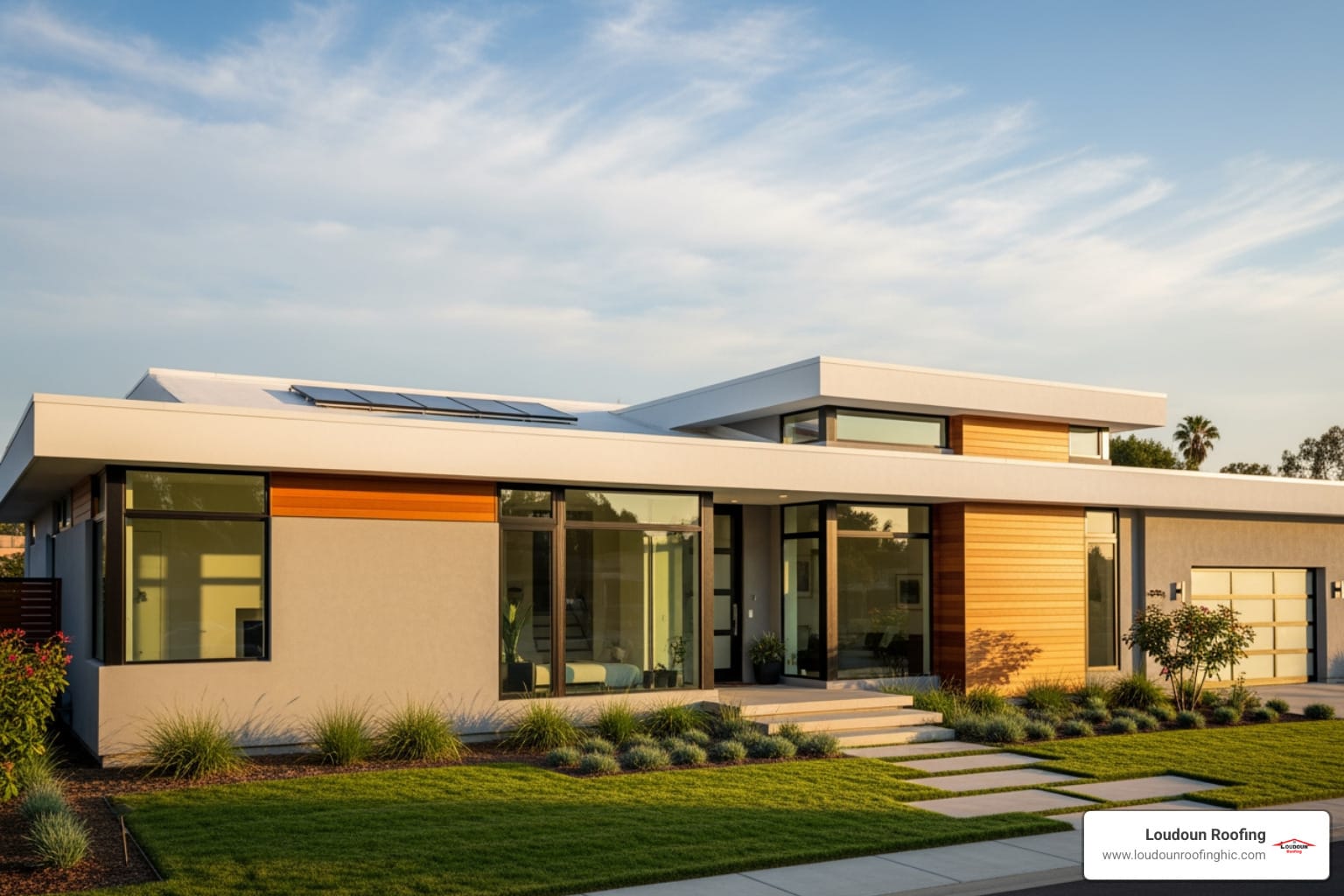

Why Commercial Properties Are Making the Switch to Tile
Tile roof replacement has become the go-to solution for commercial property owners seeking long-term value and durability. When business owners evaluate their roofing options, three key factors drive their decision:
- Longevity: Clay tiles last 80-100+ years, concrete tiles 40-75 years
- Cost-effectiveness: Lower maintenance and energy costs over time
- Property value: Improved curb appeal and increased building worth
- Weather resistance: Superior protection against fire, wind, and extreme temperatures
For business owners in Loudoun County seeking a durable and aesthetically pleasing solution, understanding your commercial roofing options is the first step toward a wise investment.
Unlike residential properties, commercial buildings demand roofing systems that minimize long-term operational disruption. A failing roof can threaten inventory, force business closures, and damage your reputation.
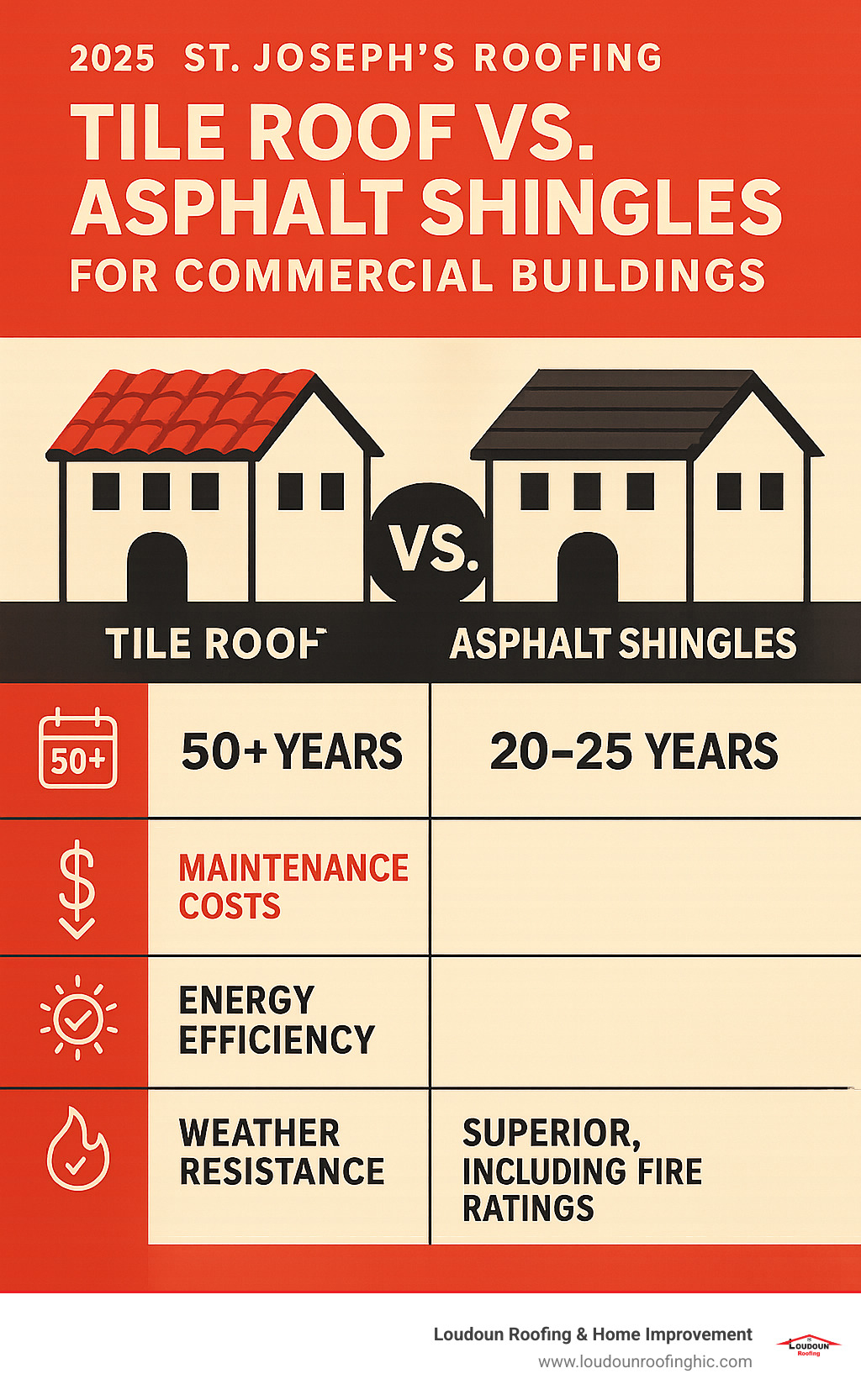
While asphalt shingles might cost less upfront, they require replacement every 20-25 years. Tile roofs, despite higher initial costs from $10-30 per square foot, often pay for themselves through reduced maintenance, energy savings, and an extended lifespan.
Having overseen countless tile roof replacement projects across Northern Virginia since 2001, I’ve seen how the right roofing choice transforms commercial properties. Experience confirms that it delivers the best long-term value for business owners.
Tile roof replacement helpful reading:
Why Tile is a Superior Choice for Commercial Buildings
When protecting a commercial investment, your roof must provide long-term performance, energy efficiency, and improved property value. This is where tile roofing excels. While competitors replace their roofs every 20-25 years, a tile roof can protect your business for decades. A tile roof replacement is a smart business decision that pays dividends for generations.
Let’s look at what makes each type of tile special:
| Characteristic | Clay Tiles | Concrete Tiles | Slate Tiles |
|---|---|---|---|
| Lifespan | 80-100+ years | 40-75 years | 100+ years |
| Weight | Moderate to Heavy | Heavy | Very Heavy |
| Cost | Higher | Moderate | Highest |
| Durability | Excellent (fire, insect, weather resistant) | Very Good (strong, versatile) | Exceptional (impervious to water, fire resistant) |
Longevity is just the beginning. Tile roofs offer energy efficiency due to their thermal mass, which naturally regulates indoor temperatures and reduces HVAC workload. For large commercial spaces, these utility savings add up quickly.
Fire resistance provides peace of mind, as clay and concrete tiles will not ignite. When severe weather hits, tile roofs stand strong against high winds, heavy rain, and hail.
The architectural versatility is another key benefit. Spanish tile offers classic elegance and excellent water management. Flat tile provides sleek, contemporary lines for modern designs. Interlocking tile delivers maximum wind resistance with a secure fit.
The Main Types of Roofing Tiles
Clay tiles are time-tested champions with fade-proof colors baked into the material. With proper care, they’ll protect your building for 80-100 years or more.
Concrete tiles balance performance and cost-effectiveness, offering versatility in style and color with the same fire and weather resistance as clay. Modern interlocking designs provide superior wind and water protection, lasting 40-75 years.
Slate tiles are the pinnacle of roofing materials. They are virtually impervious to water, highly fire-resistant, and can outlive the buildings they protect, often lasting over a century.
Each material offers distinct advantages for your building’s needs and style. For deeper insights, you can learn more about luxury roofing tile options.
Pros and Cons of Tile Roofing for Businesses
Here’s a look at the pros and cons of tile roof replacement:
The advantages are compelling: an exceptional lifespan (up to 100+ years for clay and slate), low maintenance needs, superior insulation for HVAC savings, a high ROI from longevity and increased property value, and top-tier fire and weather resistance.
The challenges are worth understanding: Higher initial costs are significant compared to asphalt. The heavy weight requires a structural assessment and possible reinforcement. Professional installation is essential, and tiles can crack under improper foot traffic during maintenance.
Identifying the Tipping Point: When Repair Isn’t Enough
Even durable tile roofs eventually reach a point where replacement is smarter than continued repairs. Recognizing when a tile roof replacement is necessary can save business owners thousands in emergency costs and structural damage. Think of it like a company vehicle: eventually, the cost of constant repairs outweighs the value of a reliable new one.

Northern Virginia’s freeze-thaw cycles, heavy rains, and summer heat accelerate wear and tear. Catching problems before they cascade into major issues is key. A few cracked tiles might be a small repair, but widespread water damage can cost tens of thousands.
For detailed guidance, check out our comprehensive guide on When to Replace a Tile Roof: Signs to Look For. If you notice any warning signs, a professional inspection can help you make an informed decision.
Common Signs of a Failing Tile Roof
- Water stains on ceilings: Brown or yellow discoloration means water has already penetrated your roof system.
- Moss or algae growth: This indicates moisture retention that can accelerate tile deterioration, especially in humid Virginia summers.
- Granule loss: Sandy material in gutters signals that the protective coating on concrete tiles is eroding.
- Corroded flashing: Damaged flashing around chimneys, skylights, and vents creates direct paths for water infiltration.
- Musty odors in attic: This often indicates hidden moisture, mold, and potential structural decay.
The Lifespan of Different Tile Materials
Understanding your roof’s expected lifespan helps you plan for its eventual replacement.
- Clay tile lifespan: 80-100+ years, making it an excellent long-term investment.
- Concrete tile lifespan: 40-75 years, offering great durability at a more moderate price.
- Slate tile lifespan: 100+ years, often outlasting the building itself.
However, the underlayment lifespan is only 20-30 years. When the underlayment fails, even perfect tiles can’t prevent leaks. This mismatch often drives the need for a complete tile roof replacement, as replacing only the underlayment requires removing and reinstalling all the tiles anyway.
The Commercial Tile Roof Replacement Process: What to Expect
Understanding the tile roof replacement process helps you prepare for this comprehensive project that protects your business for decades. It’s a carefully coordinated effort that requires skilled craftsmanship.
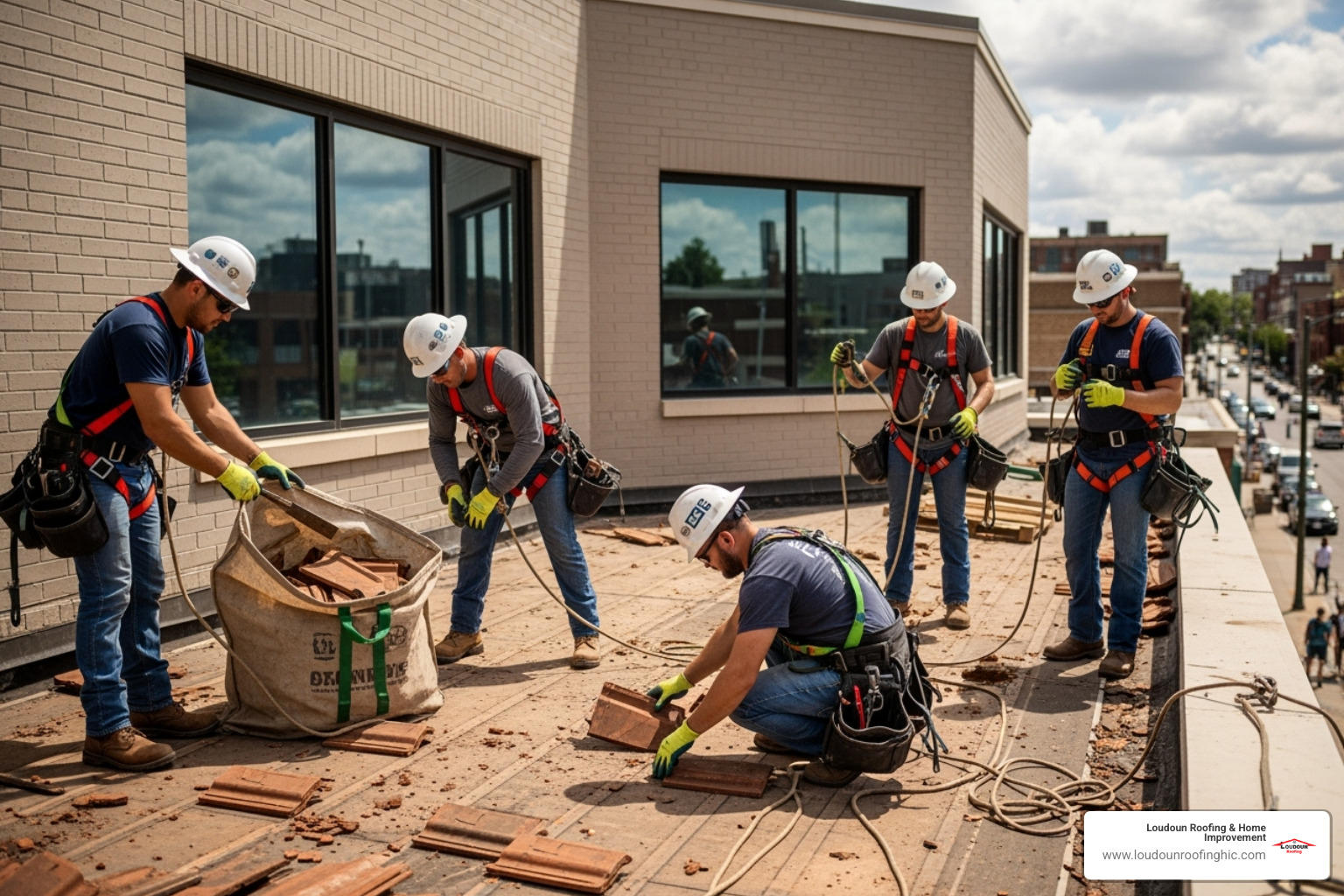
A typical project spans one to three weeks, depending on your roof’s size, complexity, and weather conditions. Experienced contractors plan around challenges to minimize disruption. Before work begins, your team should establish clear timelines and coordinate with your business schedule to ensure operations continue smoothly.
For additional insights, you can reference this helpful Tile Roof Replacement Guide (Timeline, Tools, & More).
Key Steps in a Professional Tile Roof Replacement
- Site preparation: Crews establish safety perimeters, protect landscaping, coordinate deliveries, and communicate with tenants about potential disruptions.
- Tear-off: Old tiles, underlayment, and damaged materials are carefully removed to expose the roof deck.
- Structural inspection and repair: With the deck exposed, any water damage, rot, or weakness is identified and repaired.
- Underlayment and flashing installation: A high-quality water barrier is installed, with new flashing fitted around chimneys, vents, and valleys.
- Tile layout and installation: Each tile is positioned, fastened, and aligned correctly for optimal water flow and performance.
- Site cleanup: All debris is removed, and the worksite is left pristine.
- Final inspection: The contractor verifies that all work meets industry standards and local building codes.
Understanding the Cost of a Commercial Tile Roof Replacement
Several factors influence the total investment for a commercial tile roof replacement.
- Cost per square foot: Typically ranges from $10 to $30. Concrete tiles average $7-$12, clay tiles $10-$18, and premium slate $15-$30+ per square foot.
- Roof size and complexity: Larger or more complex roofs with multiple angles, dormers, or chimneys require more materials and labor, increasing costs.
- Material choice: Concrete offers excellent value, while clay and slate provide superior longevity that can justify a higher initial investment.
- Labor costs: A significant expense, ranging from $5-$18 per square foot, reflecting the specialized skills required for proper tile installation.
- Underlayment quality: High-performance synthetic underlayment costs more but offers superior durability, adding $2-$3 per square foot.
- Debris disposal fees: Included in professional estimates to account for the removal of heavy, old roofing materials.
For detailed cost breakdowns, explore our guide on the Cost to Tear Off and Replace Roof.
Technical Considerations: The Importance of Professional Installation
Tile roof replacement is a complex undertaking that demands specialized expertise. The stakes are too high for amateur installation, as it involves critical structural and waterproofing knowledge.
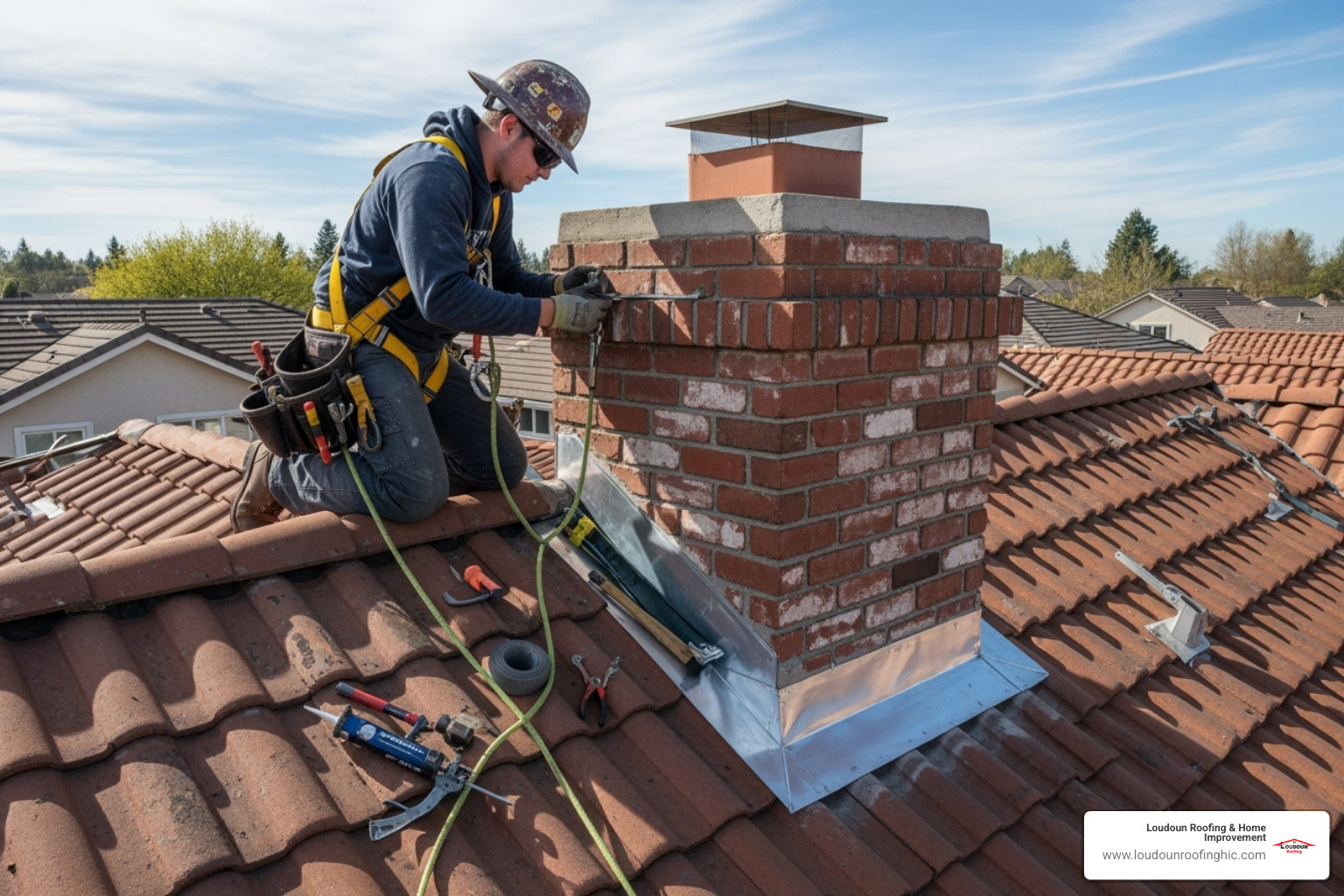
Structural requirements are a primary concern. Tile roofing is heavy, and a building’s structure must be engineered to handle the load to prevent catastrophic failure. Additionally, the underlayment and flashing form the true waterproof barrier. If installed incorrectly, even the best tiles won’t prevent leaks.
An experienced contractor also knows how to source reclaimed or compatible replacement tiles for older systems, like those from Marley, which stopped production decades ago. Professional installation avoids DIY risks that can void warranties, violate building codes, or create safety hazards.
For certified professionals, the Tile Roofing Industry Alliance maintains a directory of qualified contractors.
Structural Integrity and Roof Weight
Clay or concrete tiles weigh 6 to 8 pounds each, adding thousands of pounds of load to a commercial roof. An engineering assessment is non-negotiable before any tile roof replacement. This critical safety step determines if the building can handle the weight. Sometimes, reinforcement is needed, which adds to the cost but is far less expensive than structural failure. Building codes are strict about load-bearing requirements, and our team ensures your project meets all local regulations.
The Critical Role of Underlayment and Flashing
The underlayment is your primary water barrier, catching any moisture that gets past the tiles. We typically recommend durable synthetic underlayment for tile roofs, as it resists tearing and handles temperature fluctuations better than traditional felt. Flashing is equally critical, creating watertight seals at transitions like valleys, chimneys, and skylights. Most tile roof leaks are caused by failed flashing, not failed tiles, which is why professional installation is so important for preventing leaks.
Best Practices for Long-Term Tile Roof Maintenance
While low-maintenance, tile roofs require proper care to last for decades.
- Regular inspections: Annual check-ups, especially after severe weather, can catch small issues before they become costly problems.
- Gutter cleaning: Prevents water from backing up under tiles and causing leaks.
- Debris removal: Removes trapped leaves and branches that hold moisture and can lead to moss growth.
- Prompt repairs: A single cracked tile should be replaced quickly to prevent water intrusion.
- Avoid pressure washing: This can damage tile surfaces and force water underneath, shortening the roof’s lifespan.
Frequently Asked Questions about Commercial Tile Roofing
Business owners considering tile roof replacement often have similar questions. Here are answers to the most common inquiries based on our experience helping commercial property owners in Northern Virginia.
How long does a commercial tile roof replacement take?
A commercial tile roof replacement typically takes one to three weeks. The exact timeline depends on the roof’s size, complexity, and weather conditions. A small, simple roof may be done in a few days, while a large, complex structure could take three weeks or more. Proper planning is key to minimizing disruption to your business operations.
How does a tile roof impact a commercial building’s energy costs?
Tile roofs have excellent thermal properties that reduce heat transfer. The thermal mass of tile acts as a natural temperature regulator, absorbing heat slowly on hot days and helping retain warmth in winter. This reduces the load on your HVAC system, leading to significant savings on heating and cooling costs, often around 15-20%.
Can you install a tile roof on any commercial building?
Not always. The significant weight of tile roofing means your building’s structure must be assessed by a professional engineer before a tile roof replacement can proceed. Older buildings, in particular, may have been designed for lighter materials. Some structures may require reinforcement of the roof framing or support beams to safely handle the additional weight. This assessment is a crucial first step for safety and long-term performance.
Your Partner for Commercial Roofing in Northern Virginia
Choosing the right partner for your tile roof replacement is a crucial decision. This is a significant investment in your commercial property’s future value, protection, and aesthetic. An expert installation ensures your roof becomes a durable asset for decades.
At Loudoun Roofing & Home Improvement, we have been protecting commercial properties across Northern Virginia since 2001. We understand that your business cannot afford disruptions or subpar work. Our team approaches every project with precision, drawing on years of experience with complex commercial installations.
Our process begins with a thorough assessment of your current roof and building structure. We provide transparent pricing and clear communication throughout the project. The result is a tile roof replacement that not only protects your investment but also improves property value and reduces energy costs.
If you are ready to upgrade your commercial property with a durable, beautiful tile roof, we are here to help. Learn more about our comprehensive Roof Replacement services and let’s discuss how we can protect and improve your most important business asset.